How Does a Convection Oven Work
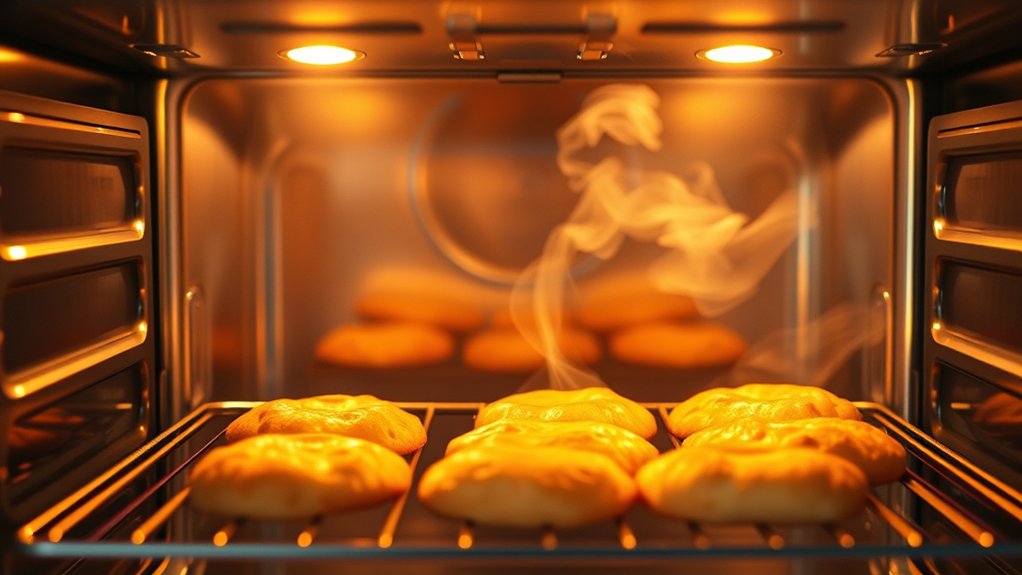
About 75% of home cooks say they’ve noticed faster browning in a convection oven, but not all know why convection ovens work the way they do. You use a fan and exhaust system to move hot air around the food, which strips away the cool air layer and heats the surface more evenly.
That means better browning, fewer hot spots, and shorter cooking times—if you set it up the right way, the difference can be even more striking.
Key Takeaways
- A convection oven uses a fan and exhaust system to circulate hot air around food. Moving air transfers heat more evenly, reducing hot spots and promoting consistent browning.
- Because the air strips away cooler surface air, convection ovens often cook food faster.
- Food should be spaced on racks or shallow pans so air can flow freely around it.
- Recipes usually need about 25°F lower temperature and closer timing checks in convection mode.
How a Convection Oven Works
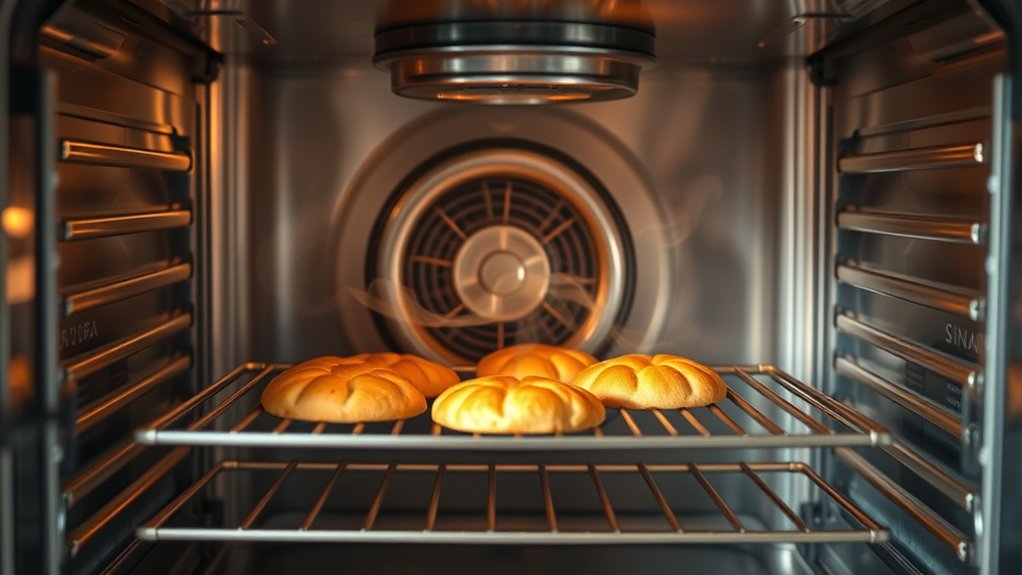
A convection oven works by using a fan and exhaust system to circulate hot air around the food, which helps it cook more evenly and often more quickly than in a conventional oven. You place your dish on a rack so air can move freely around it, and the fan keeps heat in motion across the oven cavity.
This fan assisted heating reduces hot spots and supports steady browning on roasts, vegetables, and baked goods. You’ll notice stronger convection efficiency because the moving air transfers heat to the food’s surface more consistently.
Set the temperature and time carefully, since the circulating air can accelerate cooking and dry delicate items if you’re not attentive. For best results, avoid overcrowding the oven, which can block airflow and weaken performance.
When you understand this system, you can adjust placement, timing, and moisture to get precise, reliable results in your kitchen.
Convection Oven vs. Regular Oven
When you compare a convection oven with a regular oven, the main difference is airflow: convection uses a fan to move hot air around the food, while a regular oven relies on still heat that rises and settles inside the cavity. You’ll notice this changes how you position pans and monitor browning.
For the best results, keep these points in mind:
- Use shallow pans in convection mode so air can circulate freely.
- Lower the rack when you need gentler top heat in a regular oven.
- Expect more even surface color with convection efficiency.
- Check your kitchen ventilation, since fan-assisted heat can push more warm air into the room.
In practice, choose convection for roasted vegetables, cookies, and layered dishes when you want steady browning. Choose a regular oven when a recipe depends on quiet, stable heat and you’d rather keep adjustments simple.
Why Convection Ovens Cook Faster
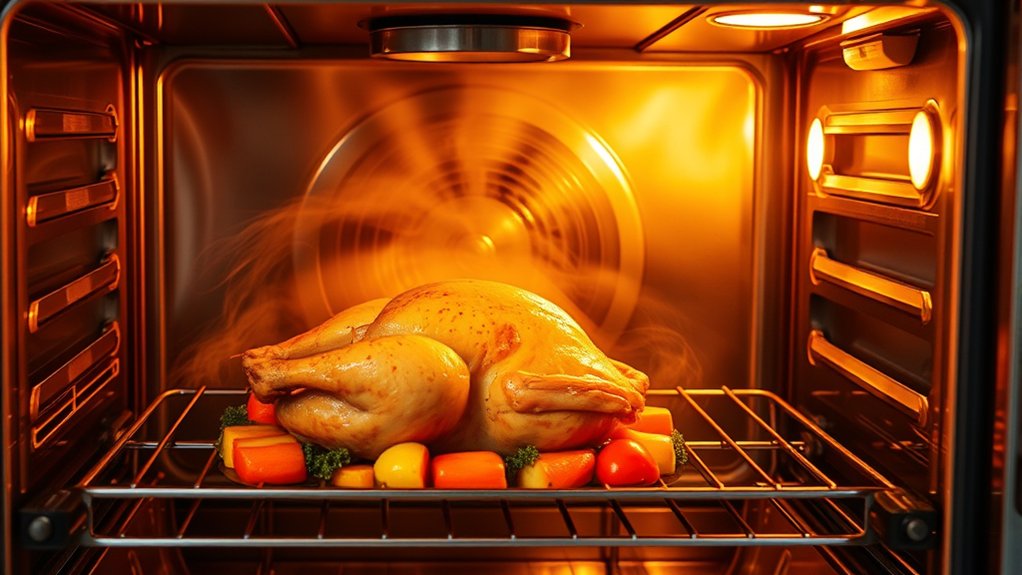
Why do convection ovens finish food faster? You get speed because the fan moves hot air constantly across every surface, so heat transfers more efficiently than still air in a standard oven. That airflow strips away the cool boundary layer around your food, letting the exterior warm and brown sooner.
As a result, you can often lower the temperature and still reach the same doneness in less time.
You also gain more even heat distribution, which reduces hot spots and helps prevent overcooked edges before the center finishes. This makes crusting textures develop quickly on baked goods, roasted vegetables, and proteins, while moisture retention improves because you can shorten overall cook time.
For best results, keep pans spaced apart so air can circulate freely. When you understand this movement of heat, you can adjust timing with confidence and use your convection oven to cook efficiently without sacrificing quality.
Best Foods for Convection Cooking
Which foods benefit most from convection cooking? You’ll get the best results with foods that profit from moving hot air and even browning. Use this method for items that need crisp edges, dry surfaces, and strong flavor development.
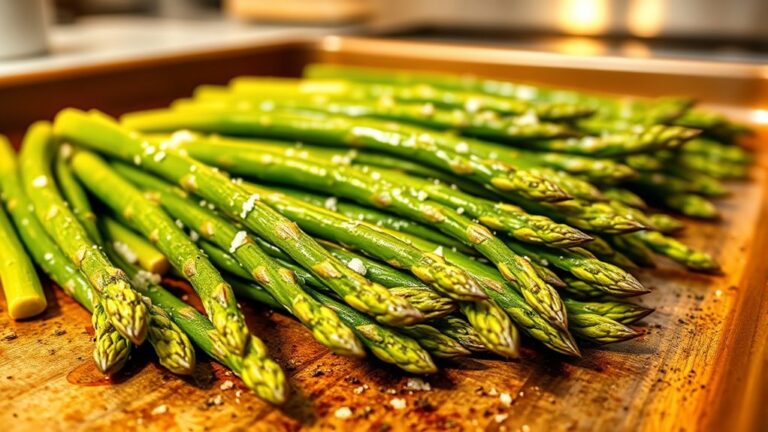
- Roasted vegetables: You can caramelize carrots, Brussels sprouts, and potatoes while keeping interiors tender.
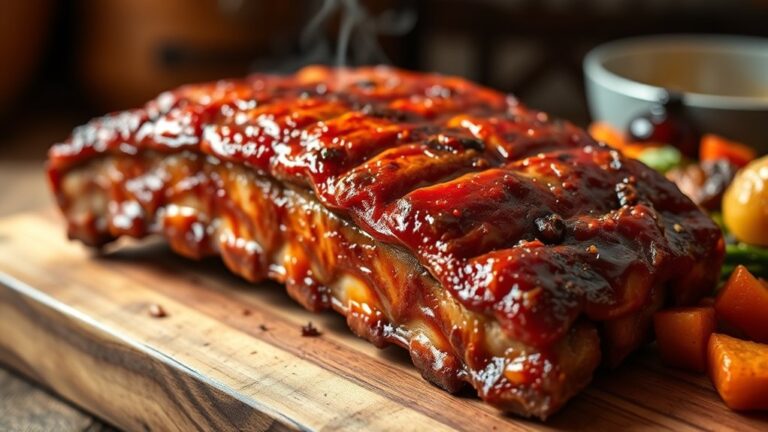
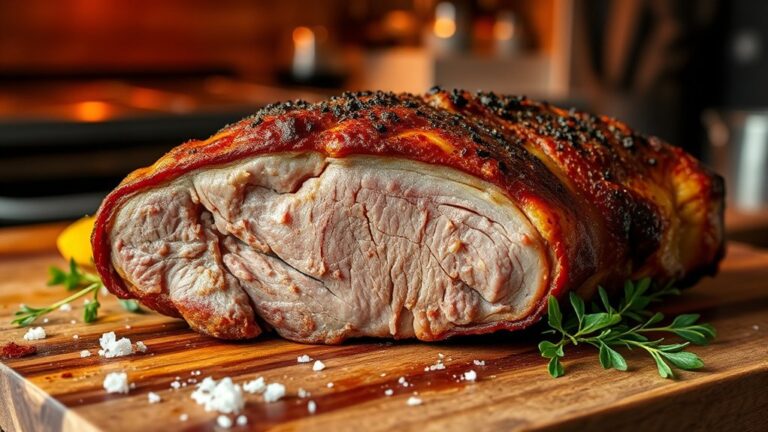
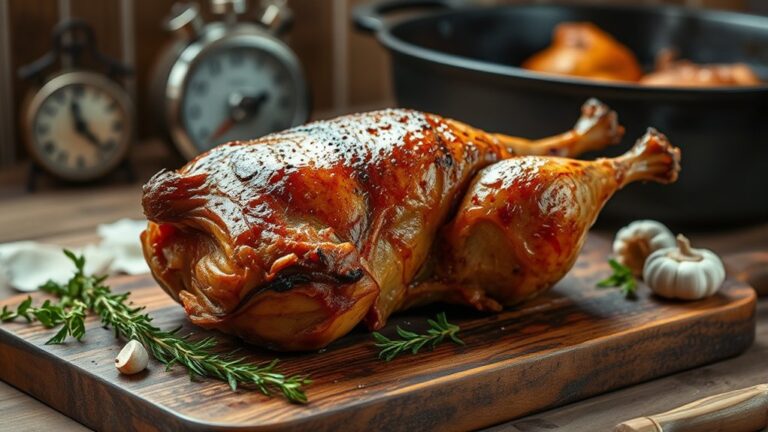
- Chicken and turkey: You’ll brown the skin efficiently and promote texture enhancement without sacrificing juiciness.
- Cookies and pastries: You can encourage even browning, especially on sheet-pan batches.
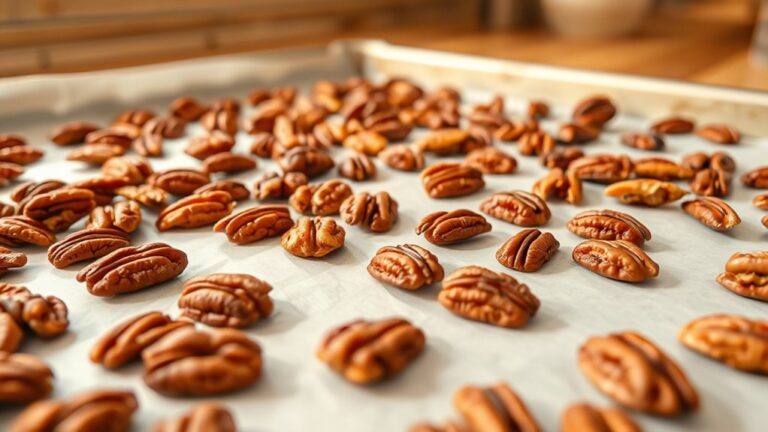
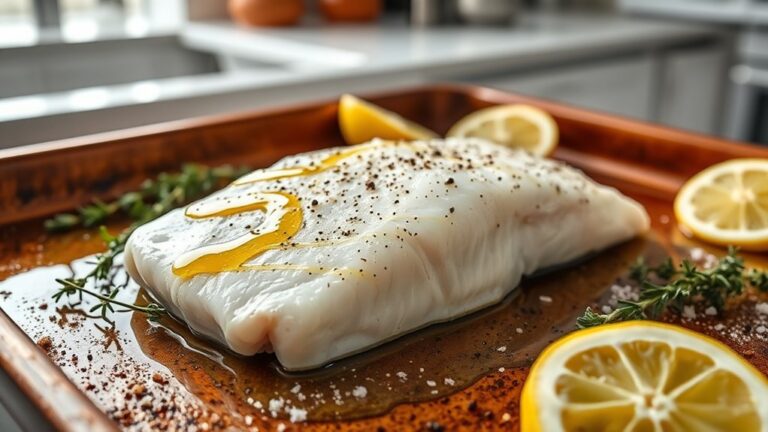
- Whole fish and nuts: You’ll crisp delicate skin and toast nuts evenly for deeper aroma.
Choose convection when you want a drier finish and more pronounced surface color. It works especially well on foods with exposed surfaces, because circulating heat drives moisture off quickly and concentrates flavor. For the cleanest results, arrange food with space around it so the air can move freely and do its job.
Convection Oven Settings and Timing Tips
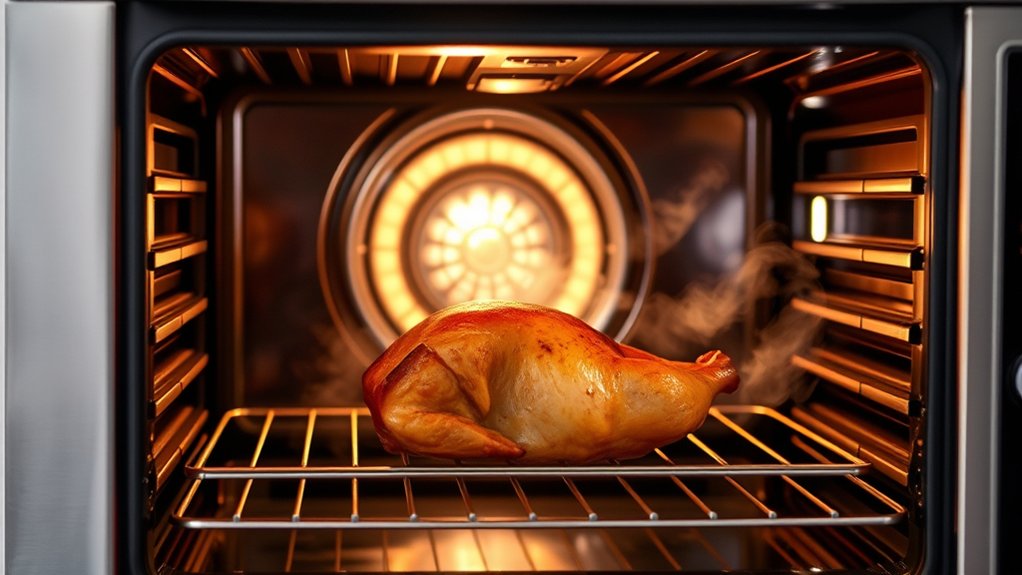
Once you’ve picked the right foods, the next step is setting the oven correctly so convection can do its best work. You should lower the temperature by 25°F from a standard recipe unless your oven manual says otherwise. Use the convection bake setting for most roasting, baking, and sheet-pan cooking, and choose convection roast when you want stronger browning.
Keep pans spaced apart so airflow patterns can move freely around each piece of food.
Check doneness early, usually 5 to 10 minutes before the recipe’s end time, because convection cooks faster and more evenly. For cookies, pastries, and delicate cakes, start with the shortest suggested time and watch the edges closely. If your oven offers an innovative temperature probe, use it for meats to avoid overcooking.
Rotate trays only if browning looks uneven, but don’t open the door too often. Trust the fan, monitor color, and adjust timing as needed.
Frequently Asked Questions
Do Convection Ovens Need Special Cookware?
No, you usually don’t need special cookware, but you do need sturdy, low-rimmed pans. For convection advantages, choose metal or silicone over glass; they help airflow and meet your cookware needs better.
Can You Use Foil in a Convection Oven?
Yes, you can use foil in a convection oven, though it’s ironic: something so thin can block airflow. You should secure foil safely and choose alternate cookware when it might touch heating elements or fan paths.
How Do You Clean a Convection Oven?
You clean a convection oven by removing racks, wiping crumbs, and using baking soda paste on stubborn spots.
Follow cleaning tips and maintenance routines regularly, then rinse, dry, and replace parts before preheating.
Are Convection Ovens Energy Efficient?
Yes, when you use convection ovens, you can often cut cooking time by about 25%, boosting convection efficiency and energy savings.
You’ll heat food faster, use less power, and still brown roasts and pastries beautifully.
Can You Bake Multiple Trays at Once?
Yes, you can bake multiple trays at once, boosting baking capacity. You’ll get the best results with smart tray arrangement, leaving space for airflow.
Rotate trays if needed to ensure even browning and consistent baking.
Conclusion
Now you know the secret: your convection oven doesn’t just heat food—it moves heat. That fan and exhaust keep hot air swirling, strip away the cool layer around your dish, and push browning to the next level.
But here’s the catch: if you choose the wrong pan or rack, you’ll lose the advantage. Use it right, and your meals cook faster, more evenly, and with better color.
The next turn in your kitchen starts now. Understanding how does a convection oven work will help you make the most of every meal.