How to Cook Lobster Tail in Oven
To cook lobster tail in the oven, you first thaw it fully, pat it dry, and trim any damaged shell. This preparation ensures even cooking and a clean presentation.
Next, split the shell lengthwise, loosen the meat, and lift it over the top while keeping it attached at the base. This technique allows the meat to cook evenly and look attractive once done.
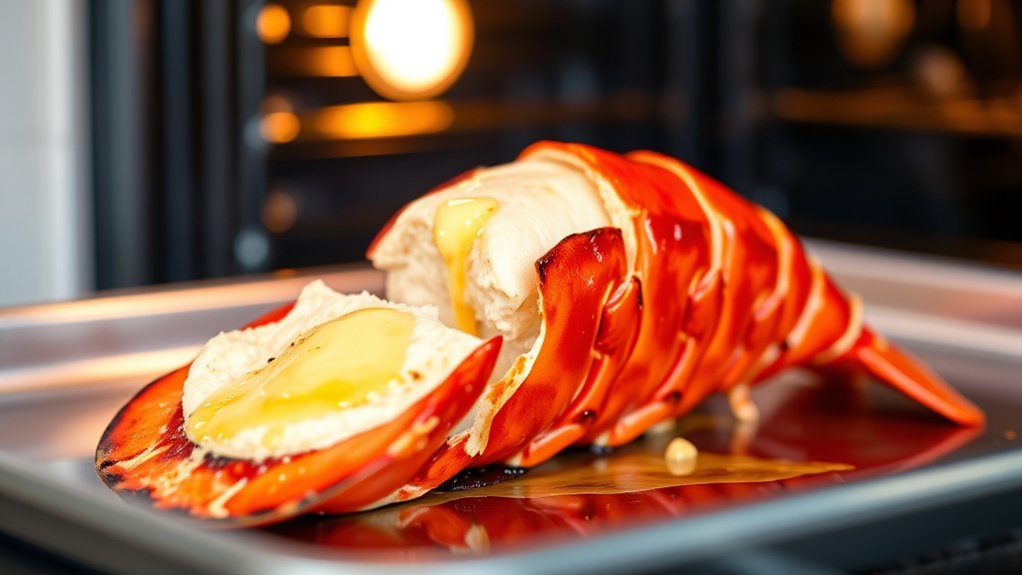
Brush the exposed flesh with butter or oil, then set it on a lined sheet pan. Bake at 400°F until the meat turns opaque and reaches the right temperature—timing matters more than you might think.
Key Takeaways
- Thaw lobster tails completely, then rinse, pat dry, and inspect before cooking.
- Cut the shell lengthwise, lift the meat over the top, and keep it attached at the base.
- Preheat the oven to 400°F and bake tails on a lined sheet pan, shell side down.
- Brush with butter or oil, then bake 8 to 15 minutes until opaque and 140°F to 145°F inside.
- Rest briefly after baking, then serve with herb butter and simple sides.
How to Prep Lobster Tails for Baking
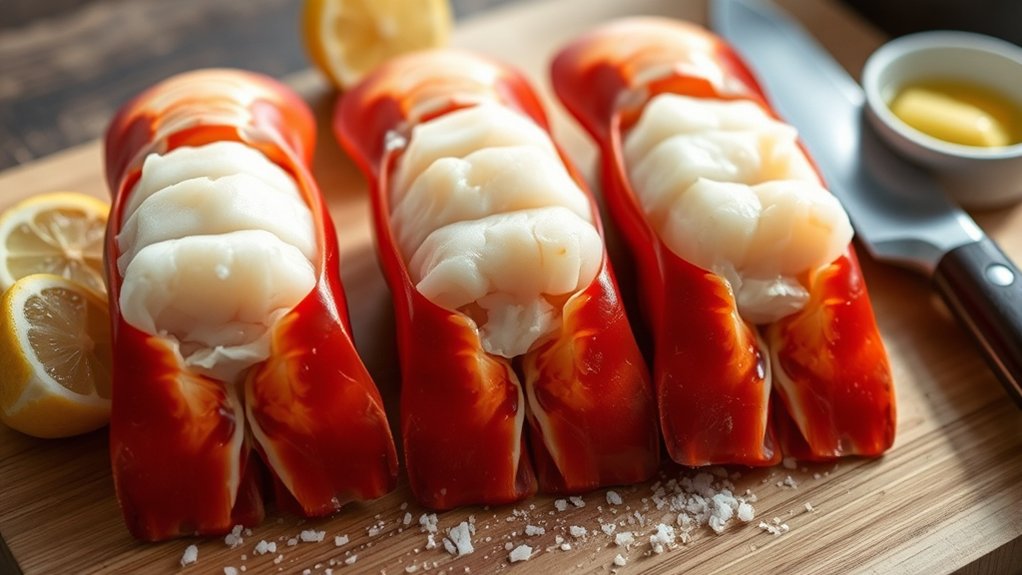
Before you bake lobster tails, thaw them completely if they’re frozen, then rinse and pat them dry so the seasoning sticks and the meat cooks evenly. Next, inspect each tail for cracks, loose shell fragments, or dark spots, and trim away anything damaged.
Thaw, rinse, and pat lobster tails dry so they season well and bake evenly.
Using kitchen shears, cut the top of the shell lengthwise from the open end toward the tail fan, then stop before you slice through the bottom shell. Gently loosen the meat from the shell and lift it slightly over the top, keeping it attached at the base.
This prepping shells step improves presentation and helps the surface cook evenly. If you see a dark vein, remove it carefully. Keep the meat intact and avoid tearing, since that protects meat texture and keeps the lobster tender.
Set the tails on a baking sheet, and they’re ready for seasoning and the oven.
Bake Lobster Tails at 400°F
Set your oven to 400°F and let it fully preheat while the lobster tails rest on the baking sheet. Place the tails on the center rack so the heat surrounds them evenly.
If you’ve followed proper thawing tips, the meat should feel cold but pliable, not icy, which helps it cook consistently. Keep the shells facing down and brush the exposed flesh with melted butter or oil to promote even browning and protect the surface.
Bake the lobster tails on a lined sheet pan so cleanup stays simple and the juices don’t scorch. Use a steady oven temperature; don’t open the door repeatedly, since that drops heat and disrupts baking.
Watch for the meat to turn opaque and firm at the edges while staying tender in the center. These controlled conditions make your bake times more reliable and help you avoid undercooked or dry results.
How Long to Bake Lobster Tails?
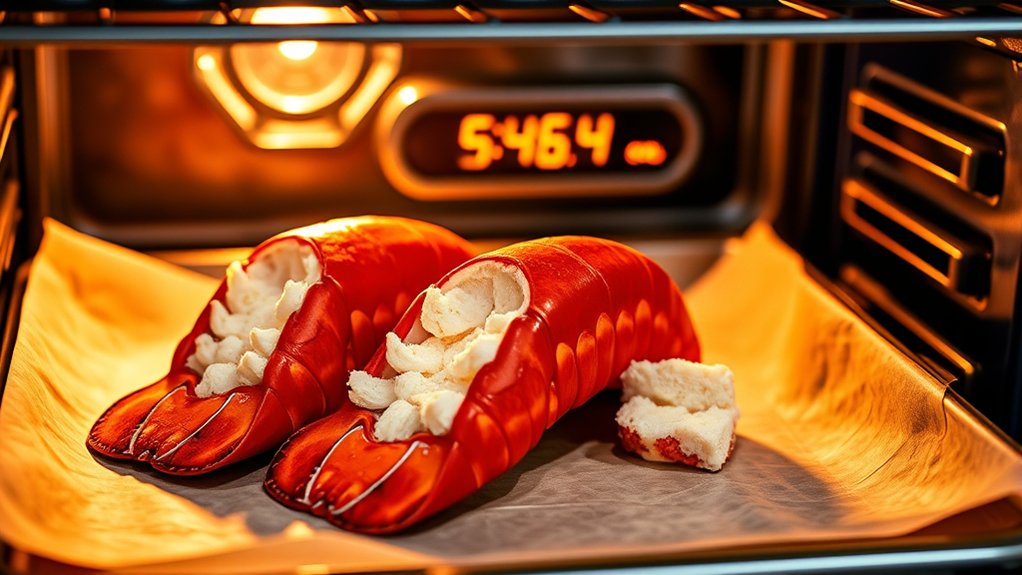
How long should you bake lobster tails? At 400°F, you’ll usually need 8 to 12 minutes for small to medium tails and 12 to 15 minutes for larger ones. For very thick tails, add a few minutes, but don’t overbake; the meat turns rubbery fast.
At 400°F, lobster tails usually bake 8 to 12 minutes, with larger tails needing a bit longer.
Use size as your guide, because baking temperatures stay constant while cook time changes with weight. A good rule is 1 minute per ounce, then check early.
You’ll know the tails are done when the meat is opaque, firm, and reaches 140°F to 145°F at the thickest point. That temperature range supports lobster safety and delivers the best texture.
If you see translucent centers, bake a bit longer and check again in 1-minute intervals. Pull the tails from the oven as soon as they’re just cooked through, then rest them briefly so the heat finishes evening out without drying the meat.
Brush Lobster Tails With Butter and Herbs
Mix melted butter with finely chopped herbs, such as parsley, thyme, or chives, so you coat the lobster with a fragrant, flavorful baste. Brush the mixture evenly over each tail, making sure you reach the exposed meat and the cut edges.
Apply a light second coat just before baking so the lobster stays moist and the herbs infuse the surface evenly.
Herb Butter Mixture
Whisk together softened butter, minced garlic, chopped parsley, a little lemon zest, salt, and black pepper until the mixture is smooth and evenly blended. This herb butter should be soft enough to spread easily but not melted, so it clings to the lobster meat and carries flavor into every cut surface.
Use fresh herbs for a cleaner taste, and keep the mixture cold until you’re ready to apply it. For lobster safety, prepare it with clean utensils and avoid cross-contamination with raw seafood juices.
If you want a richer finish, add a small pinch of paprika or chives, but keep the balance subtle. Mix only until combined; overworking the butter can dull the fresh herb flavor and reduce its clean, aromatic edge.
Even Brushing Technique
To coat the lobster tails evenly, use a pastry brush to apply the herb butter in a thin, generous layer over the exposed meat and into the split shell. Keep your strokes long and controlled so you cover every ridge without pooling.
This lobster tail technique helps the meat baste as it roasts, giving you balanced flavor and a glossy finish. Watch your brush depth: press lightly across the surface, then angle the bristles to reach the crevices near the shell edge.
| Step | Action |
|---|---|
| 1 | Dip brush lightly |
| 2 | Sweep over meat |
| 3 | Reload as needed |
| Goal | Result |
| Even coating | Consistent browning |
| Gentle brush depth | Tender, seasoned meat |
How to Tell When Lobster Tail Is Done?
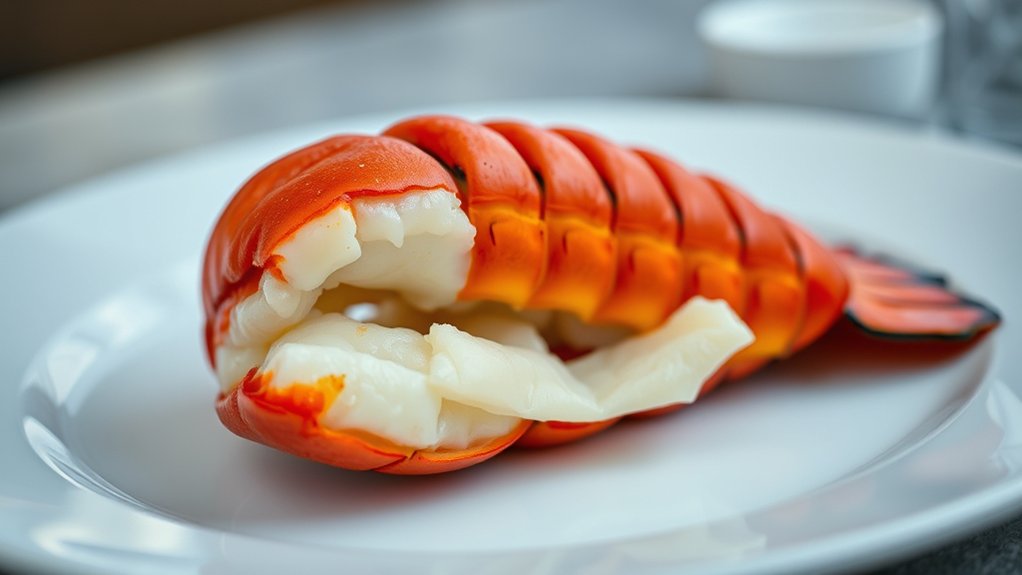
You’ll know lobster tail is done when the meat turns opaque white with a firm, springy texture and the shell becomes bright red. To check, lift the thickest part with a fork or knife; it should resist slightly, not feel rubbery or mushy.
Look for doneness indicators at the cut edge: the flesh should no longer be translucent, and the juices should run clear, not milky. If you insert an instant-read thermometer into the center, aim for 140°F to 145°F; that range signals safe, tender lobster without overcooking.
Check the tail where it curves against the shell, since that area cooks last. If the meat still looks glassy or bends easily, return it to the oven briefly and check again. Remove it as soon as it meets these signs, because lobster turns tough fast once it goes past ideal doneness.
Keep Lobster Tails Juicy
Want juicy lobster tails? You need control, timing, and heat. Start by thawing tails completely, then pat them dry so the surface browns without steaming.
Thaw tails completely, then pat them dry so they brown without steaming.
Cut the shell, lift the meat slightly, and brush it with melted butter or oil to seal in moisture. Use juicy techniques like moderate oven heat, a short bake time, and a quick check with a thermometer; pull the tails when the thickest part reaches 140°F.
Let them rest briefly so the juices redistribute instead of spilling out when you cut in. Season lightly so you preserve flavor balance and don’t mask the lobster’s sweetness.
- Thaw tails in the refrigerator
- Keep the meat lightly coated
- Bake at steady medium heat
- Check doneness early
- Rest before serving
Serve Lobster Tails With Easy Sides
Pair lobster tails with simple sides that support, rather than compete with, their rich flavor. You’ll get the best flavor balance from tender vegetables, buttered potatoes, or a crisp green salad. Serve steamed asparagus, green beans, or broccolini to add color and freshness without overwhelming the plate.
For starch, choose roasted baby potatoes, rice pilaf, or a light garlic mashed potato; each absorbs juices well and keeps the meal grounded. Keep portions modest so lobster stays the focus. A small lemon wedge, drawn butter, and chopped herbs like parsley or chives can sharpen the finish without adding heaviness.
If you want a special presentation, plate the tail beside one vegetable and one starch, leaving space for the shell to stand out. These combinations work for weeknight dinners and celebratory moments alike, because they’re easy to prepare and elegant to serve. When you keep sides simple, you let the lobster’s sweet flavor lead every bite.
Avoid Common Lobster Tail Mistakes
You need to avoid two common lobster tail mistakes: overcooking the tail and skipping proper thawing. If you leave it in the oven too long, the meat turns tough and dry, so watch for opaque flesh and a firm texture.
Always thaw frozen tails fully before cooking, or they’ll cook unevenly and lose their tender, sweet flavor.
Overcooking the Tail
Overcooking is the most common mistake when baking lobster tail, and it quickly turns tender meat rubbery and dry. You can avoid overcooking risks by watching color, texture, and carryover heat closely. Pull the tails when the flesh turns opaque and just firm; the center should still look moist.
Use cooling methods only after baking if you need to slow further cooking, such as transferring the tail to a warm plate away from direct heat.
- Check early, then every minute
- Use a thermometer for accuracy
- Stop at 140°F to 145°F
- Rest briefly before serving
- Keep butter warm, not scorching
Skipping Proper Thawing
Skipping proper thawing can ruin lobster tail before it even reaches the oven, because frozen or partially frozen meat cooks unevenly and often turns tough at the edges while staying cold in the center. You should plan ahead and thaw it in the refrigerator, not on the counter, to avoid unsafe handling and preserve texture.
Skipping thawing also makes seasoning less effective, since cold shells block flavor penetration.
| Method | Time | Result |
|---|---|---|
| Refrigerator thaw | 8–12 hours | Even, safe |
| Cold-water thaw | 30–60 minutes | Faster, controlled |
| Counter thaw | Not recommended | Unsafe handling |
Pat the tail dry before baking; excess moisture steams the meat and dulls browning. When you cook a fully thawed tail, you’ll get cleaner, sweeter flavor and a firmer bite.
Frequently Asked Questions
Can I Bake Frozen Lobster Tails Without Thawing?
Yes, you can bake frozen lobster tails without thawing; you’ll just need extra time. Use baking from frozen, follow thawing guidance if you prefer better texture, and cook until the meat’s opaque and reaches 145°F.
Should I Use Salted or Unsalted Butter?
Use unsalted butter; you control the seasoning better and avoid oversalting sweet lobster. If you prefer a brinier finish, use salted butter sparingly.
You can also add garlic, lemon, and herbs for balance.
Can I Season Lobster Tails With Garlic Powder?
Yes, you can season lobster tails with garlic powder. You’ll get a savory garlic powder discussion when you sprinkle lightly before baking.
Keep the oven timing discussion in mind, so the seasoning won’t burn.
What Size Lobster Tails Work Best for Baking?
You’ll bake best with 4- to 6-ounce lobster tails; a 5-ounce tail, for example, cooks evenly and stays tender.
Choose through size selection, then adjust tail trimming so you don’t overcook smaller shells.
Can I Cook Lobster Tails Under the Broiler?
Yes, you can broil lobster tails. You’ll answer broiler questions quickly by placing them 4 to 6 inches from heat, brushing with your butter choice, and cooking until opaque, about 5 to 8 minutes.
Conclusion
Now you’ve got the blueprint for oven-baked lobster tail that tastes like a five-star splurge. Prep it right, bake it at 400°F, and watch that shell-pinned meat turn snowy, juicy, and ridiculously tender in just minutes. Don’t overcook it, or you’ll turn luxury into rubber.
Brush on butter, serve with easy sides, and you’ve got a showstopper that practically screams celebration. Follow these steps, and you’ll nail lobster tail every single time.
With this method, cooking lobster tail in oven becomes simple, delicious, and perfect for any special occasion.