Can Parchment Paper Go in the Oven
You’ve probably seen parchment paper darken at 450°F like a warning label that learned to speak. Yes, you can use parchment paper in the oven, but only within the manufacturer’s temperature limit, usually 425–450°F.
You need to keep it flat on a baking sheet, away from heating elements, and out of broiler range. The real question is what happens when heat, grease, and paper all meet at once.
Key Takeaways
- Yes, parchment paper can go in the oven if used within the manufacturer’s temperature limit, usually 425°F to 450°F.
- Treat the printed temperature limit as a hard safety boundary, and check the package before each use.
- Keep parchment flat, fully inside the pan, and away from heating elements, oven walls, or broiler heat.
- It can burn, brown, or tear if overheated, exposed to direct flame, or used near exposed hot surfaces.
- For high-heat recipes, use a different liner or bake directly on the pan instead.
Can Parchment Paper Go in the Oven?
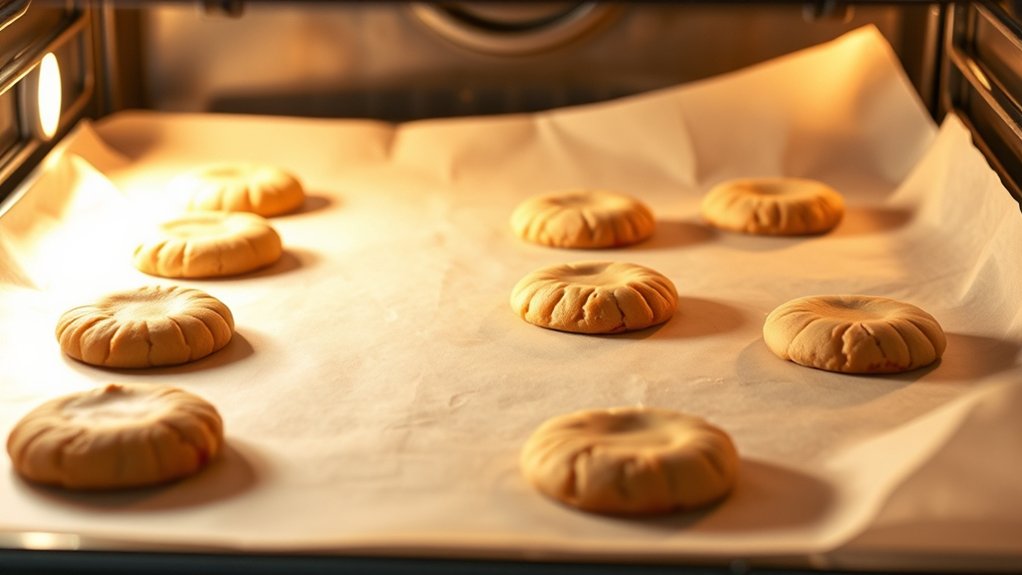
Yes, parchment paper can go in the oven, but only within the temperature limit listed by the manufacturer, which is typically around 425°F to 450°F. You should treat that rating as a hard boundary for parchment safety, because the paper’s silicone coating and cellulose base are engineered for controlled heat exposure, not unrestricted baking.
Parchment paper is oven-safe only up to the manufacturer’s temperature limit, usually around 425°F to 450°F.
When you use it correctly, it helps you line pans, reduce sticking, and simplify cleanup without direct contact between food and metal.
You need to verify the package instructions before each use, since brands can set different oven limits. Place the sheet flat in the pan and keep it from touching heating elements, broiler flames, or oven walls.
If you ignore those constraints, the paper can brown, curl, or fail prematurely. For reliable results, use it only for standard baking tasks and remove it promptly after cooking.
What Temperature Can Parchment Paper Handle?
Parchment paper usually handles oven temperatures of about 425°F to 450°F, but you should always follow the exact limit printed by the manufacturer. You need to treat that value as a true maximum, not a target, because heat transfer can exceed the oven setting at hot spots.
For parchment safety, keep it away from direct flame, broiler elements, and heating coils, where temperatures can rise fast enough to cause browning or ignition. Most standard papers use silicone coating and cellulose fibers, which tolerate moderate dry heat but degrade beyond their temperature limits.
If you bake at 400°F, you’re typically within the tested range; if you bake at 450°F, you’re at the upper boundary and should monitor closely. Always check the box, since some brands rate their sheets lower. When you need higher heat, use a different liner or bake directly on the pan.
When Is Parchment Paper Safe to Use?
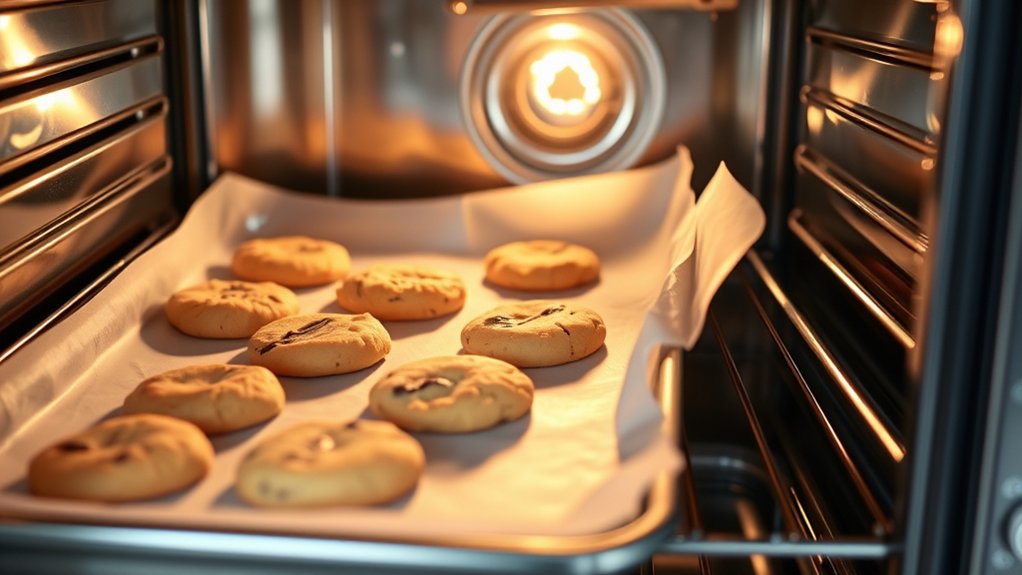
You can use parchment paper safely when the oven temperature stays at or below the manufacturer’s listed limit and the paper isn’t exposed to direct flame, broiler heat, or exposed heating elements. For oven safety, place it flat on a stable baking sheet so hot air circulates evenly and the sheet supports the liner.
You should center food on the paper to keep edges from lifting and to reduce localized overheating. Follow the parchment limits printed on the box, because those specifications reflect the paper’s silicone coating and base stock.
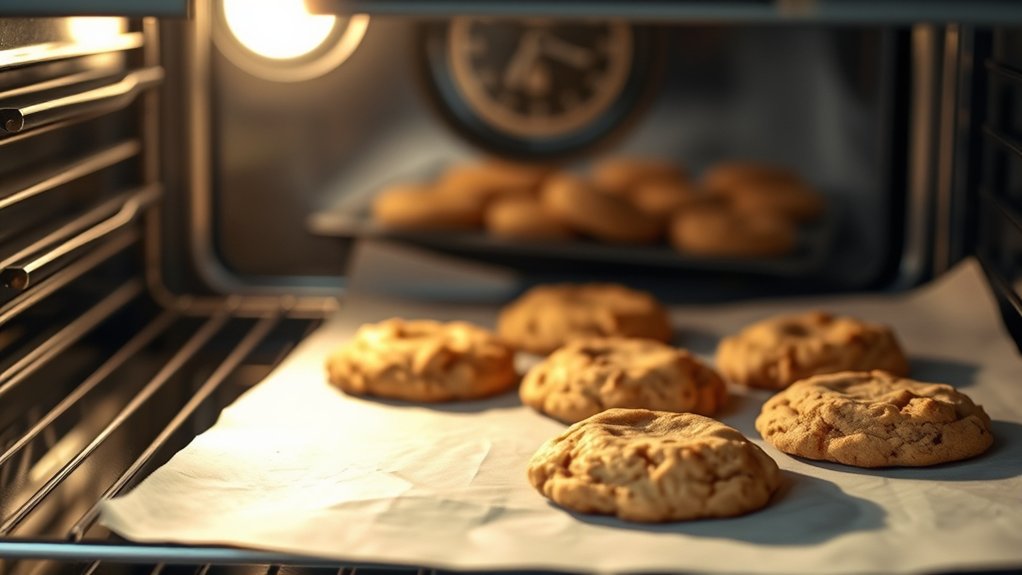
In practice, use it for baking cookies, roasting vegetables, and lining pans for moist or dry foods at standard baking temperatures. Check that the paper fits fully inside the pan, since overhang can contact hotter surfaces and compromise performance.
If your recipe requires steady, moderate heat, parchment usually provides reliable release and cleanup without affecting food quality.
When Can Parchment Paper Burn or Fail?
Parchment paper can burn or fail when it’s pushed beyond its heat limit, exposed to direct flame, or placed too close to a broiler or heating element. In those conditions, the silicone coating and cellulose base can char, curl, or ignite, increasing burn risk and reducing release performance.
You also raise failure risk with improper use, such as letting paper touch oven walls, rack edges, or hot metal surfaces. Grease splatter can raise local temperatures and accelerate scorching. Repeated exposure near the maximum rated temperature may weaken the sheet, making it brittle and more likely to tear.
Direct radiant heat can overheat the surface fast. Dry, empty paper heats faster than loaded paper. Loose edges can lift and contact hot elements.
You should treat any browning, smoke, or crisping as a warning sign that the paper’s thermal limit is being exceeded.
How to Use Parchment Paper in the Oven
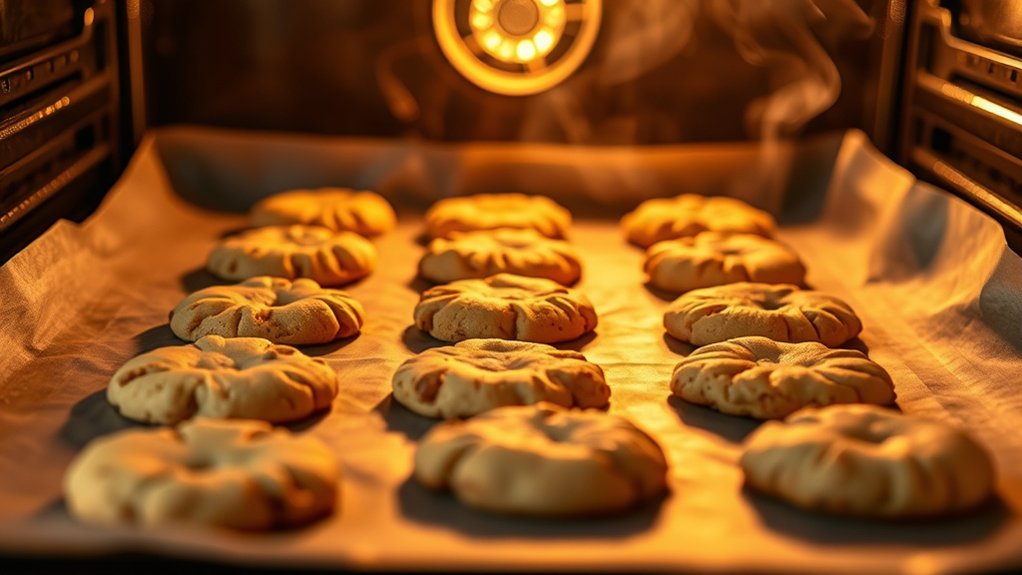
To use parchment paper safely in the oven, cut it so it lies flat on the baking surface, keep it away from exposed heating elements and oven walls, and use it only within the manufacturer’s temperature limit. You should place food on the dull side if the product specifies one, because coating consistency affects release.
For sheet pans, trim excess paper so it doesn’t curl or touch burners, then weigh it down with batter, dough, or a second pan. You can line pans for cookies, roasting, and reheating, but you shouldn’t reuse paper that has browned, become brittle, or absorbed grease.
That degradation lowers cookies durability and increases tearing risk. If your recipe exceeds the paper’s rating, switch to parchment alternatives such as silicone mats or lightly oiled metal. After baking, let the pan cool before lifting food, since hot paper loses stiffness and can shift.
Frequently Asked Questions
Can Parchment Paper Be Used in a Microwave?
Yes, you can use parchment paper in your microwave; you’ll improve parchment paper safety by keeping it dry and uncrumpled.
If you need microwave alternatives, try a microwave-safe plate, lid, or paper towel.
Is Parchment Paper Compostable After Baking?
Yes, you can compost parchment paper after baking if it’s uncoated and free of grease or food residue; that supports parchment compostability.
Check baking parchment safety first, since silicone-coated sheets may not break down well.
Can Parchment Paper Affect Food Flavor?
Yes, you can usually expect no noticeable parchment flavor; the oven impact is minimal if you use food-grade parchment correctly.
If overheated or low-quality, it can impart a faint papery taste or odor.
Should Parchment Paper Be Greased Before Use?
No, you usually don’t need to grease parchment paper; its silicone coating provides release and supports parchment safety.
You’d only add fat if your baking technique requires extra browning, adhesion control, or a recipe specifically says so.
Is Bleached Parchment Paper Safe for Baking?
Yes, you can use bleached parchment for baking; you’ll get good baking safety when you choose food-grade, oven-rated sheets and keep temperatures within the manufacturer’s limit, typically around 420°F to 450°F.
Conclusion
Yes, you can use parchment paper in the oven, but you need to respect the manufacturer’s maximum temperature, usually 425–450°F. For example, if you bake cookies at 400°F on a sheet that fully fits the pan, the paper should stay safe and stable.
If you push past the limit, or let it touch heating elements, it can scorch or fail. Always check the package instructions, and don’t reuse browned or grease-soaked parchment.
In conclusion, parchment paper can be safely used in the oven as long as you follow the temperature guidelines and usage instructions.