How Long to Preheat Oven
Funny enough, if you and your oven hit the same timing, you might think it’s ready in no time, but most ovens need 10 to 15 minutes to preheat.
How long to preheat oven really depends on several factors that can speed up or slow down the process.
Your model, rack position, and door use can all affect preheating time.
You can’t rely on the clock alone, though, because the real difference comes when you know what signal to watch for—and that changes more than you’d expect.
Key Takeaways
- Most ovens need about 10 to 15 minutes to preheat fully.
- Large wall ovens may take 15 to 20 minutes, while toaster ovens can take 5 to 10 minutes.
- Check the oven’s indicator light or display, then allow a few extra minutes for stabilization.
- Avoid opening the door during preheating, because heat loss slows the process.
- Oven type, size, calibration, and insulation all affect how long preheating takes.
How Long Does It Take to Preheat an Oven?
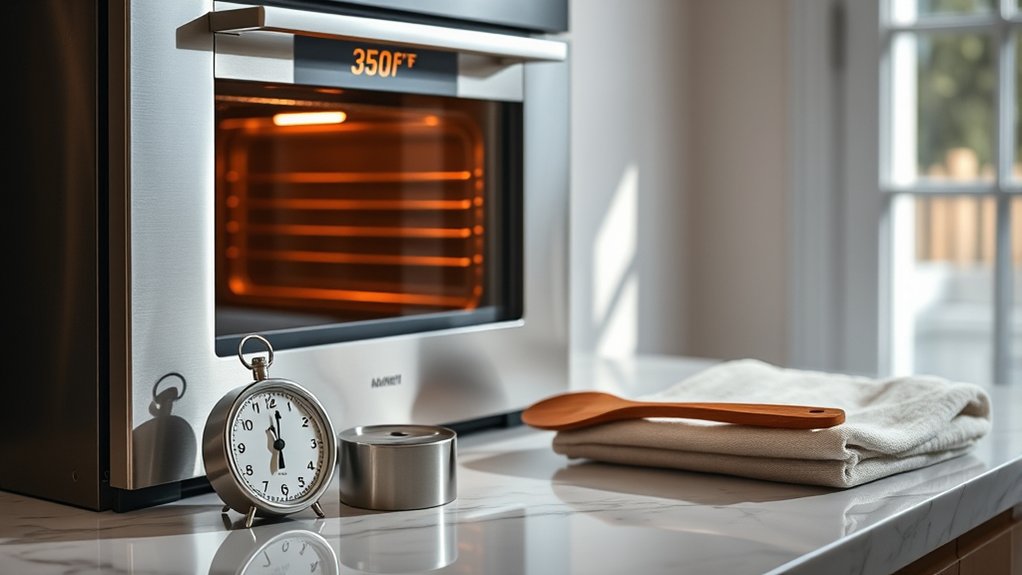
Generally, it takes about 10 to 15 minutes to preheat an oven, but the exact time depends on your oven type, temperature setting, and size. You should plan for this window whenever you bake, roast, or broil, so your food goes in at the right heat.
Most standard ovens need a few extra minutes after the indicator light turns off, so give the cavity time to stabilize. If you’re working with tight kitchen timing, start preheating before you measure ingredients or prepare pans.
Use the rack position you need before heating to avoid opening the door later. For oven safety, keep flammable items away from the appliance and never leave it unattended for long.
You can check readiness with the built-in signal, but avoid frequent door openings because they waste heat and slow the process. When you know your oven’s typical preheat time, you can schedule cooking more accurately and reduce guesswork.
What Changes Oven Preheat Time?
Several factors can make your oven heat up faster or slower, so the 10 to 15 minute estimate isn’t always exact. You should check your oven calibration, because a unit that runs cool or hot changes preheat time.
Insulation quality matters too; better insulation holds heat and shortens the wait. Rack position, oven size, and whether you’re heating a gas or electric model also affect speed.
Keep the door closed while preheating, since every opening lets heat escape and adds time.
| Factor | Effect | What you can do |
|---|---|---|
| Oven calibration | Off temperatures slow heating | Test and adjust settings |
| Insulation quality | Poor insulation loses heat | Service worn seals |
| Oven size | Larger cavities take longer | Allow extra time |
| Fuel type | Gas and electric heat differently | Follow model guidance |
| Door openings | Heat escapes quickly | Avoid opening early |
If your oven seems inconsistent, plan a few extra minutes.
How Do You Know When an Oven Is Ready?
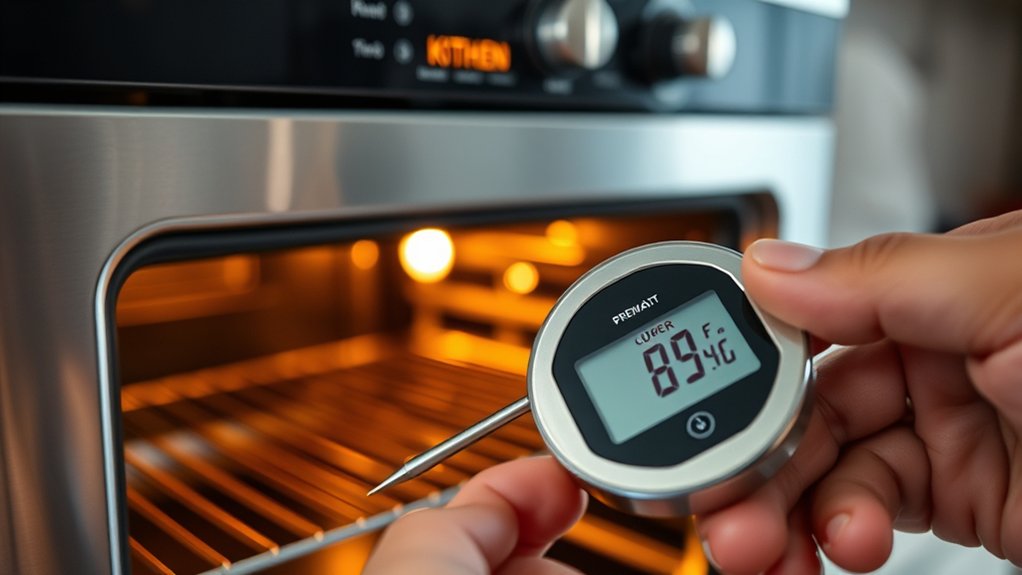
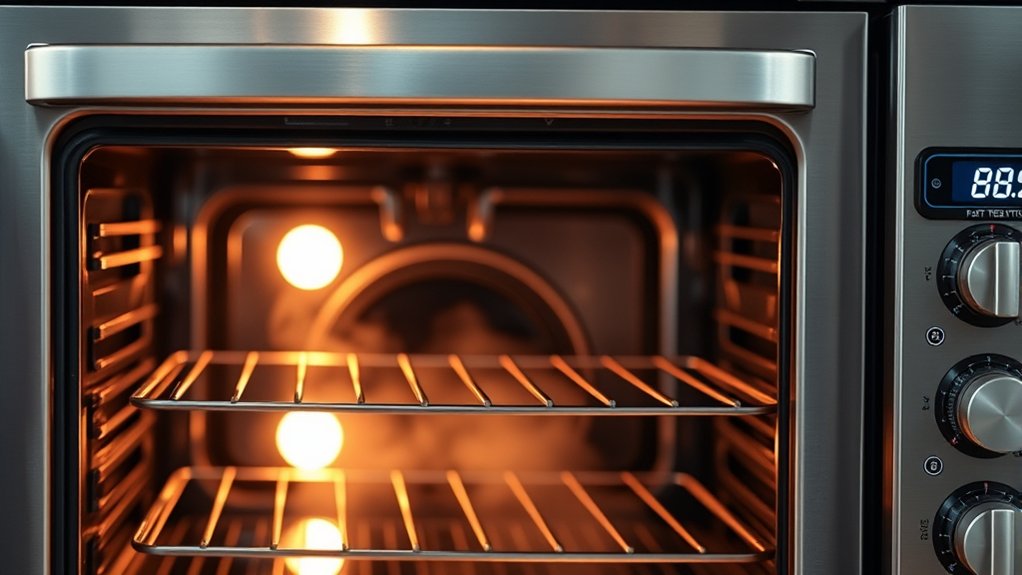
How do you know when your oven is ready? Check the preheat indicator light or display first; when it turns off or signals “ready,” the oven has usually reached temperature. If your oven doesn’t have an indicator, use an oven thermometer placed on the middle rack to confirm the set temperature.
Give the oven a few extra minutes after the signal so heat can spread evenly. Open the door only when needed, because each peek drops the temperature and hurts kitchen timing.
For better oven safety, avoid assuming the outside temperature matches the inside. Look for steady heat, not just a brief spike. If you’re baking, wait until the oven holds the target temperature before loading your food.
You can also test with a small piece of bread or a light dusting of flour, but use this only as a backup. Clear, reliable cues help you cook with confidence and keep results consistent.
How Long Should You Preheat Different Oven Types?
Different ovens don’t need the same warm-up time, so you’ll get better results if you match the wait to the appliance. A standard gas or electric oven usually needs 10 to 15 minutes to reach 350°F, while larger wall ovens may take 15 to 20 minutes.
Convection ovens often heat a bit faster, so start checking around 10 minutes, but still verify the target temperature. Older units can run slow, and that’s where oven calibration matters; if the thermostat is off, add a few extra minutes or test the temperature with an oven thermometer.
For toaster ovens, 5 to 10 minutes is often enough. Dutch ovens and other heavy cookware need preheating too, but only when a recipe calls for it. Track your preheating efficiency by noting how long your oven actually takes, then use that timing for future bakes.
How Can You Preheat an Oven Faster?
If you want to cut preheat time, start with a clean oven and keep the door shut until it reaches temperature. Use these preheating shortcuts to reduce wasted heat and get cooking sooner. Set the oven to the exact temperature you need, then watch the oven temperature indicators instead of guessing.
Remove racks or pans you won’t use; less metal means less heat absorption. Place the rack in its cooking position before turning the oven on. Use convection mode if your model has it; the fan moves heat faster. Preheat only the cavity you’ll use, and skip extra cookware inside.
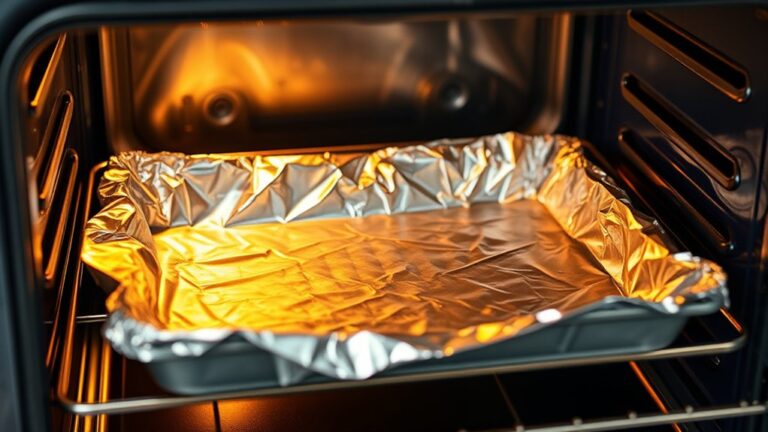
Don’t line the oven floor with foil, because it can block airflow and slow recovery. If your recipe allows, wait until the indicator light cycles off, then give the oven one extra minute for stability. For ovens with a strong preheat signal, trust the light, but verify with an oven thermometer if accuracy matters.
Frequently Asked Questions
Does Preheating Use a Lot of Electricity?
No, preheating usually doesn’t use a lot of electricity if your oven’s oven insulation is decent. You’ll use more preheating energy with older models, but you can cut it by avoiding unnecessary preheating.
Should I Preheat With the Oven Rack Inside?
Yes, you should usually leave the oven rack inside during preheating; it won’t hurt anything and can improve preheating efficiency. You’ll avoid extra heat loss, and the rack’s already hot when you start cooking.
Can I Put Food in Before Preheating Finishes?
No, you shouldn’t. You can put food in only after preheating finishes, unless a recipe says otherwise.
Proper preheating timing helps oven efficiency, so your food cooks evenly and browns correctly.
How Often Should Oven Temperatures Be Calibrated?
You should check your oven’s calibration frequency every 6 months, or sooner if baking seems off. Regular checks keep temperature accuracy steady, so you can catch gentle mischief early and avoid uneven results.
Does Opening the Door Affect Preheating Time?
Yes, opening the door does affect preheating time. You’ll lose heat, reduce preheating efficiency, and extend recovery.
Minimize door opening effects by keeping it closed until the oven reaches temperature, then check quickly.
Conclusion
So, when you preheat your oven, you’re really lighting the small fire that starts your meal’s journey. Most ovens need 10 to 15 minutes, but your model, calibration, and door habits can change that.
Watch the signal, or use an oven thermometer, so you know it’s truly ready. Keep the door closed, and let the heat settle.
When your oven’s warmth is steady, you’re set to cook with confidence and better results. Knowing how long to preheat oven ensures your dishes come out just right every time.