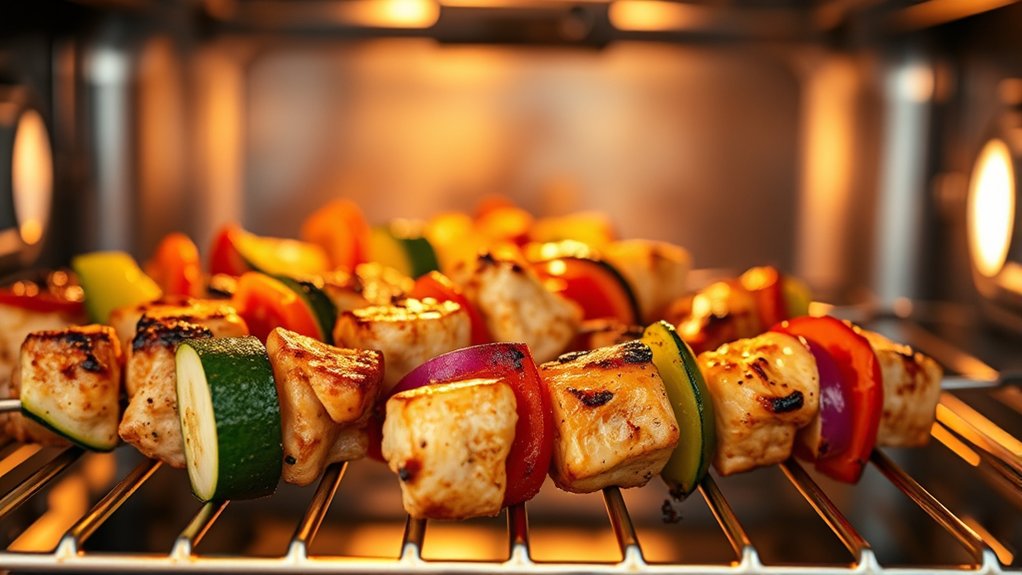
How to Cook Kabobs in the Oven
Cooking kabobs in the oven is straightforward when you size the meat and vegetables evenly, thread them with a little space between pieces, and set them on a foil-lined sheet pan.
You’ll get better browning if you preheat the oven properly, season or marinate the kabobs first, and flip them halfway through baking.
The key is knowing exactly when they’re done, and that part matters more than you might think.
Key Takeaways
- Cut meat and vegetables into even 1- to 1.5-inch pieces for uniform cooking and browning.
- Marinate meat at least 30 minutes, but keep the marinade light to avoid toughening; vegetables need only 15–20 minutes.
- Thread ingredients snugly on soaked skewers, then arrange kabobs in a single layer on a foil-lined sheet pan.
- Bake at 425°F for beef, lamb, or mixed kabobs, and 400–425°F for chicken and vegetables; flip halfway through cooking.
- Check doneness with an instant-read thermometer, then rest kabobs 5 minutes before serving.
Best Meat and Veggie Combos
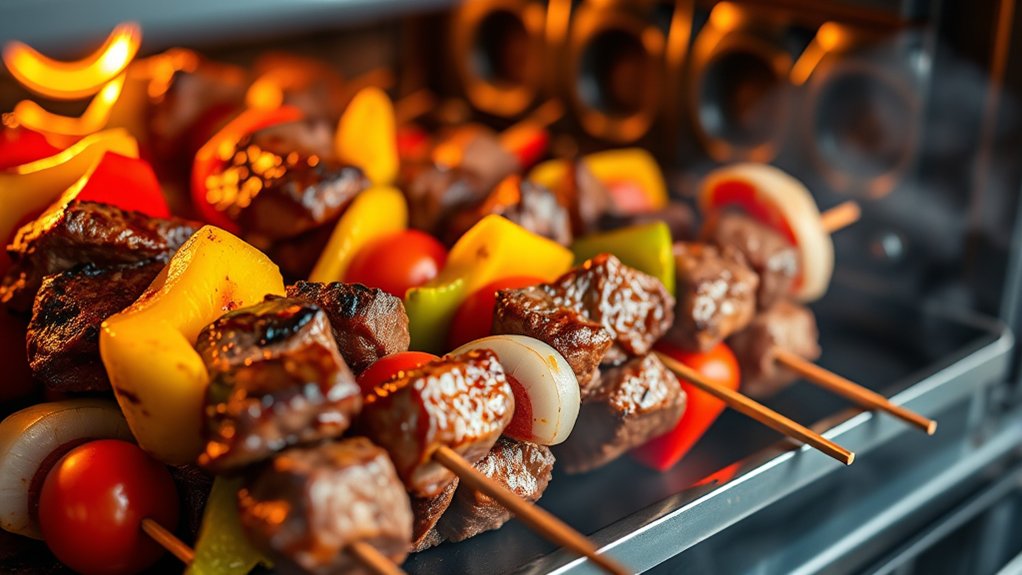
For the best oven kabobs, pair meats and vegetables that cook at a similar rate so everything finishes evenly. Choose tender beef cubes with mushrooms, onions, and bell peppers; their firm texture matches well in the oven.
Pair tender beef cubes with mushrooms, onions, and bell peppers for evenly cooked, flavorful oven kabobs.
Chicken works nicely with zucchini, cherry tomatoes, and red onion, which soften without turning mushy. Pork pairs well with pineapple, peppers, and yellow squash for a balanced mix of sweet and savory.
Shrimp cooks fast, so combine it with quick-cooking veggie combos like thin peppers, scallions, and small tomatoes. If you want meat pairings that stay juicy, favor cuts with enough fat, such as sirloin, thigh meat, or pork shoulder.
Cut vegetables into similar sizes so the kabobs brown at the same pace. Avoid mixing dense root vegetables with delicate meats unless you par-cook them. Build each skewer with one protein and two or three vegetables, then rotate your choices for variety and color.
How to Prep Kabobs for the Oven
Start by soaking wooden skewers in water for at least 30 minutes, or use metal skewers if you want to skip that step. For smart oven prep, cut your meat and vegetables into even 1- to 1.5-inch pieces so they cook at the same rate.
Pat everything dry with paper towels; excess moisture can prevent browning. Thread the pieces snugly, but don’t pack them so tightly that heat can’t move around them. Leave a small gap between each piece for better airflow and cleaner edges.
| Prep step | Why it helps |
|---|---|
| Soak skewers | Helps prevent burning |
| Dry ingredients | Promotes browning |
| Even cuts | Ensures consistent cooking |
| Space pieces | Improves heat circulation |
Choose two word ideas like bell peppers or red onion for color and structure. Place assembled kabobs on a foil-lined sheet pan, then lightly brush the pan or rack with oil so they release easily after roasting.
Easy Marinades for Oven-Baked Kabobs
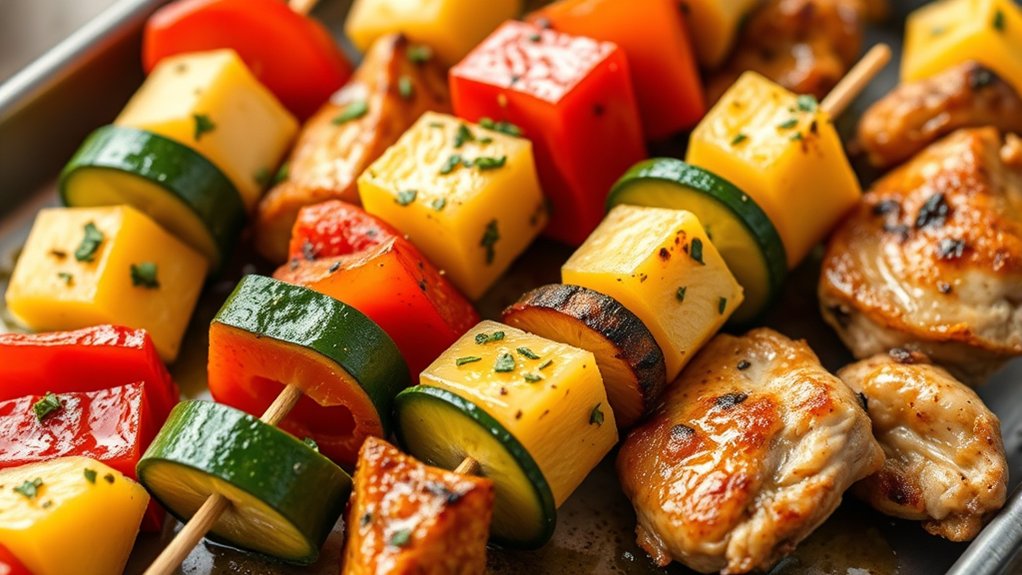
A simple marinade can make oven-baked kabobs taste bright, juicy, and well-seasoned, even after high heat. For an easy marinade, whisk 3 tablespoons olive oil, 2 tablespoons lemon juice, 1 tablespoon soy sauce, 2 minced garlic cloves, and 1 teaspoon honey.
Add pepper and dried herbs, then toss the kabobs so every piece gets coated. If you’re using chicken, beef, or lamb, marinate for at least 30 minutes; for vegetables, 15 to 20 minutes is enough.
Keep the mixture light, because too much acid can toughen meat during an oven bake. You can also use yogurt, mustard, or barbecue sauce as the base, depending on the flavor you want.
After marinating, let excess drip off before you thread or bake the kabobs so they brown instead of steaming. Always refrigerate while they soak, and discard any leftover marinade that touched raw meat.
How to Season Kabobs for Big Flavor
Seasoning kabobs well means building flavor in layers, not just adding salt at the end. Start with a dry rub that includes salt, black pepper, garlic powder, onion powder, paprika, and cumin. These seasoning blends coat the meat evenly and help each bite taste complete.
Season kabobs in layers with a bold dry rub of salt, pepper, garlic, paprika, and cumin.
If you want more depth, add flavor boosters like lemon zest, chili flakes, dried oregano, or a pinch of brown sugar. Rub the seasoning on all sides so it sticks before cooking.
Season the protein first, then let it rest for 15 minutes. Toss vegetables with a lighter hand so they don’t overpower the kabobs. Finish with a final pinch of salt or herbs after baking.
Taste your mixture before using it if it’s a sauce-based marinade. Keep the balance sharp, savory, and slightly sweet, and you’ll get kabobs that taste bold without needing extra sauce.
Set Up Kabobs on a Sheet Pan
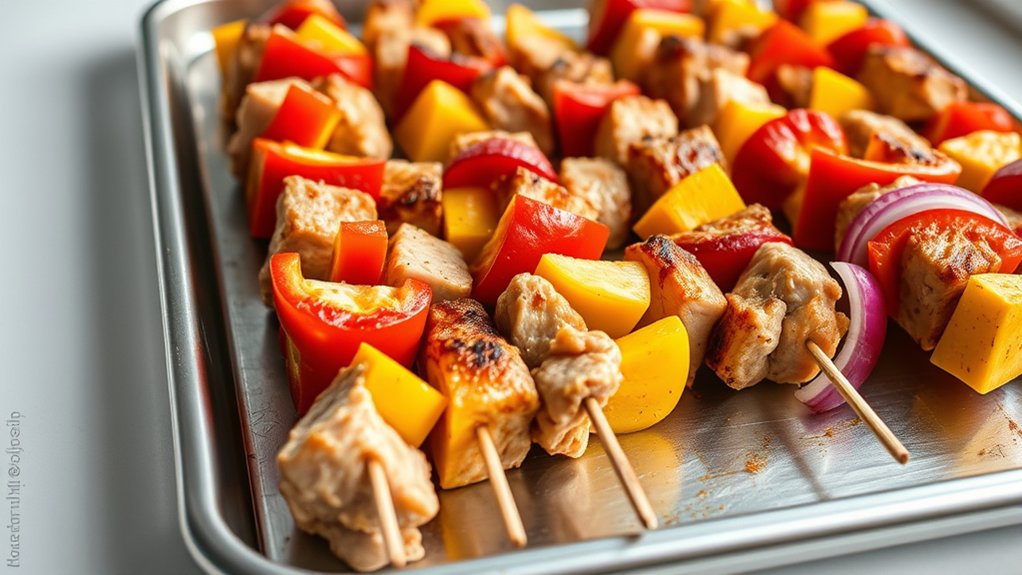
Line your sheet pan with foil to make cleanup easier and help catch any drips from the kabobs. Arrange the skewers evenly on the pan so they don’t touch, which lets heat circulate and cook them more uniformly.
Keep a little space around each skewer, and you’ll help the vegetables and meat roast instead of steam.
Arrange Skewers Evenly
How do you keep oven kabobs cooking evenly? Arrange each skewer with steady skewer spacing so hot air can circulate around every side. Lay the kabobs in a single layer on the sheet pan, and don’t let the sticks touch. This setup mimics a grill vs oven comparison by helping you avoid crowded spots that trap heat and slow browning.
- Space skewers 1 to 2 inches apart.
- Keep meat, vegetables, and fruit aligned for even exposure.
- Rotate the pan once during cooking if your oven heats unevenly.
You’ll get better color and more consistent doneness when you place each kabob with care. Even spacing also makes turning easier, so you can cook efficiently without shifting ingredients or tearing food.
Use Foil-Lined Pan
Why use a foil-lined sheet pan for oven kabobs? You make cleanup faster and protect the pan from drips, sugars, and marinade that can scorch.
Line a rimmed sheet pan with heavy-duty foil, then lightly coat it with oil or cooking spray so the kabobs won’t stick. Set the skewers on the pan in a single layer, leaving space between each one.
That spacing supports even heat distribution, so the meat and vegetables cook evenly instead of steaming. If your skewers are long, position them diagonally or trim them to fit without crowding.
These foil pan benefits help you roast kabobs cleanly and efficiently, while still letting hot air circulate around every side for better browning.
Oven Temperatures for Different Kabobs
For beef and lamb kabobs, you should roast them at 425°F so they brown well while staying juicy inside.
For chicken and veggie kabobs, use the same 425°F oven, but check chicken for an internal temperature of 165°F and cook the vegetables until they’re crisp-tender.
If your kabobs vary in size or density, adjust the timing slightly, but keep the oven hot for even cooking.
Beef And Lamb Temps
When you’re cooking beef or lamb kabobs in the oven, the right temperature depends on both the meat and your doneness goal. For beef temperatures, roast kabobs at 425°F for a hot, fast cook that browns the outside while keeping the center juicy.
For medium-rare, pull them at 130°F; for medium, aim for 140°F. For lamb temperatures, use the same oven setting and target 135°F for medium-rare or 145°F for medium. Always check the thickest piece with an instant-read thermometer.
- Let the kabobs rest 5 minutes before serving.
- Rotate the skewers once for even color.
- Keep pieces similar in size so they cook evenly.
Chicken And Veggie Temps
Chicken and veggie kabobs do best in a 400°F to 425°F oven, which gives the chicken time to cook through without drying out and helps the vegetables brown nicely. For tender chicken, aim for an internal temperature of 165°F in the thickest piece, and check several cubes since sizes can vary.
If you use peppers, onions, zucchini, or mushrooms, this heat range keeps veggie textures crisp-tender instead of mushy. Rotate the skewers halfway through baking so each side cooks evenly and gets light caramelization.
If your chicken pieces are larger, start at 425°F, then reduce the heat slightly if the vegetables darken too quickly. Let the kabobs rest for 3 minutes before serving so the juices settle and the meat stays moist.
How to Cook Kabobs in the Oven
Cooking kabobs in the oven is a simple way to get juicy, evenly cooked skewers without firing up the grill. Preheat your oven to 425°F and line a rimmed baking sheet with foil for easy cleanup. Use steady knife skills to cut meat and vegetables into uniform pieces so they cook at the same rate.
Juicy oven kabobs come together easily with evenly cut ingredients, simple prep, and a hot 425°F bake.
Thread them onto soaked wooden or metal skewers, leaving small gaps for heat circulation. Arrange the kabobs on the sheet in a single layer.
Place the pan on the center rack for balanced heat. Use cooking timing as your guide: chicken often needs 15 to 20 minutes. Check for doneness with a thermometer, not guesswork.
Slide the kabobs out when the meat reaches a safe internal temperature and the vegetables look tender. Let them rest briefly before serving so the juices stay locked in.
Flip Kabobs for Even Browning
Flip the kabobs halfway through cooking so each side gets direct contact with the oven’s heat. This helps the meat and vegetables brown evenly on all sides instead of only on the top.
Keep the rotation steady so every kabob gets the same heat exposure and cooks consistently.
Turning At Halfway Point
About halfway through the baking time, turn each kabob so the other side can brown evenly and cook through at the same rate. Use tongs, not a fork, so you don’t loosen the meat or vegetables. Check that the skewers stay aligned on the pan, then adjust them for safe tip rotation and better pan safety.
Work quickly to keep the oven hot and the cooking steady.
Lift one kabob at a time and flip it gently. Return it to the same spot on the sheet. Close the oven promptly to hold the heat.
If any piece looks darker, move it toward the center of the pan next time you turn. This simple halfway turn helps you cook kabobs consistently and prevents uneven spots.
Browning All Sides
Once you’ve turned the kabobs halfway through, keep watching for even browning on every side. Use tongs to rotate each skewer a quarter turn whenever the exposed surface starts to deepen in color. This helps you build savory browning without scorching one edge.
| Sign | Action |
|---|---|
| Pale spots | Rotate sooner |
| Deep golden edges | Check the opposite side |
| Dark char | Move the kabob immediately |
Keep the pieces spaced so each face can meet the oven’s heat and develop even caramelization. If one side browns faster, move that skewer to a different rack position and continue turning.
Stop when the meat and vegetables show a uniform, appetizing color and the exterior looks lightly crisp.
Even Heat Exposure
To keep kabobs cooking evenly in the oven, rotate each skewer so every side gets direct heat exposure at least once. Use tongs to turn them halfway through roasting, then again near the end if one side still looks pale. This simple step helps you maintain even heat and prevents overbrowning on the edges while the centers finish cooking.
Your skewering technique also matters: leave a little space between pieces so hot air can move around each ingredient.
- Turn the kabobs on a timer, not by guesswork.
- Watch for color changes, especially on thicker cuts.
- Move skewers closer to the top element only if browning is slow.
When you flip consistently, you get balanced color, better texture, and more predictable results.
Check Kabob Doneness the Right Way
How do you know when your kabobs are done? Start with doneness verification at the thickest piece on each skewer. Insert an instant-read thermometer into the center, avoiding bone and touching the pan. For chicken, aim for 165°F; for ground meats, 160°F; for beef, pork, and lamb, 145°F with a brief rest.
Cut into one large piece only if you don’t have a thermometer, and check that the juices run clear and the center looks opaque, not glossy or pink. If you used oven safe skewers, you can leave them in place while checking, but handle them carefully because they’ll be hot.
Rotate the kabobs visually during the final minutes so you can spot uneven browning and judge whether any section needs a little more time. Let the temperature reading guide you, not the color alone, since marinades can darken quickly and hide undercooked meat.
How to Serve Oven-Baked Kabobs
Let the kabobs rest for 5 minutes, then slide them off the skewers onto a warm platter so the juices stay in the meat. Arrange the pieces in neat rows, and spoon any pan juices over the top for extra flavor.
Let the kabobs rest, then slide them onto a warm platter and spoon the juices over top.
Serve them with an oven-served pairing like rice, flatbread, roasted vegetables, or a crisp salad, depending on your menu. Keep sauces nearby so guests can add them without masking the seasoning.
If you want two-word discussion ideas, use simple prompts like “best sides” or “spice level” while everyone eats.
- Garnish with chopped herbs, lemon wedges, or sesame seeds for color.
- Set out tongs and small plates so serving stays tidy.
- Use quick cleanup tips by lining the table with parchment or placing scraps in a bowl right away.
Serve the kabobs hot, and refill sides before the platter empties.
Frequently Asked Questions
Can I Use Frozen Kabob Ingredients?
Yes, you can use frozen kabob ingredients, but you should fully thaw them first. Plan enough thawing time in the refrigerator so you cook evenly, avoid excess moisture, and keep your kabobs safe and flavorful.
Do Wooden Skewers Need Soaking Before Oven Use?
Yes, you should soak wooden skewers if you’re using high heat; it helps prevent scorching. For oven use, you can also choose oven safe alternatives like metal skewers, which won’t burn or split.
Can I Cook Kabobs Without Skewers?
Yes, you can cook kabobs without skewers. You can substitute metal skewers or use alternative cooking tools like a foil-lined baking sheet, wire rack, or broiler pan to keep pieces spaced and cooking evenly.
What Vegetables Cook Fastest on Kabobs?
Cherry tomatoes, mushrooms, zucchini, and bell pepper pieces cook fastest on kabobs. For best vegetable timing, cut them small and evenly.
If you’re using skewer alternatives, keep sizes uniform so they roast at the same rate.
How Do I Store Leftover Oven-Baked Kabobs?
Store leftovers in shallow airtight containers, then refrigerate within two hours. Separate skewers if needed.
For reheating tips, warm them covered in a 325°F oven until hot. Is that correct? You’ve got it.
Conclusion
Now you know how to cook kabobs in the oven: choose even pieces, season or marinate them, thread them with care, and bake them on a foil-lined sheet pan until they’re tender and safe to eat. Flip them halfway for that golden finish, then rest them before serving.
Simple, right? With a little prep, you turn basic ingredients into sizzling, juicy kabobs that taste like a summer grill, no grill required.
By following these steps, you can easily enjoy delicious, perfectly cooked kabobs in the oven anytime.