Does Microwave Ovens Kill Nutrients
You might assume microwave ovens kill nutrients, but the evidence doesn’t support that idea.
When it comes to microwave ovens killing nutrients, what matters more is how long you cook the food, how much water you use, and whether you overheat it.
Because microwaves usually cook faster and need less water, they can preserve more vitamin C and B vitamins than boiling.
The bigger question is how you use the microwave, and that changes everything.
Key Takeaways
- Microwaves do not automatically kill nutrients; quick cooking often preserves more vitamins than longer methods.
- Heat-sensitive nutrients like vitamin C, folate, and some B vitamins can decline with prolonged cooking.
- Using minimal water and covering food helps reduce nutrient loss during microwaving.
- Cook food only until done, since overcooking causes more nutrient degradation than the microwave itself.
- Uneven heating mainly affects texture and safety, not overall nutrient content, and stirring helps improve it.
Do Microwaves Kill Nutrients?
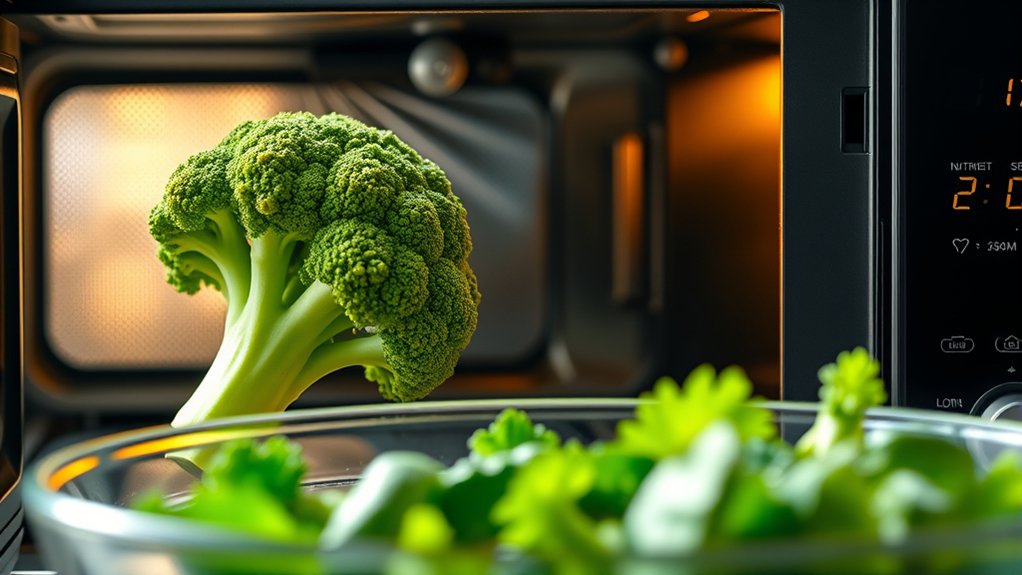
Not necessarily. Microwaves do not automatically “kill” nutrients. When you use them properly, you can often preserve nutrient retention better than with longer cooking methods because you heat food quickly and use less water.
That matters for vegetables, grains, and leftovers, where heat and water can cause losses over time. You should still pay attention to microwave safety: use microwave-safe containers, cover food to trap steam, and stir or rotate items so they heat evenly.
Uneven heating doesn’t just affect texture; it can also lead you to overcook portions unnecessarily. Your goal is simple: cook food just until it’s done, not beyond. If you choose short cooking times, minimal water, and prompt serving, you’ll usually keep more of the food’s original quality.
What Happens to Vitamins in a Microwave?
- You’ll usually retain more vitamins when you cook food quickly.
- You’ll limit loss when you use minimal water.
- You’ll protect nutrients by covering food and reducing steam escape.
- You’ll keep quality higher when you avoid overcooking.
In practice, you can preserve more vitamins in microwaved foods than in boiled foods, because water-soluble vitamins can leach into cooking water. So, if you’re heating vegetables, soups, or leftovers, use short intervals and stop as soon as the food’s hot. Microwaving doesn’t destroy vitamins automatically; your method controls the result.
Which Nutrients Are Most Sensitive to Heat?
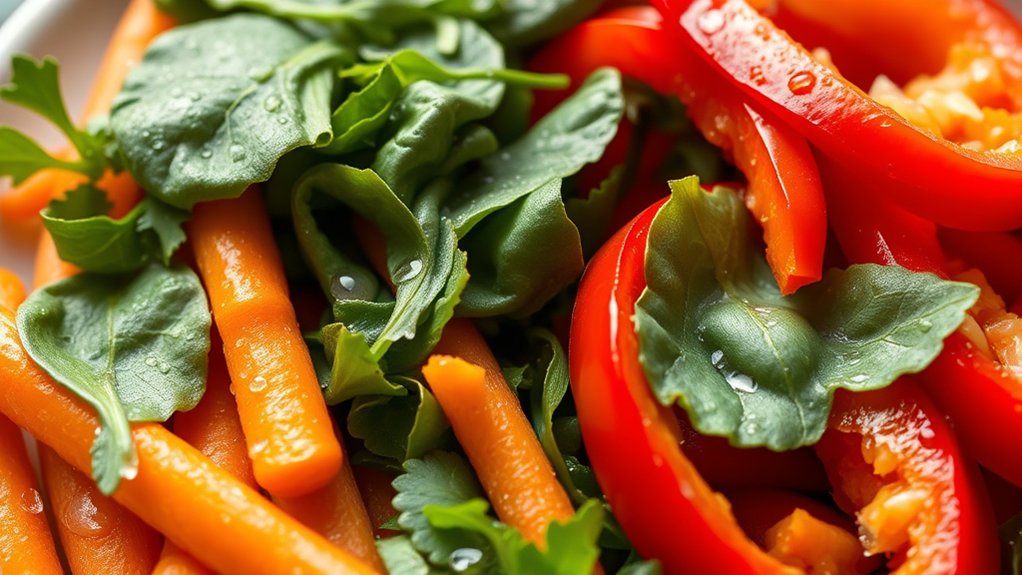
Heat-sensitive nutrients are usually the ones that break down fastest during cooking, especially vitamin C, folate, and some B vitamins. You should expect these nutrients to show the biggest losses when food sits in heat for long periods.
Heat-sensitive nutrients, especially vitamin C, folate, and B vitamins, are the first to decline during cooking.
Vitamin C is particularly vulnerable because it oxidizes easily, while folate and thiamin also decline with prolonged exposure. Riboflavin and vitamin B6 can be affected too, though their nutrient stability varies by food and conditions.
You can reduce losses by limiting cooking time, using only the heat needed, and avoiding unnecessary holding after cooking. The food’s moisture, acidity, and surface area also influence how quickly nutrients degrade.
Since different foods react differently, you won’t get the same result from every vegetable, grain, or protein. In practice, the most heat-sensitive nutrients are the water-soluble ones, so shorter, gentler cooking usually preserves more of them.
How Microwaving Compares With Boiling and Baking
When you compare cooking methods, microwaving often preserves nutrients as well as or better than boiling and baking, mainly because it uses shorter cooking times and less water. You can use this advantage for vegetables, grains, and leftovers without assuming the appliance destroys food value. Evidence shows that boiling can leach water-soluble nutrients into the cooking water, while baking may expose food to longer heat. Microwaving usually limits both losses and moisture escape.
- Less nutrient loss in water: You don’t need large volumes of water.
- More consistent heating: You can reduce overcooked edges.
- Practical for daily meals: You keep nutrient preservation simple.
- Myth check: Microwave myths often exaggerate damage without evidence.
If you want a balanced approach, choose the method that best fits the food, texture, and your routine.
Why Shorter Cooking Times Preserve Nutrients
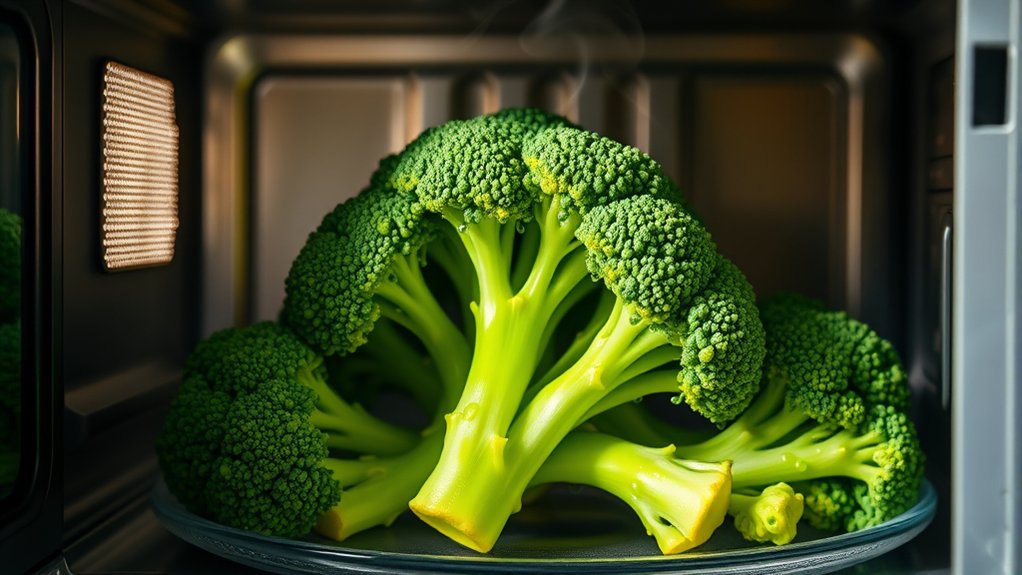
Shorter cooking times help preserve nutrients because heat has less time to break down sensitive compounds, especially water-soluble vitamins like vitamin C and some B vitamins. When you use brief heating, you limit nutrient loss from prolonged exposure to high temperatures.
That’s why nutrient timing matters: the less time food spends hot, the more likely it is to retain measurable nutrients. For microwave safety, short cooking periods also help you avoid overheating, which can further degrade delicate compounds.
| Factor | Effect on nutrients | Practical impact |
|---|---|---|
| Short heat exposure | Less vitamin breakdown | Better retention |
| Lower total cook time | Reduced oxidation | More stable food quality |
| Controlled heating | Less overcooking | Improved nutrient timing |
You can think of it as a trade-off: the goal isn’t zero loss, but less loss. With efficient cooking, you preserve more of what makes your food nutritionally valuable.
How to Microwave Without Losing Nutrients
To microwave without losing nutrients, you should use the smallest amount of water, cover the food to trap steam, and cook it only until it’s done. This approach supports nutrient preservation because less heat exposure and less leaching help retain vitamins better.
You can also reduce cooking times by cutting food into even pieces, which lets heat distribute faster and more evenly.
- Use a microwave-safe lid or vented cover.
- Add just enough water to create steam.
- Stir or rotate food halfway through.
- Let food stand briefly after cooking.
You should check doneness early, because overcooking degrades sensitive nutrients and dries food out. If your microwave has variable power, choose a lower setting for thicker foods and keep a close eye on cooking times. Small adjustments like these make microwaving a practical, evidence-based way to prepare meals while protecting quality.
Foods That Hold Up Best in the Microwave
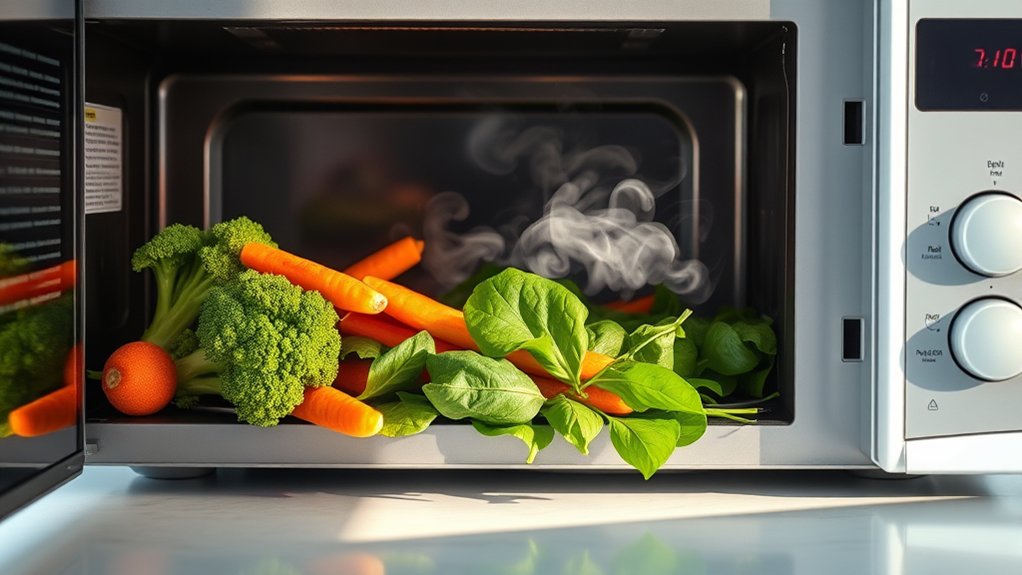
Some foods handle microwave cooking better than others, especially when you use minimal water and stop as soon as they’re heated through. You’ll usually get the best results with vegetables, especially broccoli, carrots, spinach, and green beans, because quick heating supports micronutrient preservation and limits leaching.
Potatoes also do well when you pierce them first and cook them until just tender. Grains like rice, quinoa, and oatmeal reheat reliably, though you should add only enough liquid to prevent drying.
Eggs can work too, if you cook them in short bursts and stir or pause often to avoid tough texture impacts. Fruit such as apples or berries softens quickly and keeps its flavor.
Lean proteins, including fish and chicken, reheat best when covered and checked often so they don’t overcook. In general, choose foods with high moisture and short cook times; they’re more forgiving, more even, and less likely to lose quality.
Common Myths About Microwave Nutrient Loss
You might hear that microwaves destroy all nutrients, but evidence shows they mainly cause the same nutrient losses as other cooking methods, especially when you overcook food.
Uneven heating can affect quality and safety, yet it doesn’t automatically mean your meal loses its nutrients. You should also avoid the myth that plastic containers always cause nutrient loss; the real concern is using microwave-safe materials to prevent chemical leaching.
Microwaves Destroy All Nutrients
Microwaves do not destroy all nutrients; that common myth overstates the effect of cooking. For myth debunking, you should start with nutrient basics: heat can reduce some vitamins, but all cooking methods do this to some degree.
Microwaving often uses less water and shorter times, which can help preserve vitamin C and folate better than boiling. Use these quick points to judge claims:
- Nutrient loss depends on time and temperature.
- Water-soluble vitamins are the most vulnerable.
- Short cooking usually limits damage.
- Proper storage matters before you cook.
You don’t need to fear microwaves as a nutrient killer. Instead, focus on sensible cooking habits, and you’ll keep more of the food’s natural value.
Uneven Heating Ruins Food
Uneven heating is another common complaint, but it doesn’t mean microwaves automatically ruin food or strip away nutrients. You may notice hot spots and cooler areas, especially in dense foods, yet that’s a texture and safety issue more than a nutrient preservation problem.
Microwaving often uses less water and shorter cooking times than boiling, so it can actually help preserve vitamins that break down with heat and leaching. You can reduce uneven heating by stirring, rotating, covering, and letting food stand briefly after cooking.
These steps improve temperature distribution without changing the basic nutritional value. So, while uneven heating can affect how evenly your meal feels, it doesn’t support the myth that microwaves inherently damage food quality.
Plastic Containers Cause Loss
Do plastic containers make microwaved food lose nutrients? The evidence says no. Your food’s nutrient content depends mostly on heat, time, and added water, not the container itself. Some controversial claims suggest plastic causes extra loss, but that’s one of the common nutrient myths.
If you use microwave-safe plastic, you’re mainly protecting food from spills and overheating, not stripping vitamins.
- Choose containers labeled microwave-safe.
- Avoid heating food in damaged plastic.
- Don’t use old or nonfood-grade containers.
- Follow the food’s recommended heating time.
You should still watch for melting, warping, or chemical transfer from unsuitable plastics. That’s a safety issue, not proof that microwaving with plastic destroys nutrients.
Frequently Asked Questions
Can Microwave Containers Affect Nutrient Retention?
Yes, you can affect nutrient preservation if you use unsafe microwave containers. Choose microwave safety-rated glass or ceramic, avoid damaged plastic, and you’ll minimize chemical leaching and help retain nutrients during reheating.
Does Reheating Food in Microwaves Reduce Nutrients?
No, you usually won’t lose many nutrients when you reheat food in microwaves; one study found vitamin C losses matched stovetop heating. You’ll also challenge nutrient myths and spark discussion ideas with evidence-based choices.
Are Microwaved Frozen Vegetables Less Nutritious?
No, your microwaved frozen vegetables usually keep most nutrients, and they’re often better than overcooked fresh ones.
You’ll lose more from boiling than microwaving. Don’t buy microwave myths; freezer nutrients stay largely intact with quick cooking.
Does Microwave Power Level Change Nutrient Loss?
Yes, you’ll usually preserve more nutrients at lower power with shorter cooking times because you reduce overheating, but fat loss isn’t the goal here.
You’ll optimize nutrient preservation by limiting added water and total exposure.
Can Microwaves Destroy Antioxidants in Food?
Like a careful breeze, you’ll find microwaves can affect some antioxidants, but they don’t automatically destroy them. Antioxidant stability depends on time, heat, and moisture, and microwaving often preserves nutrient retention better than boiling.
Conclusion
Microwaves don’t kill nutrients; overcooking does. When you use short cook times, little water, and even heating, you help protect vitamin C, B vitamins, and other sensitive nutrients.
In fact, microwaving can preserve more nutrients than boiling because it’s quicker and less water-intensive. So, don’t fear the microwave—you can use it like a precision tool, not a nutrient wrecking ball.
By using the microwave oven properly, you can still serve food that’s healthy, safe, and satisfying. Microwave ovens do not kill nutrients when used correctly.