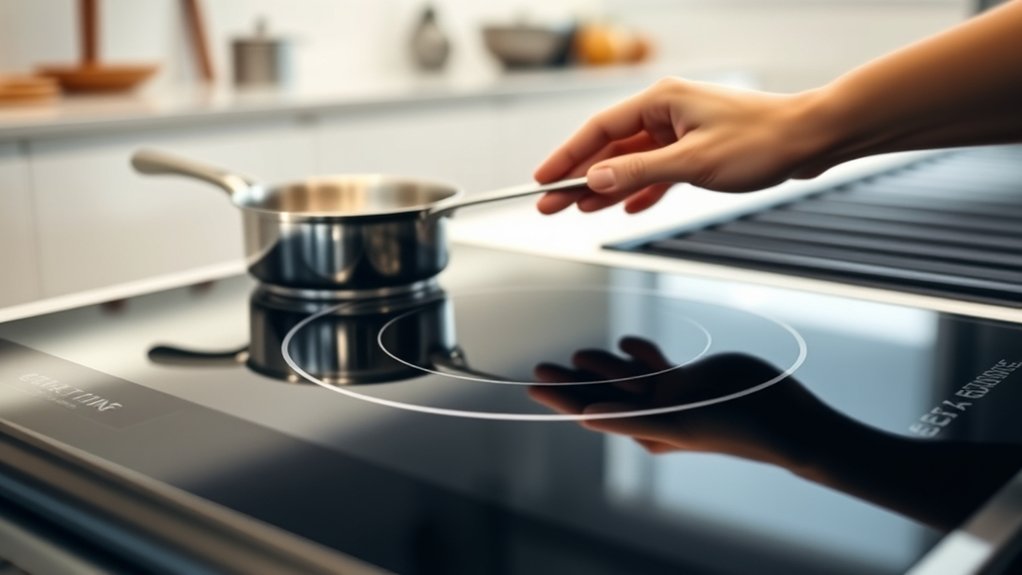
What Is an Induction Oven
Nearly 90% of the energy in an induction oven system can go straight into the pan, which is why you’ll notice fast, exact heat control. You use magnetic cookware, and the cooktop creates heat in the cookware itself rather than the surface.
That changes safety, cleanup, and performance in ways that aren’t always obvious at first. Before you choose one, it helps to know what works, what doesn’t, and why it matters.
Key Takeaways
- An induction oven heats cookware directly using electromagnetic induction rather than heating the cooktop surface.
- Alternating electromagnetic fields create currents in ferromagnetic cookware, generating heat inside the pan itself.
- It heats quickly, responds instantly to power changes, and offers precise temperature control.
- The cooktop surface stays relatively cool, though cookware can still remain hot after cooking.
- It requires magnetic, flat-bottomed cookware and may not work with nonmagnetic pans like aluminum or copper.
What Is an Induction Oven?
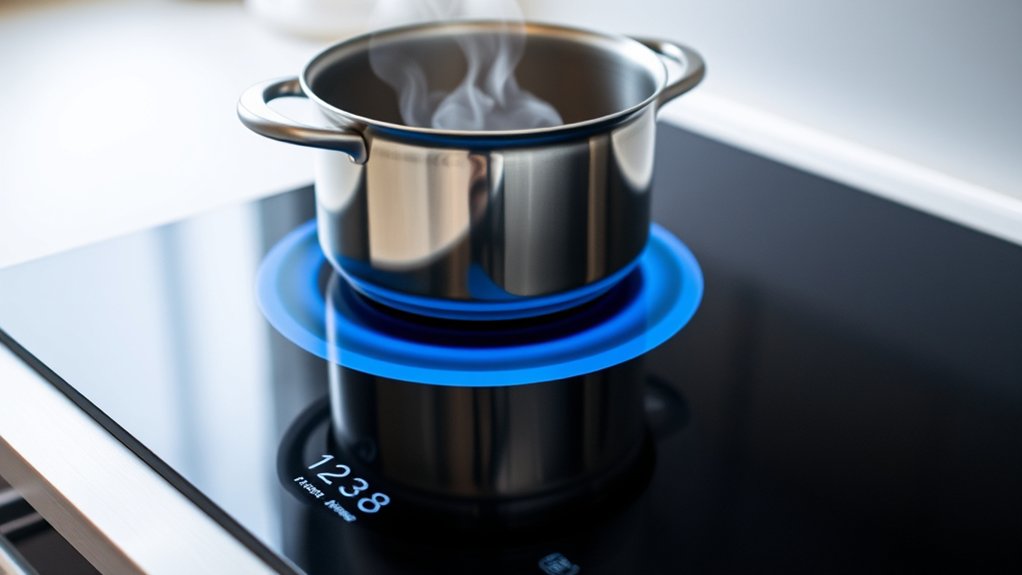
An induction oven is a cooking appliance that uses electromagnetic induction to heat cookware directly rather than warming the cooktop surface first. You place a ferromagnetic pan on the cooking zone, and a changing magnetic field induces electrical currents in the pan base.
Those currents generate heat inside the cookware, so you get rapid, controlled temperature response. The oven’s controls regulate power electronically, which helps you set precise cooking levels and maintain them consistently.
Because the surface itself stays relatively cool, you can clean it more easily after spills. When you read induction myths, you may find claims that the technology is complicated or fragile, but the core mechanism is straightforward.
If you’re evaluating price comparisons, focus on appliance features, installation requirements, and cookware compatibility, since those factors affect total cost. In practical terms, an induction oven combines efficient energy transfer with exact control, giving you a modern cooking system built around direct heat delivery.
How Induction Ovens Compare to Gas and Electric
When you compare induction ovens with gas and standard electric models, you’ll notice they heat cookware faster because electromagnetic energy transfers directly to the pan. You’ll also see higher energy efficiency, since less heat escapes into the surrounding air.
For temperature control, induction usually responds more precisely and quickly, which helps you maintain stable cooking conditions.
Heating Speed
How fast does an induction oven heat compared with gas and electric models? You’ll notice near-instant response because induction coils create heat directly in the cookware, so the surface doesn’t wait to warm first.
In heating science, that direct coupling explains why boil times are usually shorter than with gas and much shorter than with standard electric resistance elements. You also get fast temperature changes when you lower power, which helps you control simmering and searing with precision.
Some induction myths claim the speed is only a marketing trick, but the physics is straightforward. Gas still feels responsive, yet it transfers heat through a flame and pan bottom, which adds delay. Electric coils heat more slowly because the element must warm before your pan does.
Energy Efficiency
That same direct heating also affects energy use. You lose less heat to the room than with gas, so more of the input power reaches the cookware.
Compared with a resistance electric coil, induction usually transfers energy more efficiently because the pan itself becomes the heat source, not the cooktop surface. You can expect lower standby losses and less wasted thermal radiation, which matters in high-use kitchens.
Gas systems still offer fuel flexibility, but they vent a large share of heat around the pan and into the air. Your actual savings depend on pan material, wattage, and runtime.
In many regions, energy policy favors induction because it reduces onsite combustion and aligns with stricter electrical codes for modern installations.
Temperature Control
Temperature control is one of induction’s strongest advantages, because the cooktop responds almost instantly when you change the power setting. You get fine, repeatable control, so sauces, chocolate, and simmering stocks stay stable.
Gas offers visible flame changes, but heat lags in the pan. Electric coils and radiant tops react slower still, so you often overshoot your target. Induction also supports induction safety, since the surface stays cooler than the cookware.
Your results depend on cookware material, because magnetic pans transfer energy efficiently while incompatible pots won’t heat.
| Range | Behavior |
|---|---|
| Low | Gentle simmer |
| Medium | Steady boil |
| High | Rapid sear |
| Boost | Quick response |
| Off | Immediate stop |
How an Induction Oven Heats Cookware
When you use an induction oven, it sends an alternating electromagnetic field into the cookware, which induces electrical currents in the metal and produces heat directly in the pan.
You’ll need cookware with a magnetic base, since noncompatible materials won’t couple effectively with the field. This direct heating method delivers fast heat transfer, so the cookware reaches target temperature quickly and with less energy loss.
Electromagnetic Heating
An induction oven heats cookware through a changing electromagnetic field rather than by warming the air around it. You place magnetic cookware on the glass surface, and the coil beneath it generates an alternating field that induces electrical currents in the metal base.
Those currents meet resistance and convert directly into heat at the pan, so energy transfer stays efficient. For induction safety, the cooktop itself remains comparatively cool, though residual heat can still rise from the cookware.
- Field oscillation drives current.
- Electrical resistance produces heat.
- Heat moves from pan to food.
You get fast response, precise control, and less wasted energy because the heating occurs where the metal absorbs the field.
Cookware Compatibility
For induction cooking, you need cookware with a magnetic base, because the cooktop’s field only couples effectively to ferromagnetic metals such as cast iron and many stainless steels. You can verify induction compatibility with a magnet: if it sticks firmly to the bottom, your pan should work.
Nonmagnetic aluminum, copper, glass, and most ceramic vessels won’t respond unless a magnetic layer is bonded to the base. You should also inspect the contact surface for flatness, since uneven bottoms can reduce coupling.
Cookware durability matters too, because repeated thermal cycling can stress thin or warped pieces. Choose pans with a stable base and a continuous ferromagnetic layer so the oven can energize the vessel reliably and maintain consistent performance over time.
Fast Heat Transfer
Because induction-compatible cookware contains a magnetic base, the cooktop can heat it directly and very quickly. You get rapid thermal response because alternating magnetic fields induce electric currents in the pan’s metal, and those currents generate heat inside the cookware itself.
Unlike induction gas, which must transfer heat through a flame and burner surface, induction minimizes intermediate losses.
- The pan warms almost instantly.
- You adjust temperature with precision.
- The cooktop stays cooler than the cookware.
This direct energy transfer also reduces wasted heat, so your kitchen can feel more controlled and efficient. If you’ve ever compared it to heating an electric soda can on a coil, you’ll notice induction concentrates energy where you need it most.
What Cookware Works With Induction?
Cookware works with induction only if it contains a magnetic base, so you’ll need pots and pans made from cast iron, enameled cast iron, or magnetic stainless steel. You can test compatibility with a magnet; if it sticks firmly, the pan should heat.
Thin aluminum, copper, glass, and ceramic won’t activate the cooktop unless a magnetic layer is built in. This check supports induction safety because you avoid unstable heating and unexpected failures. It also affects cookware aesthetics, since many compatible pieces keep a sleek finish while still meeting performance requirements.
| Material | Works? | Notes |
|---|---|---|
| Cast iron | Yes | Strong magnetic response |
| Enameled cast iron | Yes | Induction-ready coating |
| Magnetic stainless steel | Yes | Verify with magnet |
If you’re unsure, look for an induction symbol on the base or packaging. That label gives you a precise, reliable indicator before you cook.
Benefits of an Induction Oven
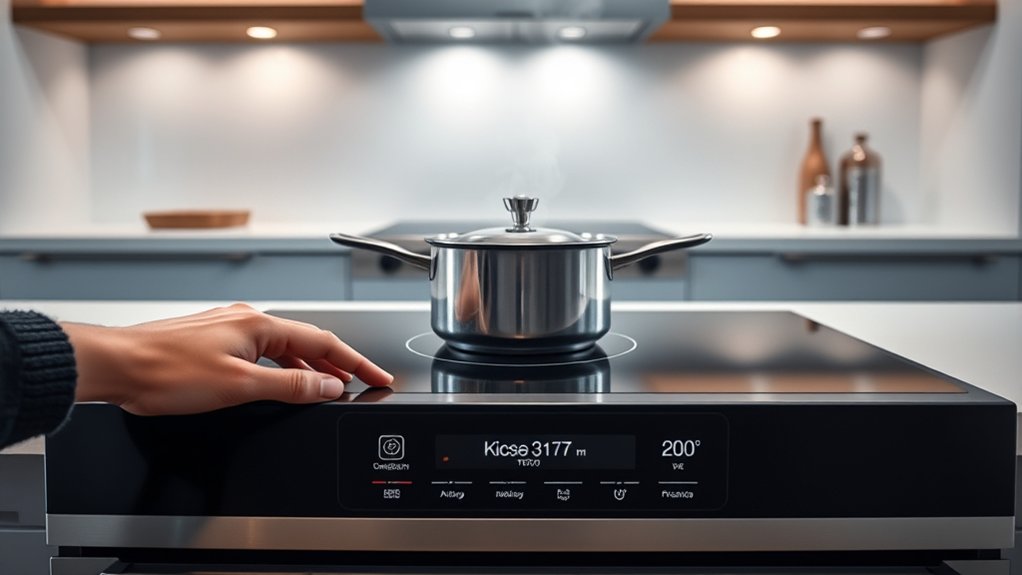
What makes an induction oven stand out is its efficiency, speed, and control. You heat cookware directly through electromagnetic energy, so you waste less power and get rapid response. That gives you precise temperature management for simmering, searing, and holding heat.
You also improve induction safety because the surface stays cooler than a conventional radiant cooktop, reducing accidental burns and making cleanup easier.
- Faster heat transfer shortens preheat time and improves workflow.
- Exact output control helps you maintain repeatable results.
- Better energy use can lower operating costs over time.
You’ll also appreciate the compatibility with flat, ferromagnetic cookware, which supports consistent contact and stable performance. If you’re comparing options at a cookware auction, you can evaluate pieces by magnetic response and base quality.
Common Induction Oven Drawbacks
Despite their efficiency, induction ovens do come with a few practical drawbacks you should consider. You’ll need compatible cookware, because nonmagnetic pans won’t heat properly, which can limit what you already own. That means you may also need induction accessories, such as adapters or new cookware, adding upfront cost.
Another limitation is that the appliance depends on electrical power and a stable circuit, so installation can be more demanding than for simpler units. You may also notice a learning curve: heat response is fast, so settings need careful adjustment to avoid uneven results.
Some users repeat induction myths, claiming the technology is unsafe or impossible to maintain, but the real issue is usually adaptation, not inherent failure. You might also hear more fan noise than with conventional ovens, since internal cooling systems must manage electronic components.
How to Use an Induction Oven Safely
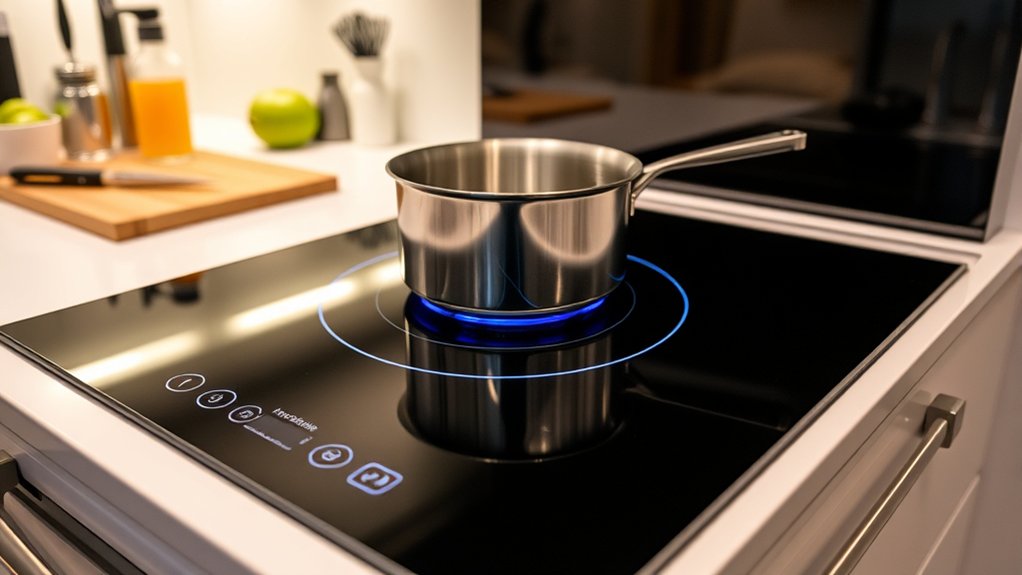
Once you’ve accounted for the induction oven’s equipment and power requirements, safe operation comes down to correct setup and controlled use. You should place the unit on a stable, heat-resistant surface, keep vents unobstructed, and verify cookware compatibility before heating.
Induction safety depends on using magnetic cookware with flat bases and avoiding oversized pans that reduce efficiency and cause uneven results. Keep handles turned inward, cords clear of the cooking zone, and liquids away from the control panel.
- Confirm the pan is induction-ready with a magnet test.
- Set the power level low, then increase it gradually.
- Turn the hob off before removing the pan.
You’ll get better control if you match pan size to the cooking zone and monitor temperature changes closely. Always supervise active cooking, since induction responds instantly and can overheat food fast. If the surface shows an error, stop and reset before continuing.
Cleaning and Maintaining an Induction Oven
To keep an induction oven working efficiently, you should clean the cooktop after each use and maintain the vents, controls, and power cord regularly. Unplug the unit before deep cleaning, then wipe the glass surface with a soft, damp microfiber cloth to remove spills before they harden.
For stubborn residue, use a nonabrasive cleaner made for induction oven cleaning and a plastic scraper at a low angle. Avoid steel wool, bleach, and harsh powders, because they can scratch the surface.
Inspect the ventilation openings for dust and clear them with a dry brush or vacuum attachment so airflow stays unobstructed. Check knobs, touch controls, and cables for wear, loose fittings, or heat damage.
Follow the manufacturer’s maintenance tips for cleaning intervals and approved products. If you notice cracks, scorch marks, or inconsistent heating, stop use and arrange service promptly. Routine care preserves responsiveness, efficiency, and long-term reliability.
Who Should Buy an Induction Oven?
You should buy an induction oven if you want fast, responsive heating with precise temperature control and improved energy efficiency. It suits you if you cook often and need rapid boil times, low thermal lag, and stable simmer performance.
An induction oven also helps if you value a cooler kitchen, since the cooktop transfers less waste heat to surrounding air.
An induction oven also helps if you value a cooler kitchen, with less waste heat warming the air.
- You prepare meals daily and need consistent output.
- You want tighter control for sauces, reductions, and searing.
- You can verify cookware compatibility before purchase.
If your pans contain magnetic stainless steel or cast iron, you’ll likely get full performance. If your current set isn’t compatible, factor in replacement costs.
You should also consider electrical service, because some models require dedicated circuits. Overall, choose an induction oven when efficiency, precision, and speed matter more than traditional flame-style cooking.
Frequently Asked Questions
Can Induction Ovens Work During a Power Outage?
No, you can’t use induction ovens during a power outage because they need electricity. You’d need a power backup, like a generator or battery system, while maintaining induction safety and verifying compatible voltage output.
Do Induction Ovens Require Special Electrical Wiring?
Yes, usually. Around 80% of induction models need a dedicated 240-volt circuit.
You’ll need to verify wiring requirements and induction compatibility with your panel and outlet before installation, since standard household circuits often can’t handle the load.
How Long Do Induction Ovens Typically Last?
You can expect an induction oven’s typical lifespan to run 10–15 years, depending on use, maintenance, and component quality.
Induction oven longevity improves when you clean it regularly, avoid overloads, and service controls promptly.
Are Induction Ovens Noisy While Operating?
Yes, though usually just a whisper, induction ovens can hum softly while operating. Your noise levels stay low if you follow maintenance tips, like keeping fans clean and cookware flat, so you’ll avoid unnecessary buzzing.
Can You Use Cast Iron on Every Induction Oven?
No, you can’t use cast iron on every induction oven. You’ll need cookware with a flat, magnetic base for proper heat induction. Some models restrict oversized or rough-bottomed cast iron pans.
Conclusion
You can think of an induction oven as the Swiss Army knife of modern cooking: fast, precise, and efficient. You get direct pan heating, a cooler cooktop, and better temperature control than gas or standard electric models.
Just make sure your cookware is induction-ready, and you’ll avoid performance issues. If you want safer operation, easier cleanup, and responsive heat, an induction oven could be the right upgrade for your kitchen.
Overall, an induction oven offers a combination of speed, safety, and control that makes it a smart choice for any home cook.