Who Is the Inventor of Microwave Oven
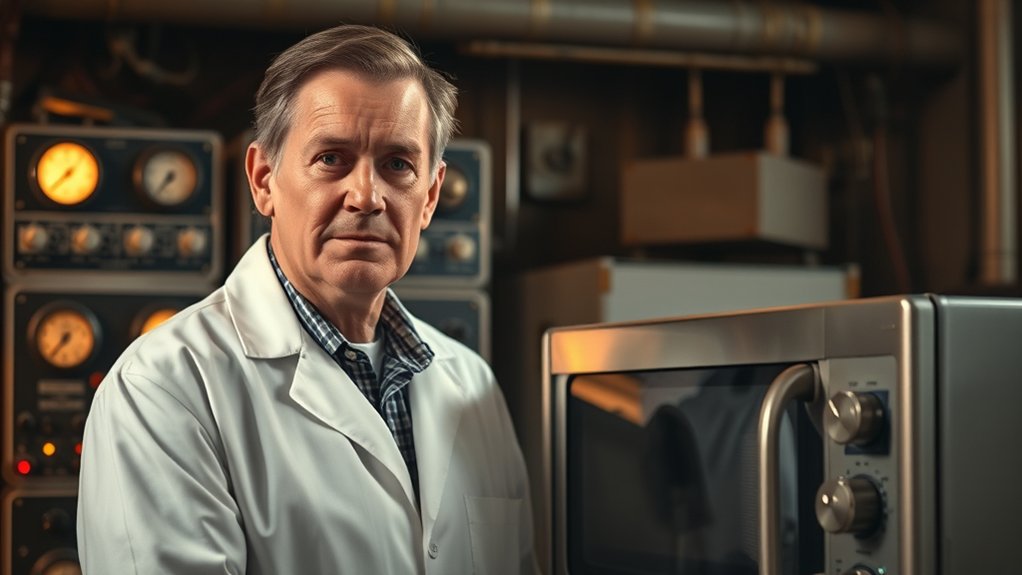
If you ask who invented the microwave oven, you’ll usually hear Percy Spencer’s name first. As a Raytheon engineer working on radar in the 1940s, he noticed a candy bar melting in his pocket and began testing what microwaves could do to food.
That accident led to a new kind of cooking, but the full story starts earlier, with wartime research and the first machines that followed. The invention of the microwave oven was a breakthrough that changed how we prepare food forever.
Key Takeaways
- Percy Spencer, a Raytheon engineer, is usually credited with inventing the microwave oven in 1945.
- His discovery began when a magnetron melted a candy bar in his pocket during radar testing.
- Spencer then tested popcorn and eggs, proving microwave energy could heat food quickly.
- The first commercial microwave oven, the Radarange, was released by Raytheon in 1947.
- Microwave oven invention also drew on earlier wartime radar research and magnetron development.
Who Invented the Microwave Oven?
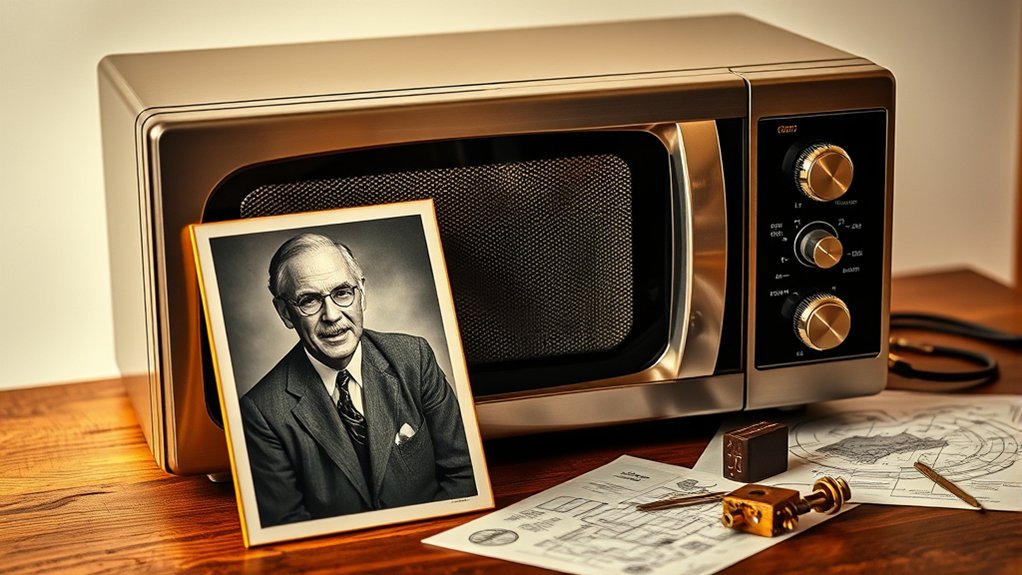
If you’re asking who invented the microwave oven, the answer usually points to Percy Spencer, an American engineer at Raytheon. In your research, you’ll see his name tied to the first practical microwave cooking appliance, but the story has an inventor controversy because earlier radar and high-frequency work laid important groundwork.
You can’t treat the device as a simple solo breakthrough; you’re looking at a chain of wartime engineering, laboratory testing, and kitchen adaptation. For you as a curious reader, that matters because it shows how inventions often emerge from shared technical progress.
You’ll also find safety myths that once surrounded microwave cooking, especially fears that the ovens “poison” food or leak dangerous radiation. Historical records and later standards don’t support those claims.
In culinary terms, the invention changed how you heat, reheat, and prepare meals, making speed part of modern home cooking.
How Percy Spencer Discovered Microwaves
Percy Spencer found microwave heating in 1945 when a magnetron test near his Raytheon lab melted the candy bar in his pocket, prompting him to ask why the energy had affected it. You can picture him, a self-taught engineer with a cook’s curiosity, noticing a simple snack become evidence.
He then tested kernels of corn and an egg, treating the lab like a kitchen bench for research. The results showed that invisible radio energy could warm food quickly, sparking a new line of inquiry.
You’re seeing historical invention at its most practical: a wartime device, a curious mind, and a meal-time problem. This moment also fed inventor drama, because credit and control soon mattered, and patent disputes followed as companies weighed who owned the idea.
Spencer’s observation didn’t just change engineering; it linked science, appetite, and commercial ambition in one remarkable discovery.
How the First Microwave Oven Worked
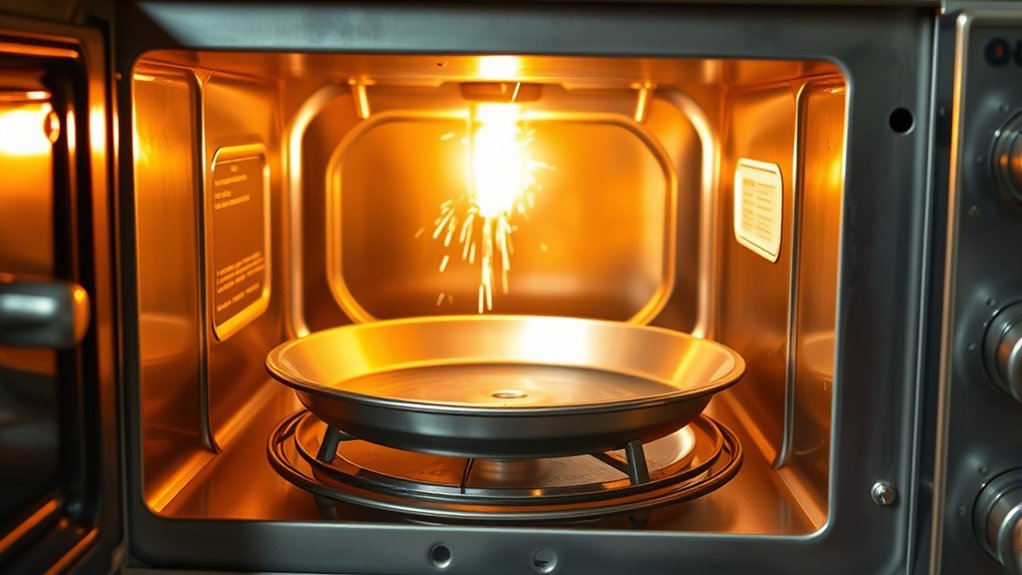
You can trace the first microwave oven to a magnetron that generated high-frequency energy, sending waves into a metal cooking chamber. The food absorbed those microwaves, and the water molecules inside it turned that energy into heat much faster than a conventional flame or element would.
In those early units, you’d see basic parts like the magnetron, waveguide, cavity, and a turntable or support system working together to cook with remarkable speed.
Magnetron Energy Generation
At the heart of the first microwave oven was the magnetron, a vacuum tube that generated high-frequency radio waves by converting electrical power into microwave energy. You can trace its wartime origins to radar research, where engineers refined it into a compact source fit for a kitchen test.
When you study the inventor controversy, you see Percy Spencer’s role alongside earlier British work, a reminder that innovation rarely belongs to one name alone. You also encounter microwave safety myths, which grew from early public unfamiliarity rather than evidence.
In this historical culinary experiment, the magnetron didn’t cook by flame or coil; it supplied invisible energy that let a food sample be prepared with startling speed, changing research labs and eventually dinner tables.
Microwave Heat Absorption
Inside the first microwave oven, the magnetron blasted energy into the cooking cavity, and food absorbed those waves by turning them into heat. You can trace microwave heat to water molecules in the meal, which jostled rapidly and warmed the surrounding flesh, batter, or broth.
In those inventor origins, researchers saw that cooking didn’t need flame; it needed agitation at the molecular level. You’d notice that a roast, a bowl of soup, or a cake mix heated from within, because the waves penetrated the food and shifted its moisture.
This historical breakthrough changed kitchen science, since the first tests revealed fast, uneven but useful cooking. For you, that meant a new method: observe, time, and adjust the dish as microwave heat did its work.
Early Oven Components
How did the first microwave oven actually work? You’d see a magnetron, power supply, and metal cavity working together, much like a carefully studied test kitchen. The magnetron generated microwaves, the cavity reflected them, and your food absorbed the energy, heating from within.
Early policy around shielding mattered because engineers had to keep radiation inside the box, while kitchen noise came from the fan and transformer.
| Component | Role |
|---|---|
| Magnetron | Produced microwave energy |
| Waveguide | Directed energy into the oven |
| Cavity | Reflected waves toward food |
You’d place a roast or soup inside, and the results depended on moisture, shape, and timing. Researchers documented these early components to refine cooking performance and safety.
The First Commercial Microwave Oven
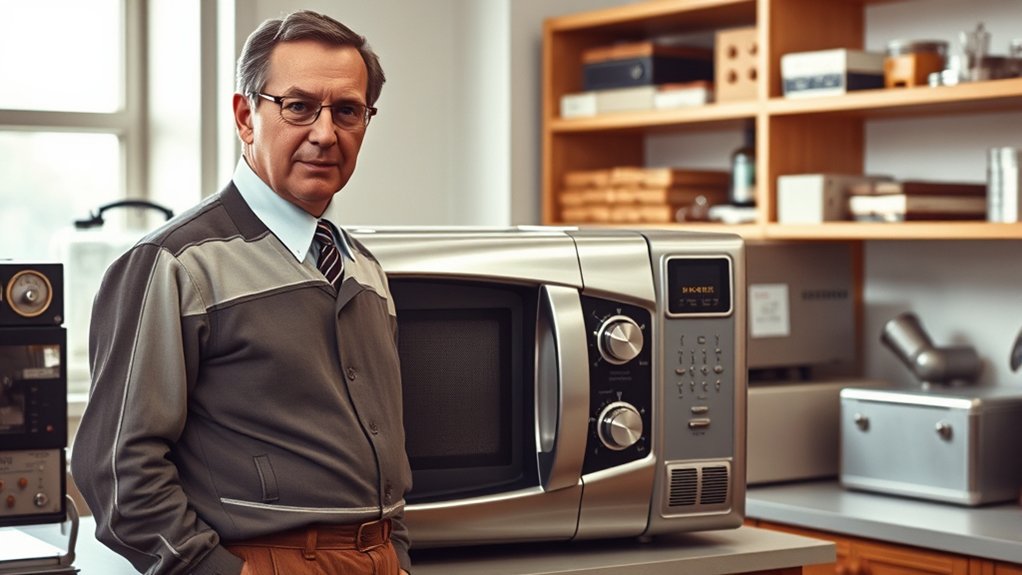
You can trace the first commercial microwave oven to Raytheon’s Radarange, which hit the market in 1947 as a towering, research-born appliance. It didn’t enter kitchens quietly; its size, cost, and industrial design made it a striking early test case for commercial adoption.
When you examine this release, you see how microwave cooking began shifting from wartime technology into practical food preparation.
First Commercial Model
The first commercial microwave oven, the Radarange, reached the market in 1947 through Raytheon and marked the start of microwave cooking as a practical technology. When you examine this model, you see a bulky, research-driven appliance built for institutions, not home kitchens.
It drew on wartime magnetron work and turned electromagnetic energy into heat for food, changing how you might think about timing, texture, and efficiency. The invention controversy around microwave cooking often centers on Percy Spencer, but patent disputes and engineering collaboration shaped the story too.
You can trace the Radarange’s importance through its role as a proof of concept: it showed that microwaves could cook reliably, even if early users needed patience, careful handling, and plenty of curiosity.
Radarange Release Year
Released in 1947, the first commercial Radarange from Raytheon marked the moment microwave cooking moved from laboratory curiosity to practical equipment. You can trace its release year to a postwar era eager for industrial speed and culinary innovation.
Historians note that the Radarange’s debut didn’t instantly reshape home kitchens, but it did establish the timeline for the microwave oven’s commercial birth. When you read a radarange rumor about earlier public use, check the records: the novelty timing points firmly to 1947.
In research terms, that date matters because it anchors the invention’s transition from wartime engineering to food preparation technology. For you, the year is the key evidence when asking who invented the microwave oven and when the invention first entered the marketplace.
Early Market Adoption
How did the first commercial microwave oven enter the market? You can trace the Radarange’s debut to postwar kitchens and institutional test sites, where cooks and engineers studied speed, texture, and heat control.
The early unit was huge, costly, and aimed at diners, hotels, and laboratories, not home tables. Yet you’d see its appeal in sliced roasts, reheated stews, and quick custards.
- You’d notice its steel cabinet, cooling fan, and humming magnetron.
- You’d watch chefs compare timings against conventional ovens.
- You’d read early ads framing convenience as a culinary breakthrough.
Researchers also noted two word discussion ideas around safety and efficiency, while an unrelated topic like fashion faded beside the oven’s practical promise.
How Microwave Cooking Changed Home Kitchens
Once microwave ovens moved from commercial tests into everyday households, they quickly reshaped kitchen routines, letting you heat, defrost, and cook food in minutes instead of relying on long stovetop or oven times. Historical accounts show you gained new flexibility: leftovers became practical meals, frozen foods entered weeknight planning, and busy households could serve food with far less preparation.
Researchers note that this shift altered shopping habits too, since convenience foods and preportioned dinners fit microwave cooking well. In inventor biographies, you see how technical innovation met domestic need, while appliance aesthetics helped the oven blend into the modern kitchen.
You didn’t need to supervise flames or preheat a large cavity, so the microwave changed how you timed meals and used countertop space. By the late twentieth century, it had become a central tool in household food management, not just a novelty.
How Microwave Oven Design Improved Over Time
Early microwave ovens were bulky, utilitarian machines, but design changes steadily made them safer, more efficient, and easier for you to use in the kitchen. As researchers refined magnetrons, cavities, and shielding, you gained better control over heat and fewer hot spots.
Inventive breakthroughs in turntables, digital timers, and sensor cooking let you reheat soup or bake potatoes with greater precision. Industry collaborations between appliance makers and materials scientists also improved door seals, glass viewing panels, and heat-resistant interiors, so cleanup became simpler after a family meal.
- You’d notice slimmer cabinets that fit modern counters.
- You’d use clearer controls that guided everyday cooking.
- You’d trust stronger safety features that reduced leakage risk.
Common Myths About Microwave Oven Invention
Although the microwave oven’s origin is well documented, myths still swirl around its invention, often crediting the wrong people or overstating a single lucky accident. You’ll often hear that a bored engineer simply stood near a magnetron and watched dinner cook, but myth vs fact matters here: the observation was real, yet it emerged from wartime radar research, not magic.
Another tale claims the first test was a full meal; in truth, you’re looking at early kitchen science, where candy, popcorn, and eggs helped researchers measure heating effects. Some stories even say one company hid the discovery from the public, but records show development, patents, and testing unfolded over years.
When you check the evidence, you see a careful progression from laboratory experiment to household appliance, shaped by materials, safety, and culinary needs rather than folklore.
Percy Spencer’s Lasting Legacy
Percy Spencer’s legacy reaches far beyond the first melted candy bar: it sits at the intersection of wartime research, practical engineering, and modern cooking. You can trace his impact from Raytheon’s radar labs to the countertop appliance in your kitchen, where speed and consistency changed how you prepare meals.
Spencer didn’t just invent a device; he helped you rethink heat, timing, and convenience in food science.
- You see the glow of magnetron-driven innovation in reheated soup and steamed vegetables.
- You taste the shift from long stove sessions to fast, measured cooking.
- You understand how curiosity can turn laboratory accident into culinary tool.
When you study his story, the unrelated topic of celebrity gadgets or the irrelevant theme of kitchen fashion fades beside real research history. His work still shapes your daily routine, proving that one engineer’s insight can transform how you cook, eat, and remember technology.
Frequently Asked Questions
What Year Was the First Microwave Oven Patented?
You’d find the first microwave oven was patented in 1945. In patent history, inventor milestones show this research-driven culinary breakthrough followed Percy Spencer’s wartime discovery, reshaping how you’d cook and heat food.
Which Company First Marketed Microwave Ovens to Consumers?
You’d find the answer in a smoky postwar kitchen: Raytheon first marketed microwave ovens to consumers, launching the Radarange.
You can trace its marketing history through the patent timeline, where culinary research met commercial innovation.
How Much Did the Earliest Microwave Ovens Cost?
You’d find early consumer pricing astonishing: the first microwave ovens cost about $1,295 in 1947, roughly $18,000 today.
A recall of historical costs shows later countertop models still sold for several hundred dollars.
Did Other Inventors Contribute to Microwave Oven Development?
Yes, you’ll find inventor collaborations and cross disciplinary contributions shaped microwave oven development. You can trace its progress through wartime radar research, engineering labs, and culinary testing, where multiple inventors refined heating, safety, and practicality together.
What Foods Were First Cooked in Microwave Ovens?
You’d first see popcorn, then chocolate, contrastingly humble and revelatory in microwave culinary history. Researchers note appliance design favored quick snacks, while microwave ethics and kitchen aesthetics barely mattered as you experimented with melting, popping, and testing.
Conclusion
So, when you ask who invented the microwave oven, you trace the story to Percy Spencer, whose sharp eye turned a radar experiment into a kitchen revolution. You’ve seen how his candy-bar moment sparked a chain of research, patents, and practical design.
Like a well-braised idea, the microwave oven simmered from wartime science into everyday life, forever changing how you cook, reheat, and rethink the modern meal.
In conclusion, Percy Spencer is credited as the inventor of the microwave oven, a device that transformed cooking habits worldwide.