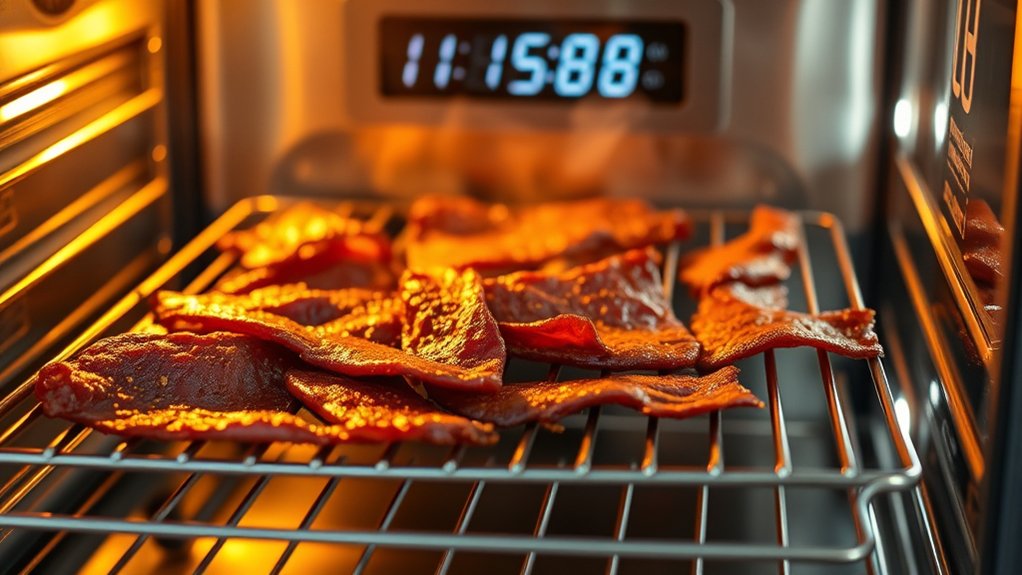
How to Make Jerky in the Oven
You’ll get the best oven jerky by starting with lean beef, trimming away every bit of fat, and slicing it thin against the grain after it’s chilled.
Making jerky in the oven requires careful preparation to achieve the perfect texture and flavor.
Then you’ll soak the strips in a savory marinade, arrange them on a rack, and dry them low and slow in the oven until they turn firm and chewy.
The key is knowing when they’re just right—and that part matters more than you might think.
Key Takeaways
- Choose lean beef cuts like top round, bottom round, eye of round, or flank steak with minimal marbling and exterior fat.
- Trim all visible fat, chill the meat, and slice it against the grain into thin, even strips about 1/8 to 1/4 inch thick.
- Marinate the strips in soy sauce, Worcestershire, garlic, black pepper, sugar, and smoked paprika, with optional vinegar or citrus.
- Arrange strips on a wire rack over a foil-lined sheet and bake at 170°F to 200°F with the oven door slightly ajar.
- Jerky is done when firm and chewy; cool fully, then store airtight and refrigerate for longer freshness.
Choose the Best Meat for Jerky
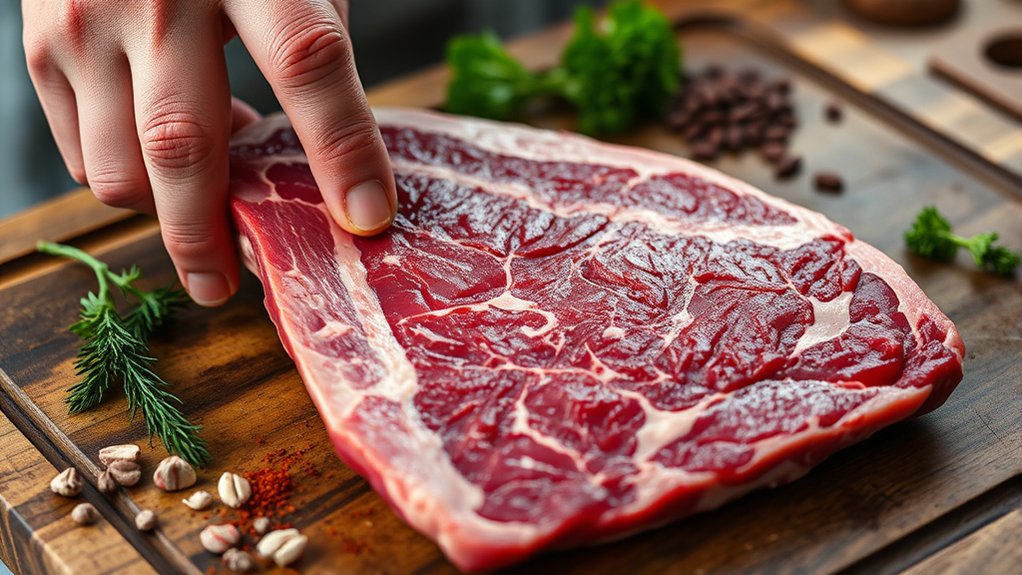
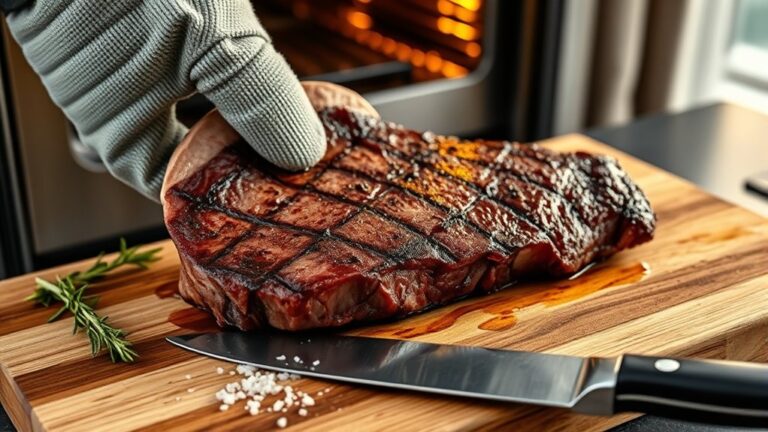
For the best oven-baked jerky, start with a lean cut of meat, since excess fat can turn rancid and shorten shelf life. You should focus on choosing meat that stays firm and trims cleanly, such as top round, bottom round, eye of round, or flank steak.
These cuts dry evenly and give you a chewy texture without greasy spots. Ask your butcher for the leanest piece available, and look for meat with little marbling and no thick exterior fat.
Choose lean cuts with little marbling and no thick fat for evenly dried, chewy jerky.
If you want richer flavor, you can compare a few options through flavor testing: cook a small sample of each cut, then taste for beefiness, tenderness, and how well it holds seasoning.
Keep thickness in mind too, because a uniform piece helps you work efficiently later. Once you find a cut you like, pat it dry, trim away visible fat, and get it ready for the next step in your jerky recipe.
Slice and Marinate the Jerky
Slice the meat against the grain into thin, even strips, about 1/8 to 1/4 inch thick, so the jerky turns out tender and easy to chew. Trim away visible fat, since it can turn rancid and dull the flavor. If the meat is firm, chill it first to make slicing cleaner and more uniform.
For marinade, whisk together soy sauce, Worcestershire, garlic, black pepper, a little sugar, and smoked paprika for deep, savory balance. Add a splash of vinegar or citrus for brightness, or include a little oil for a richer, sous vide flavor.
Submerge the strips fully in a shallow dish or bag, then turn them so every piece gets coated. Cover and refrigerate while the meat soaks up seasoning. Beef works well, but venison alternatives like bison or elk also marinate beautifully. Keep the strips cold and flavorful until you’re ready for the oven.
Set Up and Bake Jerky in the Oven
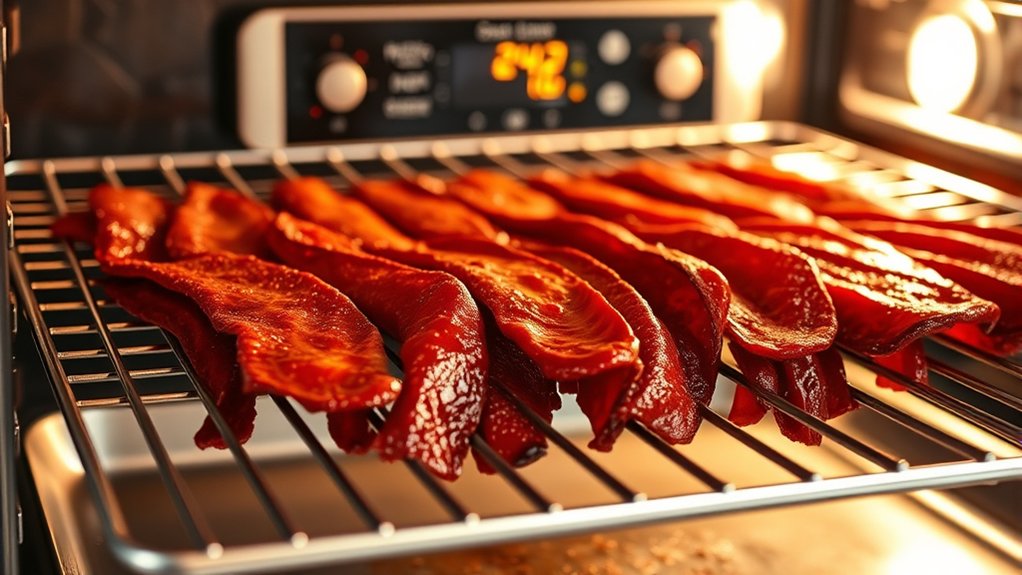
Preheat your oven to its lowest setting, usually around 170°F to 200°F, and line a baking sheet with foil for easier cleanup. Set a wire rack over the sheet so air can move around the meat, then arrange the strips in a single layer with space between each piece. This setup supports oven safety and helps the jerky dry evenly.
Slide the tray onto the center rack and keep the oven door slightly ajar if your model allows it, using a wooden spoon to hold it open just a crack. Bake slowly, turning the tray if needed for even heat.
Place marinated strips on the rack, not touching. Keep fat-heavy pieces toward the outside edges. Rotate sheets halfway through if you use more than one.
Watch your texture goals as the jerky cooks: you want the surface to firm while the meat stays flexible, not brittle.
Check for Safe, Chewy Doneness
You’ll know the jerky’s done when it feels dry on the outside but still bends without snapping in half. Grab a strip from the tray and let it cool for a minute, because hot jerky can fool you. When you tear it, the center should look fibrous and slightly darker, not wet or glossy.
If it still feels soft, give it more time in the oven and check again in 10-minute intervals. Aim for that sweet spot where the surface is firm and the middle yields with chewy resistance. That’s the chewy physics you’re after.
The meat should taste concentrated, not raw, and it shouldn’t leave moisture on your fingers. If you’re unsure, slice a thicker piece open and inspect it closely; that safe unknown is better resolved now than later. Keep testing a few pieces from different spots, since some strips dry faster than others.
Store Jerky to Keep It Fresh
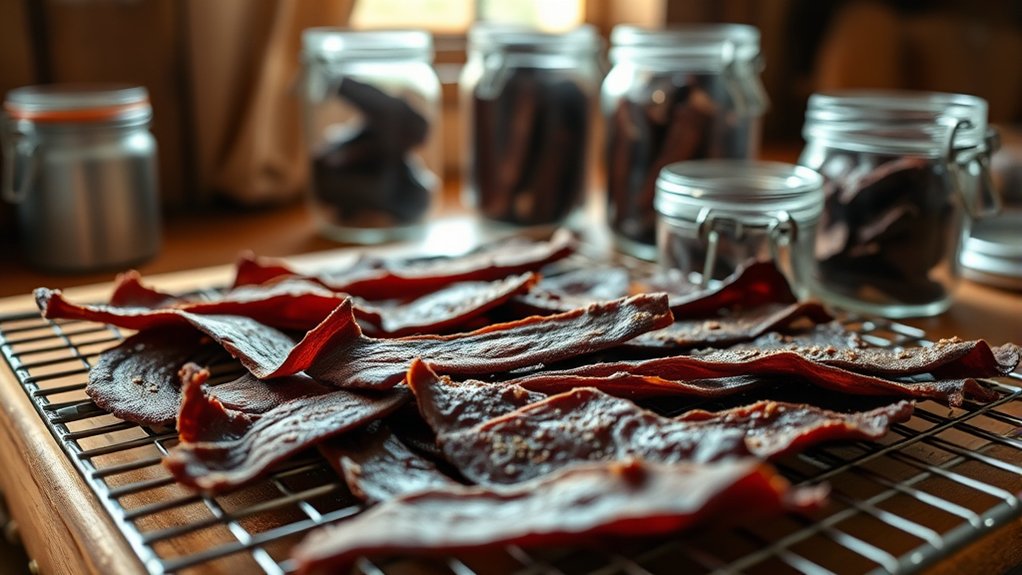
Once the jerky has cooled completely, pack it in an airtight container or zip-top bag so it stays dry and chewy. Press out excess air, then seal tightly for better store safety and a longer shelf life.
Keep the container in a cool, dark pantry if you’ll eat it within a week; refrigeration helps preserve freshness longer. For best packaging tips, portion the jerky into small bags, so you only open what you need.
- Use clean, dry hands or tongs when handling pieces.
- Add a paper towel to absorb stray moisture.
- Label the bag with the date and flavor.
Check the jerky before each snack: if you notice any damp spots, off smells, or mold, discard it right away. When you store it well, your oven-made jerky stays flavorful, tender, and ready for quick meals, trail snacks, or lunchbox protein.
Frequently Asked Questions
Can I Use Frozen Meat for Oven Jerky?
Yes, you can, but thaw it completely first. Frozen meat considerations include even slicing and drainage, while oven jerky safety depends on keeping meat chilled, trim-friendly, and heated promptly for reliable drying.
Do I Need to Trim All the Fat Off?
No, you don’t need to trim every bit, but you should remove as much fat as you can; fat trimming vs. flavor matters, and safety considerations favor leaner meat because fat can spoil faster.
Can I Make Jerky Without a Wire Rack?
Yes, you can, but it’s a mountain-sized hassle. You’ll lay strips on foil-lined baking sheets, flip them often, and keep discussing ideas about subtopic not relevant to other H2s: two word placement.
How Do I Add Smoky Flavor Without Liquid Smoke?
You can add smoky flavor by using smoked spices like paprika, chipotle, or smoked salt. Then briefly expose your marinated jerky to wood chip smoke from a stovetop smoker or grill before drying.
Can I Use Ground Meat Instead of Sliced Beef?
Yes, you can use ground meat, and you’ll get excellent jerky if you choose lean fat content. Mix seasonings, form thin strips, and bake low until dry, chewy, and safely cooked through.
Conclusion
Now you know how to make jerky in the oven from start to finish. Choose lean meat, slice it thin, marinate it well, and bake it low and slow until it’s firm and chewy. Keep a close eye on the texture so you don’t overdo it.
Let it cool, then store it properly so it stays fresh. With a little patience, you’ll turn simple beef into savory strips that disappear faster than you can make them.
By following these steps, you’ll master how to make jerky in the oven and enjoy delicious homemade snacks anytime.