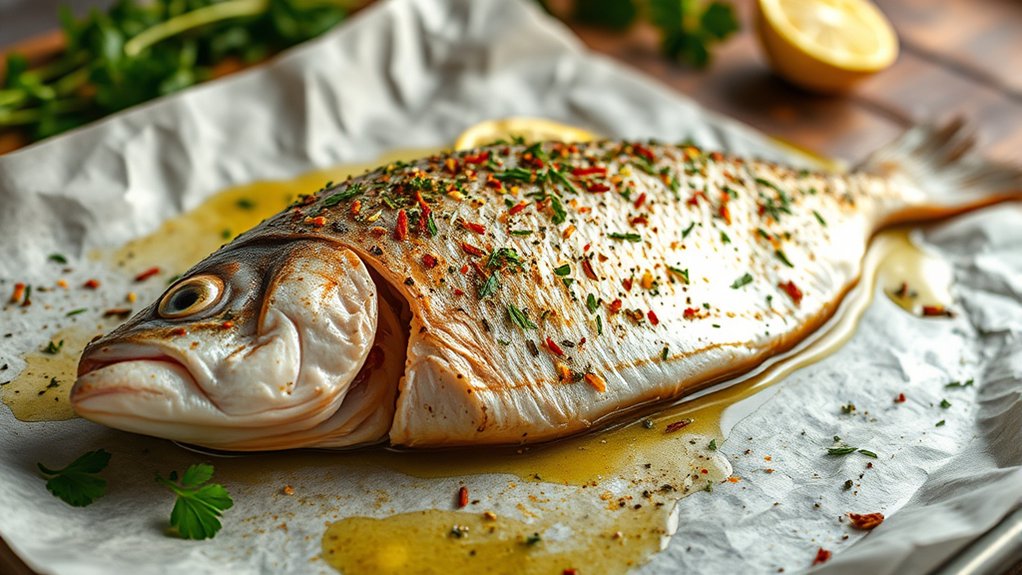
How to Bake Tilapia in the Oven
When baking tilapia in the oven, a 1-inch fillet typically cooks in about 10 minutes. This timing makes the process less guesswork and more routine.
You can keep the fish tender by prepping it correctly, choosing a simple seasoning, and using the right oven heat. The process is straightforward, but a few details determine whether you end up with dry fish or a clean, flaky result.
One step in particular makes more difference than most people expect.
Key Takeaways
- Preheat the oven to 400°F for a quick, moist bake.
- Pat tilapia dry, trim edges, and place fillets in a single layer.
- Season lightly with salt, pepper, garlic powder, paprika, and optional lemon or herbs.
- Bake standard fillets for 10 to 12 minutes; thin pieces may finish in 8 minutes.
- Remove when opaque and flaky, or 145°F in the center; avoid overbaking.
How Long to Bake Tilapia in the Oven?
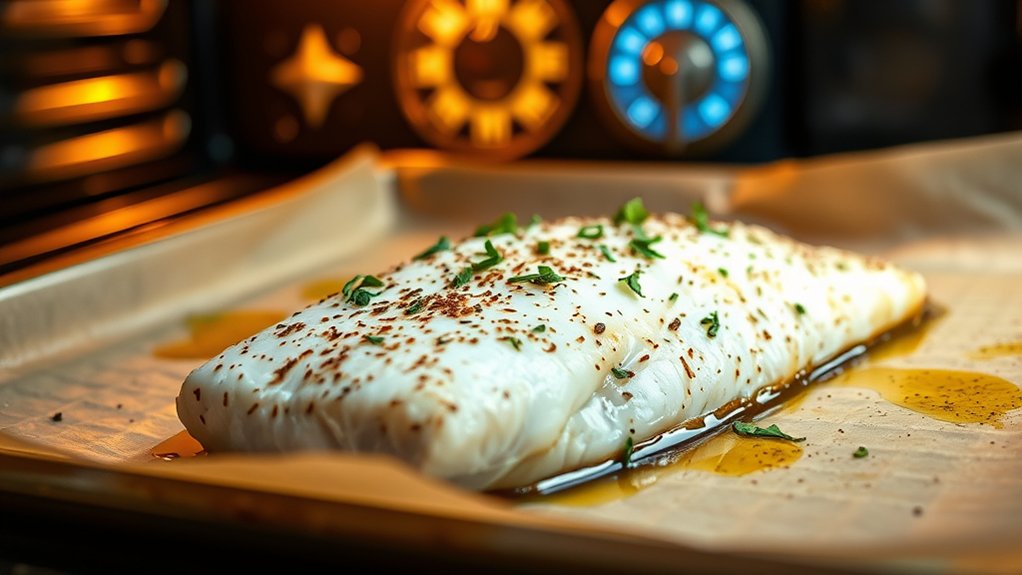
How long should you bake tilapia in the oven? You should usually bake fillets at 400°F for 10 to 12 minutes, or until the thickest part flakes easily with a fork. This baking timing gives you moist, tender fish without drying it out.
If your fillets are thin, check them at 8 minutes; if they’re thick, allow up to 14 minutes. You can rely on color and texture as well: properly baked tilapia turns opaque and separates into clean layers. Different tilapia textures respond to heat quickly, so small timing changes matter.
Use an instant-read thermometer if you want precision; 145°F at the center confirms doneness. Don’t overbake, because tilapia loses moisture fast and becomes firm. For even results, place the fillets in a single layer and monitor the clock closely.
How to Prepare Tilapia Before Baking
Before baking, pat the tilapia fillets dry with paper towels so the surface can brown properly and season evenly. Trim any ragged edges, then inspect each fillet for bones or stray scales.
Pat tilapia fillets dry, trim ragged edges, and check for bones or stray scales before baking.
If you see a center strip of bloodline or excess moisture, remove it with a clean knife. Place the fish on a lightly greased sheet pan or in a shallow baking dish, leaving space between pieces so heat can circulate.
For consistent results, choose fillets that are similar in thickness, and let them sit briefly at room temperature while you preheat the oven. These tips for tilapia prep help you achieve a uniform texture and cleaner presentation.
If you’re buying the fish yourself, prioritize ethical sourcing by choosing suppliers that disclose farming or catch methods and handle the fish cold. Keep the fillets refrigerated until you’re ready to bake, and work quickly to preserve freshness and food safety.
What Seasoning Works Best on Tilapia?
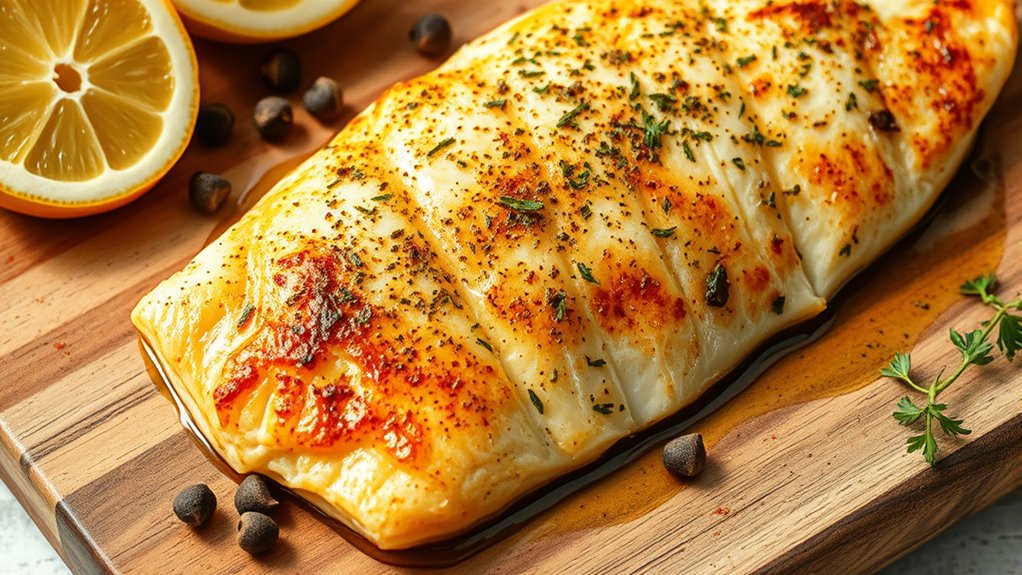
Tilapia has a mild flavor, so it pairs well with seasonings that add brightness without overpowering the fish. You should build seasoning pairings around salt, black pepper, garlic powder, and paprika, then finish with lemon zest or juice for lift.
A small amount of onion powder adds depth, while dried parsley or dill supports a clean, fresh profile. If you want more warmth, use a light touch of cumin or chili powder, but keep the blend restrained.
You can also brush the fillets with olive oil first so the seasonings adhere evenly and the surface tastes balanced. For consistent flavor balance, season both sides lightly instead of layering on heavy amounts.
Simple blends work best because tilapia absorbs flavor quickly and can lose its delicate texture if you overwhelm it. Choose one bright note, one savory note, and one herb so each bite stays clear and well defined.
What Oven Temperature Is Best for Tilapia?
For evenly cooked tilapia, you should bake it at 400°F, which gives the fillets enough heat to cook through quickly without drying out. This oven temperature is the best balance of speed and moisture, so you can prepare a consistent result with minimal effort.
At 400°F, your tilapia bake time usually falls between 10 and 15 minutes, depending on fillet thickness and whether you bake them on a lined sheet pan or in a lightly oiled dish. If your fillets are very thin, stay closer to the lower end of that range; if they’re thicker, allow a little more time.
You can also use 375°F if you want a gentler bake, but you’ll need a longer tilapia bake time. Avoid temperatures below that unless you prefer a slower method, because lower heat can leave the texture less efficient.
How Do You Know When Tilapia Is Done?
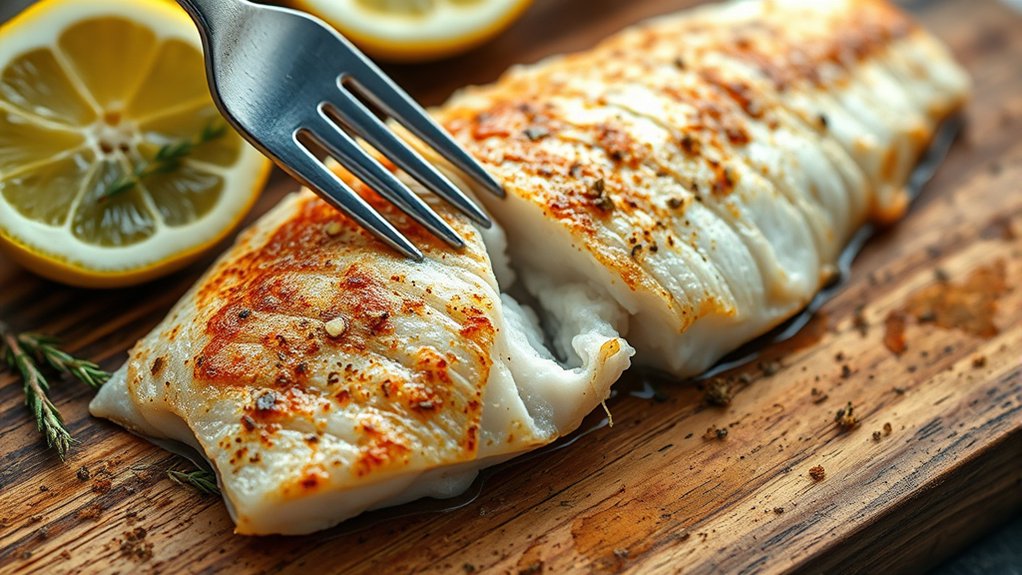
At 400°F, tilapia usually finishes quickly, so the key is checking for doneness before it overcooks. You can tell it’s done when the flesh turns opaque and flakes easily with a fork at the thickest point.
At 400°F, tilapia cooks fast, so watch for opaque flesh that flakes easily at the thickest point.
Press the center gently; it should feel firm but still moist, not rubbery. If you use a thermometer, aim for 145°F in the thickest section. Check early, because oven timing varies with fillet thickness, pan material, and whether you start with chilled fish.
A thinner fillet may finish in 8 minutes, while a thicker one can need closer to 12. If the edges curl slightly and the surface looks opaque all the way through, the fish is likely ready.
Remove it promptly and let it rest for 1 minute; carryover heat finishes the center without drying it out.
Frequently Asked Questions
Can I Bake Tilapia From Frozen?
Yes, you can bake tilapia from frozen, but you’ll need extra time. You should skip thawing if you prefer, yet check oven safety by cooking until the center reaches 145°F and flakes easily.
Should I Use Foil or Parchment Paper?
You should use parchment for a tender, clean lift, while foil vs parchment depends on your finish. Both suit nonstick cookware options, but parchment prevents sticking better and keeps the fish’s delicate sheen intact.
Can I Add Vegetables to the Baking Pan?
Yes, you can add vegetables to the baking pan. Choose sturdy vegetable combinations, like asparagus, zucchini, and peppers, then toss them with seasoning ideas that complement your tilapia.
You’ll create a complete, efficient meal.
What Sauces Pair Well With Baked Tilapia?
You can pair baked tilapia with lemon-butter, garlic-herb, tartar, mango salsa, or light cream sauces.
Pairing sauces depends on your cooking methods; keep flavors bright, balanced, and subtle so you don’t overpower the fish.
How Do I Store Leftover Baked Tilapia?
Store your leftover baked tilapia in an airtight container, refrigerate within two hours, and use it within three days. Chill it quickly to protect leftover texture, and choose reheating methods with brief cooking times and fresh flavor pairings.
Conclusion
Now you’re ready to bake tilapia that comes out tender, flaky, and lightly golden. As it cooks at 400°F, the fillets turn opaque and release a clean, savory aroma, with lemon and herbs brightening each bite. Keep an eye on the edges; when the fish flakes easily and reaches 145°F, it’s done.
Pull it from the oven, let it rest for a moment, and serve it warm, simple, and perfectly cooked. Baking tilapia in the oven this way ensures a delicious meal every time.