How to Cook Filet Mignon in Oven
Like a well-kept secret from a classic steakhouse, cooking filet mignon in the oven can turn this tender cut into a delicious, crusted dinner right at home.
Start by patting the steaks dry and seasoning them well. Sear them hard on both sides to develop a flavorful crust.
Then, finish cooking the filet mignon in a 400°F oven until it reaches your desired doneness. Use a thermometer to check the temperature and avoid overcooking.
Let the steaks rest briefly before serving. This simple process helps you avoid the common mistakes that can ruin an expensive cut—if you know what to watch for next.
Key Takeaways
- Bring filet mignon to room temperature, pat dry, and season generously with kosher salt and black pepper.
- Sear in a very hot, oven-safe skillet with a little high-smoke-point oil for 1–2 minutes per side.
- Preheat the oven to 400°F and finish cooking on the center rack without crowding the pan.
- Use an instant-read thermometer and pull the steak 3–5°F below target doneness.
- Rest the steak 5–10 minutes before slicing against the grain, and serve with simple sides or sauce.
Prepare Filet Mignon for Baking
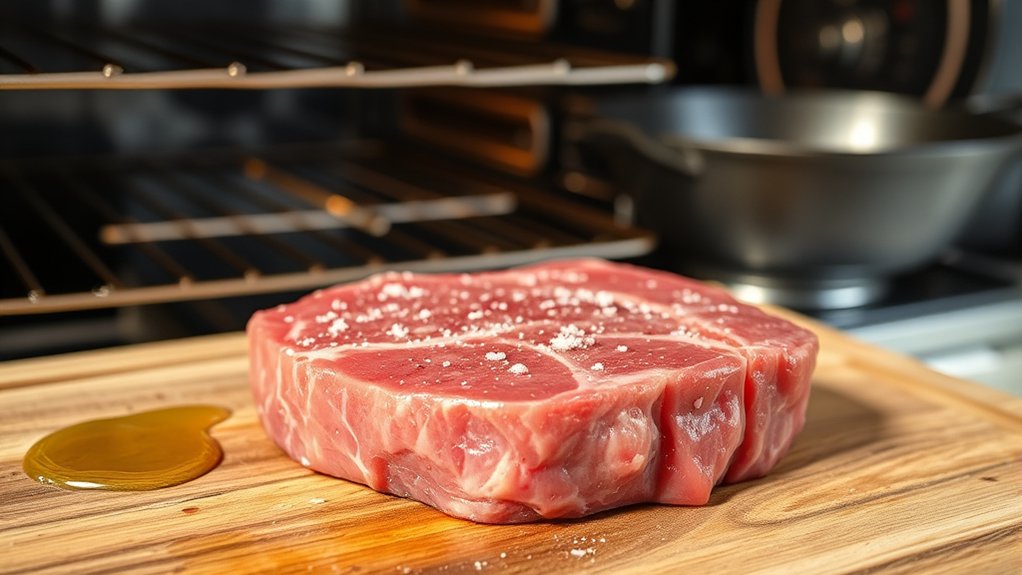
Start by taking the filet mignon out of the refrigerator 20 to 30 minutes before cooking so it can come closer to room temperature. While it rests, set up your prep area with clean towels, a tray, and a wire rack so you can work efficiently.
Pat each steak dry with paper towels; excess surface moisture hinders browning in the oven. Check the shape and thickness of the cut, and trim any silver skin or loose fat only if needed.
When selecting cuts, choose steaks that are evenly thick, firm, and well marbled for consistent results. Keep the steaks on a rack over a sheet pan so air circulates around them and the bottoms stay dry.
This prepping mise helps you move smoothly into the next step without scrambling for tools or handling the meat too much.
Season It Simply and Well
Season your filet mignon with only salt and black pepper so the beef’s natural flavor stays front and center. Use enough to coat both sides evenly, pressing it in lightly for better adherence.
Then let the steak rest at room temperature for a few minutes so the seasoning settles and the meat cooks more evenly.
Salt and Pepper Only
Why complicate filet mignon when salt and pepper can do the job beautifully? Pat the steaks dry, then season all sides generously with kosher salt and freshly ground black pepper.
Use enough salt to coat the surface evenly; it should look seasoned, not buried. The pepper should be coarse enough to stay visible and add a clean bite.
If you’re tempted by seasoning alternatives, save them for another cut; filet mignon shines when you let its natural flavor lead. Keep your hands off heavy spice blends and sweet rubs.
Place the steaks in oven safe cookware after seasoning, and make sure the surface is lightly coated so the crust forms well. This simple approach gives you direct control over flavor, color, and texture.
Let Meat Rest
Let the steaks rest at room temperature for 20 to 30 minutes before they go into the oven so they cook more evenly. Pat them dry again if moisture appears, then season simply with salt and pepper. This short pause relaxes the chill, which helps you avoid a gray band and overcooked edges.
Don’t leave them out too long; you want the center still cool, not warm. If you need a joke about leftovers, save it for later. Filet mignon deserves focus now. After resting, place the steaks on a rack or skillet and move straight to the oven.
That steady transition supports even roasting and better browning. When they finish, let them rest again before dramatic plating, so the juices stay in the meat.
Sear the Steaks for Better Flavor
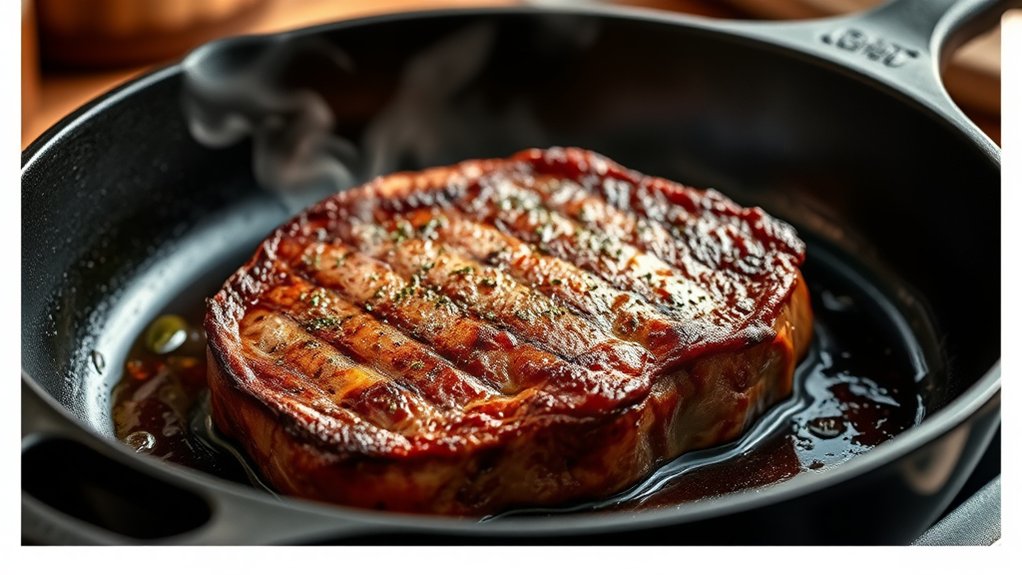
Heat a heavy skillet over high heat until it’s very hot, then add a small amount of oil with a high smoke point. Pat the filet mignon dry, season it lightly, and place it in the pan without crowding.
Let the steak sear undisturbed for about 1 to 2 minutes per side, pressing only if needed to ensure full contact. This searing technique creates a deep crust and locks in surface flavor.
Watch for even browning, since browning benefits include richer taste, better aroma, and a more appealing finish. Use tongs to turn the steak once, then sear the edges briefly to build color all around.
Don’t move the meat constantly; steady contact develops the best crust. Keep the pan hot enough to brown quickly, but don’t let the oil smoke excessively. Once the exterior looks mahogany and crisp, you’re ready for the next step.
Set the Oven Temperature
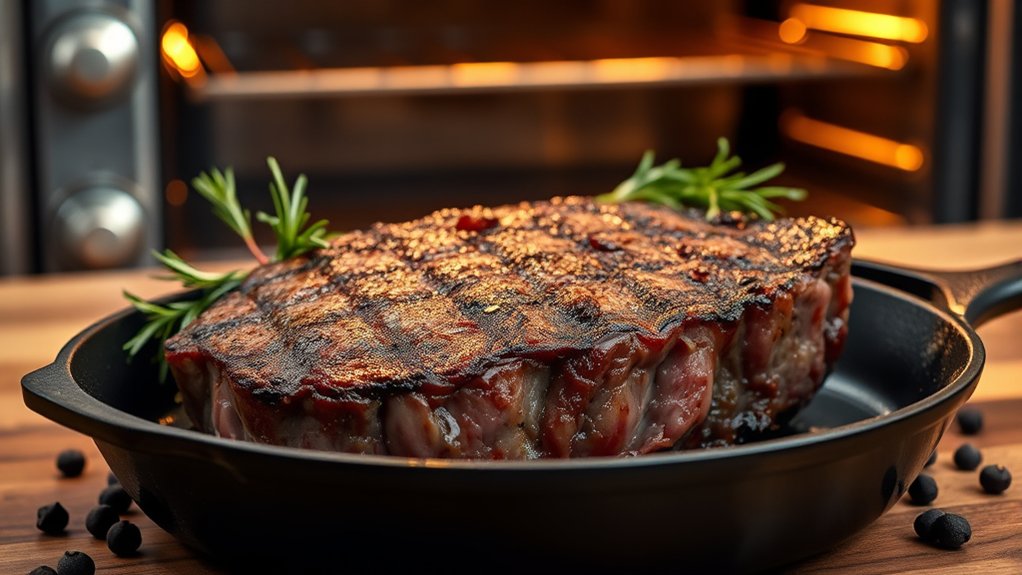
Once the steak has a good crust, move it into an oven preheated to 400°F. This temperature gives you steady, even heat that finishes filet mignon efficiently without drying the surface. Use an oven safe roasting pan so the steaks stay stable and the hot pan transfers heat cleanly.
Keep your kitchen timing tight: once the oven reaches temperature, wait only long enough to confirm steady heat, then proceed immediately.
Once the oven reaches temperature, proceed immediately to keep the heat steady and the steak cooking evenly.
- Set the rack in the center for balanced airflow.
- Preheat fully before the steak enters the oven.
- Use a pan that won’t warp at high heat.
- Keep the door closed to preserve temperature.
If you’re cooking more than one steak, leave space between them so hot air can circulate. A consistent oven temperature helps you control the process with precision, and it lets you move from sear to oven without delay.
Bake Filet Mignon to the Right Doneness
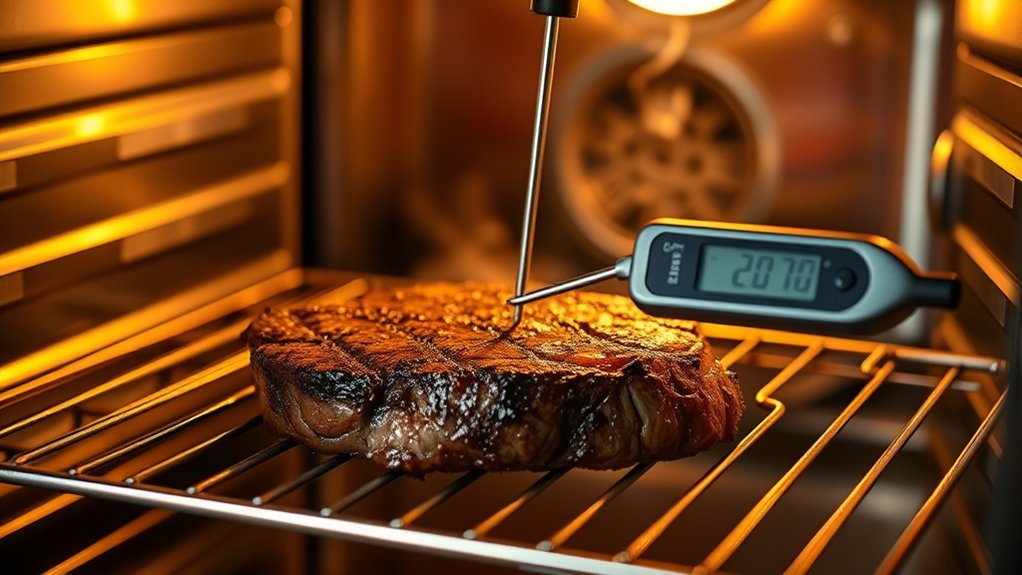
Bake the filet mignon until its center reaches your target internal temperature, using a meat thermometer for accuracy. Pull it from the oven a few degrees early, since the temperature will keep rising as it rests.
Let it rest before slicing so the juices settle and the steak stays tender.
Target Internal Temperature
What internal temperature should you aim for? Use an instant-read thermometer and pull the filet mignon at the perfect temperature for your preferred doneness. For rare, target 120°F; for medium-rare, 125°F to 128°F; for medium, 135°F.
Remember, carryover heat will raise the center a few degrees after you remove it from the oven, so don’t wait for the final number to appear in the pan.
- Insert the probe into the thickest center.
- Check temperature early, then monitor closely.
- Remove the steak 3°F to 5°F before your goal.
- Match the reading to your doneness target.
Rest Before Slicing
After you pull the filet mignon from the oven, let it rest for 5 to 10 minutes so the juices redistribute and the temperature finishes rising to your desired doneness. Set it on a warm plate or cutting board and leave it uncovered; tenting too tightly traps steam and softens the crust.
In a tiny kitchen, you can use this pause to finish sides, wipe down tools, and keep your workflow tight. Don’t slice early, or you’ll lose flavorful juices and reduce tenderness. Use this resting time as one of your best budget tips: better doneness means fewer costly mistakes and no need to recook.
When the exterior still looks glossy and the center feels set, slice against the grain with a sharp knife and serve immediately.
Check Doneness With a Thermometer
For the most reliable result, check the filet mignon with an instant-read thermometer inserted into the thickest part of the steak. This gives you a true internal temperature and prevents guesswork. A quality doneness thermometer improves reading accuracy, especially with a thick cut like filet mignon.
- Insert the probe sideways, not from the top, so you hit the center.
- Avoid touching fat or the pan, which can skew the reading.
- Wait for the number to stabilize before you decide.
- Compare the temperature to your target level of doneness.
Use these benchmarks: rare at 125°F, medium-rare at 130°F, medium at 140°F. Pull the steak a few degrees before the target if you want more control. Since carryover heat continues to rise, your thermometer helps you stop at the right moment.
Check each steak individually, because size and oven hot spots can create differences.
Rest the Steaks Before Slicing
Once you pull the filet mignon from the oven, let it rest for 5 to 10 minutes before slicing. Set the steaks on a warm plate or cutting board and leave them uncovered so the surface stays dry. This resting technique lets the juices redistribute through the meat instead of running out when you cut it.
Keep the steaks in a quiet spot away from drafts; don’t tent them tightly, or you’ll soften the crust. Use this slicing timing to your advantage: wait until the exterior relaxes slightly and the center finishes carrying over a few degrees.
Then slice across the grain with a sharp knife in smooth, clean strokes. Cutting too soon wastes moisture and makes the texture less tender. If you cooked more than one steak, rest each one the same way for even results.
Proper resting gives you filet mignon that stays juicy, supple, and evenly seasoned in every bite.
Serve With Easy Side Dishes
What should you serve with filet mignon? Choose sides that support the steak’s tenderness without overpowering it. Keep your plate balanced with simple, well-seasoned vegetables, starches, and a bright accent.
These side dish ideas work especially well because they cook quickly and let the filet stay center stage.
- Roasted asparagus with olive oil, salt, and lemon
- Garlic mashed potatoes for a creamy, classic pairing
- Sautéed green beans with shallots and butter
- A crisp salad with vinaigrette for contrast
For quick pairings, aim for textures that differ from the steak: creamy, crisp, or lightly charred. You can also add a sauce, like herb butter or pan jus, to tie everything together.
Keep portions moderate so the meal feels elegant, not heavy. When you serve filet mignon with easy sides, you create a refined dinner that looks polished and tastes complete.
Avoid Common Cooking Mistakes
A few avoidable mistakes can turn a great filet mignon into a dry or unevenly cooked steak. You should start with evenly sized fillets so they cook at the same rate. Don’t skip patting the meat dry; surface moisture blocks browning.
Avoid uneven fillets and excess moisture—both can keep filet mignon from browning evenly.
Season generously, then let the steak rest at room temperature briefly so the center doesn’t lag behind. Use a hot skillet or oven-safe pan, but don’t crowd it, or you’ll steam the meat instead of searing it.
Track cooking timelines with an instant-read thermometer, not guesswork, and pull the steak a few degrees before your target since carryover heat finishes the job. Let it rest after cooking so juices redistribute.
Avoid slicing too soon, because that drains moisture fast. If you avoid typical pitfalls like uneven thickness, excess moisture, and poor timing, you’ll get a tender filet mignon with a clean crust and precise doneness every time.
Frequently Asked Questions
Can I Cook Frozen Filet Mignon in the Oven?
Yes, you can cook frozen filet mignon in the oven, but you’ll get better results with a frozen thaw process first. Use oven safe thawing, then sear and roast for even doneness and juicier texture.
Should I Use Butter or Oil for Filet Mignon?
Use both: butter vs oil works best when you match fat content and cooking stage. You should sear filet mignon in oil for higher heat, then baste with butter for flavor and browning.
How Long Should Filet Mignon Rest After Cooking?
Rest, briefly. You should let filet mignon rest 5 to 10 minutes after cooking; this rest time duration lets juices redistribute.
Use a resting technique like tenting loosely with foil, then slice and serve.
Can I Make Filet Mignon Without Searing It First?
Yes, you can, but you’ll miss crust and depth. You can roast it gently, then finish under high heat.
Try sous vide techniques for precision, and use pan sauce ideas to boost flavor afterward.
What Wine Pairs Best With Filet Mignon?
You’ll usually pair filet mignon best with Cabernet Sauvignon, Bordeaux, or Syrah; their bold flavor profiles complement the steak’s richness.
For pairing methods, match tannin and oak to your sauce, then taste and adjust.
Conclusion
When you cook filet mignon in the oven, you’re turning a simple steak into a small triumph. Pat it dry, season it well, sear it hard, and let the oven finish the job. Use a thermometer, trust the numbers, and rest the meat before slicing.
Do that, and each tender bite will feel like a reward for your care. Serve it hot, and let the silence at the table say it all. Mastering how to cook filet mignon in the oven ensures a perfectly cooked steak every time.