How to Roast Chestnuts in the Oven
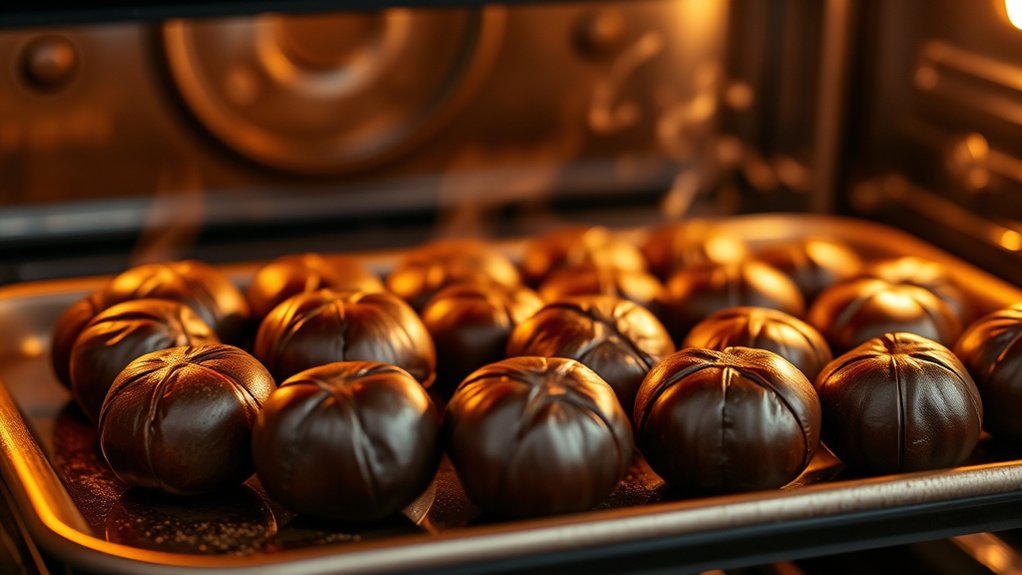
When autumn turns kitchens golden and the air smells almost like holiday markets, roasting chestnuts in the oven is a simple and delightful way to bring that seasonal magic home. You’ll choose firm, smooth nuts, score each one with care, then roast them until the shells split and the flesh turns tender.
The real trick starts when they come out warm, and that’s where things get interesting.
Key Takeaways
- Preheat the oven to 425°F and line a rimmed baking sheet for stable, even roasting.
- Score each chestnut with a deep X on the rounded side, cutting through the shell only.
- Arrange chestnuts cut-side up in a single layer and roast for 20–25 minutes.
- Roast until shells curl back and the flesh feels tender when lightly pressed.
- Peel chestnuts while warm, then season with butter, sea salt, cinnamon, honey, or rosemary.
What You Need to Roast Chestnuts
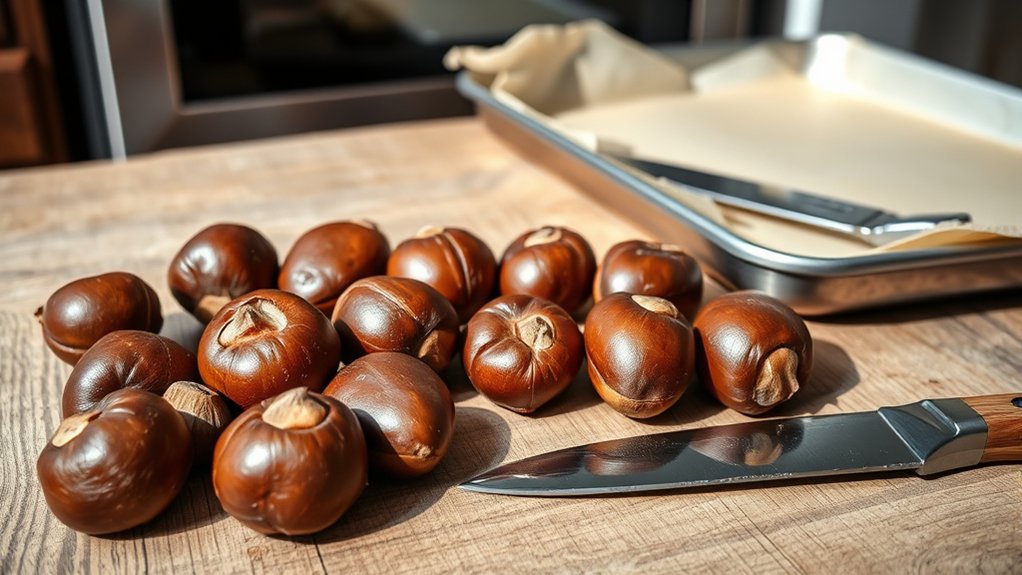
Before you start roasting chestnuts, gather a sharp paring knife, a baking sheet, and a clean kitchen towel or oven mitts. You’ll also want fresh chestnuts with smooth, glossy shells and no cracks, soft spots, or mold. A rimmed sheet helps keep them steady in the oven, and parchment can make cleanup easier. If you like, keep a small bowl of water nearby to rinse away dust before you dry them well.
Gather a sharp knife, fresh glossy chestnuts, and a baking sheet to make roasting easy and tidy.
Choose chestnuts that feel heavy for their size, since they usually hold more moisture and roast more evenly. Your oven should preheat fully so roast timing stays consistent and the shells open cleanly.
For flavor pairings, set out butter, sea salt, rosemary, honey, or cinnamon after roasting. A kitchen towel lets you wrap the hot nuts briefly so they steam and stay tender.
With these simple tools and good ingredients, you’re ready to roast chestnuts confidently and enjoy their warm, sweet aroma.
How to Score Chestnuts
To score chestnuts, hold each nut steady on a cutting board and use a sharp paring knife to cut a deep “X” across the rounded side of the shell, slicing through the shell but not into the flesh. This is how to score safely and cleanly, and it helps you avoid jagged breaks.
Keep your fingers tucked away as you work, and rotate each chestnut if the shell feels uneven. Look for natural chestnut patterns; some shells curve more than others, so adjust your cut to stay centered. Use firm pressure, but don’t force the blade.
- Anchor the chestnut with a folded towel.
- Follow the shell’s smoothest curve.
- Make one decisive cut, not several slashes.
- Keep the “X” open and visible.
- Inspect each nut before moving on.
When you score chestnuts well, you create a neat opening that looks tidy and controlled.
How to Roast Chestnuts in the Oven
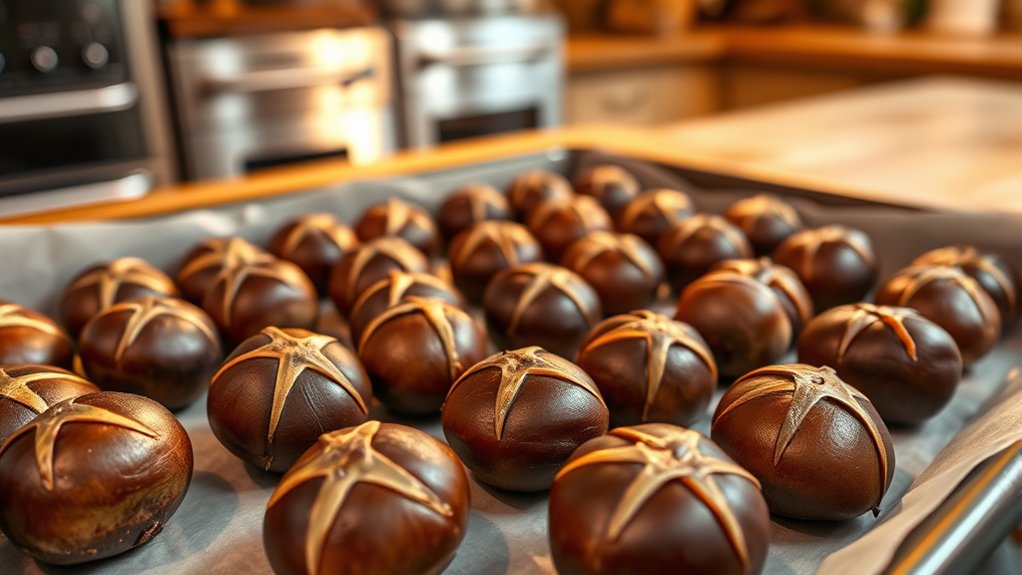
Once you’ve scored the chestnuts, arrange them in a single layer on a baking sheet with the cuts facing up, then roast them in a preheated 425°F oven for about 20 to 25 minutes. Slide the pan onto the middle rack so the heat reaches them evenly.
As they roast, the shells curl back and the kitchen fills with a sweet, nutty aroma. For a quick two word discussion idea, think oven placement; for another two word discussion idea, consider sheet spacing.
| Step | Tip |
|---|---|
| Preheat | Set 425°F first |
| Arrange | Keep nuts single-layer |
| Position | Cuts face up |
| Bake | Use the middle rack |
| Flavor | Expect rich aroma |
Let them roast without crowding, and you’ll get consistent results. If your baking sheet is dark, start checking earlier, since it can heat more quickly. Use oven mitts when you remove the pan, and move the chestnuts to a towel-lined bowl for easy handling.
How to Tell When Chestnuts Are Done
You’ll know your chestnuts are done when the shells split open and the cuts widen beautifully. The flesh inside should feel tender when you press it lightly, not firm or raw.
For a quick check, peel one while it’s still warm; if it comes away easily, they’re ready.
Shells Split Open
How do you know when chestnuts are done? You’ll see the shells split open in a wide, dramatic X, and that’s your biggest clue. The cuts should gape enough that steam escapes and the edges curl back.
Watch for:
- deep splits across each shell
- browned, slightly blistered skins
- fragrant, nutty aroma
- shells pulling away from the meat
- a light sizzling sound
When you spot these signs, pull them from the oven before they scorch. The splits tell you the chestnuts have roasted properly and are ready for easy peeling.
Use the warm nuts for flavor ideas like soups, stuffing, or a simple snack with salt. Keep an eye on them, because once the shells split, they can go from perfect to overdone fast.
Flesh Turns Tender
Press the chestnut gently between your fingers, and it should feel soft and yielding beneath the split shell. That tender flesh tells you the nut has cooked through and soaked up enough heat to become sweet and creamy.
If it still feels hard or chalky, give it a few more minutes in the oven, checking often so it doesn’t dry out. You’ll notice the interior is easier to eat when it’s properly softened, and the flavor becomes richer too. For two word discussion ideas, think texture check and doneness signal.
Once you’ve reached this point, move the chestnuts to a towel while they’re warm, then let them cool before chestnut storage. That helps preserve their delicate texture and keeps the roasted flavor at its best.
Easy Peel Test
Another quick way to check whether chestnuts are ready is the peel test. When you pull one from the oven, let it cool just enough to handle, then snip away the shell. If the inner skin slips off easily, your chestnuts have reached that easy peel stage and the test quality is excellent.
- The shell opens cleanly
- The skin comes off in strips
- The nut feels tender inside
- The flesh looks moist, not dry
- The flavor tastes sweet and cooked
If the peel fights you, roast the batch a few minutes longer. You want chestnuts that yield without crumbling, because that means they’re done through and ready to enjoy warm, glossy, and fragrant.
How to Peel Chestnuts While Warm
While they’re still warm, you’ll find chestnuts much easier to peel, so don’t wait too long after roasting. Hold one nut in a towel to protect your fingers, then press along the scored shell and split it open.
Work gently, using your thumbs to lift away the shell and the thin brown skin underneath. If a piece resists, pause and use a small knife tip to nudge it loose. This peeling technique works best when you move quickly, because the steam release softens both layers and helps them separate cleanly.
Peel in batches, keeping the rest covered with a clean kitchen cloth so they stay warm and pliable. Remove any bitter skin bits as you go, since they can cling tightly once the chestnuts cool.
For the smoothest results, crack each chestnut fully, then peel from the wider side where the shell usually opens first.
Ways to Flavor Roasted Chestnuts
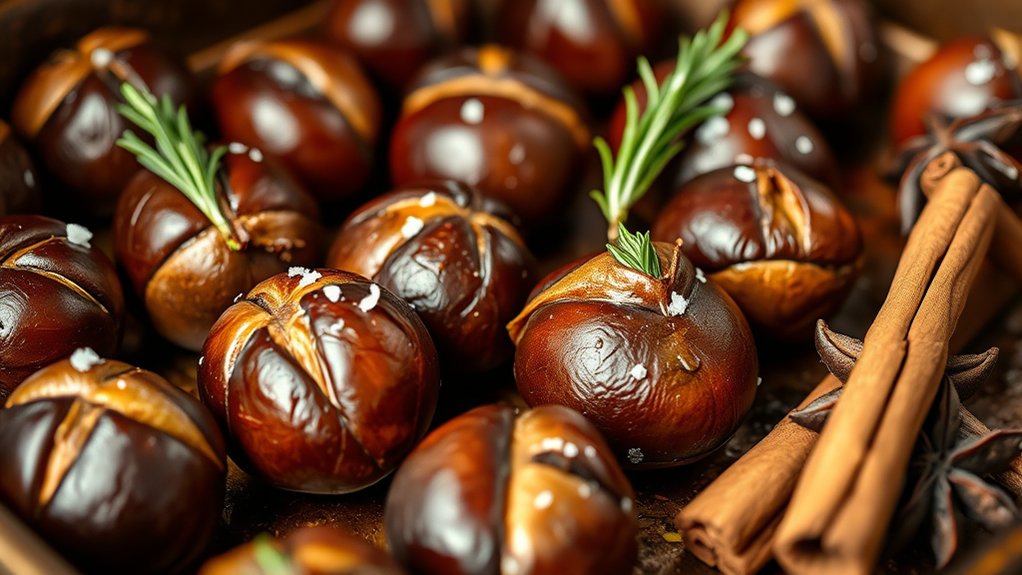
Want to add a little extra character to your roasted chestnuts? You can brush them lightly with melted butter, then finish with salt for a simple, rich taste. For a sweeter twist, toss them with cinnamon and a touch of brown sugar while they’re still warm.
You can also explore savory flavor pairing ideas that highlight their earthy sweetness.
- Sea salt and olive oil
- Cinnamon and maple
- Rosemary and garlic
- Chili and smoked paprika
- Vanilla and honey
If you like bold flavors, try small spice blends with cumin, nutmeg, or cardamom. Sprinkle them sparingly so you keep the chestnuts’ soft, nutty flavor front and center.
You can even mix sweet and savory by adding a pinch of flaky salt to honey-glazed nuts. Taste as you go, and adjust each batch until it fits your mood.
Since chestnuts soak up seasoning well, even a little extra seasoning can make them feel festive, cozy, and memorable.
Fix Common Roasting Problems
If your chestnuts come out tough, underdone, or hard to peel, a few simple fixes can turn things around. First, score each nut deeply enough to cut through the shell and skin; shallow cuts trap steam and make peeling miserable.
If they’re still firm after roasting, leave them in the hot oven a few extra minutes, checking often so you don’t dry them out. If the shells cling, wrap the chestnuts in a clean towel for 10 minutes after baking; the trapped steam loosens the skins.
Don’t fall for roasting myths that say higher heat always helps. Too much heat can scorch the outside while leaving the inside raw. You’ll also hear wrong roasting jargon about “dry-roasting” being the only proper method, but a little moisture during cooling actually improves results.
If a batch seems uneven, stir them halfway through and rotate the pan for more even browning and tenderness.
Frequently Asked Questions
Can I Roast Chestnuts Without Scoring Them?
You can, but you shouldn’t. In the oven method, roasting without scoring traps steam, so chestnuts can burst.
Cut a slit first to reduce risks, help them cook evenly, and make peeling much easier later.
How Long Do Roasted Chestnuts Stay Fresh?
You’ll keep roasted chestnuts fresh for about 2 to 3 days at room temperature, or up to a week chilled. For best roast timing and storage tips, seal them airtight and cool completely first.
Can I Freeze Roasted Chestnuts for Later?
Yes, you can freeze chestnuts for later. Cool them completely, peel, then freeze chestnuts in airtight bags.
For best storage duration, use them within three months, and thaw them gently before reheating.
Do Chestnuts Need to Soak Before Roasting?
No, you don’t need to soak before roasting chestnuts; no scoring required if you want easy peeling.
Still, a little soak before roasting can help. As they say, better safe than sorry.
Are Chestnuts Safe for People With Nut Allergies?
No, chestnuts aren’t safe if you have nut allergies. You should avoid them and check with an allergist, because chestnuts can trigger reactions.
Cross-contamination may also put you at risk.
Conclusion
Now you’re ready to roast chestnuts with confidence. Since chestnuts are about 50% water by weight, that deep X and hot oven help steam them open for easy peeling and sweet, tender results.
Keep them warm, peel them quickly, and season them your way with butter, salt, or cinnamon. If a few shells stay stubborn, don’t worry—you’re learning the rhythm.
With practice, you’ll turn this simple winter snack into a cozy favorite. Roasting chestnuts is a delightful tradition that brings warmth and flavor to your home.