What Oven Temp to Keep Food Warm
Is it really true that a low oven can keep your food warm without overcooking it?
When setting the oven to keep food warm, you can usually set it between 170°F and 200°F. However, you should verify the actual temperature with a thermometer because dials can run hot.
Cover dishes to hold moisture, yet leave a little steam escape. The right setting depends on the food, and the difference between warm and overdone can be smaller than you think.
Key Takeaways
- Use a low oven setting around 170°F to 200°F to keep food warm, not cook it further.
- Keep food above 140°F during holding for food safety.
- Reheat leftovers to 165°F first, then switch to the warm setting.
- Cover dishes with foil or a lid to retain moisture and prevent drying out.
- Check food with a thermometer and limit warm holding to 2 to 4 hours.
What Oven Temp Keeps Food Warm?
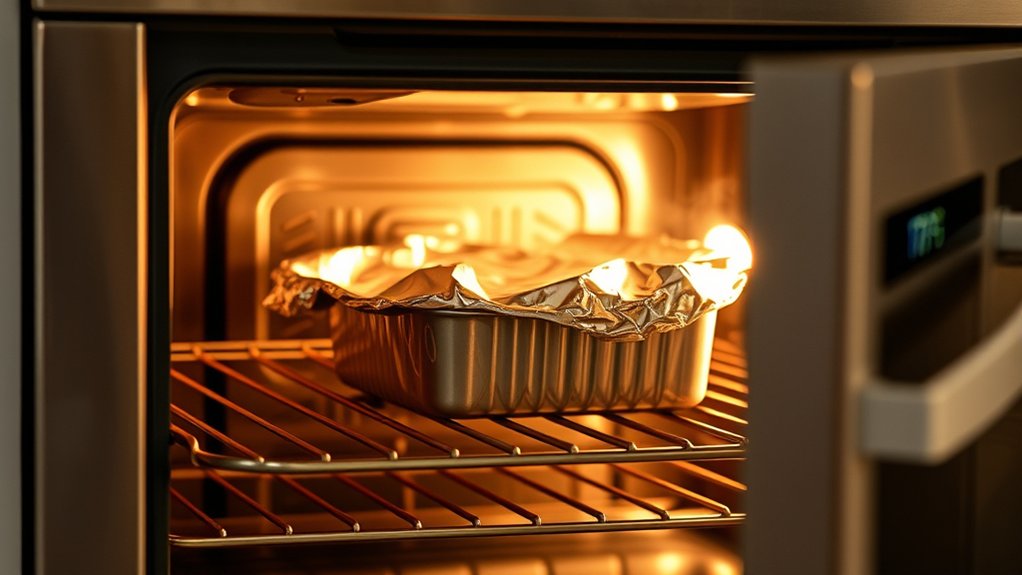
To keep food warm in the oven, you’ll usually want a low setting of about 170°F to 200°F. You should treat that range as a holding zone, not a cooking temperature, because higher heat can dry out meat, overcook vegetables, or change texture.
Use a low oven setting, around 170°F to 200°F, as a holding zone—not a cooking temperature.
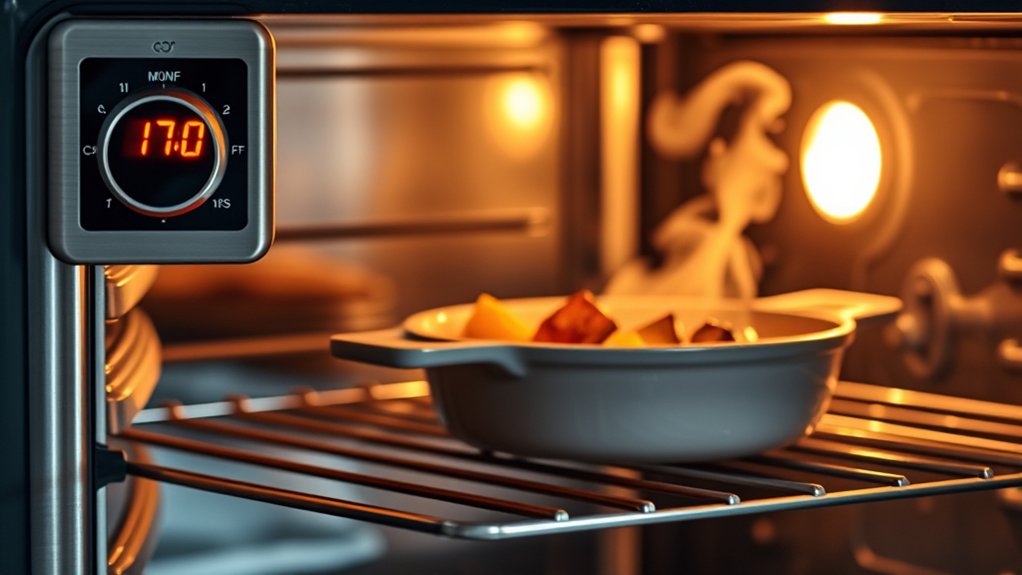
If your oven runs hot, use an oven thermometer to verify the actual temperature. Keep dishes covered with foil or a lid so moisture stays in, and choose oven-safe cookware that spreads heat evenly.
For an alternative presentation, you can hold plated food on warmed trays instead of deep pans, but watch closely for drying. Good kitchen ergonomics matter too: arrange shelves so you can lift dishes in and out safely without reaching too far.
Check the food occasionally and remove it once serving starts, since prolonged holding can reduce quality and safety.
Set the Oven to 170°F to 200°F
Set your oven to 170°F to 200°F to keep food in the ideal holding range without cooking it further. You’ll want to check that the food stays above 140°F if you’re holding it for any length of time, since that helps reduce food safety risks.
Use a covered dish and watch it closely so it doesn’t dry out or overheat.
Ideal Holding Range
When you need to keep food warm without drying it out or overcooking it, aim for an oven temperature between 170°F and 200°F. This range gives you a stable holding temperature for casseroles, roasted meats, and side dishes while preserving texture better than higher heat.
Use the lowest setting that keeps the food comfortably warm, and check your oven’s accuracy with a thermometer if you can. For better oven safety, avoid leaving dishes in much longer than needed, and keep lids or foil on loosely so steam can escape.
If your oven runs hot, choose 170°F; if it cools quickly when opened, 200°F may work better. Adjust as needed, but don’t treat it like a cooking temperature.
Food Safety Tips
Keeping food warm safely means holding it at 170°F to 200°F, not letting it sit in the danger zone where bacteria can grow. You should verify oven temperatures with a thermometer, since dials can drift.
For food safety, keep dishes covered so steam stays in and surfaces don’t dry out. Stir soups and sauces now and then to spread heat evenly.
If you’re holding meat, poultry, or casseroles, check the center before serving. Don’t warm food for hours; serve it as soon as you can.
A casserole under loose foil
Steam rising from a serving dish
A glowing oven light
A thermometer clipped to a pan
Warm plates stacked nearby
Cover Food to Lock in Moisture
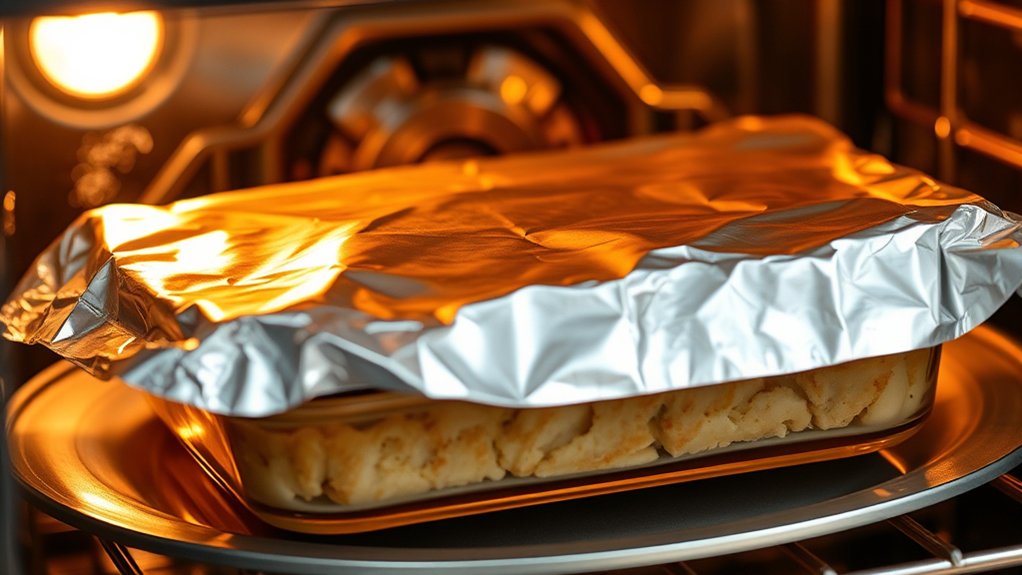
Cover the food with a lid, foil, or an oven-safe cover to help trap steam and prevent it from drying out. You should use this simple moist locking step whenever you plan to hold food in a warm oven. It keeps surfaces from hardening and helps sauces, grains, and meats stay more appealing.
If you’re exploring subtopic ideas, start with a tight cover that fits well but doesn’t crush the food. Use foil loosely over casseroles so steam can circulate without spilling onto the pan. For plates, choose an oven-safe cover or another safe barrier that seals lightly.
Check the cover occasionally, because condensation can collect and drip back onto delicate items. Handle hot covers carefully, since escaping steam can burn you. This approach won’t fix food that’s already dry, but it can slow further moisture loss and improve texture during short holding periods.
Adjust Heat for Each Dish
Different dishes need different warm-holding temperatures, so adjust the oven to match what you’re serving. You’ll protect quality better when you match heat to dish variety instead of using one setting for everything.
Delicate foods, like custards or flaky pastries, need gentler warmth, while sturdy casseroles can tolerate a slightly higher setting. Check the food’s texture and moisture before you raise the temperature.
If you notice edges drying or sauces thickening too much, lower the heat a bit. Use an oven thermometer if you can, since dial settings aren’t always exact. Keep lids or foil on until serving, then remove them only when you’re ready to plate.
A pan of creamy macaroni
Roasted vegetables with crisp edges
Tender sliced chicken
Buttered rolls in a covered basket
A glass baking dish of rice
How Long Can You Keep Food Warm?
You can keep food warm for a limited time, but you should not hold it too long if you want to stay within safe temperature ranges. Dense dishes, sauces, and covered foods often hold better than delicate items, yet each type has its own limit, so you should check them often.
If food starts to dry out, lose heat, or drop below a safe warm temperature, you should reheat it before serving.
Safe Warm Holding Time
How long can you keep food warm? You should keep it in the warm zone for no more than 2 to 4 hours, and you’ll get the best results when you check it often.
For safe handling, hold food at 140°F or higher, stir it now and then, and cover it to reduce moisture loss. That helps preserve quality and limits risk.
For energy efficiency, use the lowest oven setting that stays above the safe threshold, and avoid opening the door repeatedly.
- Steam rising from a covered pan
- A thermometer clipped to the dish
- A softly glowing oven light
- Foil wrapped tightly over trays
- Serving spoons ready beside the warmer
Food Type Differences
The 2- to 4-hour warm holding window can shrink or stretch a bit depending on the food. You can keep sturdy dishes like casseroles, roasted meats, and baked sides warm a little longer because they hold heat well.
Delicate foods, such as fish, eggs, or cream sauces, lose quality faster, so you should shorten the hold time and use gentler oven techniques. Bread, fried items, and crisp toppings won’t stay appealing for long, even at low heat, so plan your presentation ideas around serving them sooner.
Moist foods usually tolerate warmth better than dry ones, but you still need to check the food periodically and avoid letting it sit too long. When in doubt, serve sooner rather than later to protect texture and flavor.
Signs To Reheat
Even at the right oven temperature, food won’t stay safe or appealing forever, so watch for clear signs that it’s time to reheat or replace it. You should check texture, moisture, and internal heat before serving. If the surface dries out, sauces separate, or meat feels rubbery, warm it again or discard it.
Uneven warmth often points to poor equipment placement, so stir or rotate pans. Watch for seasoning mistakes too; salt and spices can taste harsh after long holding.
- Steam fading from a casserole
- Gravy forming a skin
- Rice clumping at the edges
- Veggies looking dull and shriveled
- A lukewarm center on a thermometer
If food sits too long, don’t guess. Reheat promptly and verify safe serving temperature.
Prevent Overcooking in a Warm Oven
To keep food warm without drying it out or pushing it past done, set the oven as low as possible and check the food often. Use a thermometer if you can, and keep delicate foods covered so steam helps protect moisture.
Choose shallow pans for even holding, and don’t leave small portions in the oven longer than needed. If you’re planning menu Topic ideas around holding time, favor dishes that stay tender, like casseroles, roasted vegetables, or braised meats. Rotate trays once or twice so hot spots don’t overcook one side.
For Oven safety, avoid overcrowding, keep foil away from heating elements, and never use warming as a substitute for proper cooking. Turn the oven off when the food reaches the right serving window, then transfer it to a covered dish or insulated carrier.
This cautious approach helps you serve food warm, not overdone, with better texture and flavor.
Reheat Food Before Holding It Warm
Before you hold food warm, reheat it all the way to a safe internal temperature first. This helps you avoid keeping food in the temperature danger zone, where bacteria can grow.
Once it’s hot enough, you can move it to a warm oven for short-term holding.
Reheat To Safe Temp
Need to warm it up first? Reheat your food until it reaches a safe internal temperature before you hold it warm. This step supports reheat safety and keeps texture and flavor better than slow warming from cold.
Use a food thermometer, and check the thickest part of the dish. Follow oven timing closely so the food heats evenly without drying out.
- Steam rising from a casserole
- A thermometer probe in the center
- Shiny sauce bubbling at the edges
- A tray wrapped loosely with foil
- Hands placing hot plates on a rack
Once the center is hot enough, move it to a warm holding setting. Don’t guess by appearance alone; some foods look hot before they’re ready. Keep the process simple, steady, and careful.
Prevent Temperature Danger
Keep hot food out of the danger zone by reheating it fully before you hold it warm. You should bring leftovers to 165°F before lowering the oven for holding, because warm settings won’t kill bacteria. For kitchen safety, use a food thermometer and check the thickest part, not the surface.
If you’re serving a non culinary event, plan extra time so the food reaches temperature first.
| Step | Why it matters |
|---|---|
| Reheat fully | Stops bacterial growth |
| Hold above 140°F | Keeps food safe |
| Stir and test | Evens out cold spots |
If food sits below 140°F for more than two hours, discard it. Don’t guess; verify. This simple habit protects guests and helps you serve food safely.
Keep Crispy Foods From Getting Soggy
To keep crispy foods from turning soggy, use a low oven temperature and give them room to breathe. Set your oven around 200°F to 250°F, and avoid trapping steam.
Keep crispy foods in a low oven, and let them breathe to avoid sogginess.
For best moisture control, place the food on a wire rack over a baking sheet so air can circulate underneath and the crispy texture lasts longer. If you line the pan, use parchment only when needed, since it can hold a little dampness.
Check foods often, because breaded chicken, fries, and roasted vegetables can dry out if you leave them too long.
- golden fries on a wire rack
- breaded chicken with a crackly crust
- toasted bread beside a warm pan
- roasted potatoes with crisp edges
- onion rings with steam fading away
Hold Multiple Dishes Without Crowding
When you’re warming several dishes at once, give each one enough space so the heat can move around them. Arrange pans in a single layer, and don’t stack them unless your oven rack setup truly allows airflow.
If your kitchen layout is tight, use only the dishes you need and rotate the rest in batches so everything can keep warm without becoming uneven. Leave gaps between casserole dishes, roasting pans, and serving trays so hot air can circulate.
Avoid overfilling one rack, because crowding slows warming and can make some areas cooler than others. If you’re using lids, set them slightly ajar when appropriate so steam doesn’t collect and soften foods unnecessarily.
Place smaller items on upper racks only if they fit without touching. A balanced setup helps you hold multiple dishes safely, maintain texture, and reduce the need to constantly shuffle pans around.
Check Food Temperature Before Serving
Before you serve warmed food, check its temperature with a clean food thermometer to make sure it’s safe and evenly heated. Slide the probe into the thickest part, avoiding bone, fat, and the pan. If the center feels cool, return the dish to the oven and keep warm until it reaches a safe serving temperature.
- Steam rising from a casserole dish
- A thermometer touching the middle of roast slices
- A shallow tray of sauce warming evenly
- Golden potatoes nestled beside a hot pan
- A careful hand checking for a cool spot
For food safety, stir soups and sauces before testing, since heat can settle at the edges. Test several spots in large dishes, especially casseroles, meats, and leftovers.
If you’re serving buffet-style, recheck food every so often so it stays hot enough without drying out. Trust the thermometer, not the look or smell alone. Warm food can appear ready while still hiding unsafe cold pockets.
Frequently Asked Questions
Can I Keep Food Warm Without Drying It Out?
Yes, you can. Use low heat, cover the food, and add a little moisture.
Try keep warming methods and texture preservation strategies, like foil or a lidded dish, so you don’t dry it out.
Does Warming Food in Foil Affect Taste?
Yes, foil can slightly change foil taste if you trap steam or use acidic foods. You’ll usually notice more texture change than flavor.
Limit warming duration, and uncover briefly to keep food fresher.
Should I Use a Thermometer for All Dishes?
No, you don’t need a thermometer for all dishes, but thermometer usage helps with safety and consistency.
For dish specific temperatures, check meats, casseroles, and sauces; trust visual cues for simple sides and baked goods.
Can Leftovers Stay Warm in a Slow Cooker Instead?
Yes, you can keep leftovers slow cooker-warm for a while, but you should watch the temperature closely. Use warm keeping tips: stir often, cover well, and keep food above 140°F to stay safe.
Is It Safe to Warm Food on the Oven Rack?
Usually, no: you shouldn’t warm food directly on the oven rack. Food can dry out or drip, creating oven safety risks.
About 48 million foodborne illnesses happen yearly, so use a pan and cover it.
Conclusion
To keep food warm safely, set your oven between 170°F and 200°F and verify it with a thermometer. That range holds food above 140°F without cooking it much further. In fact, the USDA says leftovers should be held at 140°F or higher to stay out of the danger zone.
Cover dishes loosely, check them often, and adjust for each food. If you’re unsure, reheat first, then use the oven as a holding zone. Remember, setting the right oven temp to keep food warm is key to maintaining safety and quality.