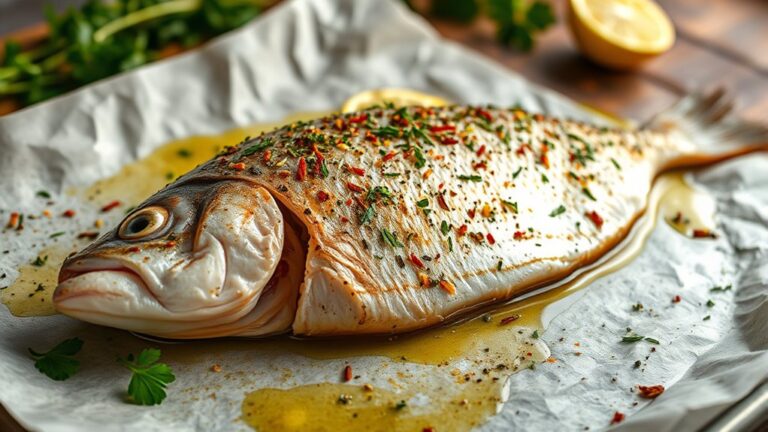
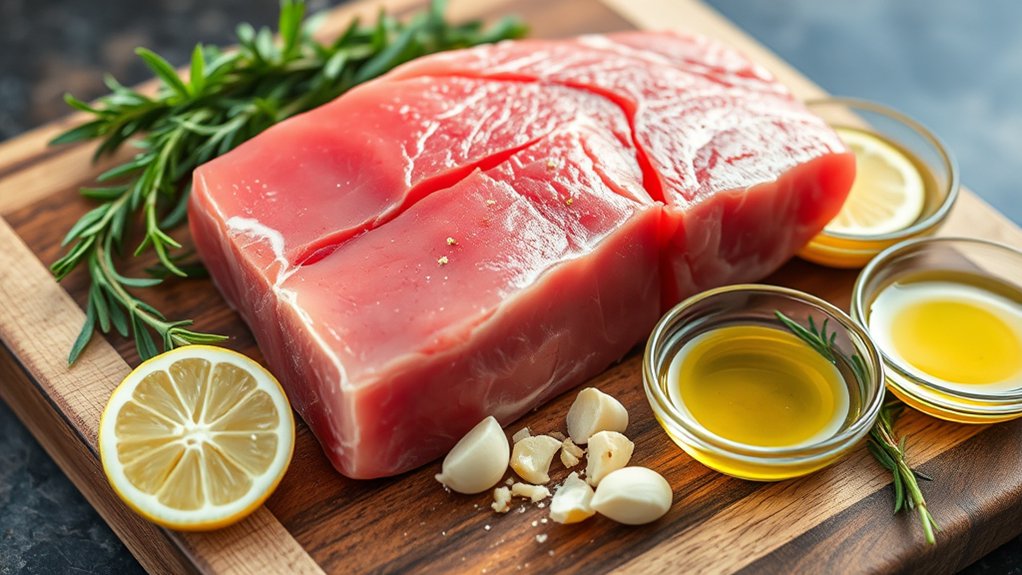
How to Cook Tuna Steak in Oven
A tuna steak in the oven can change from silky to dry fast, so you need to move like a steady hand over a hot pan. Cooking a tuna steak in the oven requires attention to detail to keep it tender and flavorful. You’ll want a thick, bright piece of tuna, lightly salted, peppered, and brushed with oil before it meets high heat.
The real key is timing, and once you know when to pull it, the whole method becomes much more precise than it first seems.
Key Takeaways
- Choose center-cut tuna steaks about 1 to 1.5 inches thick, with deep ruby-red flesh and a clean ocean smell.
- Season simply with salt, pepper, and a little olive oil; marinate only 10 to 20 minutes if using acidic flavors.
- Preheat the oven to 400°F to 450°F; optionally sear the tuna first for a better crust.
- Bake on a lightly oiled pan or rack for about 8 to 12 minutes, until the center reaches 115°F to 125°F.
- Rest briefly before serving, and pair with rice, potatoes, couscous, or a light sauce like soy-ginger glaze.
How to Choose Tuna Steak for Baking
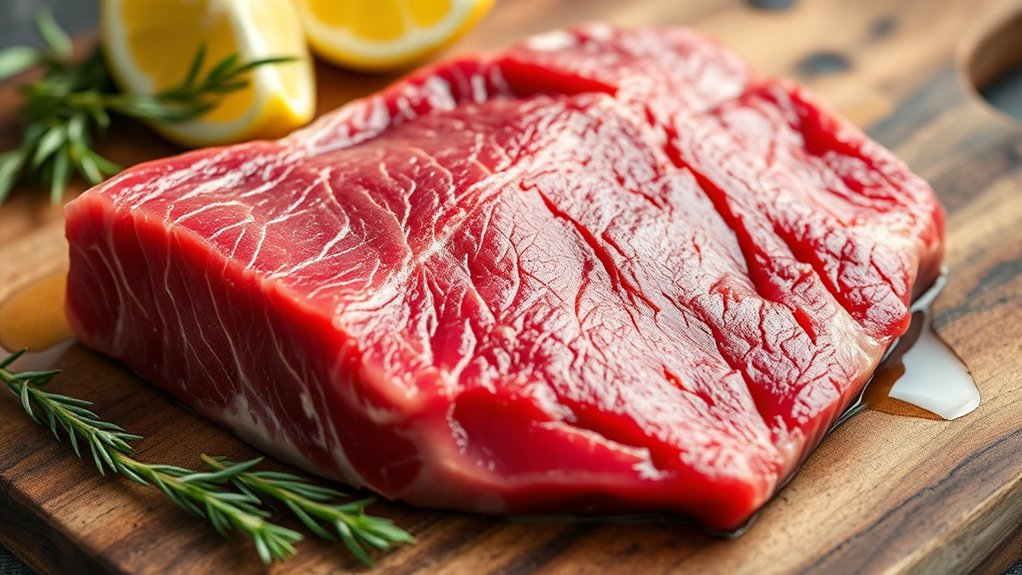
Choosing the right tuna steak starts with color, texture, and cut. You should look for deep, even flesh, whether ruby red or dark pink, with no brown edges or dry spots. Press it gently; it ought to feel firm and spring back, not mushy.
For baking, choose center-cut steaks about 1 to 1 1/2 inches thick so they cook evenly and stay moist. When you’re picking quality, favor pieces with a clean ocean scent and a glossy surface, since dull, cloudy fish often signals age.
If you see labels for sashimi-grade or previously frozen, that can help, but freshness matters more than marketing. Ask your fishmonger when the tuna arrived and how it was handled. Avoid steaks with strong fishiness, excess liquid, or cracked fibers.
If fresh tuna isn’t available, buying tins won’t give you the same texture, so save them for another recipe. Choose carefully, and your oven-baked tuna will slice cleanly and taste cleanly.
How to Season Tuna Steak
You can keep tuna steak seasoning simple with kosher salt, black pepper, and a light drizzle of olive oil to help the surface brown evenly. If you use a marinade, let it sit for 15 to 30 minutes so the fish picks up flavor without losing its firm texture.
For deeper flavor, pair tuna with garlic, lemon zest, soy sauce, sesame, or fresh herbs like thyme and parsley.
Basic Seasoning Blend
A simple blend of kosher salt, black pepper, and a light coating of olive oil gives tuna steak clean, balanced flavor without overpowering its natural richness. You should pat the steaks dry, then season both sides evenly so the surface browns well in the oven.
Use coarse salt for better control, and grind the pepper fresh for a sharper aroma. If your tuna variety is especially fatty, keep the seasoning restrained; leaner cuts can take a slightly heavier hand.
The olive oil helps the spices cling and promotes a subtle crust, creating appealing texture contrast between the seasoned exterior and the tender center. For a clean finish, add the seasoning just before cooking so the steak stays glossy and the seasoning stays bright, not muted or watery.
Marinade Timing Tips
For tuna steak, timing your marinade matters as much as the ingredients themselves. You should keep marinade timing short, usually 10 to 20 minutes, so the fish seasons without losing its clean texture.
If you leave tuna too long in acidic mixtures, the surface can turn mushy and cook unevenly in the oven. Pat the steak dry before marinating, then refrigerate it in a shallow dish or sealed bag for even contact and safe storage implications.
Use just enough marinade to coat, not drown, the flesh. If you want stronger seasoning, brush on a little extra after marinating instead of extending the soak.
Remove excess liquid before baking so the exterior sears properly and the flavor stays balanced, focused, and precise.
Flavor Pairing Ideas
| Flavor | Pantry staple | Effect |
|---|---|---|
| Citrus | Lemon zest | Sharpens richness |
| Umami | Soy sauce | Deepens savor |
| Nutty | Sesame oil | Adds warmth |
| Aromatic | Garlic | Brings bite |
| Fresh | Ginger | Brightens finish |
| Herbal | Dill | Lifts palate |
Keep seasoning light, then oven-roast fast so the tuna stays tender and vivid.
Best Oven Temperature for Tuna Steak
For tuna steak, you’ll get the best results in a hot oven, usually between 400°F and 450°F, so the exterior cooks fast while the center stays tender.
If you want a deeper crust, you can start with a quick high-heat sear before finishing in the oven. Judge doneness by internal temperature: aim for about 115°F to 125°F for rare to medium-rare, depending on your preference.
Ideal Temperature Range
What oven temperature gives tuna steak the best sear and the most tender center? You’ll usually find the ideal range between 425°F and 450°F, where the steak cooks quickly without drying out. This range respects tuna ecology by avoiding waste from overcooking a prized fish, and it supports kitchen safety because you can manage the process efficiently.
- Set the oven to 425°F for balanced, gentle roasting.
- Use 450°F if your steak is thick and you want faster surface browning.
- Keep the temperature consistent so the center stays moist and pink.
At this range, you control doneness precisely, preserve flavor, and maintain a clean, professional result.
High-Heat Searing
To get a deep sear on tuna steak, preheat your oven to 450°F and use a very hot pan or baking surface to start the browning fast. You’ll create a caramelized crust before the center overcooks.
Brush the fish lightly with oil, then season with salt, pepper, and smart spicing ideas like sesame, cumin, or smoked paprika. Press the steak dry first; surface moisture blocks browning.
Use cooking techniques that maximize contact, such as a cast-iron skillet or preheated sheet pan. Sear the first side for a minute or two, then finish in the oven just until the exterior sets.
Keep the heat high and the timing short so the texture stays firm outside and tender inside.
Doneness by Temperature
How do you know when tuna steak is done? You measure the center, not just the surface. For precise tuna doneness, use an instant-read thermometer and set your oven to 425°F for quick, controlled cooking. This gives you firm edges while keeping the middle rosy and moist.
Bake temperatures matter because tuna overcooks fast.
- 115°F: very rare, cool center.
- 120°F to 125°F: medium-rare, ideal for most steaks.
- 130°F and above: medium, firmer texture.
Pull the steak 5°F before your target, then rest it for 3 minutes. Carryover heat finishes the fish without drying it out. If you want cleaner slices, chill the steak briefly before baking, then recheck temperature at the thickest point.
How Long to Bake Tuna Steak
Bake tuna steak in a hot oven for about 8 to 12 minutes, depending on thickness and your preferred doneness. If your steak is 1 inch thick, start checking at 8 minutes; thicker cuts may need closer to 12 minutes.
You can follow this how to bake guideline with basic kitchen equipment, such as a sheet pan and instant-read thermometer. Set the oven to 425°F to 450°F, then place the steak on a lightly oiled pan or rack.
Bake until the exterior firms and the center reaches your target temperature from the earlier doneness guide. For rare, pull it sooner; for medium, bake a bit longer.
If you want a lightly seared edge, use a very hot oven and avoid overcrowding the pan. Let the steak rest briefly after baking so the heat settles evenly and slicing stays clean.
How to Keep Tuna Steak Juicy
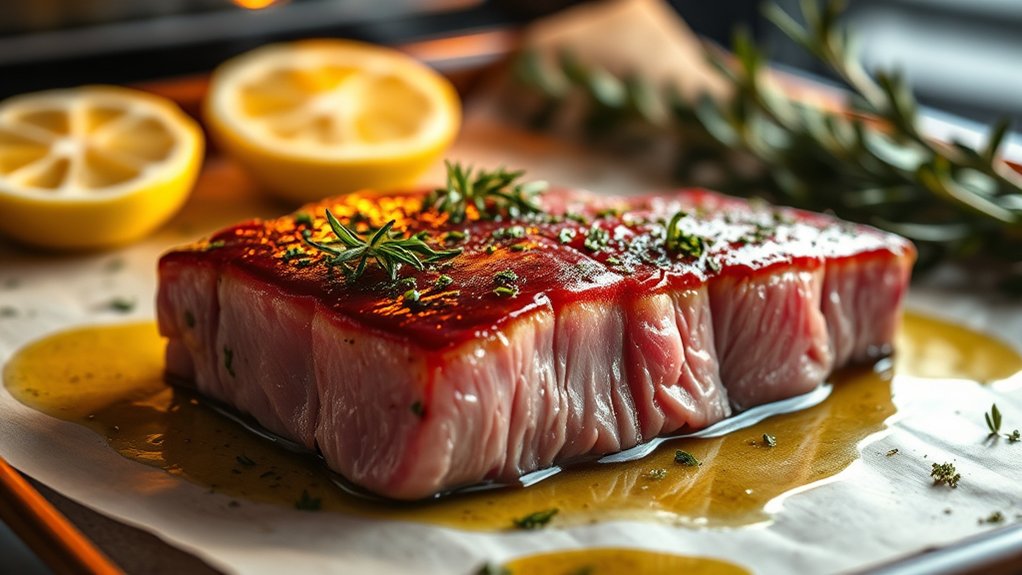
Juicy tuna steak starts with careful heat control, so don’t let the oven dry it out. For juicy basics, keep the steak cold until you’re ready, then let it sit 10 minutes after seasoning. Pat it dry, but don’t oversalt early, because salt can pull out moisture if it lingers.
Use a hot oven technique and a preheated pan or sheet so the exterior sears quickly while the center stays tender.
- Brush the steak lightly with oil.
- Bake just until the center turns opaque around the edges.
- Rest it briefly, covered loosely, to let juices redistribute.
Check doneness with an instant-read thermometer and pull it before it looks fully firm; carryover heat finishes the job. If you want extra insurance, baste with melted butter or pan juices during the final minute. Slice against the grain to keep each bite moist and clean-tasting.
What to Serve With Tuna Steak
What goes best with tuna steak? You want sides that respect its meaty texture and clean flavor. Serve it with a crisp fennel and cucumber salad, lightly dressed with lemon, olive oil, and dill, to add brightness without crowding the fish.
Roasted asparagus, green beans, or broccolini bring a tender bite and a slight char that complements the seared exterior. For a starch, choose jasmine rice, garlic mashed potatoes, or a small mound of herbed couscous; each absorbs the tuna’s savory juices well.
A soy-ginger glaze, wasabi aioli, or citrus vinaigrette adds sharp contrast. If you’re building a lighter plate, a simple tuna salad can work as an appetizer, while canned tuna recipes like white bean salad or stuffed tomatoes make easy sides for a casual meal.
Finish with pickled vegetables or avocado slices for creaminess and balance.
How to Store Leftover Tuna Steak
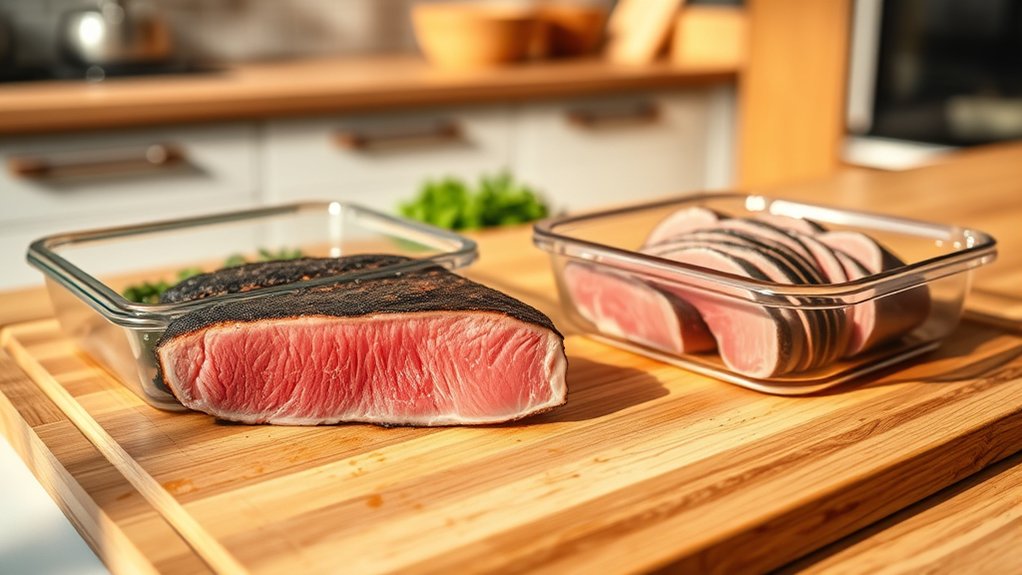
Cool leftover tuna steak quickly before storing it so the fish stays safe and keeps its texture. Pat it dry, then place it in a shallow airtight container or wrap it tightly in plastic and foil.
Follow strict storage guidelines: refrigerate it at 40°F or below within two hours, and eat it within 2 days for the best flavor. Keep it on a lower shelf, away from raw foods, so juices don’t drip onto other ingredients.
- Chill it fast before sealing.
- Label the container with the date.
- Freeze portions you won’t use soon.
For freezing tips, wrap each steak piece separately, then slip it into a freezer bag with excess air pressed out. Use frozen tuna within 1 month for peak quality. Thaw it overnight in the refrigerator, not on the counter, then reheat gently or serve cold in a salad.
Frequently Asked Questions
Can I Bake Frozen Tuna Steak Directly?
Yes, you can bake frozen tuna steak directly, but you’ll get better texture if you thaw it first.
If you marinate, adjust marinade timing after thawing so the fish absorbs flavor evenly.
Should I Use Parchment or Foil for Baking?
You can use either, but parchment vs foil depends on your goal: parchment prevents sticking and preserves moisture; foil boosts browning and easier cleanup.
For oven baking pros/cons, choose parchment for delicate tuna, foil for firmer edges.
Can Tuna Steak Be Marinated Overnight?
Yes, you can marinate tuna steak overnight, but you shouldn’t. Overlong marinade chemistry softens the flesh, and time temperature safety matters: keep it refrigerated, then marinate 15–30 minutes for clean, firm flavor.
Is a Meat Thermometer Necessary for Tuna Steak?
No, a thermometer isn’t strictly necessary, but it helps. You can judge doneness indicators by color and firmness: rare stays cool and red, while medium turns opaque and springy without overcooking.
Can I Broil Tuna Steak After Baking?
Yes, you can broil tuna steak after baking; it’ll finish with a crisp top. Use bake method tweaks like lowering time, then try broiling alternatives: 1–2 minutes per side, watching closely so you don’t overcook.
Conclusion
Now you know how to cook tuna steak in the oven with confidence. Choose a firm, sushi-grade steak, season it simply, and bake it hot and fast so the center stays tender. Keep a close eye on the temperature, then rest it before slicing.
When you handle tuna this way, you turn a weeknight dinner into a polished plate—like a chef’s spotlight on the freshest catch. Serve it right away for the best flavor. Mastering how to cook tuna steak in the oven ensures a delicious and impressive meal every time.