
How to Cook Italian Sausage in Oven
If you want to cook Italian sausage in the oven with crisp, bronzed casing and juicy meat inside, the oven makes it easy. You’ll need a baking sheet, parchment or foil, and a few simple seasonings to build flavor before the sausages ever hit the heat.
The real trick is knowing the right temperature and timing, because a small shift can change the texture completely—and that’s where things get interesting.
Key Takeaways
- Preheat the oven to 400°F and line a baking sheet with parchment paper or foil.
- Arrange fresh Italian sausage links in a single layer, lightly brushed with olive oil.
- Season simply with cracked pepper, garlic powder, fennel, or red pepper if desired.
- Bake for 20 to 30 minutes, turning once halfway through for even browning.
- Cook until the internal temperature reaches 160°F for pork or 165°F for poultry.
What You Need for Italian Sausage in the Oven?
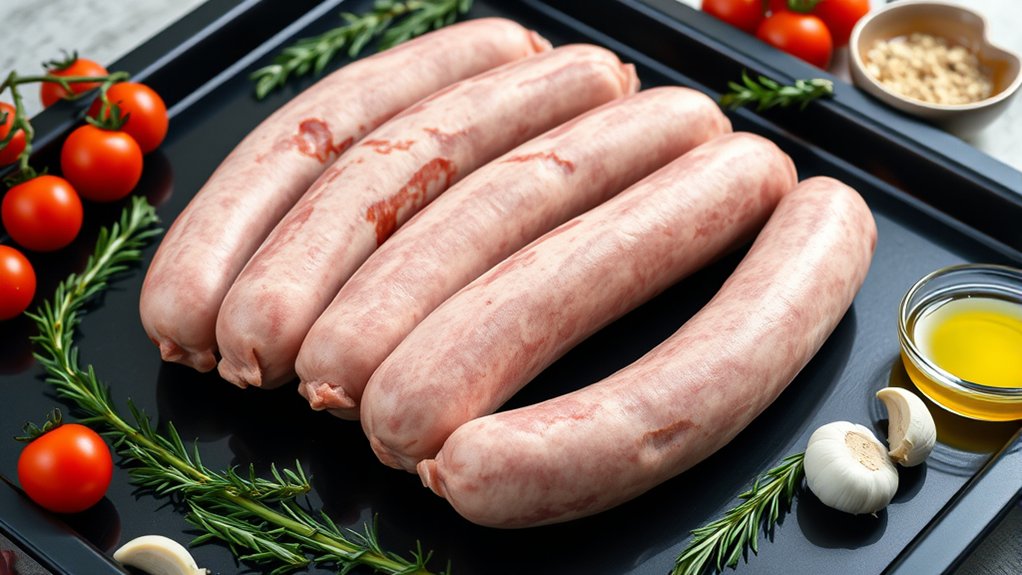
Before you start cooking Italian sausage in the oven, gather a few simple essentials: fresh or thawed Italian sausage links, a baking sheet or roasting pan, parchment paper or foil for easy cleanup, and a reliable oven. You’ll also want tongs for handling the links and a meat thermometer for checking doneness.
If you like extra flavor, keep sliced onions, bell peppers, or potatoes nearby for easy pairing ideas, though they’re optional. A light coating of oil can help prevent sticking and promote even browning. Keep a plate lined with paper towels ready if you want to drain excess fat after baking.
For storage tips, plan ahead: refrigerate raw sausage promptly and use sealed containers for leftovers. With these basics in place, you can focus on clean prep, steady heat, and the rich, savory aroma that makes oven-baked Italian sausage so satisfying.
How to Prepare Italian Sausage for Baking?
Start by choosing fresh Italian sausages with a firm texture, bright color, and no sour smell, since quality shows in every bite. You can prick them lightly with a fork if you want to reduce excess fat, but don’t overdo it or you’ll lose too much flavor.
Then season them with a touch of oil, herbs, or pepper so they’re ready to bake with a rich, savory finish.
Selecting Fresh Sausages
How do you choose the best Italian sausage for the oven? You want links that look plump, moist, and evenly colored, with a tight sausage casing that feels firm, not slack. Check the package date, then pick sausages with a clean, savory aroma and no gray patches.
If you like brighter flavor, choose varieties made with fresh herbs like fennel, parsley, or basil. These ingredients often signal a well-balanced seasoning profile before baking.
- Choose cold sausages.
- Avoid torn casings.
- Check for even fat distribution.
- Select uniform links for even baking.
When you handle them gently, you help them hold their shape and roast beautifully in the oven.
Pricking and Seasoning
Once you’ve chosen plump, fresh sausages, prep them for the oven by deciding whether to prick the casings lightly or leave them intact. If you want less splatter, use a fork sparingly; this supports pricking safety while still letting a little steam escape.
Don’t puncture deeply, or you’ll lose flavorful juices and dull the finished bite. Pat the sausages dry, then brush them with a thin film of olive oil so the skins brown evenly.
For seasoning variations, keep it simple with cracked pepper, garlic powder, and fennel, or add crushed red pepper for heat. If your sausages are already heavily seasoned, skip extra salt.
Massage the spices over the surface, arrange them on the tray, and they’re ready to bake beautifully.
What Temperature Should You Bake Italian Sausage At?
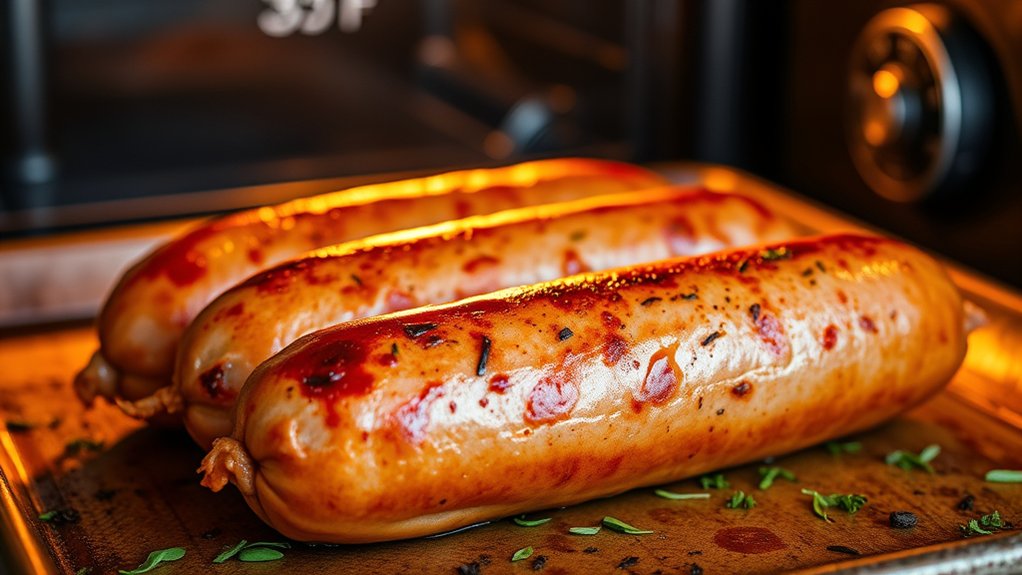
For the best balance of juicy meat and browning, bake Italian sausage at 400°F. This temperature lets the casing turn deeply golden while the center cooks through evenly, without drying out. You’ll get a savory, lightly crisp exterior and a tender bite inside.
If you’re planning two word ideas for a sheet-pan meal, 400°F fits right in; off topic temperatures can leave you with pale skin or tough meat.
- 350°F: gentler, slower browning.
- 375°F: a solid middle ground.
- 400°F: the sweet spot for most ovens.
- 425°F: faster color, less forgiveness.
Use 400°F when you want dependable results from fresh Italian sausage. Your oven’s heat should feel steady, not aggressive, so the links cook evenly and the fat renders without splattering excessively.
If your oven runs hot, 375°F can be a smart adjustment.
How Long Should Italian Sausage Bake?
Italian sausage usually bakes for 20 to 30 minutes, depending on your oven and how browned you want the casing. You should check the internal temperature with a meat thermometer and pull it when it reaches 160°F for pork or 165°F for chicken or turkey.
Thicker links and fresh sausage often need more time than thinner or pre-cooked ones, so size and type really matter.
Baking Time Range
How long should Italian sausage bake? You’ll usually need 20 to 30 minutes in a 400°F oven, but size and casing style shift the timing. Use sausage terminology to your advantage: links, ropes, or patties each brown differently, so don’t treat them the same. For even results, follow these steps:
- Arrange sausages in a single layer.
- Turn them once halfway through.
- Watch for deep golden color.
- Let your oven cleanup stay easy by lining the pan with foil.
If you bake thicker sausages, expect the longer end of the range; thinner ones finish sooner. Keep the heat steady, and you’ll get juicy, flavorful sausage with crisp edges and less fuss.
Internal Temperature Check
The safest way to know your Italian sausage is done is to check its internal temperature, not just its color. Slide a thermometer into the thickest part of the link, avoiding the pan, and look for 160°F.
At that point, the juices run clear and the center feels firm, giving you the rich, old world flavor you want without risking undercooked meat. This quick check protects food safety and removes the guesswork from baking.
If you’re serving sausage straight from the oven, let it rest for a few minutes so the heat settles evenly through the casing. You’ll keep the texture juicy, the seasoning bold, and the result consistently reliable every time.
When in doubt, trust the thermometer; it’s your best kitchen safeguard.
Size And Type Factors
Once you’ve confirmed the sausage has reached 160°F, the next question is timing, and that depends on what you’re baking. You’ll adjust for size considerations and casing options, because thicker links need more time than slim ones, and natural casings brown faster than softer ones.
- Small links: 15–18 minutes.
- Medium links: 18–22 minutes.
- Large sausages: 22–28 minutes.
- Split or flattened sausage: 12–15 minutes.
Bake at 400°F for even browning, and turn the sausages once halfway through so you get a deep, glossy finish all around. If you’re cooking with peppers or onions, the pan may steam slightly, so add a few extra minutes.
Watch for firm texture, crisped casing, and juicy centers rather than relying on color alone.
How to Tell When Italian Sausage Is Done?
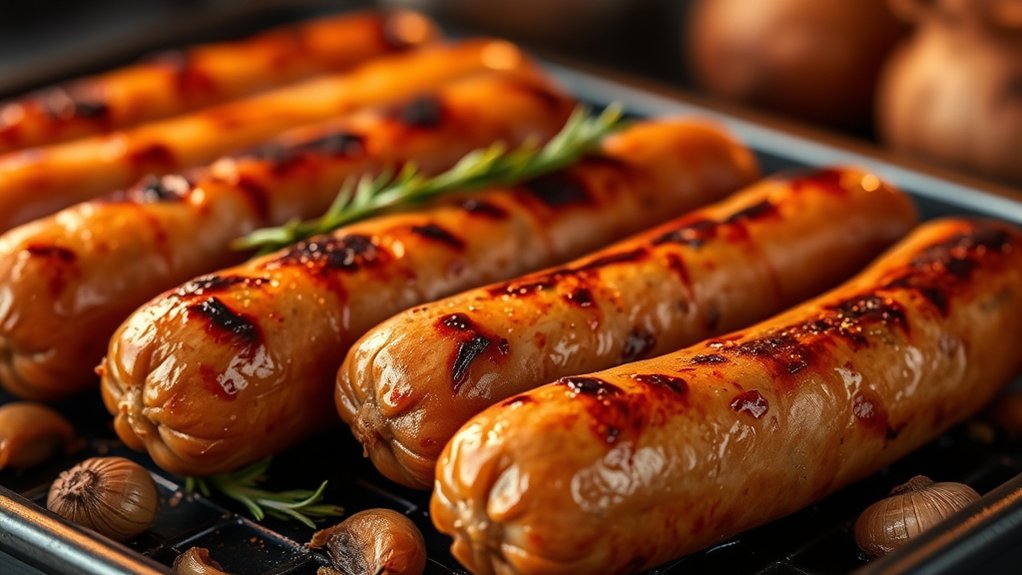
Watch for a deep golden-brown color and firm, springy texture to know your Italian sausage is done. You should also check that the casing looks evenly blistered, not pale or wet.
Look for deep golden-brown color, firm springy texture, and evenly blistered casing to know Italian sausage is done.
Slice into the thickest link if you need a visual cue; the meat should be opaque throughout, with no pink center or glossy raw patches. For exactness, use an instant-read thermometer and aim for 160°F for pork sausage or 165°F for poultry sausage.
That simple check gives you reliable tips when doneness looks uncertain. If you’re comparing brands in a price comparison, don’t assume a pricier sausage cooks differently; thickness and fat content matter more than cost.
Let the sausage rest briefly after baking so the juices settle and the texture stays juicy, then serve with confidence. If the sausage feels soft, translucent, or releases cloudy juices, give it more time in the oven.
How to Serve Oven-Baked Italian Sausage?

Serve oven-baked Italian sausage hot, sliced, or whole, depending on the dish you’re building. Let the juices stay inside, then plate it with something bright, starchy, or saucy so every bite feels balanced. If you want a crisp finish, give the sausage a minute under the broiler for deeper color and a better crispy skin.
- Tuck slices into toasted rolls with peppers and onions.
- Add whole links to pasta with marinara and basil.
- Serve beside roasted potatoes and a mustard dip.
- Pair with a garlic twist by spooning garlicky beans or aioli alongside.
You can also layer it into grain bowls, pizza, or a warm salad. Keep the portions generous, but don’t drown the sausage; you want its savory spice to stand out. A squeeze of lemon or a few chopped herbs can sharpen the flavor and make the plate look vibrant.
Frequently Asked Questions
Can I Bake Italian Sausage From Frozen?
Yes, you can bake frozen sausage, but you’ll need extra time and careful heat. If you want faster results, use safe thawing methods first, then bake until the center reaches 160°F for juicy, evenly cooked sausage.
Should I Pierce Sausage Before Baking?
No, you shouldn’t pierce sausage before baking; you’ll lose juices and flavor. Bake at the proper baking temperature, turning once, until browned and cooked through.
You’ll get plump, moist links with better texture.
Can I Use Parchment Paper or Foil?
Yes, you can use parchment paper or foil; they’re your heat-proof stage. You’ll gain parchment confidence and better flavor layering, while keeping cleanup easy and your sausages browning evenly without sticking.
How Do I Reduce Grease in the Oven?
Use a rack over a lined sheet so fat drips away, and you’ll get better grease reduction. Don’t overcrowd, and turn the sausages once for even oven browning without letting them sit in pooled grease.
Can I Bake Sausage With Vegetables?
Yes, you can bake sausage with vegetables; like a well-tuned duet, they deepen each other’s notes. You’ll get easy indoor roasting and smart flavor pairing.
Toss everything with oil, then roast until browned and tender.
Conclusion
Now you know how to cook Italian sausage in oven with confidence, and it’s easier than you might expect. You don’t need fancy tools or complicated steps—just a hot oven, a lined pan, and a little attention to turn them halfway.
If you’ve worried the casings might dry out, don’t: a quick rest keeps them juicy and flavorful. Serve them with peppers, onions, or potatoes, and you’ll have a simple, satisfying meal every time.
With these easy tips, cooking Italian sausage in oven becomes a hassle-free way to enjoy a delicious dish any night of the week.