How Long to Cook Steak in Oven
If you want to know how long to cook steak in the oven, you’ll need to match the oven time to the thickness and desired doneness of your steak. At 400–450°F, a 1-inch steak usually takes 8–12 minutes, a 1.5-inch steak takes 12–18 minutes, and a 2-inch steak needs 18–25 minutes.
A quick sear before or after baking helps develop flavor and texture, but the thermometer tells the real story when it comes to doneness.
Remember, the resting step is crucial and changes more than you might expect. It allows the juices to redistribute, making your steak tender and juicy.
Key Takeaways
- Bake steaks at 400°F to 450°F; 450°F gives a stronger crust, while 400°F cooks more gently.
- After searing, cook 1-inch steaks 8–12 minutes, 1.5-inch steaks 12–18 minutes, and 2-inch steaks 18–25 minutes.
- Use doneness targets: 125°F rare, 135°F medium-rare, 145°F medium, and 160°F well-done.
- Remove steaks about 5°F before target temperature, since carryover heat continues cooking them.
- Rest steaks 5–10 minutes before slicing across the grain for better juiciness and texture.
Steak Oven Cooking Times by Doneness
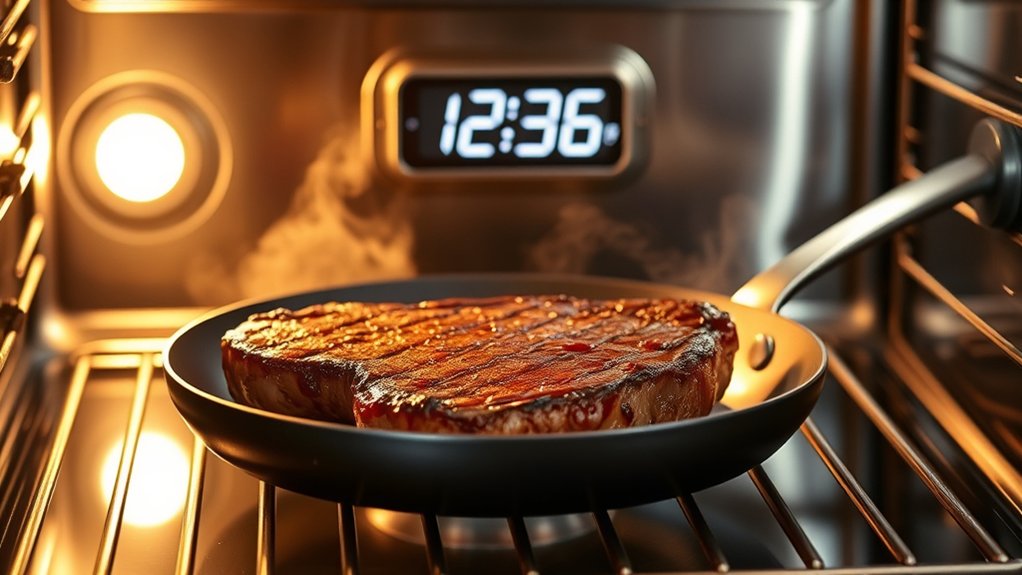
Wondering how long to cook steak in the oven? You’ll tailor oven time to the doneness you want. For rare, cook a 1-inch steak about 4 to 6 minutes after searing, then rest it briefly; the center should stay cool and red.
Cook a 1-inch steak 4 to 6 minutes after searing for a cool, red rare center.
For medium-rare, plan on 6 to 8 minutes, aiming for a warm red center and a juicy texture. Medium usually needs 8 to 10 minutes, giving you a pink center with firmer bite.
Medium-well often takes 10 to 12 minutes, while well-done can reach 12 to 14 minutes, though the meat loses tenderness. Use thickness, not guesswork, to guide timing, and adjust slightly for thicker cuts.
Rest the steak before slicing so juices redistribute. Then match your flavor pairing with the doneness you choose, whether that’s butter, herbs, or a peppery sauce.
What Oven Temperature Is Best for Steak?
For the best steak, use a hot oven, typically 400°F to 450°F, so the outside finishes quickly while the inside stays tender and juicy. At this range, you get dependable browning without overcooking the center, which helps preserve a juicy texture.
If you want a stronger crust, lean toward 450°F; if you prefer a gentler finish, 400°F works well and still supports good flavor balance. Preheat the oven fully before the steak goes in, because a stable temperature improves consistency and reduces the risk of uneven cooking.
You should also keep the oven door closed as much as possible, since heat loss can slow the sear and dull the final result. For most cuts, this temperature range gives you controlled cooking, clear doneness, and a steak that tastes rich, savory, and balanced from edge to center.
How Steak Thickness Changes Bake Time
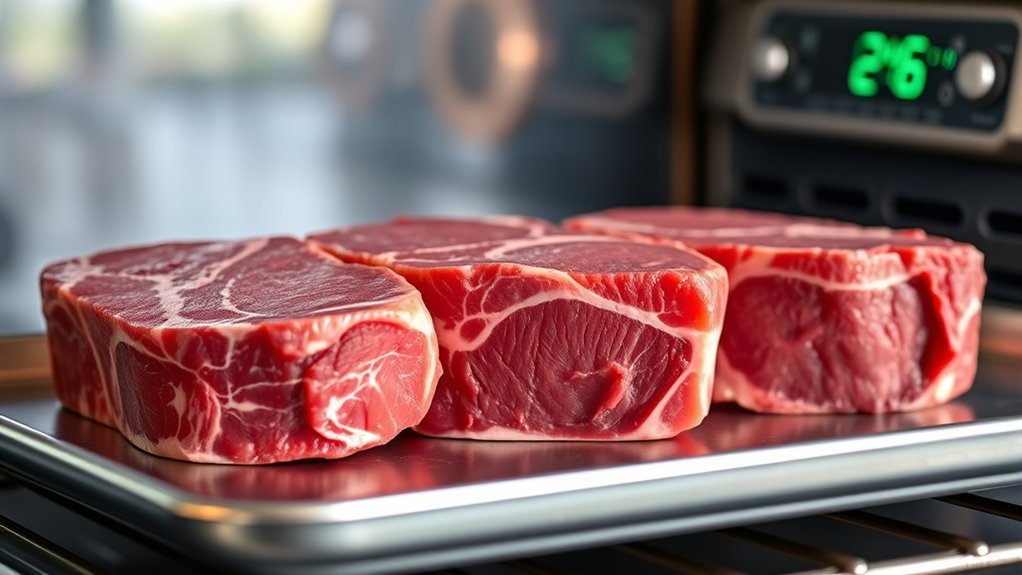
Steak thickness directly affects how long you need to bake it, because thicker cuts take longer for heat to reach the center while thinner steaks cook through much faster. You should treat thickness impact as a core timing factor, not a small adjustment.
A 1-inch steak may need about 8 to 12 minutes, while a 1.5-inch cut often needs 12 to 18 minutes, depending on oven temp variance and your target doneness.
| Thickness | Bake time |
|---|---|
| 1 inch | 8–12 minutes |
| 1.5 inches | 12–18 minutes |
| 2 inches | 18–25 minutes |
When you measure the steak before baking, you can estimate timing more accurately and reduce overcooking risk. Keep in mind that even a small increase in thickness changes heat transfer noticeably, so you shouldn’t use one fixed time for every steak.
Instead, adjust your bake window to the cut’s size and monitor doneness closely.
Should You Sear Steak Before Baking?
Searing before baking is usually worth it if you want better flavor, deeper browning, and a more appealing crust. You start by heating a heavy skillet until it’s very hot, then sear the steak briefly in oil to build color and develop browned bits on the surface.
Searing before baking is usually worth it for deeper browning, better flavor, and a more appealing crust.
This step improves the result because dry oven heat alone can’t create the same depth. If you prefer the pan to oven method, sear first, then transfer the skillet to the oven to finish cooking evenly.
That approach gives you strong searing vs finishing control: the skillet handles crust formation, while the oven manages gentler cooking through the center. You don’t need a long sear; a short, high-heat contact on each side usually works best.
If you skip searing, you can still bake steak, but you’ll trade away flavor, texture, and visual appeal.
How to Check Steak Doneness With a Thermometer
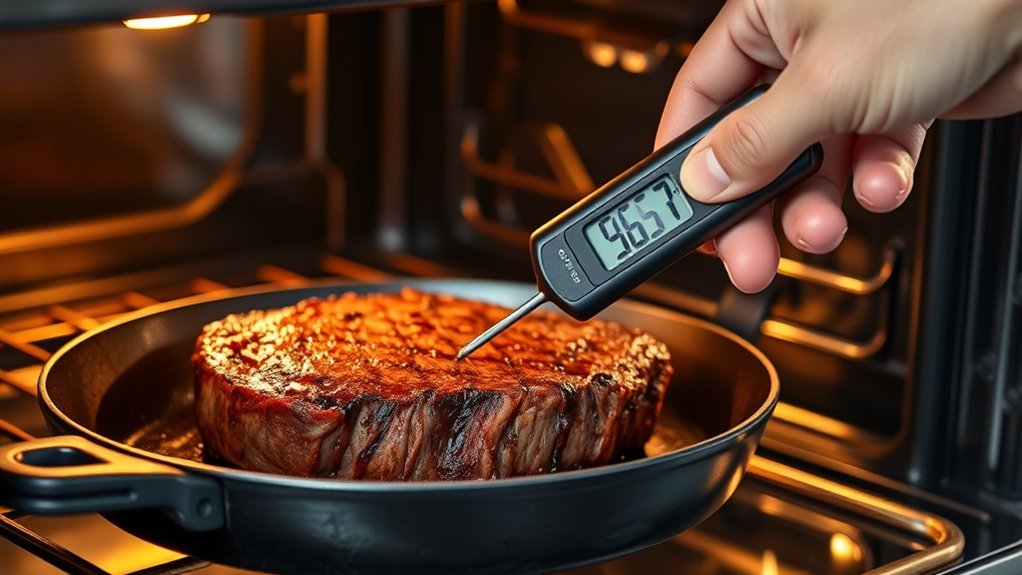
To check steak doneness accurately, insert an instant-read thermometer into the thickest part of the steak, avoiding fat, bone, and the pan. Aim for about 125°F for rare, 135°F for medium-rare, 145°F for medium, and 160°F for well-done, then account for a few degrees of carryover cooking.
You can also confirm the result by looking for visual cues such as firmness, juices, and color in the center.
Thermometer Placement Tips
Wondering where to insert your thermometer for the most accurate reading? You should aim for the thickest part of the steak, because that’s where temperature changes most slowly. Avoid bone, fat, and the pan’s surface, since they can skew your reading.
For cleaner results, use these two word discussion idea one and two word discussion idea two principles:
- Insert the probe horizontally from the side, not the top, so you reach the center quickly.
- Stop when the tip sits near the middle, with no contact against gristle or bone.
- Hold the thermometer steady for a few seconds until the reading stabilizes.
You’ll get the best accuracy if you check several spots and trust the lowest consistent reading.
Target Temperature Guide
How do you know when steak is done? Use an instant-read thermometer and aim for exact internal temperatures. For rare, pull it at 120°F to 125°F; medium-rare, 130°F to 135°F; medium, 140°F to 145°F; medium-well, 150°F to 155°F; and well-done, 160°F or higher.
Insert the probe into the thickest part, avoiding bone and fat, then wait for the reading to stabilize. Remove the steak from the oven about 5°F before your target, because carryover cooking will raise the temperature as it rests.
This approach protects juicy texture and supports flavor development by preventing overcooking. If you want consistency, record your preferred finish temperature and repeat it each time.
Verify doneness with the thermometer before slicing so you keep control of the final result.
Doneness Visual Cues
Even with a thermometer, it helps to know the visual signs of doneness so you can double-check the steak as it cooks. You should inspect doneness visual cues alongside internal temperature, because steak appearance can confirm whether the center is progressing as expected.
- Rare steak looks soft, with a cool red center and minimal surface resistance.
- Medium-rare shows a warm red core, firmer edges, and light juices that bead on top.
- Medium and beyond display a pink center, tighter texture, and a darker, more opaque exterior.
Press the steak gently with tongs; it should feel firmer as it cooks. If the exterior browns too quickly, reduce heat or tent loosely. These checks help you remove the steak at the right moment.
Why Steak Needs to Rest After Cooking
After you pull the steak from the oven, let it rest so the juices can redistribute through the meat instead of spilling out when you cut it. This short pause helps the fibers relax, which gives you a more tender, even slice.
If you skip resting, you’ll lose moisture and the steak won’t cut as cleanly.
Juice Redistribution
Ever wonder why a steak seems juicier after it rests? When you pull it from the oven, the hot fibers are still contracting and pushing moisture outward. If you cut too soon, you let those juices escape onto the plate instead of letting them redistribute through the meat.
Resting gives internal pressure time to equalize, so each bite stays moist and evenly seasoned. This matters more than smoke point debates; your goal is retention, not more heat.
- Let the steak rest on a warm plate.
- Keep it loosely covered, not sealed.
- Wait long enough for the center to relax.
During this pause, temperature gradients soften, and liquid moves back toward the middle. That’s how you preserve texture, flavor, and precision.
Better Slice Texture
Why does a rested steak slice cleaner and taste more tender? Because you let the muscle fibers relax after heat drives moisture inward. When you cut too soon, juices rush out, the surface tears, and you lose a better slice.
Resting lets the meat firm slightly, so your knife meets less resistance and creates neater edges. That improved texture consistency matters especially for thicker cuts, where carryover heat continues to settle proteins without overcooking the exterior.
You should rest the steak on a cutting board, loosely tented, for 5 to 10 minutes, depending on thickness. Then slice across the grain with a sharp knife. You’ll see cleaner sections, tighter structure, and a more polished bite that holds together on the plate.
Frequently Asked Questions
Can I Cook Frozen Steak Directly in the Oven?
Yes, you can cook frozen steak directly in the oven, but you’ll need extra time. Prioritize frozen thaw timing and meat thaw safety. Use a hot oven, monitor doneness, and avoid serving undercooked centers.
Which Oven-Safe Pan Works Best for Baking Steak?
You’ll get the best steak sear in a heavy cast-iron best skillet, oven safe, like a reliable workhorse; it holds heat evenly, resists warping, and lets you move straight from stovetop to oven.
Should I Season Steak Before or After Baking?
You should season steak before baking; seasoning timing matters because salt draws out moisture, then helps flavor sealing as it rests. Pat it dry first, season generously, and bake immediately or after a short rest.
Can I Broil Steak Instead of Baking It?
Yes, you can broil steak instead of baking it; it’s a smart shortcut. In broil vs bake, broiling sears fast under high heat, and oven broiling alternatives help you hit the ground running with juicy results.
How Do I Reheat Leftover Steak Without Drying It Out?
Reheat leftover steak gently at 250°F on a rack over a tray, then cover loosely with foil. These oven techniques preserve moisture during leftover reheating; stop when it’s warm, and rest before slicing.
Conclusion
In the oven, your steak’s bake time depends on thickness and doneness, so use the guide, not guesswork. For best results, sear it first, roast at 400–450°F, and check with a thermometer: 125°F for rare, 135°F for medium-rare, and 145°F for medium.
Then let it rest 5–10 minutes. As the saying goes, good things come to those who wait—and a rested steak rewards you with juicier, more even bites.
Remember, knowing how long to cook steak in oven is key to achieving the perfect level of doneness every time.