How to Cook Meatballs in Oven
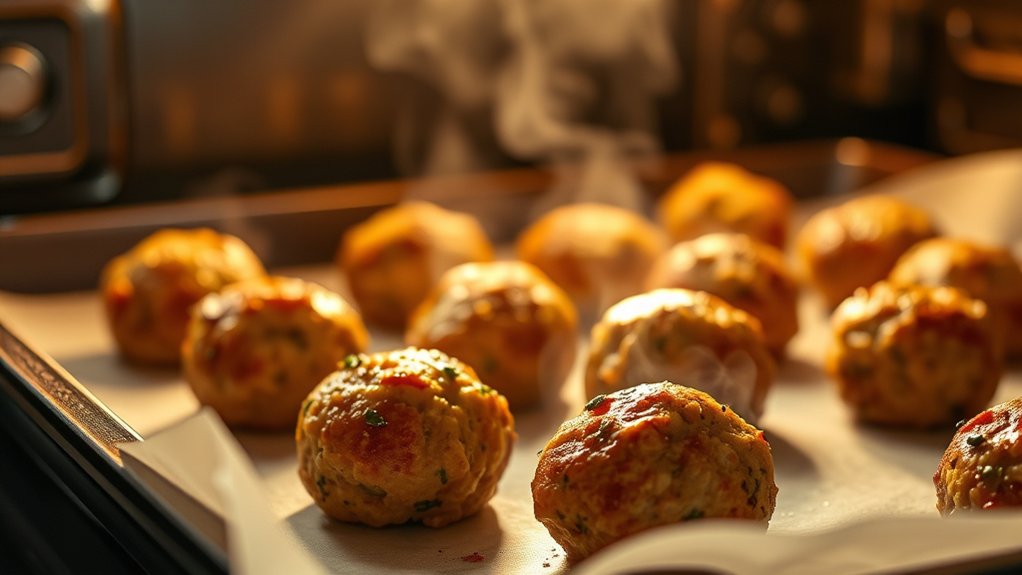
Like a well-kept kitchen secret, cooking meatballs in the oven rewards a careful hand. You start by mixing ground meat with egg, breadcrumbs, grated onion, garlic, salt, pepper, and any herbs or cheese you like. Then, shape them gently into smooth 1- to 1 1/2-inch balls.
Preheat the oven to 400°F, or 375°F for larger meatballs. Bake until browned and cooked through, and you’ll see why the resting step matters before the sauce comes in.
Key Takeaways
- Combine ground meat with eggs, breadcrumbs, onion, garlic, seasonings, and optional herbs or cheese until just cohesive.
- Shape meatballs into uniform 1 to 1½-inch balls, handling gently and spacing them apart on the baking tray.
- Preheat the oven to 400°F, or 375°F for larger meatballs, for balanced browning and tenderness.
- Bake about 15 to 20 minutes, turning once halfway, until cooked through and the center reaches safe temperature.
- Rest briefly after baking, then serve with warm sauce, pasta, vegetables, or garnishes like Parmesan and herbs.
What Ingredients Go Into Oven Meatballs?
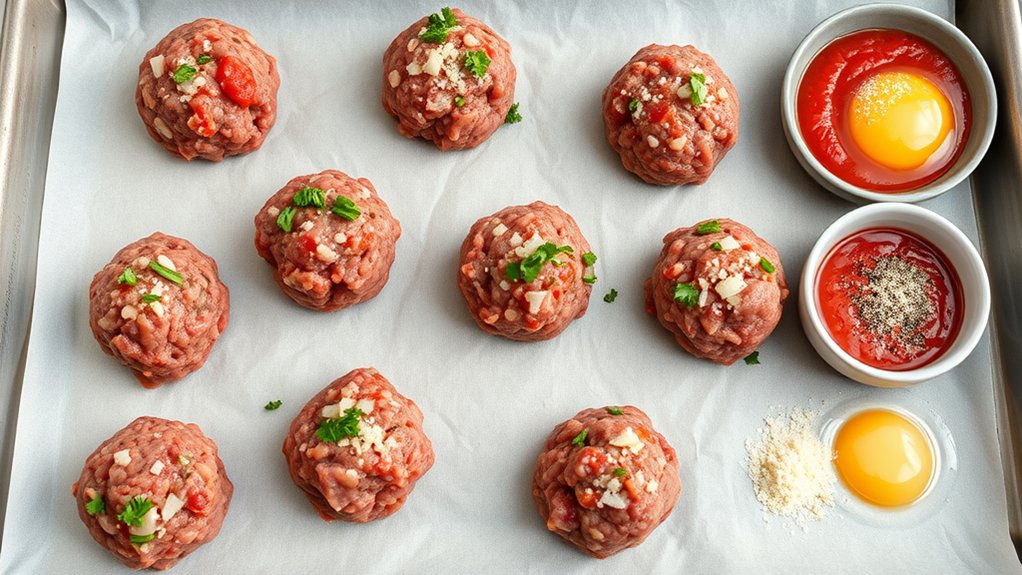
For oven meatballs, you’ll want a balanced mix of ground meat, a binder, seasoning, and moisture. Choose beef, pork, turkey, or a blend, then add eggs and breadcrumbs to help hold the mixture together.
Use grated onion, minced garlic, salt, black pepper, and herbs for flavor. If the mixture feels dry, add milk, broth, or a little olive oil. If it feels loose, add a bit more breadcrumb.
You should keep the texture cohesive but not dense. This two word discussion idea stays oven specific because the heat dries meatballs faster than pan cooking, so moisture matters. Avoid overloading with filler ingredients, which can mute flavor and weaken texture.
Taste the mixture if your recipe allows a small cooked sample, then adjust seasoning before baking. When you choose quality ingredients and a clean ratio, you set up meatballs that bake evenly and stay tender inside.
How Should You Shape Oven Meatballs?
Shape your meatballs into even portions so they bake at the same rate and finish with the same texture. Use a gentle rolling motion between your palms, just enough to hold the mixture together without compacting it.
Keep the shapes smooth and consistent, since uniform meatballs brown more evenly in the oven.
Uniform Meatball Size
How should you shape oven meatballs? You should portion the mixture into uniform sizing so each piece cooks at the same rate. Aim for balls about 1 to 1 1/2 inches wide, unless your recipe specifies otherwise. Use a scoop or scale to measure equal portions, then shape each one to match.
Consistent size helps you avoid dry edges on small pieces and undercooked centers in larger ones. It also promotes even browning on the baking sheet, so the batch finishes together. Set each meatball with enough space around it for hot air to circulate freely.
If you vary the size, adjust the smallest and largest pieces before baking. Precision now gives you better texture, cleaner timing, and a more reliable result.
Gentle Rolling Technique
Once you’ve portioned the mixture into even pieces, roll each one lightly between your palms just until it holds together. Use gentle rolling instead of pressing hard; this keeps the meatballs tender and prevents a dense, compact texture.
Aim for smooth, round shapes, but don’t overwork the mixture, or the fat can warm and the meatballs may toughen. If the surface cracks, moisten your hands slightly and finish shaping with a few quick turns.
Set each meatball on the tray with a little space between them so heat circulates evenly. These oven friendly tips help the meatballs brown properly and stay juicy.
Stop shaping as soon as they look cohesive and uniform, then bake right away for the best texture and rise.
What Oven Temperature Is Best for Meatballs?
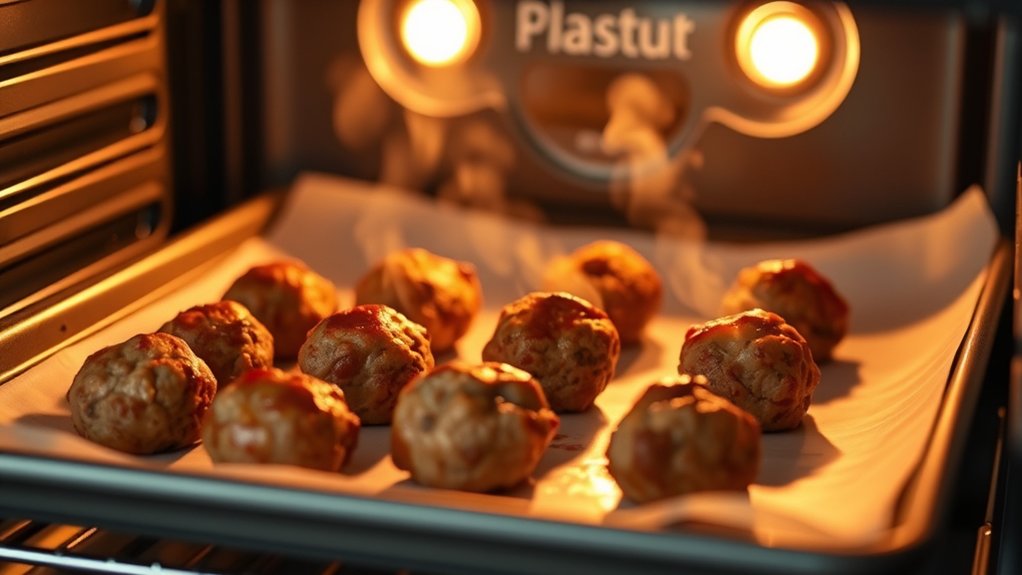
What oven temperature works best for meatballs? You’ll get the best balance at 400°F, which browns the surface efficiently while keeping the center tender.
Many cooks fall for savory misconceptions, thinking a lower temperature always means juicier results, but that often leaves you with pale, soft meatballs instead of appealing texture contrasts.
At 400°F, you create a well-set exterior that holds its shape and develops flavor without drying out the meat. If your meatballs are especially small, you can still use this temperature and rely on careful monitoring.
For larger meatballs, 375°F can work when you want a gentler bake and a slightly softer crust. Either way, preheat fully before you slide the tray in, because consistent heat helps the meatballs cook evenly from the start.
Keep the oven stable, avoid crowding the pan, and let the heat do its job.
How Long Should Meatballs Bake?
Bake meatballs for about 15 to 20 minutes at 400°F, depending on their size. You should turn them once halfway through so they brown evenly on both sides. Small meatballs, about 1 inch wide, often finish closer to 15 minutes; larger ones, closer to 20 minutes.
If you make them very dense or tightly packed, add a few extra minutes and check the center. Use a thermometer if you want precision: beef, pork, veal, or mixed meatballs should reach 160°F, and poultry meatballs should reach 165°F. Don’t rely on color alone, since oven heat can vary.
If your tray is crowded, the meatballs may need a little longer. One idea is to test one meatball first; if it’s done, the rest usually are too. Skip any topic unrelated, and focus on size, spacing, and temperature for reliable results every time.
How Do You Keep Meatballs Juicy in the Oven?
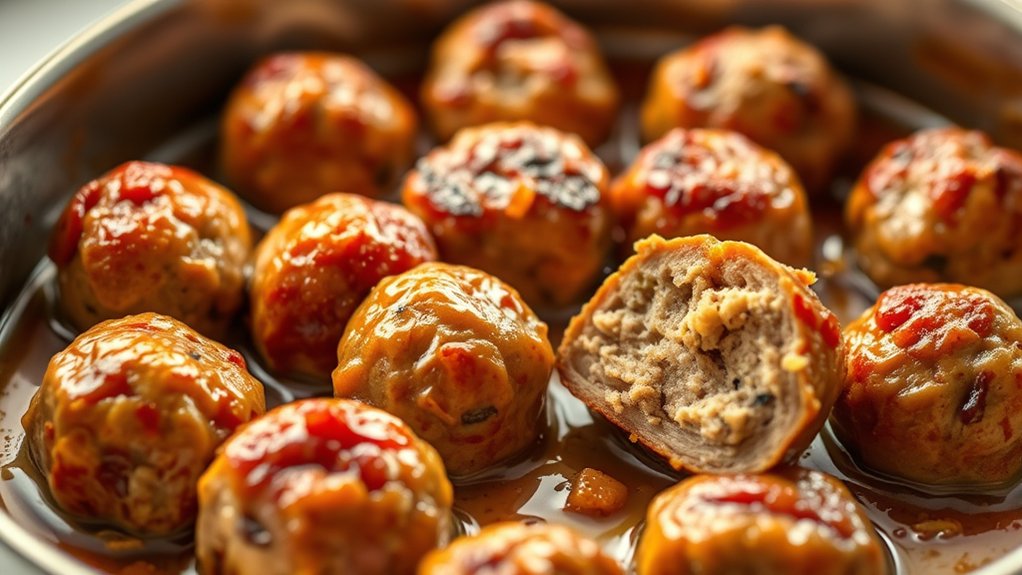
You’ll keep meatballs juicy by choosing ground meat with enough fat, like beef, pork, or a blend. Mix in moisture-rich ingredients such as egg, milk, soaked breadcrumbs, or finely grated onion to help the meat stay tender.
Bake just until they’re cooked through, since overbaking dries them out fast.
Choose The Right Meat
To keep oven-baked meatballs juicy, start with the right meat blend: a mix with enough fat, such as 80/20 beef or a combination of beef, pork, and veal, gives you flavor and moisture without turning greasy. You should choose fresh meat from reliable meat sourcing, then season it with savory spices that support, not mask, the meat’s character.
| Meat option | Fat level | Best result |
|---|---|---|
| 80/20 beef | Medium | Rich, tender bites |
| Beef and pork | Higher | Soft, succulent texture |
| Beef, pork, veal | Balanced | Delicate, juicy finish |
When you select the right grind, you help the meatballs hold shape and stay supple in the oven. Avoid extra-lean cuts, which dry out quickly and taste flat.
Add Moisture-Rich Ingredients
How do you keep meatballs juicy in the oven? Add moisture-rich ingredients like grated onion, soaked breadcrumbs, milk, or ricotta to your mix. These ingredients improve moisture retention by holding liquid during baking, so the meat stays tender instead of dry.
You should also work in eggs gently; they help bind without tightening the mixture. For better fat distribution, combine the meat with the wet ingredients until just unified, not dense. This keeps the texture soft and even.
Use aromatics, herbs, and cheese to support flavor balance, then match them with smart spice pairing, such as garlic, parsley, black pepper, or fennel. When you season the mix well and add enough moisture, you create meatballs that bake up juicy, flavorful, and satisfying.
Avoid Overbaking Meatballs
Overbaking is the fastest way to dry out meatballs, so pull them from the oven as soon as they reach a safe internal temperature and look just cooked through. Use a thermometer and check the center of the largest meatball; don’t guess by color alone.
Smaller meatball shapes cook faster, so watch them closely and start checking a few minutes early. Bake at a moderate temperature so the exterior sets before the inside loses moisture. If you need even browning, rotate the pan once instead of extending the bake.
Line your sheet pan with foil or parchment for easier oven cleanup, but don’t let convenience tempt you to overcook. Rest the meatballs briefly after baking so juices redistribute and each bite stays tender.
When Should You Check Meatballs for Doneness?
Check your meatballs near the end of the baking time, usually about 5 minutes before they should be done, so you can catch them before they dry out. This timing lets you protect a tender texture while preserving flavor balance.
For most standard meatballs, start checking at the 15- to 18-minute mark if they’re medium-sized, or a little earlier for smaller ones. Open the oven quickly, then test the center of one meatball with an instant-read thermometer.
You want 160°F for beef, pork, or veal, and 165°F for poultry. If you don’t have a thermometer, cut one meatball in half; the juices should run clear, and the center shouldn’t look pink.
Return them to the oven only as long as needed. Once they reach temperature, pull them out right away and let them rest briefly so the heat finishes the cooking evenly.
How Can You Serve Baked Meatballs?
Once your meatballs are cooked through and rested, you can serve them in several simple, satisfying ways. For classic plating options, nestle them over spaghetti, linguine, or polenta, then spoon warm tomato sauce over the top.
If you want a lighter meal, arrange them on a platter with roasted vegetables and a bright green salad. For an appetizer, skewer each meatball with a toothpick and set out dipping sauces.
Good sauce pairing matters: try marinara, garlic cream, pesto, or a spicy harissa yogurt. You can also tuck the meatballs into toasted rolls with melted provolone for sandwiches.
For polished serving suggestions, finish with grated Parmesan, chopped basil, or parsley, and add a drizzle of olive oil. Keep the sauce hot, the garnish fresh, and the portions balanced so each bite stays tender, flavorful, and easy to eat.
Frequently Asked Questions
Can You Freeze Uncooked Meatballs Before Baking?
Yes, you can freeze uncooked meatballs before baking. Use a proper freezing technique: arrange them on a tray, freeze until firm, then bag them. This helps prevent sticking and minimizes texture impact.
Should Meatballs Be Browned Before Oven Baking?
Yes, you should brown meatballs first if you want better flavor and a firmer texture impact. You’ll use the browning technique to develop color; then bake them until they’re cooked through and juicy.
Can You Use a Rack for Baking Meatballs?
Yes, you can use a rack; it lets hot air swirl like a breeze around each meatball. Set them on a rack over a pan, then bake until browned. This supports even cooking and cleaner fat drip.
What Ground Meat Works Best for Meatballs?
Pork and beef usually make the best meatballs because they stay juicy and flavorful.
You can also use ground beef and turkey for a lighter option, but add fat or moisture so they don’t dry out.
How Do You Reheat Leftover Baked Meatballs?
You’ll warm leftover baked meatballs in a 350°F oven, covered, for 10–15 minutes until hot inside. For reheating leftovers, add sauce pairings like marinara or gravy just before serving, then watch their aroma bloom.
Conclusion
Now you’ve got oven meatballs that practically steal the show. With the right mix, gentle shaping, and a hot oven, you’ll pull out tender, juicy bites with browned edges that look straight out of a trattoria.
Check for doneness, let them rest, and don’t skimp on the sauce. Pile them over pasta, polenta, or crusty bread, and you’ll turn a simple dinner into a full-on feast that disappears in minutes.
Mastering how to cook meatballs in the oven ensures you always have a delicious, crowd-pleasing meal ready to enjoy.