How to Cook Mahi Mahi in Oven
To cook mahi mahi in the oven, you’ll want to start with firm, fresh fillets and a hot, steady temperature so the fish stays moist instead of drying out.
You can season it simply or build more flavor with a quick marinade, but the timing matters more than you might think.
Once it hits the oven, a few minutes can make the difference between tender and overdone, and that’s where the real technique begins.
Key Takeaways
- Preheat oven to 400°F and line a baking sheet with parchment for easy cleanup.
- Pat mahi mahi dry, brush with olive oil, and season with salt, pepper, garlic powder, and lemon.
- Choose fresh, firm, even-thickness fillets, preferably center-cut, for consistent baking.
- Bake on the center rack for 10 to 12 minutes per inch of thickness, until opaque and flaky.
- Rest 2 minutes, then serve with rice, vegetables, or salad and a lemon garnish.
How to Cook Mahi Mahi in the Oven
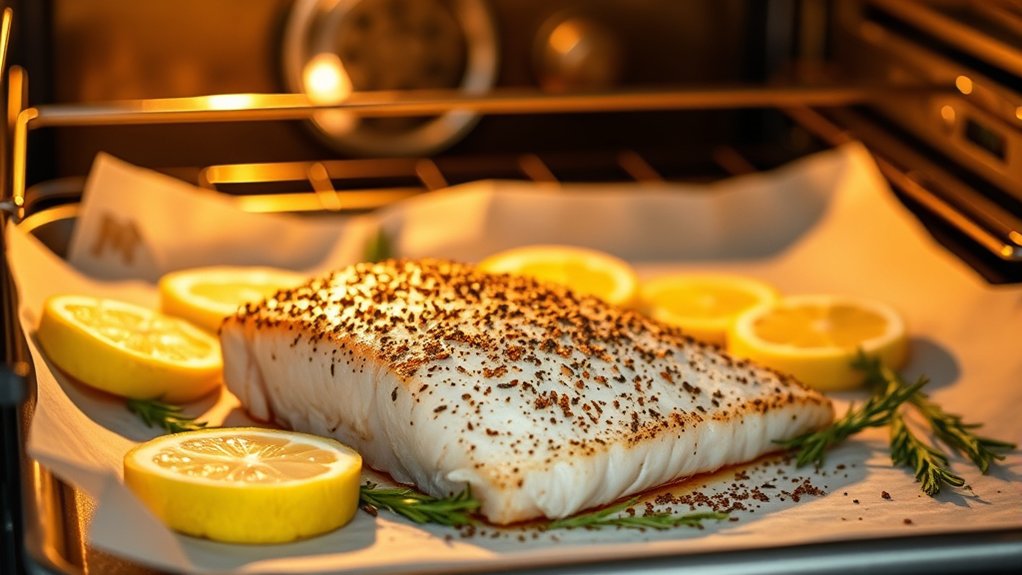
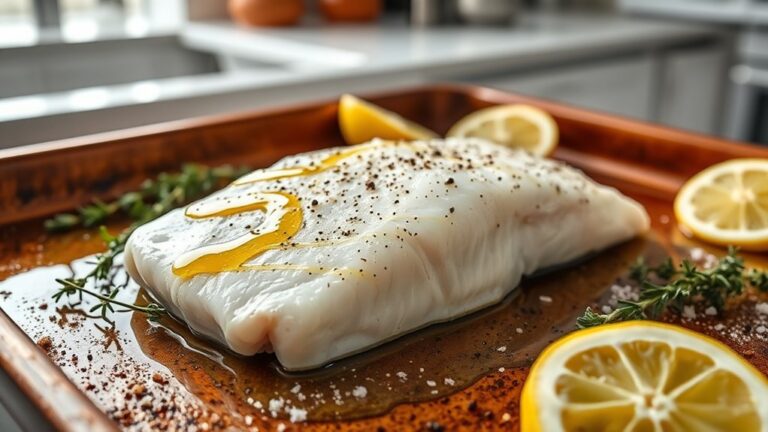
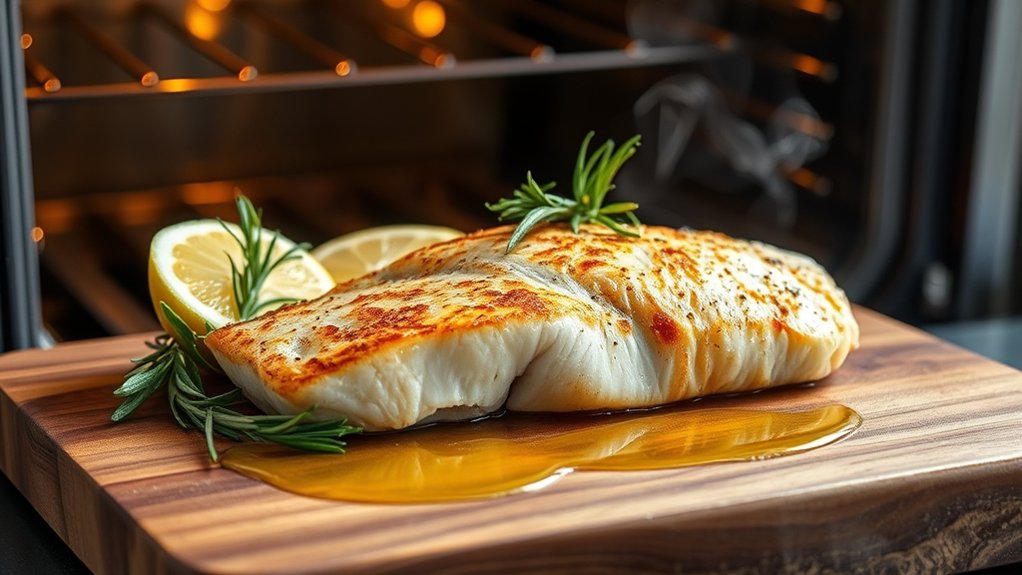
Want perfectly cooked mahi mahi from your oven? Preheat it to 400°F and line a baking sheet with parchment for easy cleanup. Pat the fish dry, then brush both sides with olive oil.
Preheat to 400°F, pat mahi mahi dry, and brush with olive oil for a perfectly cooked, easy-cleanup dinner.
Season it with salt, pepper, garlic powder, and a squeeze of lemon. For quick cooking, place the fillets on the sheet in a single layer, leaving space around each piece so heat circulates evenly.
Bake for 10 to 12 minutes, depending on thickness, until the flesh turns opaque and flakes easily with a fork. If you want extra flavor, add a thin herb butter or a light sprinkle of paprika before baking.
One of the best kitchen hacks is to check doneness early; mahi mahi can dry out fast if you overcook it. Remove it promptly, rest it for 2 minutes, and serve with vegetables, rice, or a crisp salad.
Choose the Best Mahi Mahi Fillets
Start with fresh, firm mahi mahi fillets that have a clean ocean scent and moist, translucent flesh. You should look for pieces with even thickness so they cook uniformly in the oven. Choose fillets that spring back lightly when you press them; that resilience signals the best texture.
Avoid dull color, dry edges, or any mushy spots, because those flaws usually mean poor handling. If you buy skin-on fillets, make sure the skin looks intact and clean, since it can help the fish hold together during roasting.
You’ll also want fillets sized to your baking dish, so heat circulates properly around each piece. When possible, select center-cut portions for consistent fish adaptability in different oven methods.
Ask for fillets cut the same day, or refrigerated correctly, and keep them cold until you’re ready to cook. Careful selection gives you cleaner slices, better structure, and a more reliable result.
Season Mahi Mahi for Rich Flavor
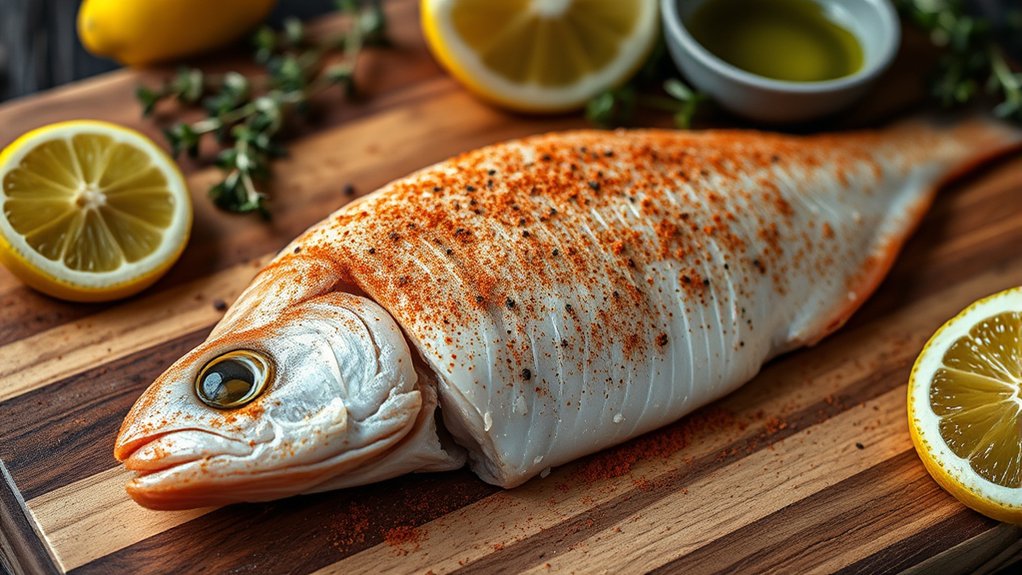
You can build rich mahi mahi flavor by rubbing the fillets with bold spices like paprika, garlic powder, and black pepper. Balance that heat with fresh citrus and herbs so the seasoning stays bright and clean.
For even deeper flavor, let the fish marinate briefly before you bake it.
Choose Bold Spices
For a mahi mahi fillet that tastes rich and well-rounded, season it boldly with spices that can stand up to the oven’s heat. You can use smoked paprika, garlic powder, onion powder, cumin, black pepper, and a pinch of cayenne to build depth without masking the fish’s clean flavor.
Rub the mixture evenly over both sides, pressing it in so it adheres before baking. Keep the layer light but complete; mahi mahi benefits from assertive seasoning, not a heavy crust.
Choose bold spices that bring warmth, savoriness, and a subtle edge. If you want a citrus balance later, let it complement the spice rather than compete with it.
This approach gives you a seasoned fillet that bakes into a flavorful, polished main course with real definition.
Balance Citrus And Herbs
How do you brighten mahi mahi without overpowering its clean flavor? You use a careful citrus pairing and a restrained hand with herbs. Lemon, lime, or orange zest lifts the fish, while parsley, dill, cilantro, or thyme add depth.
For strong flavor balance, coat the fillets lightly, then season both sides evenly. You want freshness, not sharpness, so keep acidic notes measured and let the herbs echo the fish’s natural sweetness. A pinch of sea salt helps those flavors register clearly in the oven.
- Use finely grated zest, not heavy juice.
- Choose one or two herbs, not a mix.
- Favor parsley for clean brightness.
- Try dill for a softer, green finish.
- Add herbs just before baking for best aroma.
Marinate For Deeper Flavor
Want richer mahi mahi with a little more depth? Marinate the fillets for 20 to 30 minutes before baking, and don’t exceed 45 minutes, or the flesh can turn soft. Use a light blend of olive oil, garlic, salt, pepper, and fresh herbs, then add a controlled citrus infusion from lemon or lime to brighten the fish without overpowering it.
Pat the mahi mahi dry first, coat it evenly, and refrigerate it while the flavors penetrate. Good marinade timing gives you seasoned flesh, not mushy texture. When you’re ready to cook, lift the fillets from the marinade and let excess drip off. This keeps the surface from steaming in the oven and helps you develop a clean, flavorful finish.
Bake Mahi Mahi at the Right Temperature
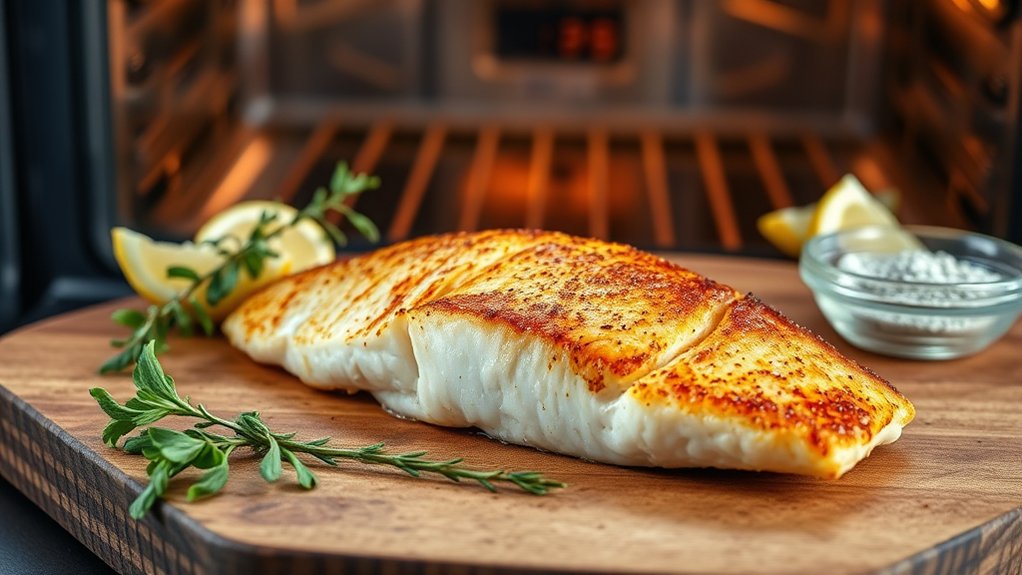
Set your oven to 400°F, which gives mahi mahi enough heat to cook quickly while staying moist and tender. Place the fish on the center rack so the hot air circulates evenly around it and promotes steady browning.
Watch for doneness after about 10 to 12 minutes, and pull it when the flesh turns opaque and flakes easily with a fork.
Ideal Baking Temperature
For the best oven-baked mahi mahi, aim for a temperature of 400°F, which gives the fish enough heat to cook quickly without drying out. You’ll get even cooking and a lightly crisp exterior without overcooking the center.
Keep your oven fully preheated before you slide the fillets in, because steady heat supports a crispy texture and better moisture retention. For oven safety, use a reliable thermometer and hot pads when handling the dish.
- Set 400°F before baking
- Preheat completely
- Bake for even doneness
- Check for 137°F internal temperature
- Let the fish rest briefly
Oven Rack Position
Place your oven rack in the center position so the heat circulates evenly around the mahi mahi and cooks it through without scorching the top. This oven rack position gives you balanced radiant heat from above and steady heat from below, which supports a clean cooking temperature interplay.
You don’t want the fillet too close to the upper element, where the surface can brown too quickly, or too low, where the bottom may lag behind. Keep the pan level and leave space around it so hot air can move freely.
If you’re using convection, the center rack still works best because it moderates direct exposure and keeps the fish in a stable heat zone. That placement helps you maintain control, especially with thinner portions.
Doneness And Timing
Once the rack is centered, focus on temperature and timing: bake mahi mahi at 400°F for about 10 to 12 minutes per inch of thickness, or until it flakes easily with a fork and reaches 137°F to 145°F in the thickest part. Use doneness timing to avoid overcooking, since mahi mahi dries out fast.
Check doneness cues at the edge and center; the flesh should turn opaque, separate cleanly, and feel just firm, not rubbery.
Start checking early if fillets are thin. Use an instant-read thermometer for accuracy. Rest the fish 2 minutes before serving. Pull it slightly before full carryover cooking. Match timing to the thickest section.
Check When Mahi Mahi Is Done
How do you know when mahi mahi is ready? You check the thickest part with an instant-read thermometer and look for 137°F to 145°F, which protects seafood safety while keeping a juicy texture. Slide the probe into the center, not touching the pan, because surface heat can fool you.
Then press the fillet gently with a fork; it should flake cleanly and separate in firm, moist layers, not look translucent or soggy. The flesh should turn opaque throughout, with only a faint sheen left.
If you see a raw-looking center, give it another minute or two, then test again. Remove the fish as soon as it reaches temperature, since carryover heat can finish the job fast. Rest it briefly on a plate so the juices settle, and you’ll get clean slices without dryness.
Serve Mahi Mahi With Easy Side Dishes
A bright, simple side makes baked mahi mahi feel complete, so pair it with foods that won’t overpower its mild, flaky flesh. You can build a balanced plate with quick side dishes that cook fast and keep cleanup light.
Think crisp green beans, steamed rice, or roasted potatoes for steady texture. Add a fresh salad or sautéed zucchini for color and contrast. These choices support the fish without crowding the flavor, and they make easy plating feel polished.
Crisp green beans, steamed rice, or roasted potatoes add texture without overshadowing the mahi mahi.
Keep portions tidy: place the fillet slightly off-center, add one starch, one vegetable, and a small garnish of lemon. That layout looks intentional and helps you serve dinner with confidence.
- Steamed jasmine rice
- Roasted asparagus
- Garlic green beans
- Buttered baby potatoes
- Simple cucumber salad
Try Simple Marinades and Seasoning Variations
Why keep baked mahi mahi plain when a quick marinade can add brightness without masking its mild flavor? You can whisk olive oil, lemon juice, minced garlic, and a pinch of salt for one of the easiest simple marinades. Let the fish sit 15 to 20 minutes, no longer, so the acid won’t tighten the texture.
For deeper flavor, add soy sauce, ginger, and a touch of honey, then bake immediately after marinating. If you prefer dry seasoning variations, rub the fillets with paprika, black pepper, onion powder, and dried thyme before they go into the oven.
You can also use cumin and coriander for a warmer profile, or chili flakes for gentle heat. Keep the layers balanced: mahi mahi tastes best when you support, not overwhelm, its natural sweetness. Pat the fish dry before baking if the marinade seems wet, and finish with fresh herbs or citrus zest.
Frequently Asked Questions
How Long Does Fresh Mahi Mahi Last Before Cooking?
Fresh mahi mahi lasts 1–2 days refrigerated before cooking if you keep it cold.
You should use freshness timing carefully, follow storage tips, and cook it promptly for the best texture and safe flavor.
Can I Bake Frozen Mahi Mahi Without Thawing It First?
Yes you can bake frozen mahi mahi straight from the freezer, like a train staying on track. You’ll use baking from frozen, skip thawing vs freezing worries, and add a few extra minutes for even, safe cooking.
What Oven-Safe Dish Works Best for Mahi Mahi?
You’ll want a rimmed glass or ceramic oven safe dish with enough dish stability to hold juices and prevent tipping.
Choose a shallow baking dish, lightly oiled, so heat circulates evenly around your mahi mahi.
Should I Cover Mahi Mahi While Baking It?
No, you usually shouldn’t cover mahi mahi while baking it; uncovered heat helps you brown it and keeps it firm.
If you’re testing the theory that covering mahi mahi prevents dryness, use parchment paper loosely instead.
Can I Use Parchment Paper for Baking Mahi Mahi?
Yes, you can use parchment paper for baking mahi mahi. You’ll get easy release, gentler heat, and less sticking, key parchment paper benefits.
Compared with foil alternatives, it won’t react with acidic seasonings, either.
Conclusion
Now you know how to cook mahi mahi in the oven with confidence. Choose fresh fillets, season them well, and bake at 400°F until the fish turns opaque and flakes easily.
Use the right timing, check the internal temperature, and let it rest before serving. With a simple marinade or spice blend, you can change the flavor like a chameleon changing colors, keeping this easy seafood dinner fresh, bright, and satisfying every time.
By following these tips, you’ll master how to cook mahi mahi in the oven perfectly every time.