How to Cook Eggplant in Oven
To cook eggplant in the oven, you start with a firm, fresh eggplant.
Trim, rinse, dry, and cut it into even pieces so it bakes evenly.
Season it lightly and use enough oil to help it brown.
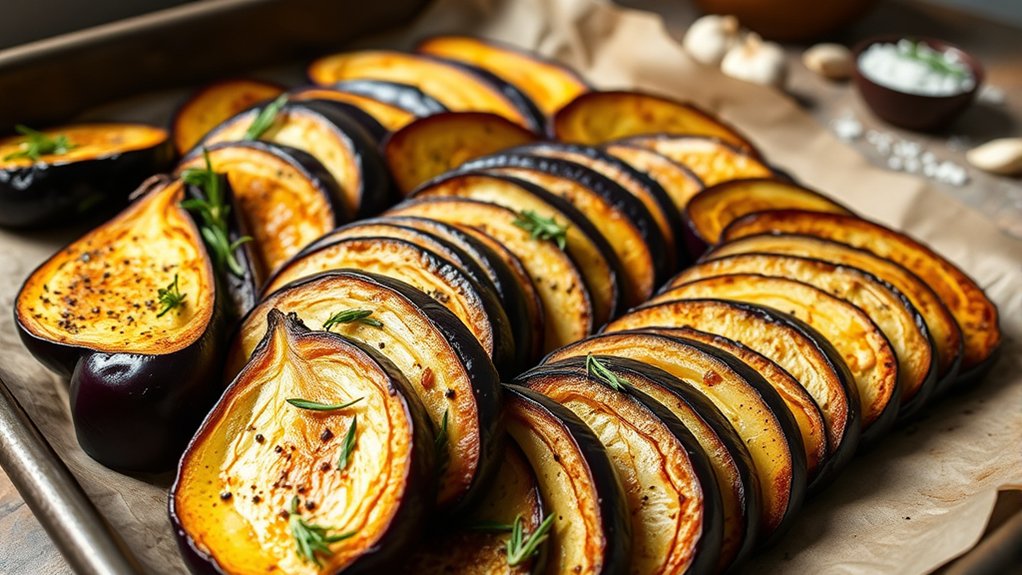
Arrange the pieces in a single layer on a baking sheet.
The right temperature and timing matter more than you might expect.
A few small mistakes can leave the eggplant soggy instead of tender.
Key Takeaways
- Rinse, dry, trim, and cut eggplant into uniform 1/2-inch slices, planks, or cubes for even roasting.
- Preheat the oven to 400°F to 425°F, with 400°F a reliable default for tender, browned eggplant.
- Season immediately with salt, olive oil, and optional pepper, garlic powder, paprika, oregano, or thyme.
- Arrange pieces in a single layer on a baking sheet and flip halfway through for even browning.
- Bake 20 to 35 minutes until the flesh is silky and a fork slides in easily, then serve with herbs or lemon.
Ingredients and Tools for Oven Eggplant
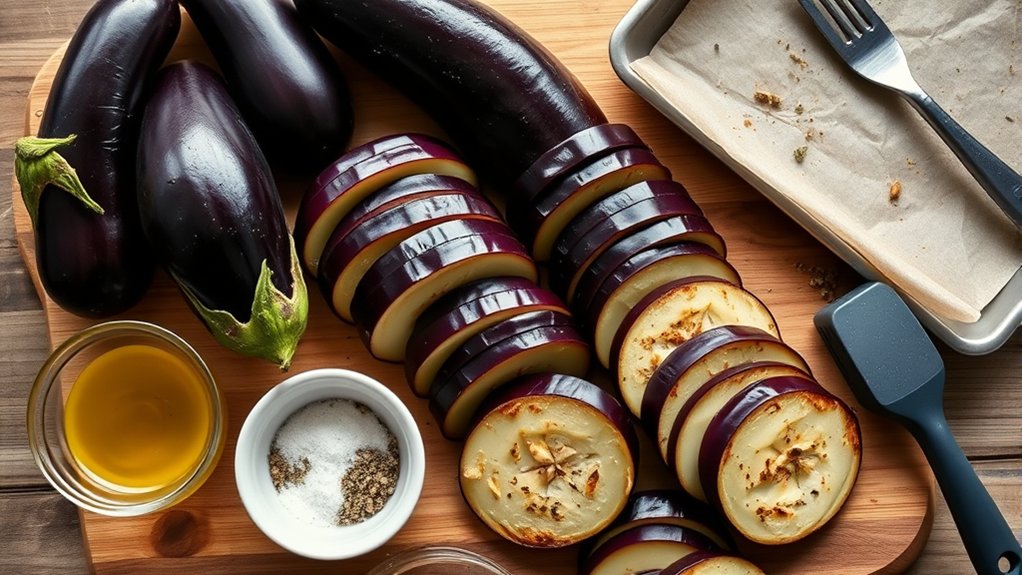
Before you start, gather a medium eggplant, olive oil, salt, pepper, a sharp knife, a cutting board, and a baking sheet. You’ll use these basics to roast cleanly and control texture.
Gather a medium eggplant, olive oil, salt, pepper, a sharp knife, a cutting board, and a baking sheet for clean, controlled roasting.
Choose an eggplant with smooth skin and a firm feel; that helps you judge freshness. Keep the olive oil ready so you can coat the surface evenly and support browning without drying the flesh. Use salt and pepper to season simply, since the oven will deepen the flavor.
Your sharp knife should cut cleanly, and the cutting board gives you a stable surface. The baking sheet needs enough space for even heat flow, which helps prevent overcooking risks.
As the eggplant heats, you may notice mild smoky aromas, especially if the skin chars slightly. That scent signals roasting, not burning, so monitor color closely and stay precise with your timing.
How to Prep Eggplant for Baking
Start by rinsing the eggplant and patting it dry, then trim off the stem and any blemishes. Set it on a cutting board and check the skin for a deep, even eggplant color; bright, glossy skin usually signals freshness.
If the eggplant feels soft or has wrinkled spots, choose a firmer one for better texture after baking. Slice it lengthwise for planks, into rounds for faster cooking, or cube it for even browning. Keep the cuts uniform so the pieces bake at the same rate.
If you want a more concentrated smoky flavor, you can score the flesh lightly, which helps heat penetrate evenly. After cutting, arrange the pieces in a single layer so air can circulate around them.
Handle the eggplant gently, since bruising can darken the flesh and affect appearance. Once prepped, move on right away so the cut surfaces stay fresh and ready for the oven.
How to Season Eggplant
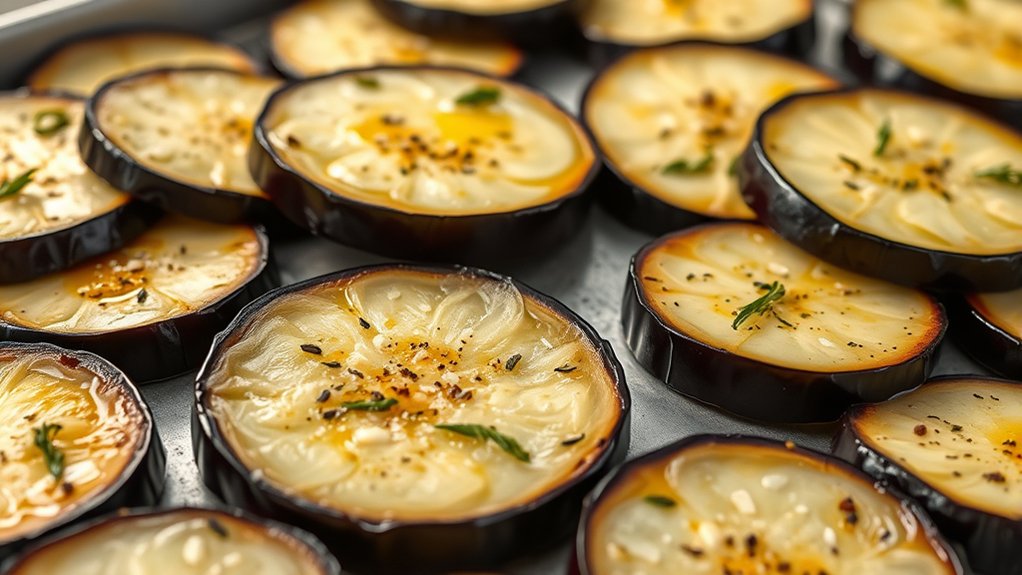
Once your eggplant is cut and arranged, season it right away so the pieces absorb flavor evenly. Start with salt, then add a light coating of olive oil to help the surface brown and carry spices. Use your fingers or a brush to spread both ingredients across every side.
Season eggplant immediately with salt and a light coat of olive oil for even flavor and browning.
For basic seasoning options, try black pepper, garlic powder, onion powder, and paprika. If you want stronger flavor, add dried oregano, thyme, cumin, or crushed red pepper. Keep the layer even; too much spice can overwhelm the eggplant’s mild taste.
You can also mix in grated Parmesan or nutritional yeast for a savory finish. For balanced flavor combinations, pair garlic with oregano, paprika with cumin, or thyme with black pepper.
Taste as you go only if you’re seasoning a small sample, since eggplant responds best to measured application and even coverage.
Best Oven Temperature for Eggplant
For most eggplant recipes, you’ll get the best results at 400°F to 425°F, which lets the slices cook through and brown evenly. If you bake at a lower temperature, the eggplant softens more slowly and can turn watery, while higher heat gives you a faster roast and firmer edges.
Choose the temperature based on the texture you want, then adjust the time to match.
Ideal Baking Temperature
The best oven temperature for eggplant is 400°F, which gives you tender flesh and well-browned edges without drying it out. You should preheat fully before the eggplant goes in, because a stable temperature helps you cook evenly and predictably.
If your oven runs hot, lower it to 390°F; if it runs cool, move to 410°F and watch the timing closely. Use 400°F for sliced rounds, cubes, or halved eggplant when you want reliable results.
Don’t let failed sourcing or an unrelated controversy distract you from the basic method: steady heat and proper spacing matter most. Keep the pieces in a single layer so hot air can move around them, and adjust only after you’ve confirmed your oven’s actual temperature with a thermometer.
Texture At Different Heat
At 400°F, eggplant turns soft and custardy inside while the surface browns enough to add flavor and a little structure. You’ll get the best balance here because the heat drives out moisture without collapsing the flesh.
Lower temperatures, around 350°F, keep it milder and less caramelized, so the texture stays more delicate. Higher temperatures, near 425°F, speed browning and can create crisp edges, but you risk drying the center.
- Use 400°F for creamy slices.
- Use 425°F for firmer, more roasted cubes.
- Use 350°F when you want gentler cooking, almost like creme brulee in reverse or a molecular gastronomy base.
Check doneness with a fork: it should slide in easily, but the eggplant shouldn’t fall apart.
How Long to Bake Eggplant
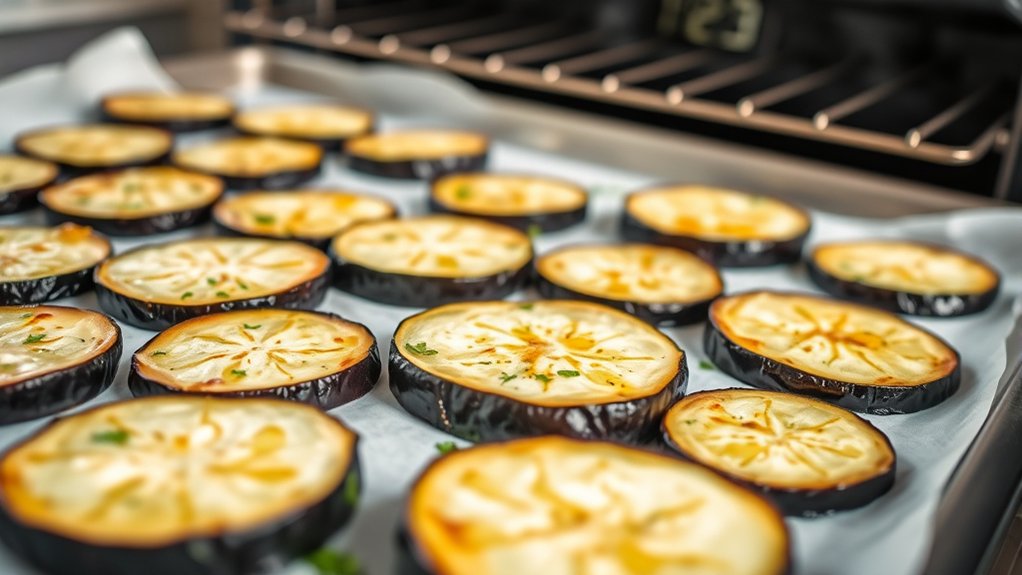
How long should you bake eggplant? You usually need 20 to 35 minutes at 400°F, depending on cut size and thickness. For slices about 1/2 inch thick, bake 20 to 25 minutes; for halves or larger chunks, plan on 30 to 35 minutes.
Keep your pieces in a single layer so heat reaches them evenly. If you want firmer texture, pull them earlier; if you want a softer, more spreadable interior, give them the full time. Brush the cut surfaces with oil before baking so the flesh doesn’t dry out and the edges can develop a crisp foam-like blistering, almost like browning sugar on the surface.
Flip slices halfway through for even coloring and consistent baking. If you’re using a convection oven, reduce the time by about 5 minutes. Always match the bake time to the size, moisture, and shape of your eggplant pieces.
How to Tell When Eggplant Is Done
You’ll know eggplant is done when the flesh feels tender and the surface looks browned or lightly blistered. Press the center gently with a fork; it should yield without collapsing. If you cut it open, the interior should look silky, not watery or firm. Check the edges first, since they usually brown before the center finishes.
- Use a fork test: Slide the tines into the thickest part. They should pass through with little resistance.
- Watch the color: Look for deep golden patches and a matte surface, which signal proper roasting.
- Avoid excess time: Pull it as soon as it softens; waiting too long creates an overcooked texture and a bland flavor.
If the skin shrinks and the slices hold their shape while remaining soft inside, you’ve got the right finish. Keep checking near the end, because eggplant can move from perfect to mushy quickly.
Ways to Serve Baked Eggplant
Once your baked eggplant is tender and browned, you can serve it in several simple ways. Slice it into thick rounds for oven plating, then add herbs, olive oil, and lemon. You can also layer it with tomato sauce and cheese for a quick casserole.
If you want a lighter plate, pair it with grains, greens, or yogurt. For a richer meal, tuck it into sandwiches or wraps.
| Serving idea | Method |
|---|---|
| Simple side | Add salt, herbs, and citrus |
| Main course | Pair with rice, couscous, or beans |
| Sandwich filling | Stack with sauce, greens, and cheese |
| Sweet twist | Use in spiced eggplant desserts |
You should keep portions even so each serving looks neat. For extra color, place the slices beside roasted peppers or parsley. If you’re planning eggplant desserts, cool the flesh first and mash it smoothly.
Fix Common Baked Eggplant Problems
If your baked eggplant turns out soggy, bitter, or unevenly cooked, a few small adjustments can fix it fast. First, salt sliced eggplant for 20 minutes, then pat it dry; this pulls out excess moisture and reduces bitterness.
Second, cut pieces evenly and spread them in a single layer so heat reaches every side. Third, brush lightly with oil instead of soaking the flesh, because too much oil makes the texture heavy.
Use high heat, around 425°F, and flip once halfway through for steady browning. These cooking strategies help you get tender centers and crisp edges.
- Check thickness: Keep slices about 1/2 inch thick for even roasting.
- Watch timing: Remove eggplant when it’s soft but still holds shape.
- Adjust seasoning: Add herbs, garlic, lemon, or tahini to improve flavor pairings.
If bitterness remains, choose younger eggplant next time, since older fruit can taste harsher and need more careful prep.
Frequently Asked Questions
Can I Bake Eggplant Without Peeling It?
Yes, you can bake eggplant without peeling it; you’ll keep more texture and nutrients. If skins seem tough, consider peeling eggplant partially.
Skip or use the salting process to reduce bitterness and excess moisture.
Should I Salt Eggplant Before Baking?
Yes, you should, like drawing out a sponge’s hidden water. Use the salting technique to encourage moisture reduction, then pat it dry before baking.
You’ll get firmer slices, better browning, and less bitterness.
Can I Use Frozen Eggplant in the Oven?
Yes, you can bake frozen eggplant, but you’ll get softer oven texture. You should thaw and pat it dry first, then roast at high heat so you reduce sogginess and improve browning.
What Eggplant Variety Works Best for Roasting?
Globe and Italian eggplants work best for roasting: they’re meaty, mild, and slice evenly. You’ll get crisp edges, soft centers.
Choose firm, glossy eggplant varieties, then follow roasting tips: salt, oil lightly, and space pieces well.
Can I Bake Eggplant Ahead of Time?
Yes, you can bake ahead; cool the eggplant, then store it in airtight containers for eggplant storage. Refrigerate up to 3 days.
Reheat in a hot oven until warmed through and slightly crisp.
Conclusion
Once you’ve baked eggplant at 400°F until it’s golden and tender, you’re just a few steps from a versatile side or main. A single medium eggplant can yield about 4 cups of cooked pieces, enough to anchor a meal or share at the table.
Use the same method each time: trim, cut, season, and roast. If it’s browned at the edges and soft in the center, you’ve done it right.
Mastering this simple process is key to cooking eggplant in the oven perfectly every time.