How Long to Cook Cod in Oven
Like a clockwork finish in a well-run kitchen, you can roast cod in the oven in about 10 to 15 minutes at 400–425°F. This is the ideal time frame to cook cod in the oven, though thinner fillets may need less time and thick center cuts often require the full range.
You’ll want the flesh opaque, flaky, and 145°F at the thickest point. The real difference comes from how you handle moisture, heat, and the baking vessel—details that can make or break the result.
Key Takeaways
- Bake most cod fillets at 400°F for 10–12 minutes, adjusting for thickness.
- Thin fillets may finish in about 8 minutes; thicker center-cut fillets can take 13–15 minutes.
- Frozen cod usually needs 20–25 minutes at 425°F; bake until the thickest part reaches 145°F.
- Cod is done when it turns opaque and flakes easily, while still moist in the center.
- Start checking early, because carryover heat can overcook cod and dry it out.
How Long Does It Take to Cook Cod in the Oven?
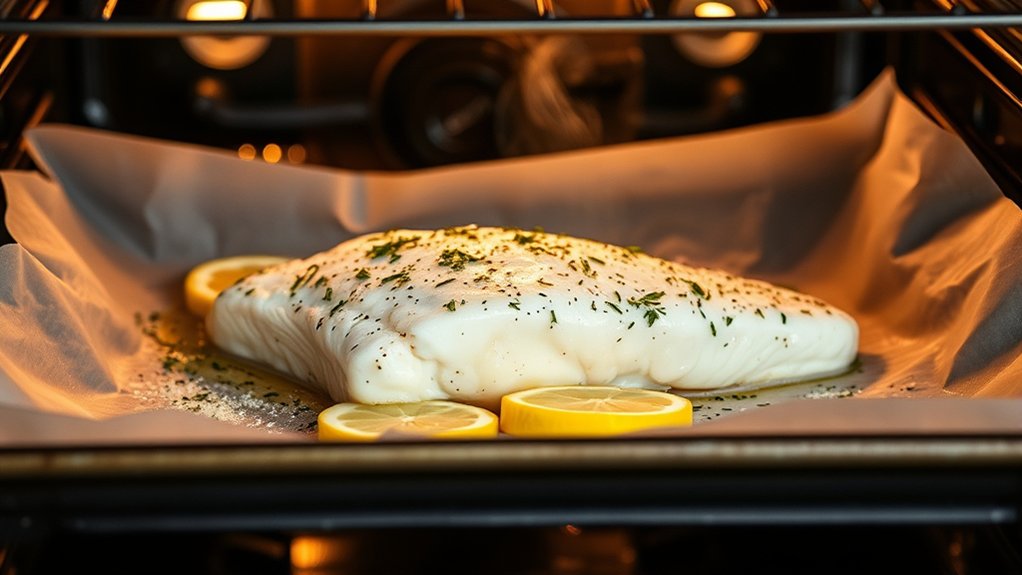
So, how long does cod need in the oven? For most fillets, you’ll cook it for 10 to 12 minutes at a moderate oven setting, but thickness changes the timing. A thin piece may finish in 8 minutes, while a thicker center-cut fillet can need 13 to 15 minutes.
You should check early, because cod dries out quickly once it’s past done. Look for flesh that turns opaque and flakes easily when you press it with a fork.
Don’t trust common baking misconceptions that say fish always needs a long roast. Those oven myths lead to tough, overcooked cod. Instead, judge by thickness and doneness, not by strict guesses.
If your fillet is uniform, it’ll cook evenly; if it’s uneven, the thinner end will finish first. For best results, remove cod as soon as the center turns opaque and separates cleanly, then let residual heat finish the job.
What’s the Best Oven Temperature for Cod?
For cod, the best oven temperature is usually 400°F, which cooks the fish quickly enough to stay moist while giving the surface a little color. At this setting, you get even heat without drying out delicate fillets.
If your cod is thick, very cold, or especially high in cod quality, 400°F still gives you a reliable balance of speed and tenderness. You can also use 375°F for a gentler bake, but you’ll need a few extra minutes.
Higher temperatures, like 425°F, work when you want faster browning, yet they leave less room for error. Choose a preheated oven, and keep the fillets in a single layer so the heat circulates well.
For the best results, pair the right temperature with sustainable sourcing, because fresher, responsibly handled cod bakes more evenly and tastes cleaner. In most kitchens, 400°F remains the most dependable target for cod.
How to Tell When Cod Is Done
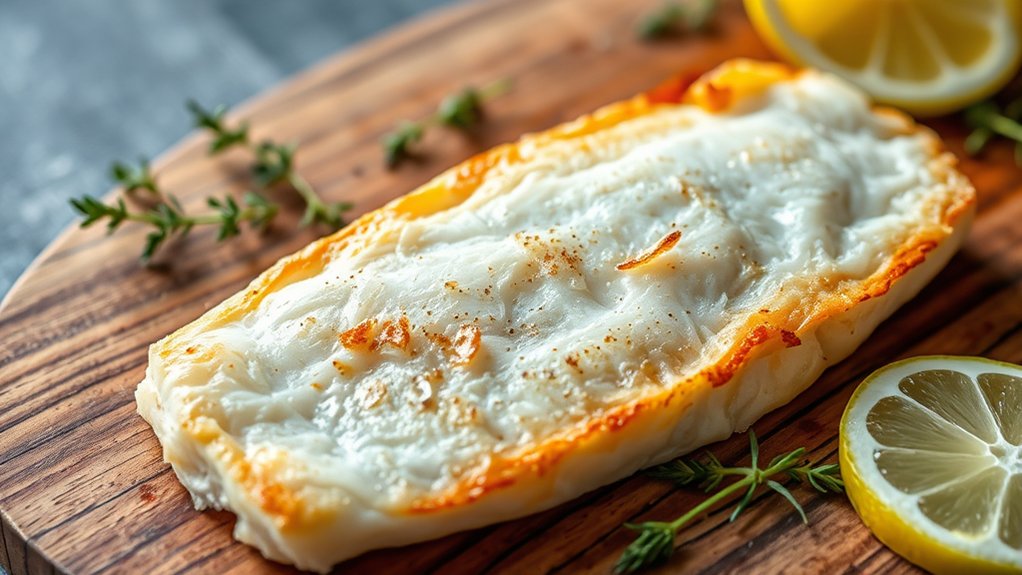
You can tell cod is done when the flesh turns opaque and flakes easily with a fork, yet still looks moist at the center. For a more exact check, insert an instant-read thermometer into the thickest part and look for 145°F.
If you pull it at that point, you’ll keep the fish tender instead of overcooking it.
Visual Doneness Signs
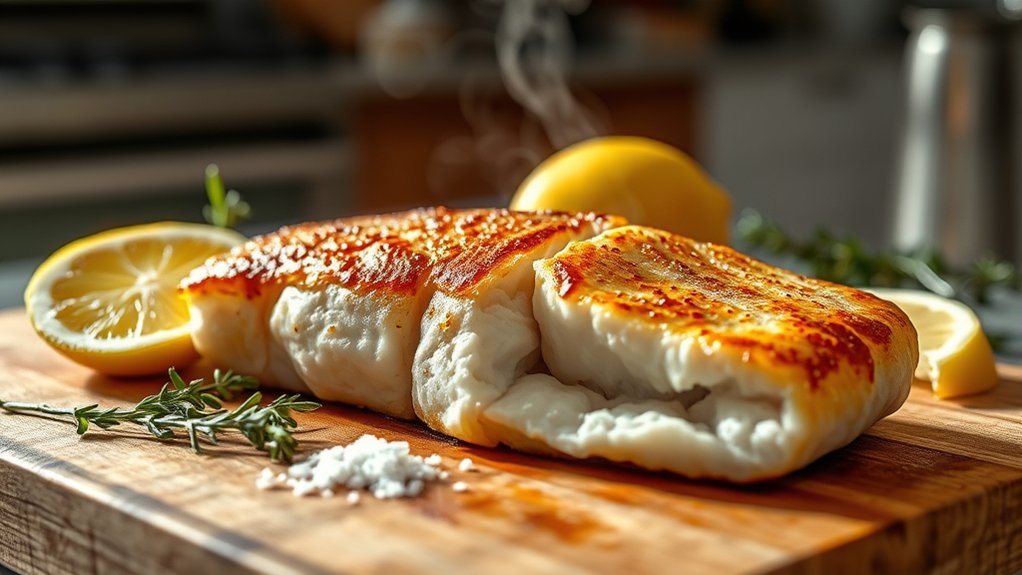
A perfectly cooked cod fillet turns opaque and flakes easily with a fork, yet still looks moist in the center. You should see the flesh shift from translucent to solid white with a gentle, pearly sheen.
The surface may separate into clean layers when you press it lightly with a fork, and the edges can curl slightly without drying out. Watch for a matte finish that signals set proteins, but don’t wait until the fish looks chalky or shriveled.
Cod’s simple flavor benefits from this precise doneness, and the tender flesh creates a clear texture contrast against any crisp topping or side. If the fillet resists flaking, give it a little more time; if it falls apart and looks dry, it’s gone too far.
Temperature Check Guide
How do you know cod is done? Use an instant-read thermometer and check the thickest part of the fillet. You want 145°F; at that point, the flesh turns opaque, flakes easily, and feels just firm, not rubbery.
If the center is still translucent, give it another minute or two, then retest. Don’t rely on color alone, since seasoning ideas and marinades can darken the surface before the fish is cooked through.
Pull the cod from the oven and rest it briefly; carryover heat finishes the center safely. For oven safety, use dry mitts, keep probes away from hot pan edges, and avoid touching bone or the baking dish.
Accurate temperature is the most reliable doneness check.
Bake Fresh Cod in 10 to 15 Minutes
Bake fresh cod at 400°F to 425°F for 10 to 15 minutes, depending on thickness, and you’ll get a flaky, moist result. Check for doneness by testing whether the flesh turns opaque and separates easily with a fork, since overcooking dries it out fast.
Season the fish before baking, then time your herbs, butter, or citrus so they enhance the cod without masking its clean flavor.
Oven Temperature Guide
For the best oven results, preheat to 400°F and plan on 10 to 15 minutes for fresh cod, depending on thickness. You’ll get steady heat that cooks the fish quickly without drying it out. Use a rimmed sheet pan or baking dish so juices stay contained and your oven stays cleaner.
This temperature also supports ocean sustainability by reducing wasted energy and helping you cook only what you need. For kitchen safety, keep the pan centered and use dry mitts when handling hot cookware.
- Thin fillets need less time.
- Thick fillets need the full window.
- Higher heat shortens cooking and limits moisture loss.
- Consistent preheating improves results.
Doneness Test Tips
You’ll know cod is done when it turns opaque and flakes easily with a fork at the thickest part, usually after 10 to 15 minutes at 400°F. Check only once near the end, then slide the fork in and twist gently; the flesh should separate in clean layers, not look glassy or resist.
If you use a thermometer, target 145°F in the center for reliable doneness vs texture, since cod can still feel moist before it fully cooks. Don’t overbake while “checking again,” because carryover heat continues cooking after you remove it.
For oven safety, use mitts, keep your face clear of steam, and return the pan carefully if it needs another minute. Thin fillets may finish sooner, so watch closely.
Seasoning And Timing
How should you season cod for the best oven timing? Use a light coat of oil, salt, pepper, and mild herbs so you enhance flavor without slowing heat transfer. In seasoning science, salt draws out surface moisture, then dissolves and reabsorbs, helping the fish brown evenly.
For oven chemistry, preheat fully to 400°F so the fillet cooks fast and stays moist. Bake fresh cod in 10 to 15 minutes, depending on thickness. Follow this sequence:
- Pat the fillet dry.
- Season both sides evenly.
- Place it on a hot, oiled sheet.
- Check for opaque flesh that flakes easily.
If your fillet is thicker than 1 inch, add a few minutes. Remove it promptly to prevent carryover cooking from drying the center.
How to Bake Frozen Cod Without Thawing
Frozen cod can go straight from freezer to oven, and it bakes best when you adjust for the extra moisture and cold start. Preheat your oven to 425°F and line a sheet pan with parchment or lightly oiled foil.
Place the frozen cod in a single layer, leaving space between pieces so heat circulates. For a reliable no thaw bake, pat off any surface ice, then brush the fish with a little oil to prevent drying and promote even browning.
Bake the frozen cod until the thickest part reaches 145°F, usually 20 to 25 minutes depending on thickness. Check early if the fillets are thin, and add a few minutes if they’re very thick.
You’ll know the fish is done when it turns opaque and flakes cleanly with a fork. Remove it promptly, because overbaking toughens the delicate texture.
How to Season Cod for Better Flavor
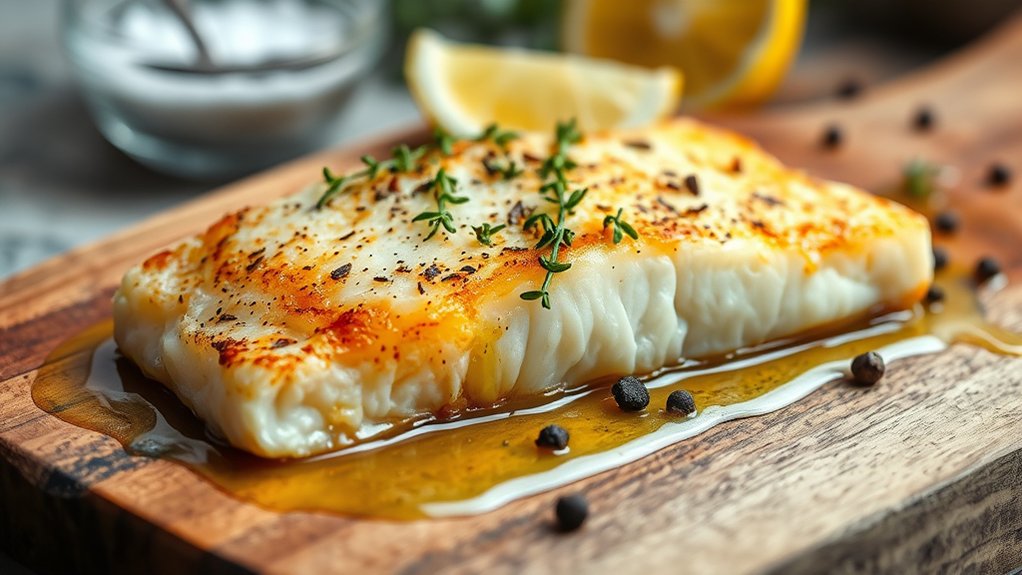
Seasoning cod well starts with keeping it simple, because its mild flavor takes on herbs, citrus, spices, and aromatics easily. You’ll get the best results when you choose seasoning ideas that support the fish instead of masking it.
Use these flavor boosters:
- Salt and black pepper: season evenly before baking so each bite tastes balanced.
- Lemon zest or juice: add brightness and sharpen the fish’s clean flavor.
- Garlic, paprika, or dill: use one or two at a time for a focused profile.
- Olive oil or melted butter: brush lightly to help seasonings adhere and deepen taste.
Pat the fillets dry first, then coat them just enough to create a thin, even layer. If you want more complexity, combine citrus with herbs or spice with butter, but keep the blend restrained.
Cod rewards precision, so a measured hand gives you a cleaner, more satisfying flavor every time.
Why Cod Turns Dry in the Oven
Cod dries out in the oven when heat drives moisture from its delicate, lean flesh faster than the fish can retain it. You’re working with a low-fat fish, so even a few extra minutes can push it from moist to chalky.
Cod dries quickly in the oven, so even a few extra minutes can turn it chalky.
High oven heat accelerates protein tightening, which squeezes out juices and leaves the flesh firm and dry. Poor cod quality makes this worse because older or previously thawed fish usually holds less natural moisture.
Thickness matters too: thin fillets overcook far faster than thick ones, even at the same temperature. Many oven myths claim cod must be baked until it flakes aggressively or turns opaque everywhere, but those cues often appear after the fish has already lost tenderness.
If you overbake, carryover heat keeps cooking it after you remove it. Your goal is to stop when the center is just done, not fully dehydrated. Keep the temperature controlled, and you’ll protect texture.
Use Foil, Parchment, or a Baking Dish
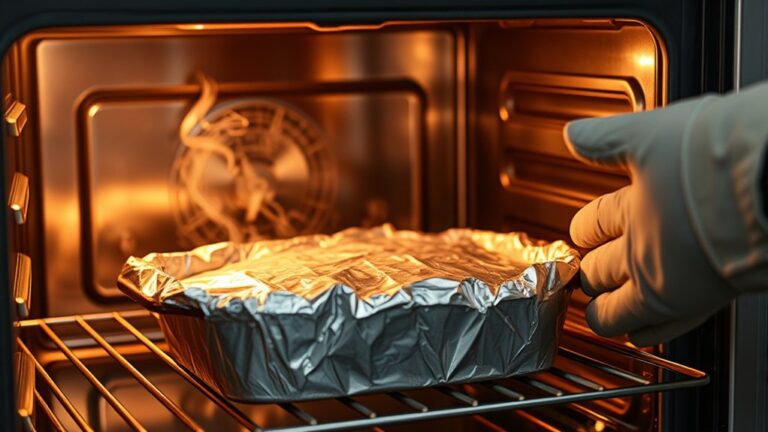
Do you want to keep cod moist in the oven? Choose the right vessel, because it controls steam, heat, and browning. For foil vs parchment, foil seals tightly and traps more moisture; parchment breathes a little more and keeps the fish from sticking while still protecting delicate flakes.
For baking dish vs sheet, a baking dish holds juices and supports a thicker fillet, while a sheet pan exposes more surface area and encourages faster drying. Use the method that matches your goal, then watch the clock closely.
- Foil: best for maximum moisture retention.
- Parchment: best for gentle cooking and clean release.
- Baking dish: best when you want pooled juices around the cod.
- Sheet pan: best when you need quicker heat and firmer texture.
Whichever you pick, lightly oil the surface and avoid overcrowding.
Serve Cod With Easy Side Dishes
What should you serve alongside baked cod to make the meal feel complete? Choose side dishes that support the fish’s mild flavor without overpowering it. You can pair cod with roasted asparagus, green beans, or broccoli for a clean, balanced plate.
If you want something heartier, serve it with mashed potatoes, rice pilaf, or couscous; these absorb juices and add structure. A simple salad with lemon vinaigrette also works well, especially when you use dry heat cooking methods that keep the fish light and flaky.
For a sharper contrast, add sautéed spinach or glazed carrots. Keep seasonings restrained so the cod stays the focus. You don’t need complicated accompaniments to make the meal succeed; you need texture, freshness, and a little acidity.
When you plan your side dishes carefully, you create a complete dinner that feels intentional, polished, and easy to execute.
Frequently Asked Questions
Can I Cook Cod From Frozen at 400°F?
Yes, you can cook frozen cod at 400F baking. You’ll need about 20 to 25 minutes, until it flakes easily and reaches 145°F internally.
Brush with oil, season well, and bake uncovered.
Should I Rinse Cod Before Baking?
You usually shouldn’t rinse cod before baking; rinsing cod can spread bacteria and hurt oven safety.
Pat it dry instead, then season and bake immediately for clean handling, better browning, and safer prep.
Is Skin-On Cod Better for Oven Cooking?
Yes, skin on cod usually gives you better oven texture because it protects the flesh from drying and helps the fillet hold together. You’ll get slightly richer flavor, though you can remove the skin after baking if you prefer.
Can I Broil Cod After Baking for a Crisp Top?
Yes, you can broil cod after baking for a crisp top. Use broil finish for 1–2 minutes, watching closely.
Dry the surface first, and your crispy top planning will help prevent overcooking and ensure texture.
How Do I Store Leftover Baked Cod?
You’ll refrigerate leftover baked cod within two hours, because fish loves becoming a science project. Wrap it tightly, use leftovers handling best practices, follow refrigeration guidelines, and enjoy cooking leftovers within two days.
Conclusion
For perfectly cooked cod, you’ll want to watch the clock and the texture. Bake it at 400–425°F for 10 to 15 minutes, then check for an opaque, easily flaked center and 145°F inside. Use foil, parchment, or a baking dish to hold in moisture and prevent drying.
With smart seasoning and simple sides, you’ll serve tender, flavorful fish that feels fresh, fast, and foolproof every time. Remember, knowing how long to cook cod in oven is key to achieving the best results.