Can Pyrex Go in the Oven
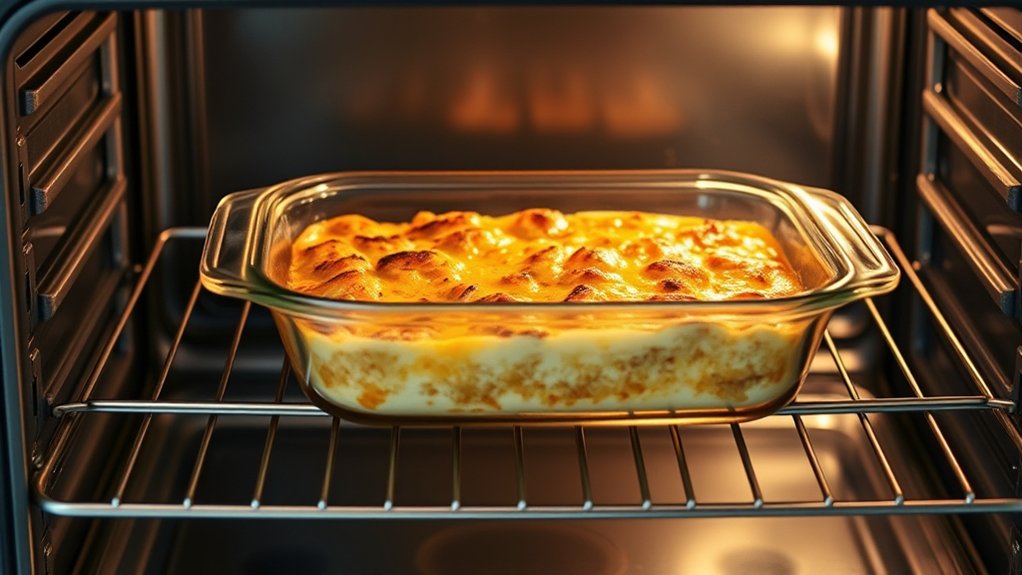
Yes, you can put Pyrex in the oven, but only if you use it the right way and stay within the dish’s temperature rating.
Using Pyrex safely in the oven requires careful attention to temperature limits and handling.
You need to avoid sudden temperature changes, never place it under a broiler or on a burner, and check for chips before use.
The material matters here, because not every Pyrex dish behaves the same.
A small mistake can lead to cracking when you least expect it.
Following these guidelines will help ensure your Pyrex ovenware remains safe and durable.
Key Takeaways
- Yes, Pyrex can go in the oven when used according to the manufacturer’s temperature limits.
- Always check the dish for chips, cracks, or scratches before baking.
- Place Pyrex on a dry, room-temperature, oven-safe surface, not on a stovetop or burner.
- Avoid sudden temperature changes, like moving a cold dish into a hot oven.
- Do not use Pyrex under a broiler, on direct flames, or above its rated maximum temperature.
Is Pyrex Safe in the Oven?
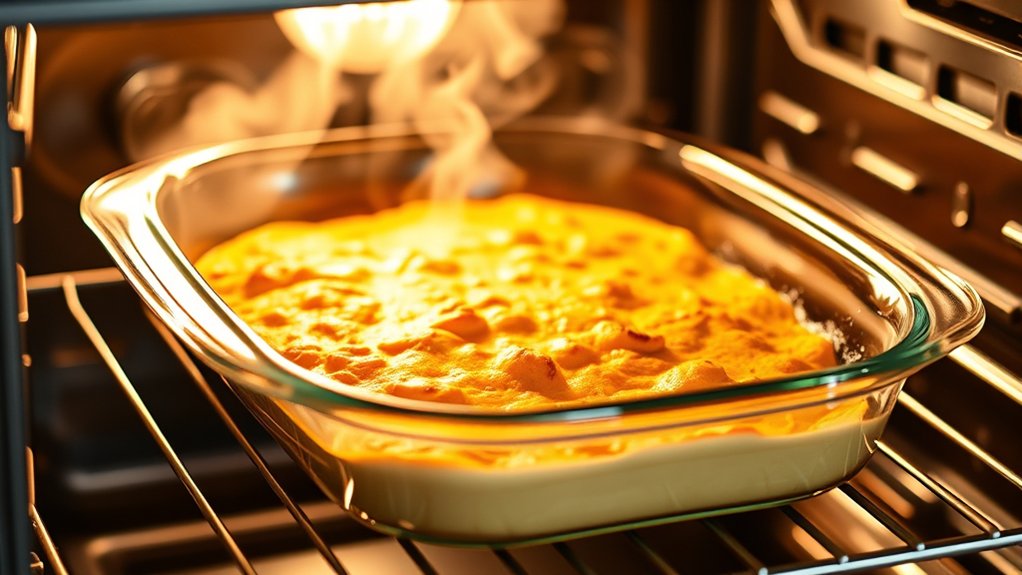
Yes, Pyrex is safe in the oven when you use it properly and stay within the brand’s temperature limits. You should treat it as borosilicate or tempered glass designed for cooking, not as a universal heatproof container.
Yes, Pyrex is oven-safe when used properly and within the brand’s temperature limits.
Place it on a dry, room-temperature, oven-safe surface and avoid direct contact with burners, broilers, or stovetop flames. You’ll prevent failure by checking for chips, cracks, or scratched edges before each use.
Don’t move it from extreme cold to hot heat abruptly, because thermal shock can still break glass. Many oven safety misconceptions come from assuming all glass cookware behaves the same; it doesn’t.
If you need different performance characteristics, compare pyrex alternatives such as metal, ceramic, or silicone bakeware. For ordinary baking and reheating, Pyrex works well when you follow the manufacturer’s instructions and handle it carefully.
What Temperature Can Pyrex Handle?
Pyrex can usually handle typical oven temperatures for baking, roasting, and reheating, but the exact limit depends on the specific product line and the manufacturer’s instructions. You should treat its rating as the governing spec, not a guess.
In general, standard borosilicate or soda-lime Pyrex-style glass performs best within normal home-oven ranges, while extreme heat raises breakage risk.
- Check the labeled maximum temperature.
- Compare dishware vs glassware ratings before use.
- Avoid dry broiler-level heat.
- Watch for sudden handling heat contrasts.
- Prefer gradual temperature changes.
You’ll get the most reliable performance when you stay well below the stated limit and respect the oven’s actual temperature, not the setting alone. In practical terms, Pyrex is built for steady thermal exposure, but it isn’t immune to thermal stress.
If you need a quick rule, use the product label first and the recipe temperature second.
How to Use Pyrex Safely in the Oven
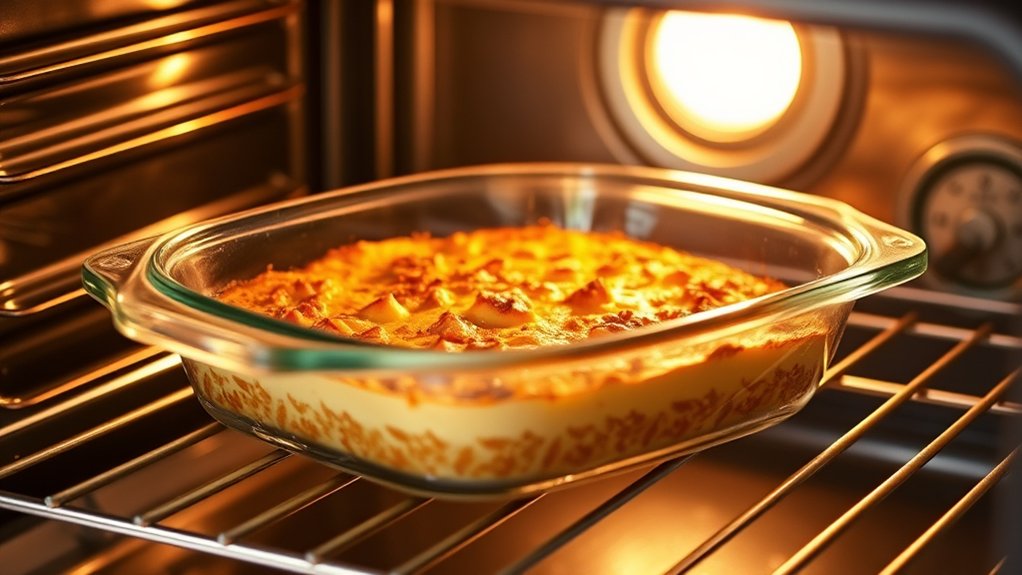
To use Pyrex safely in the oven, preheat the oven fully before placing the dish inside, keep the glass away from direct flame or broiler elements, and avoid moving it between extreme temperatures. You should set Pyrex on a dry, room-temperature surface, then fill it without overloading the dish.
To use Pyrex safely, preheat the oven fully, avoid sudden temperature changes, and keep it away from direct heat.
Use oven mitts when you remove it, and place it on a dry cloth, trivet, or cooling rack rather than a cold counter. For baking safety, handle the dish with steady support so it won’t flex or tilt.
Check for chips, deep scratches, or worn markings before each use, since damage can reduce glassware durability. If you add liquid, do it at a moderate temperature, not after sudden cooling.
Keep the dish centered on the rack for even heat exposure, and don’t use metal tools that can scrape the surface. These steps help you bake with confidence and protect the dish.
Why Pyrex Cracks in the Oven
- You place a cold dish into a hot oven.
- You set it on a wet, cool, or metal surface.
- You expose one section to direct heat from a burner or element.
- You trap food that heats unevenly and expands at different rates.
- You use a scratched or chipped dish, which concentrates stress.
When the temperature gradient gets too steep, the glass expands unevenly and cracks propagate from weak points. For crack prevention, you should preheat the oven fully, let the dish warm gradually, and avoid sudden contact with cold water or countertops.
You also need to handle the dish carefully, because impact damage lowers thermal tolerance and increases failure risk.
When You Shouldn’T Bake With Pyrex
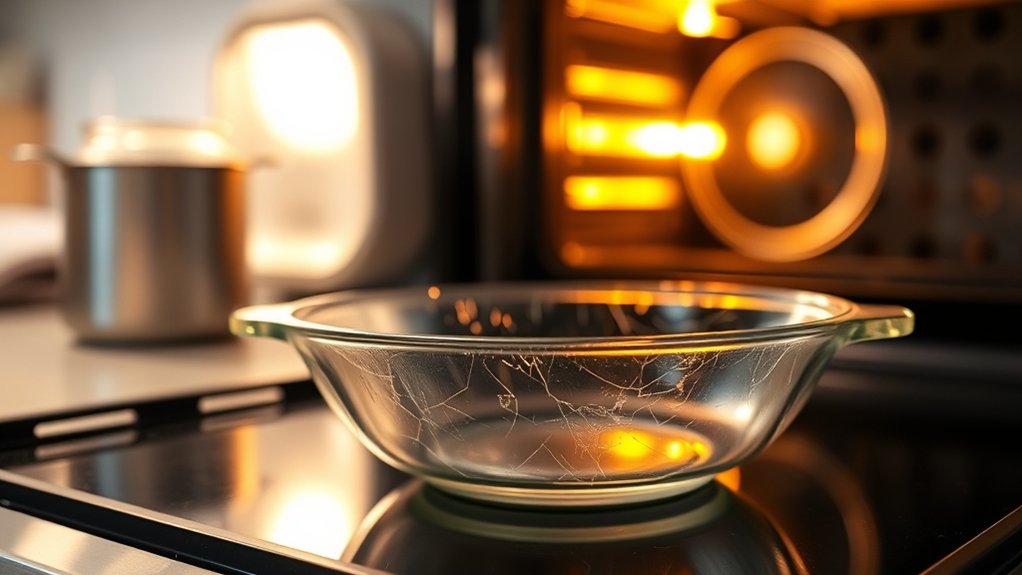
You shouldn’t bake with Pyrex when the recipe calls for temperatures or methods that exceed the dish’s thermal limits, especially under a broiler, on a stovetop burner, or in direct contact with a heating element. You also shouldn’t use it for rapid temperature changes, like moving a cold dish into a very hot oven or setting a hot pan on a wet surface.
Those conditions can trigger thermal shock and cracking. Skip Pyrex if the food requires searing, open-flame cooking, or dry heat above the manufacturer’s rating. Avoid damaged dishes, including ones with chips, scratches, or hairline fractures, because flaws concentrate stress.
If you’re comparing cookware options, discussion ideas should focus on heat source, temperature range, and material compatibility, not safety myths about glass being universally ovenproof. Check the base and product guide before each use.
When the method pushes the dish outside its intended operating window, choose metal, ceramic, or cast iron instead.
Frequently Asked Questions
Can Pyrex Go From Freezer to Oven Safely?
You can move Pyrex from freezer to oven safely if you avoid extreme temperature shocks. Let it warm slightly, never place it on a hot rack, and follow two word ideas about Subtopic, two word ideas about Subtopic carefully.
How Do I Know if My Pyrex Is Vintage?
You can tell by checking the vintage marking, logo style, and glass composition; older Pyrex often used borosilicate glass and etched or stamped marks. Compare base codes and patterns with manufacturer date guides for confirmation.
Can Pyrex Lids Be Used in the Oven?
Usually no; you shouldn’t put Pyrex lids in the oven. Glass and plastic lids often fail above 350°F.
For safer use, check 1 label, 2 materials, avoid cracking. discussion ideas, material limits
Is Pyrex Safe Under the Broiler?
No, you shouldn’t put Pyrex under the broiler unless the manufacturer specifically says it’s broiler-safe. You risk thermal shock and cracking.
For nonstick safety and glass bakeware longevity, use a lower rack and avoid direct radiant heat.
What Should I Do if Pyrex Chips?
Discard it immediately; a single chip can spread like a crack in ice. You should prioritize chip safety, avoid further oven handling, inspect nearby food, and replace the dish to prevent breakage, cuts, or contamination.
Conclusion
You can use Pyrex in the oven, but you need to use it correctly, within its temperature limit, and with careful handling. You protect the dish when you preheat fully, avoid thermal shock, and place it on a dry, room-temperature surface.
You protect your food when you inspect for damage, center the dish on the rack, and never exceed the label. Use Pyrex carefully, use it consistently, and use it safely.
In conclusion, using Pyrex in the oven is safe as long as you follow these precautions to ensure both your dish and food remain protected.