How to Cook Cabbage in the Oven
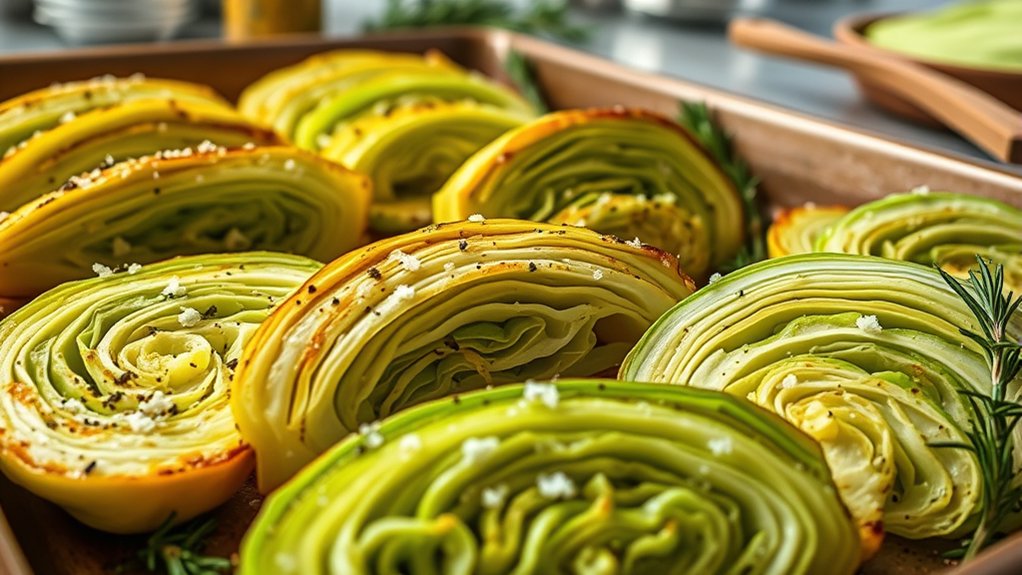
To cook cabbage in the oven, you need the right head, the right cut, and the right heat. Using a firm cabbage cut into wedges or thick slices will give you the best results. Coat the pieces lightly with oil and seasoning.
Then, roast the cabbage at a high temperature until the edges brown and the center becomes tender. The trick is in the timing, and a few small choices can change the texture completely.
Key Takeaways
- Choose a heavy, tight cabbage with crisp leaves; green and Savoy roast best, while Napa is too delicate.
- Trim damaged leaves, cut into wedges or thick slices, and pat dry before lightly oiling and seasoning.
- Roast on a single layer at 400°F to 425°F, depending on cut, until edges brown and centers turn fork-tender.
- Flip halfway for even browning, and avoid crowding so hot air can crisp the cabbage.
- Finish with simple seasonings like garlic, pepper, lemon, herbs, or browned butter, then serve hot.
What Kind of Cabbage Works Best
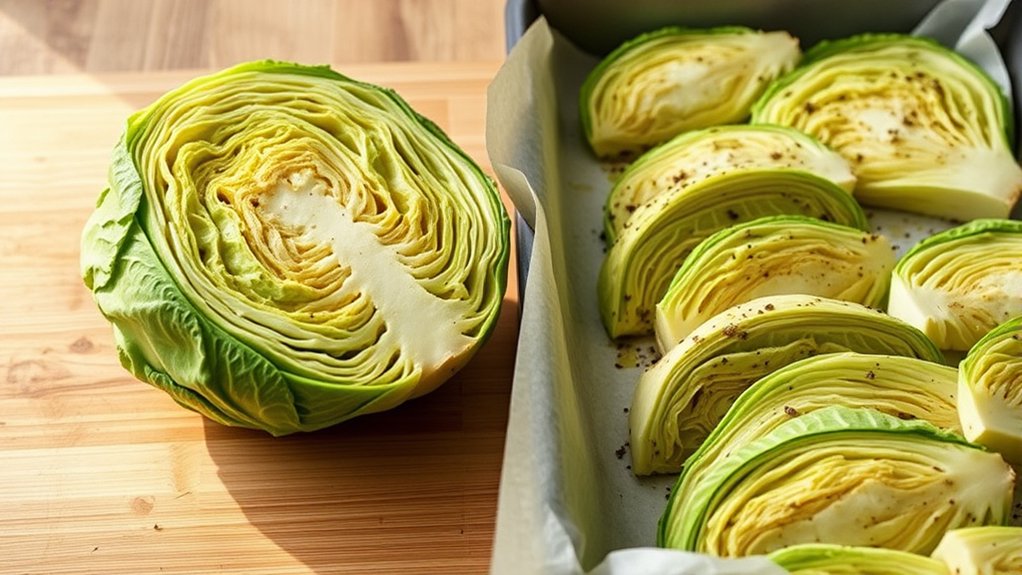
For roasting, green cabbage is usually your best bet because its leaves are sturdy, mildly sweet, and hold up well in the oven. You can also use savoy cabbage if you want a more delicate texture and ruffled leaves that crisp at the edges.
Red cabbage works too, but it often needs careful color preservation; high heat can dull its vibrant hue, so choose it when appearance matters less than flavor. Napa cabbage isn’t ideal for roasting because it’s too tender and can collapse quickly.
Pick a head that feels heavy for its size, with tight, unblemished leaves and no soft spots. Good cabbage storage helps maintain freshness, firmness, and flavor before you cook it. Keep it cold and dry, and don’t wash it until you’re ready to use it.
The fresher the cabbage, the better it will roast, brown, and taste.
How to Prep Cabbage for the Oven
Choose a firm cabbage with crisp, tightly packed leaves and no soft spots or blemishes. Trim away any damaged outer leaves, then cut the cabbage into wedges or thick slices so it cooks evenly in the oven.
Season it lightly with oil, salt, and pepper, and add any other spices you want before roasting.
Selecting Fresh Cabbage
How do you spot the best cabbage for oven roasting? Choose a head that feels heavy, compact, and firm in your hands. Check freshness indicators: crisp outer leaves, tight layers, and a clean, mild scent. Avoid heads with splits, soft spots, or yellowed leaves.
Use these storage tips: keep whole cabbage unwashed in the refrigerator, wrapped loosely, and use it within a week for best texture.
| Trait | Look For | Avoid |
|---|---|---|
| Weight | Dense, solid head | Light, airy head |
| Leaves | Tight, crisp, green | Wilted, torn, yellow |
| Surface | Smooth, clean skin | Cracks, blemishes, decay |
Pick cabbage with uniform color and no moisture buildup. Quality now means better roasting later, with firmer texture and sweeter flavor.
Cutting and Seasoning
Start by trimming away any loose outer leaves, then rinse the cabbage and pat it completely dry. Cut it into wedges for hearty slices, or shred it if you want faster roasting and more crisp edges.
Keep the core intact when you cut wedges so they hold together in the oven. Brush each piece lightly with oil, then season with salt, pepper, and any spice you prefer, such as garlic powder, paprika, or caraway. Don’t overdo the oil; too much softens the cabbage texture.
Arrange the pieces in a single layer so they brown evenly. Match your cuts to the oven temperature: higher heat suits thin slices, while moderate heat helps thick wedges cook through without burning.
How to Roast Cabbage in the Oven
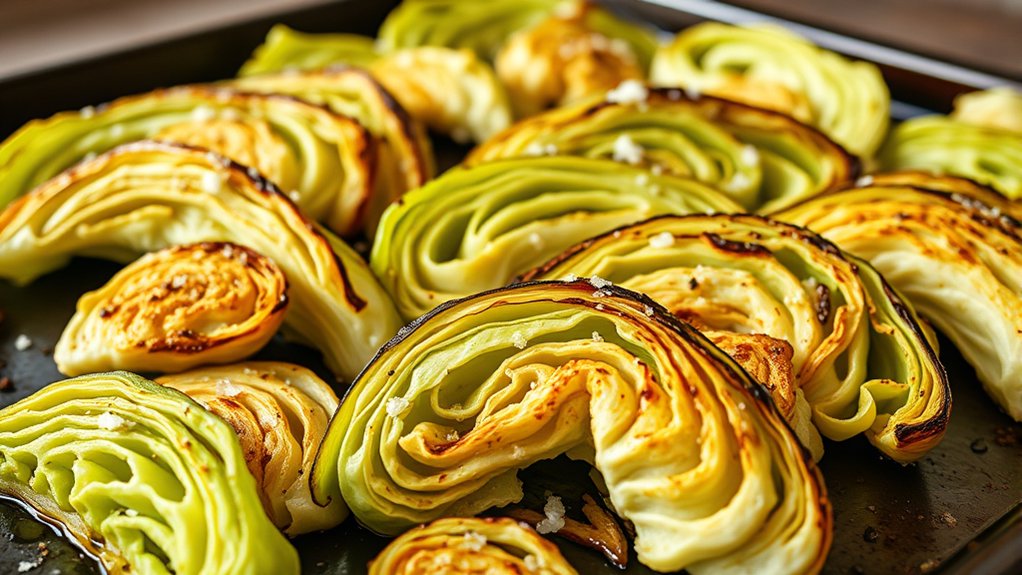
To roast cabbage in the oven, cut the head into wedges or thick slices, then coat the pieces lightly with oil, salt, and pepper so they brown well instead of steaming. Set your roasting temp to 425°F for balanced caramelization and a tender cabbage texture.
Arrange the pieces in a single layer on a lined sheet pan, leaving space between them for airflow. Roast until the edges darken and the center turns fork-tender.
| Step | Action | Result |
|---|---|---|
| 1 | Preheat oven | Even heat |
| 2 | Oil cabbage | Better browning |
| 3 | Season lightly | Clean flavor |
| 4 | Roast 20-30 min | Tender centers |
| 5 | Flip once | Deeper color |
Check doneness at 20 minutes; thicker pieces may need a few more. If you want stronger caramel notes, keep the heat steady and avoid crowding. Serve immediately while the cabbage still has crisp edges and a savory, roasted finish.
How to Bake Cabbage Slices
Baked cabbage slices come out best when you cut the head into even rounds, brush both sides with oil, and season them simply with salt, pepper, and any herbs you like. Arrange the slices in a single layer on a lined sheet pan so they cook evenly.
Bake at 400°F until the edges brown and the centers turn tender, usually 20 to 30 minutes. Flip them once halfway through if you want more even color and a stronger texture contrast.
Bake until the edges brown and the centers turn tender, flipping halfway for even color and crisp contrast.
Use enough oil to prevent dryness, but don’t drench the cabbage; too much oil softens the edges and dulls flavor balance. For deeper taste, add garlic powder, smoked paprika, or a little Parmesan near the end.
Check the thickest part with a fork before you remove them. Serve the slices hot, while the exterior stays crisp and the center stays soft.
How to Cook Shredded Cabbage in the Oven
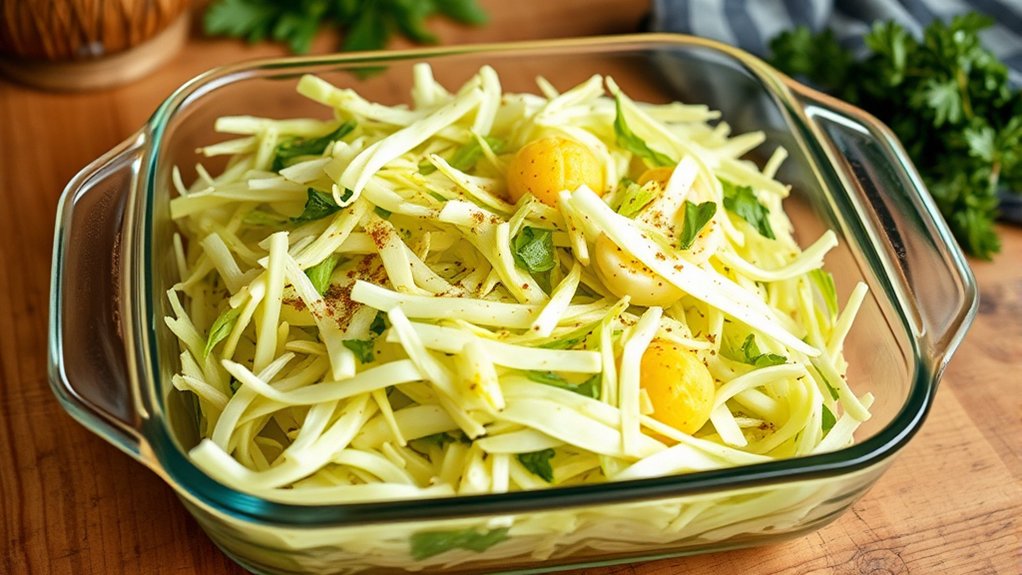
Shredded cabbage cooks quickly in the oven, so spread it in a thin, even layer on a lined sheet pan and toss it with oil, salt, and pepper before roasting. Use a hot oven, usually 425°F, and stir once halfway through so the edges brown without drying out.
This oven technique keeps shredded cabbage tender in the center and lightly crisp at the edges.
| Time | Result |
|---|---|
| 8 minutes | Bright, just wilted |
| 12 minutes | Soft, lightly browned |
| 15 minutes | Deeply caramelized |
Check the pan early, because shredded cabbage can go from perfect to limp fast. If you want more color, spread it out further rather than piling it up.
Remove it when the strands look glossy, trimmed with brown spots, and still hold a little bite. Serve it right away for the best texture and clean, roasted flavor.
Best Seasonings for Oven Cabbage
You can season oven cabbage with garlic and black pepper for a simple, savory base that brings out its natural sweetness. A smoked paprika blend adds depth and a subtle smoky edge.
Finish with lemon and herbs to brighten the dish and sharpen the flavor.
Garlic And Black Pepper
Garlic and black pepper deliver the simplest, most reliable seasoning for oven cabbage, adding depth without overwhelming its natural sweetness. You can use minced garlic or garlic powder, but fresh garlic gives you better garlic nuance and a cleaner roast.
Toss the wedges with oil, salt, and enough pepper to create pepper balance, then coat them evenly so every edge seasons well. Roast the cabbage until the leaves crisp and the center turns tender; the heat softens garlic’s sharpness and lets the pepper bloom.
Add the seasoning before baking so it clings to the surface and browns with the cabbage. If you want a sharper finish, sprinkle a little more black pepper after roasting.
Smoked Paprika Blend
Smoked paprika blend adds a warm, lightly sweet, smoky layer that gives oven cabbage more depth without hiding its natural flavor. You can use smoked paprika with salt, pepper, and oil to coat wedges evenly before roasting. This simple base works well in paprika blends because it distributes flavor fast and browns the edges cleanly.
- Start with 1 teaspoon smoked paprika per medium cabbage.
- Add a pinch of garlic powder for balance.
- Mix the spices into oil before tossing.
- Roast until the edges char lightly.
Use a light hand; smoked paprika can dominate if you overdo it. For best results, apply the blend just before baking so the cabbage stays crisp-tender and the seasoning clings well.
Lemon Herb Finish
A lemon herb finish brightens roasted cabbage with fresh acidity and a clean, savory aroma that keeps the flavor lively. You should toss the hot cabbage with olive oil, lemon juice, and a little citrus zest right after it leaves the oven.
Add chopped parsley, dill, or thyme for a sharp herb aroma that cuts through the cabbage’s natural sweetness. Keep the seasoning light so you don’t mask the roasted edges. A pinch of salt and black pepper will sharpen the finish.
If you want more depth, add minced garlic or a few capers. Serve it immediately while the cabbage’s texture still has bite and the herbs stay vivid.
How Long to Cook Cabbage in the Oven
How long should cabbage stay in the oven? You should roast cabbage wedges at 400°F for 25 to 35 minutes, depending on thickness. Thin slices soften faster, while thick wedges need more time.
Check at 20 minutes; the center should feel tender when pierced with a knife, and the edges should turn golden.
- Roast small wedges for 20 to 25 minutes.
- Roast medium wedges for 25 to 30 minutes.
- Roast large wedges for 30 to 35 minutes.
- Add a brief rest after baking so the heat settles evenly.
If you’re finishing with brown butter, pour it on after roasting so it clings without burning. For kitchen safety, use a sturdy sheet pan, keep your hands clear when flipping, and handle hot oil carefully.
If you want a softer texture, cover the pan loosely for part of the bake, then uncover it near the end. Always judge doneness by tenderness, not color alone.
How to Get Crispy Cabbage Edges
For crisp cabbage edges, you need high heat, dry surfaces, and enough space on the pan. Preheat your oven to 425°F or higher so the outer leaves blister before the center softens.
Pat each wedge or slice very dry; moisture steams the cabbage and blocks crispy edges. Brush or mist the cut surfaces lightly with oil, then place the pieces flat-side down on a hot, parchment-lined sheet. Don’t crowd them; leave room so air can move around each piece. Flip once only if needed.
Use the center rack for even browning, and roast until the edges darken and curl. If your oven runs cool, finish under the broiler for 1 to 2 minutes, watching closely. This method improves cabbage texture by creating contrast: tender layers inside, crisp, browned edges outside. Serve right away, while the edges stay firm and crunchy.
Flavorful Add-Ins for Oven Cabbage
You can boost oven cabbage with a garlic butter blend that melts into the leaves and adds rich, savory depth. Finish it with a spiced herb mix to sharpen the flavor and bring out the cabbage’s natural sweetness.
Use both sparingly so you don’t mask the vegetable itself.
Garlic Butter Blend
Want richer oven-baked cabbage with minimal effort? Use a garlic butter blend to coat each wedge before baking. Melt unsalted butter, stir in minced garlic, and brush it evenly over the cut surfaces. This adds depth, promotes browning, and keeps the cabbage tender.
- Use 3 tablespoons butter per medium cabbage.
- Mix in 2 cloves minced garlic.
- Season lightly with salt and black pepper.
- Brush on just before the cabbage goes into the oven.
For even results, place the wedges cut-side up on a lined sheet pan. Keep the garlic butter on the cabbage, not the pan, so it won’t burn. Follow basic oven safety by using a stable rack and heat-safe tools.
Spiced Herb Finish
A garlic butter base gives oven cabbage rich flavor, and a spiced herb finish can push it further. You can add smoked paprika, black pepper, thyme, and a pinch of caraway after roasting to sharpen flavor without masking sweetness.
Finish with chopped dill or parsley for freshness. Apply the herbs in the last 3 to 5 minutes so they bloom without burning. If you want a crisp edge, brush lightly with oil before the final blast.
Watch oven metrics closely: high heat deepens browning, but too much time softens cabbage texture. Taste before serving and adjust salt, acid, or chili flakes. This finish keeps the dish vivid, balanced, and precise.
How to Serve Oven-Cooked Cabbage
Serve oven-cooked cabbage hot from the pan so it keeps its caramelized edges and tender texture. To control serving temperature, transfer it to warmed plates or a shallow bowl immediately. This helps you present the cabbage at its best and prevents sogginess.
When you think about how to plate, arrange the wedges or ribbons in a single layer, then spoon any browned pan juices over the top for shine and flavor.
- Finish with flaky salt, black pepper, or a squeeze of lemon.
- Add chopped parsley, dill, or thyme for a fresh lift.
- Pair it with roasted chicken, pork, sausage, or grilled fish.
- Serve it alongside mashed potatoes, rice, or crusty bread.
If you want extra richness, drizzle with olive oil or a little melted butter just before serving. For a sharper profile, add a splash of vinegar after plating. Keep portions modest so each serving stays hot and the edges stay crisp.
Frequently Asked Questions
Can I Cook Cabbage in Foil Packets?
Yes, you can cook cabbage in foil packets. Use the foil packet technique to trap steam, add seasoning, and bake until tender.
For crispy texture goals, open the packets briefly to brown the edges.
Should I Use Convection for Oven Cabbage?
Yes, you should use convection for oven cabbage if you want faster browning and more even roasting. Reduce temperature about 25°F and check early, since convection benefits shorten oven cabbage timing.
Can Frozen Cabbage Be Roasted in the Oven?
Yes, you can roast frozen cabbage, but you’ll get softer, less crisp results. Thaw and drain it first, then pat it dry.
Use high heat for better oven roasting and browning.
How Do I Store Leftover Oven-Cooked Cabbage?
Store leftover oven-cooked cabbage in an airtight container in the fridge within two hours. For best leftover storage, keep it 3–4 days.
Reheating tips: warm it covered in a skillet or microwave until hot.
Can I Make Oven Cabbage Ahead of Time?
Yes, you can make it ahead. For prepping ahead, roast until just tender, then cool and refrigerate.
When ready, reheat at 375°F until hot, using reheating tips like covering loosely to prevent drying.
Conclusion
Choose a sturdy, tightly packed cabbage, then prep it with care and roast it hot for the best results. You’ll get golden, crisp edges and tender, sweet centers when you use a light oil, simple seasoning, and enough space on the pan.
Flip once, finish with flavor, and serve it sizzling. With the right cut, heat, and timing, you’ll turn humble cabbage into a hearty, homey side with satisfying, savory snap.
Mastering the right cut, heat, and timing is key to transforming humble cabbage into a delicious dish. This method of cooking cabbage in the oven brings out its best flavors and textures every time.