How to Keep Pizza Warm in Oven
If you’ve got a tray of pizza arriving before the rest of dinner is ready, knowing how to keep pizza warm in the oven can save the day.
You can keep each slice warm without turning it leathery by following a few simple steps.
Set a stone or sheet to about 170–200°F, lay the slices in a single layer, and cover them loosely with foil. A little moisture and the right timing make all the difference.
There’s one simple step that keeps the crust from drying out, ensuring your pizza stays delicious until mealtime.
Key Takeaways
- Set the oven to its lowest setting, ideally 170°F to 200°F, to keep pizza warm without overbaking.
- Place slices in a single layer on a baking sheet or directly on the rack for even warming.
- Cover pizza loosely with foil to retain heat while allowing steam to escape.
- Keep slices separated with parchment and rotate them if holding several pieces.
- Check often and serve within 30 to 60 minutes to avoid drying out or hardening.
How to Keep Pizza Warm in the Oven
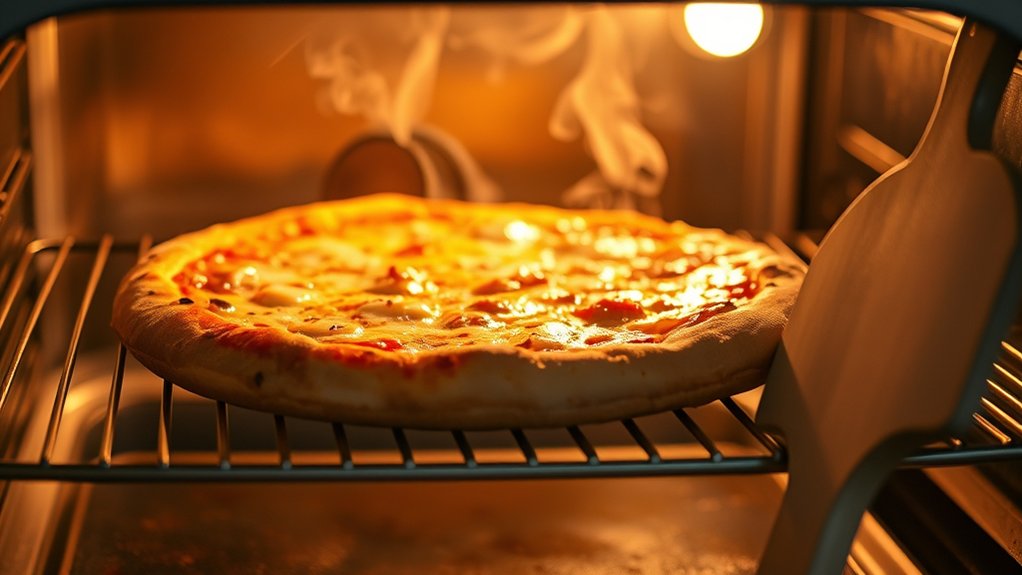
If you’re waiting to serve pizza, the oven can keep it warm without drying it out. Slide your slices onto a baking sheet or directly onto the rack, then set the oven to its lowest setting. Use oven hacks like cracking the door slightly if the heat feels too intense, and cover the pizza loosely with foil to protect the crust while letting steam escape.
You can also stack slices with parchment between them for easy serving. Keep an eye on the cheese: it should stay glossy, not blistered. Think of cookie science here. Gentle heat preserves texture, just as careful baking keeps cookies tender.
For the best bite, warm the pizza only until it’s ready to eat, then serve it right away. This method helps you hold on to melty cheese, savory sauce, and a crisp, fragrant crust without turning dinner leathery or dull.
What Temperature Keeps Pizza Warm in the Oven?
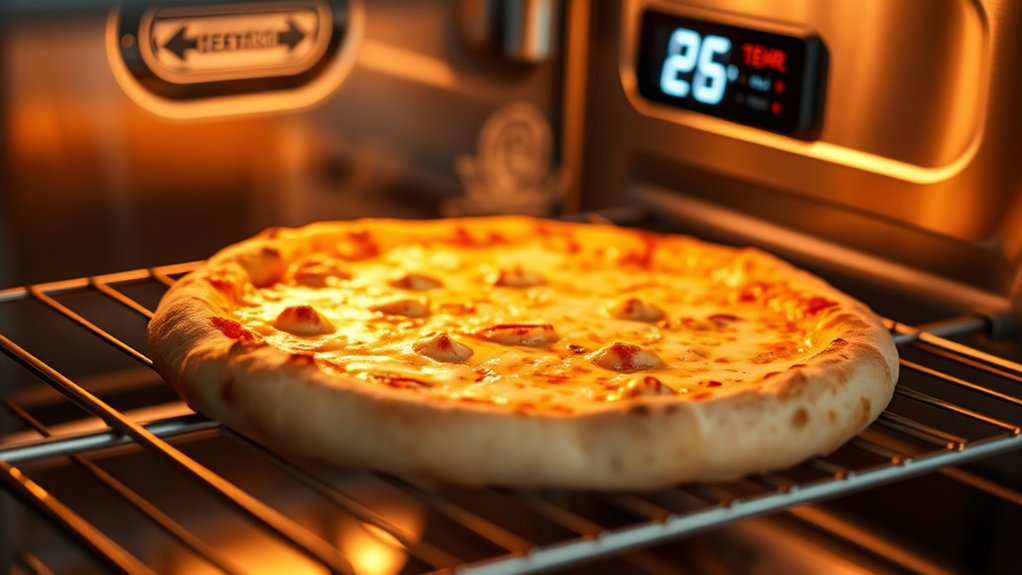
The best temperature for keeping pizza warm in the oven is usually around 170°F to 200°F, just low enough to hold heat without pushing the crust toward overbaking. At this range, you keep the cheese soft, the sauce lively, and the crust pleasantly crisp instead of dry.
Set your oven lower if it runs hot, and use an oven thermometer if you want accuracy. If your pizza sits for more than a short while, aim for the lower end to keep moisture in the toppings and prevent the slices from turning leathery.
You can also use alternate methods, like a warming drawer or a covered pan on very low heat, but the oven gives you the most control. Avoid higher temperatures, since they can make the edges hard and the cheese oily. With the right setting, your pizza stays inviting, fragrant, and ready to serve.
How to Arrange Pizza for Even Warming
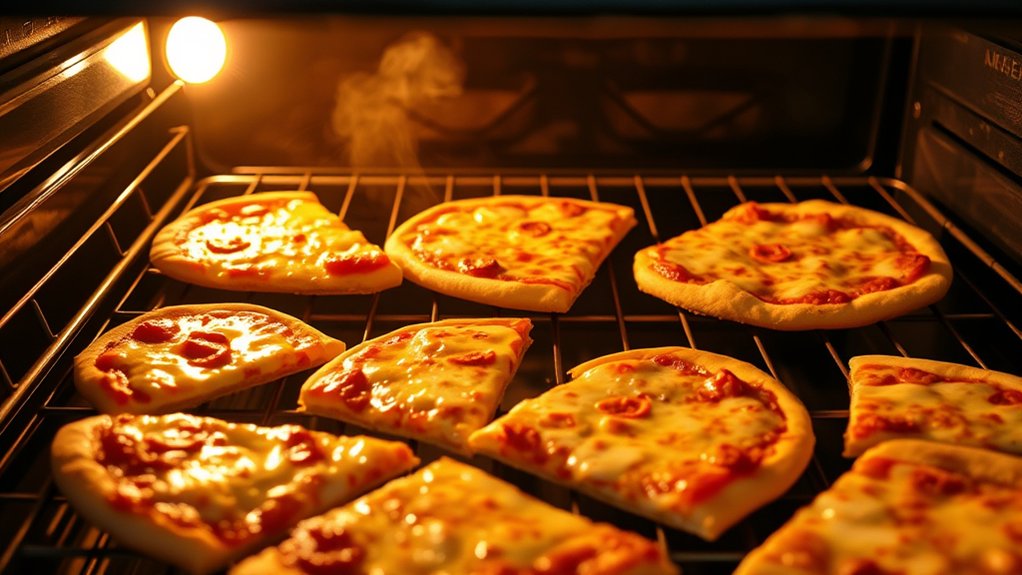
For even warming, arrange the pizza in a single layer on the middle oven rack or a preheated baking sheet so heat can circulate evenly around the slices. Keep each slice flat and slightly separated, because tight stacking traps steam and softens the crust.
This smart pizza placement helps the cheese warm gently while the edges stay crisp and inviting. If you’re reheating several slices, rotate them once so every piece gets the same cozy heat. Use a rimmed sheet if you want extra support, but don’t crowd the pan.
Leave a little space between slices for better airflow and moisture retention control; that balance keeps toppings juicy without making the base soggy. Avoid covering the pizza unless you need to guard against drying, since a lid can block the light, even warmth you want.
With thoughtful arrangement, you’ll bring back that fresh-from-the-pie-box aroma and texture.
How Long Can Pizza Stay Warm?
How long can pizza stay warm before it starts to lose its appeal? You can usually keep it pleasantly hot for about 30 to 60 minutes in a low oven, though the exact window depends on thickness, toppings, and how tightly you cover the pie.
After that, the crust may soften and the cheese can settle into a less lively texture, even if the pizza isn’t yet ice cold. If you’re feeding a crowd, treat that hour as your sweet spot.
- Thin crust cools faster than deep dish.
- Cheese-heavy slices often stay appealing a little longer.
- Larger batches need more careful timing and rotation.
For best results, serve when the aroma still feels fresh and the toppings look glossy. If you can’t eat it right away, use a storage friendly plan and watch the clock.
Pizza tastes best when you enjoy it while it’s still warm enough to feel indulgent.
How to Keep Pizza From Drying Out
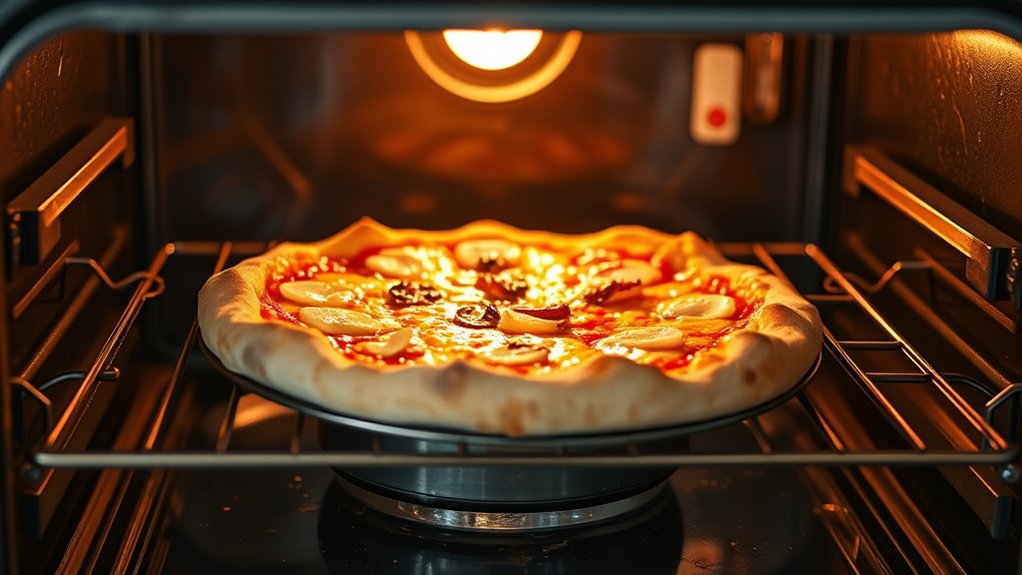
Once you’ve got your pizza warm, the next job is keeping it moist enough to stay inviting. You can do that by covering the slices loosely with foil, which traps gentle steam without softening the crust too much.
If you’re using the oven, set the pizza on a preheated stone or baking sheet and keep the heat low, around 200°F, so the toppings stay juicy and the cheese doesn’t turn leathery. For better moisture control, place a small oven-safe dish of water nearby; that extra humidity helps prevent the surface from drying out.
When you’re choosing reheating methods, avoid blasting the pizza with high heat, since that strips away flavor and dries the edges fast. If you’re keeping crusts crisp, don’t stack slices tightly or leave them uncovered in hot air.
Check them often, and serve as soon as they’re warm, glossy, and ready to taste fresh.
Frequently Asked Questions
Can I Keep Different Pizza Toppings Warm Together?
Yes, you can keep different toppings warm together if you use gentle temperature stratagems and separate slices loosely. You’ll preserve each topping’s flavor, prevent sogginess, and keep your pizza appetizing without overcooking.
Should I Use Foil When Reheating Leftover Pizza?
You shouldn’t use foil directly; it can trap steam, raising crust sogginess. Instead, heat your pizza at the right foil temperature only as a loose shield, so you keep melty toppings and a crisp crust.
Does Pizza Dough Affect Warming Time?
Yes, dough density and crust thickness affect warming time; denser dough needs longer, while thin crust heats faster. You’ll notice better moisture retention, crisp crust texture, and improved reheating efficiency with adjusted oven timing.
Can I Keep Pizza Warm in a Toaster Oven?
Yes, you can keep pizza warm in a toaster oven if you use low heat and watch closely. Use keeping warming techniques, ensure oven safety, and avoid drying it out so your slices stay crisp and appetizing.
Is It Safe to Leave Pizza Near the Oven Door?
No, it’s not safe leaving pizza near the oven door; you risk uneven heating and contamination.
Keep it on a warm, covered plate instead, so you’ll preserve its crisp crust and melty, appetizing cheese.
Conclusion
Now you know how to keep pizza warm in the oven without turning it into a dry disappointment. Set a low temperature, arrange the slices with a little space, and let a loose foil cover and a touch of humidity do the rest.
Keep an eye on the clock, because the sweet spot won’t last forever. Follow these steps, and when you lift that first slice, it’ll still be hot, glossy, and ready to vanish fast.
By mastering how to keep pizza warm in the oven, you ensure every bite stays delicious and satisfying.