What Is the Conventional Oven
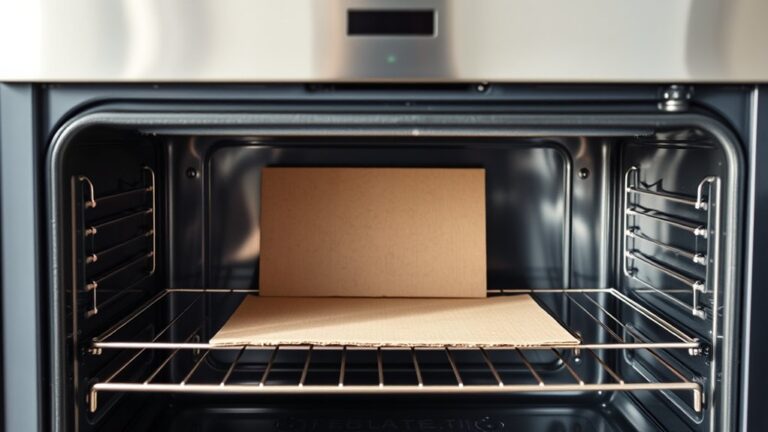
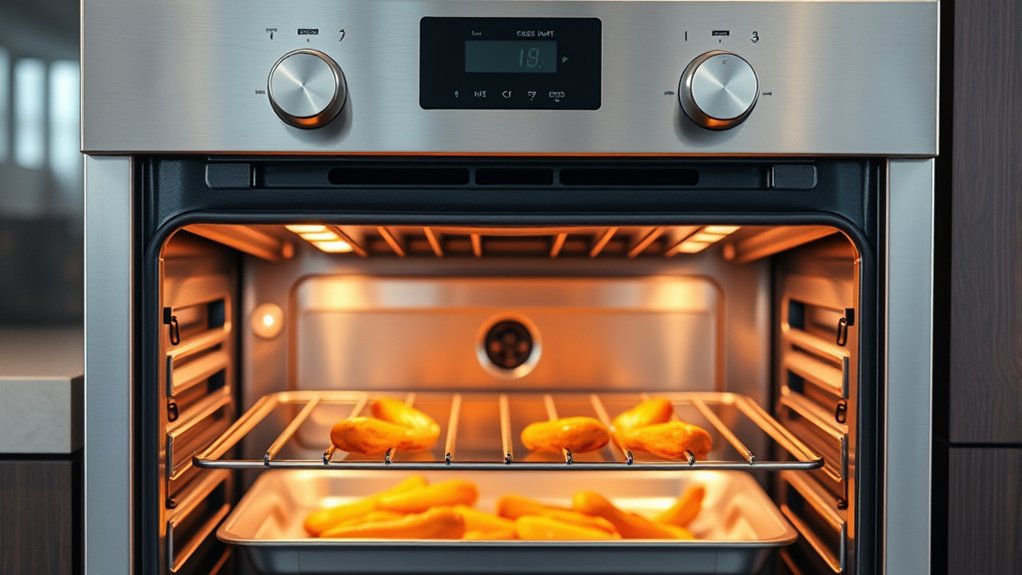
When you slide a pan into a conventional oven, it’s a bit like parking near a campfire: the heat comes from fixed sources, and placement matters. A conventional oven uses stationary top and bottom heating elements to bake, roast, or broil with steady results.
Unlike convection models, it doesn’t move air with a fan. So, you need to understand how heat behaves inside the oven if you want even cooking. There’s one simple adjustment that changes everything.
Key Takeaways
- A conventional oven is a standard cooking appliance that uses stationary heat from top and bottom elements.
- It cooks food by radiant heat and circulating hot air without a fan.
- Conventional ovens are commonly used for baking, roasting, and broiling.
- They usually provide steady, gentle heat for consistent cooking results.
- Conventional ovens can be built-in, slide-in, or freestanding, depending on kitchen layout.
What Is a Conventional Oven
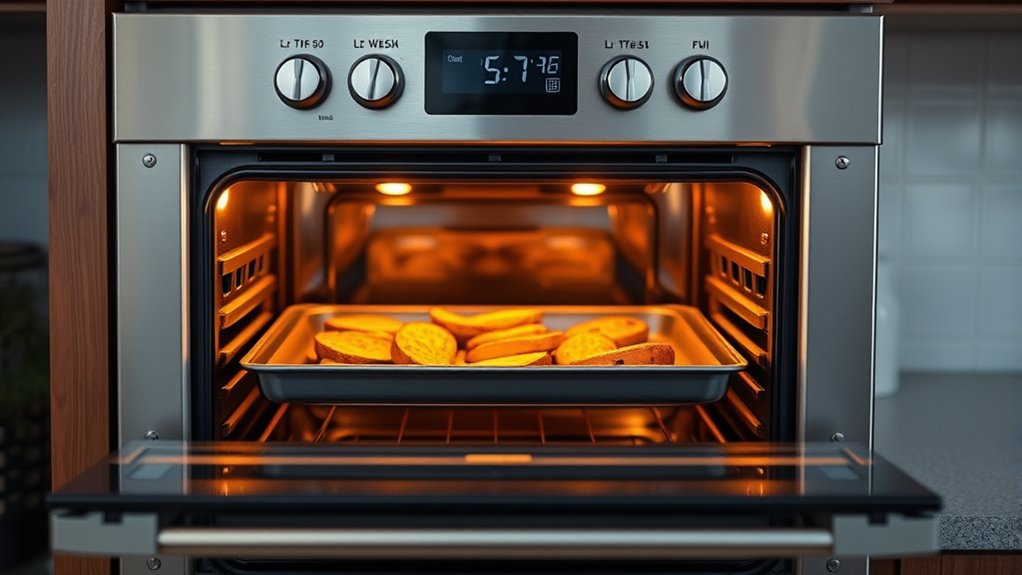
A conventional oven is a standard cooking appliance that heats food using stationary heat from one or more elements, typically positioned at the top and bottom of the oven cavity. You use it for baking, roasting, and broiling when you want consistent results without specialized settings.
In a tiny kitchen, it gives you dependable cooking capacity without demanding extra gadgets or complicated controls. You can choose a built-in, slide-in, or freestanding model based on your layout and cooking habits. Look for clear temperature controls, adjustable racks, and an interior size that matches your needs.
If you’re making budget upgrades, a conventional oven can improve meal flexibility without forcing a full remodel. You should compare energy ratings, cleaning features, and installation requirements before you buy.
When you understand its basic design, you can select an oven that fits your space, supports daily cooking, and delivers reliable performance.
How a Conventional Oven Heats Food
A conventional oven heats food with electric or gas heating elements that warm the oven cavity. You’ll get heat from both radiant energy and the hot air moving inside the chamber.
That circulation helps cook food evenly, but you should still rotate pans when needed for consistent results.
Heating Elements
Inside a conventional oven, heating elements convert electrical energy into heat and raise the air temperature until your food cooks by surrounding heat. You rely on the upper and lower elements to create steady radiant heat; the bottom element usually does most of the work, while the top element adds browning. An irrelevant topic or unrelated concept won’t change that basic function.
| Element | Role |
|---|---|
| Top | Browns surfaces |
| Bottom | Delivers primary heat |
| Thermostat | Signals when to cycle |
| Rack position | Affects exposure |
Use this setup to match your recipe. Place food where the heat reaches it evenly, then let the elements cycle without opening the door too often. That keeps the oven temperature stable and your results consistent.
Air Circulation
Hot air moves slowly around the food in a conventional oven, and that circulation is what helps heat reach every exposed surface. You rely on air circulation to transfer energy from the hot walls and racks to your pan and food.
Because the oven doesn’t use a fan, the warm air rises, cools, and sinks in a steady pattern. That means you should leave space around dishes so heat can move freely. Avoid overcrowding, or you’ll block airflow and slow browning.
Position pans in the center rack when possible for even exposure. This controlled movement affects baking performance by shaping how quickly the outside sets and the inside cooks. When you manage airflow well, you get more consistent results and fewer hot spots.
Conventional Oven vs. Convection Oven
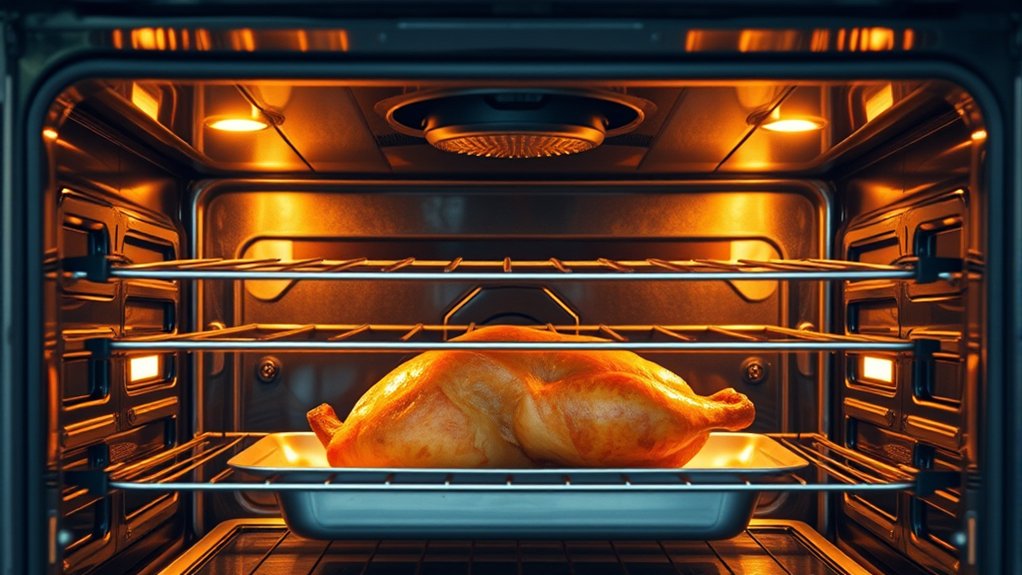
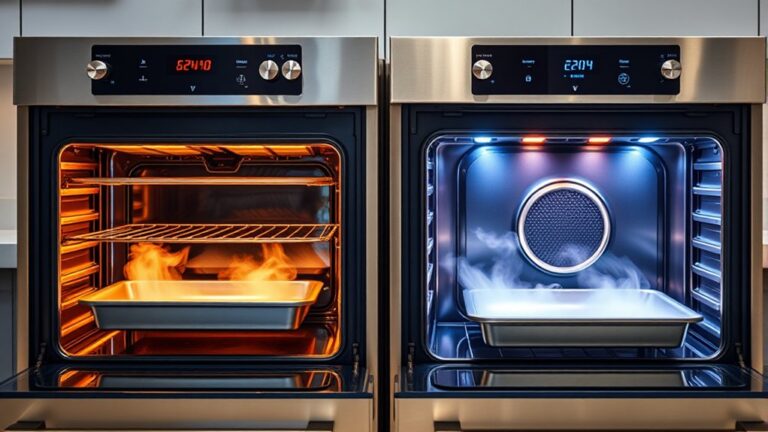
A conventional oven heats food with stationary radiant heat from the top and bottom elements, while a convection oven adds a fan to move hot air around the cavity.
You’ll usually get more even browning and faster cooking in a convection oven, but a conventional oven can work better for recipes that need gentle, stable heat. When you compare them, focus on how each method affects cooking time, texture, and final results.
Heating Method Differences
How do conventional ovens differ from convection ovens? In a conventional oven, you rely on radiant heat from top and bottom elements, while a convection oven adds a fan that circulates hot air. You should know this core difference before you compare oven myths or judge energy efficiency claims.
| Oven Type | Heat Movement |
|---|---|
| Conventional | Still air, direct heat |
| Convection | Fan-assisted air circulation |
| Result | Different heating method |
This means your conventional oven heats by natural convection inside the cavity, not by forced airflow. You control temperature the same way, but the oven’s internal heat distribution works differently. That distinction matters when you interpret manufacturer labels and set cooking expectations.
Cooking Performance Comparison
That difference in heat movement shows up most clearly in cooking performance. In your conventional oven, you’ll usually get steadier, gentler results, which helps custards, cakes, and breads rise evenly without drying too fast.
A convection oven speeds cooking by circulating air, so you’ll often see faster browning, crisper edges, and more uniform roasting. If you’re baking delicate batters, use the conventional setting for better control.
If you’re roasting vegetables or multiple trays, convection can improve efficiency and consistency. Adjust recipes by lowering temperature and checking food earlier when you switch modes.
These comparison points give you practical discussion ideas unrelated to heating elements, because performance depends on airflow, moisture loss, and surface browning, not just how the oven warms.
Best Foods to Cook in a Conventional Oven
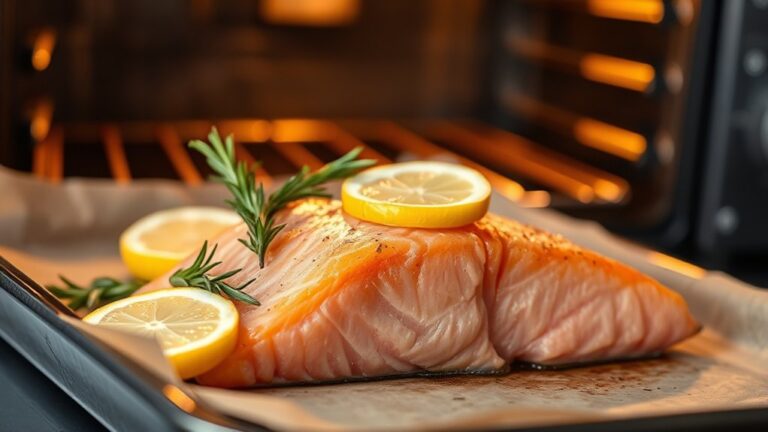
What foods shine in a conventional oven? You get the best results with dishes that need even, steady heat and dry surface browning. Roast chicken works well because the top heat crisps the skin while the center cooks through. Use flame retention and door insulation to support consistent performance by helping the oven hold temperature between checks.
Sheet-pan vegetables caramelize well. Casseroles set evenly and brown on top. Cookies and quick breads bake with reliable texture.
You can also cook loaves, lasagna, and meatloaf confidently in this oven. Its balanced heat lets you build color without constant adjustment, so your food finishes with firm edges and tender interiors.
For best results, place pans in the center rack, leave space for airflow, and avoid overcrowding. That approach gives you predictable browning, cleaner texture, and stronger flavor.
When to Use a Conventional Oven
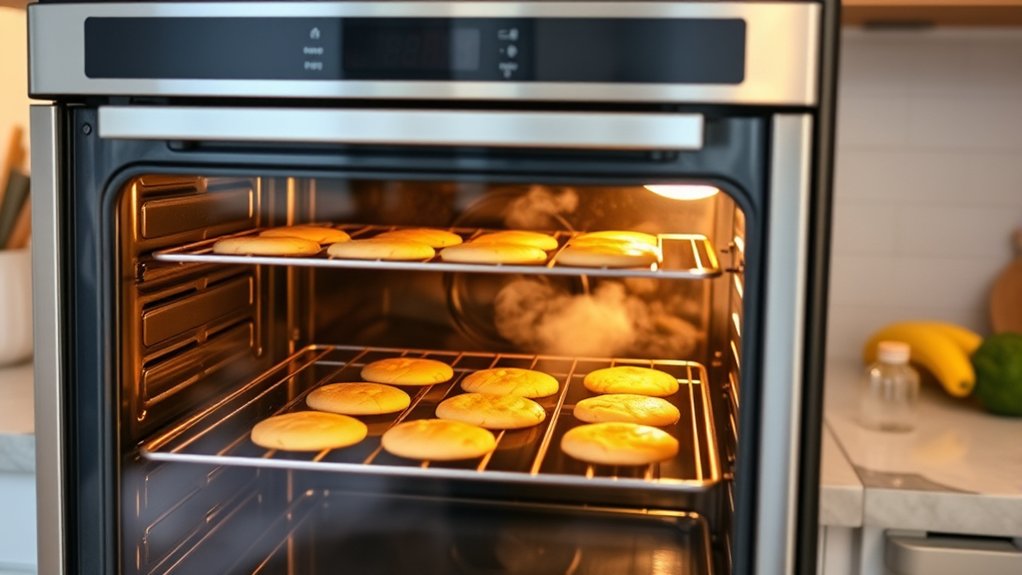
Use a conventional oven when you need steady, even heat for baking, roasting, and casseroles. You’ll get reliable results for dishes that benefit from consistent surrounding heat, especially when timing and browning matter.
Don’t use it when you need quick preheating, intense top heat, or a faster alternative like a toaster oven or microwave.
Cooking Tasks Best Suited
A conventional oven is best when you want even, consistent heat for tasks like baking cakes, cookies, bread, casseroles, roasted meats, and vegetables. Its classic design gives you dependable control, while indirect infrared heating helps you brown and cook food evenly. Use it when precision matters and you need stable temperatures throughout the cycle.
- Bake layered cakes and quick breads with steady rise.
- Roast meats and vegetables for uniform color and tenderness.
- Reheat casseroles or bake dishes that need thorough, even warming.
You should preheat fully, place pans in the center rack, and avoid crowding the oven. That setup lets heat circulate properly and helps you get repeatable results every time.
When Not To Use
Even with its strengths, a conventional oven isn’t the best choice for every task. You should avoid it when you need fast, high-heat searing, because the oven won’t give you the direct browning a stovetop, broiler, or grill can.
Skip it for delicate foods that dry out easily, unless you can tightly control temperature and moisture. Don’t use it for novelty listings or unrelated topics; stay focused on actual cooking needs.
If you’re reheating small portions, a microwave or toaster oven may work better and use less energy. You should also reconsider it when your recipe depends on precise airflow, rapid response, or constant stirring.
Choose a conventional oven when even, steady heat matters, not when speed, crisp edges, or specialized results are your priority.
Temperature Tips for Better Baking
What temperature gives you the best bake? Start by matching your recipe exactly, then verify your oven with an independent thermometer. You need temperature consistency because even small swings can change rise, browning, and texture.
If your oven uses gas, steady flame control helps maintain heat without sudden spikes or drops. Preheat fully before loading food, and keep the door closed so you don’t release stored heat.
Use these practices:
- Place racks before preheating so air can circulate evenly.
- Rotate pans only if your oven bakes unevenly.
- Let baked goods set briefly before removing them.
For precision, lower the temperature by 25°F when dark pans, glass dishes, or crowded trays absorb extra heat. If a recipe specifies a range, choose the lower end for delicate batters and the higher end for sturdy doughs.
With careful monitoring, you’ll bake more evenly and predictably every time.
Common Conventional Oven Problems and Fixes
When your conventional oven acts up, start with the basics: check the set temperature against an independent thermometer, confirm the rack position, and make sure the oven has fully preheated.
If food browns unevenly, rotate the pan halfway through baking and avoid crowding multiple dishes.
If the oven runs hot or cool, recalibrate the control only after verifying the thermometer reading over several tests.
If heat escapes, inspect the door seal for gaps, cracks, or debris; replace worn gaskets promptly.
If the oven won’t heat, check the power supply, circuit breaker, and heating element for visible damage.
If you smell unusual odors, remove spills and burned residue, then run a short high-heat cycle to clear them.
For an unrelated topic with no context, ignore marketing claims and rely on measured results.
If problems persist, stop using the appliance and call a qualified technician.
How to Preheat a Conventional Oven
To preheat a conventional oven, set the temperature you need, close the door, and let the appliance reach that heat before you put anything inside. Check the dial or display, then wait for the indicator light or signal to confirm readiness. This improves preheating efficiency and helps your food cook evenly from the start.
Set the oven, close the door, and wait for the signal before baking.
- Position the rack before you turn the oven on.
- Keep the door shut so heat doesn’t escape.
- Use safety precautions when handling hot racks or pans.
If your recipe calls for a fully heated oven, allow extra time for older models or larger cavities. Don’t open the door repeatedly; each opening drops the temperature and slows recovery. For accurate results, trust the oven’s preheat signal instead of guessing. When the oven reaches the target setting, load your dish promptly and begin cooking right away.
Cleaning and Caring for Your Oven
Once your oven is hot and ready, keeping it clean helps it perform well and last longer. Wipe spills after each use, once the oven has cooled completely. Use a soft cloth, mild detergent, and warm water; avoid abrasive pads that can damage the finish.
For baked-on residue, apply a paste of baking soda and water, let it sit, then wipe it away. Follow the manufacturer’s cleaning schedules so grease doesn’t build up and affect heating.
Remove racks and wash them separately if your model allows it. Check the door seal regularly; a damaged seal can reduce efficiency and should be replaced.
Always follow safety reminders: unplug the oven or switch off power at the breaker before deep cleaning, and never spray cleaner onto heating elements. Keep vents clear so air can circulate properly.
With consistent care, you’ll preserve performance, improve hygiene, and reduce repair needs over time.
How to Choose the Right Oven
Choosing the right oven starts with matching the appliance to your cooking habits, kitchen space, and power source. Measure the cutout carefully, then compare standard sizes with your available clearance.
If you bake often, prioritize even heating and reliable temperature control; if you roast more, look for strong broil settings and fast preheat. Think about fuel type, because gas and electric models perform differently and require different hookups.
- Check capacity for your largest trays and pans.
- Compare convection, self-cleaning, and smart controls.
- Verify installation needs, including voltage and ventilation.
Also weigh two word discussion ideas to consider: energy use, maintenance, and budget. Read reviews for durability, but focus on performance data over marketing claims. Finally, choose the model that fits your routine now and still handles future cooking needs without crowding your kitchen.
Frequently Asked Questions
Can a Conventional Oven Be Used for Broiling?
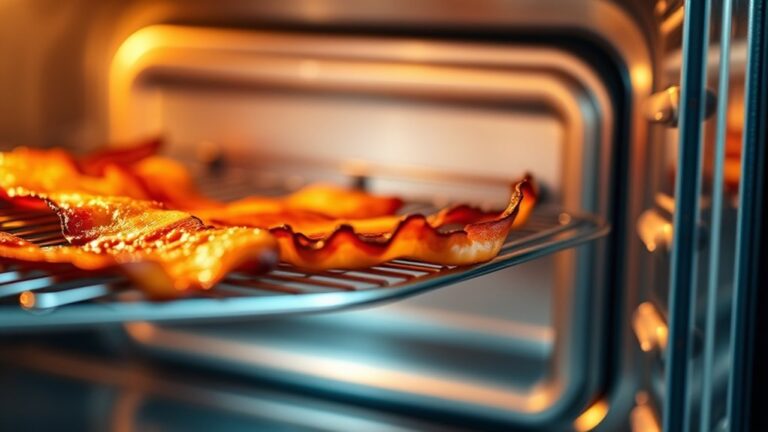
Yes, you can broil in a conventional oven if it has a broiler setting. You’ll use intense top heat for broiling basics, so position food correctly and watch heat distribution closely.
Does a Conventional Oven Need Special Cookware?
No, you usually don’t need special cookware, but you should choose oven-safe pieces with strong material durability. For baking, specialty bakeware can help performance.
Always check temperature ratings, handles, and lids before you use them.
How Long Do Conventional Ovens Usually Last?
Most conventional ovens last about 10 to 15 years if you maintain them well. You’ll notice ageing components, rising energy usage, and uneven heating before failure, so inspect seals, elements, and controls regularly.
Are Conventional Ovens Energy-Efficient?
Yes, some conventional ovens are energy efficient, especially when you match size to meal, use convection settings, and avoid preheating too long.
You can improve energy efficiency with simple maintenance tips like sealing leaks and cleaning regularly.
Can I Bake Multiple Trays at Once?
Yes, you can bake multiple trays at once. You’ll get best results by managing baking tray placement and monitoring oven rack temperature control.
Rotate trays halfway through so everything browns evenly and bakes consistently.
Conclusion
Like a steady hearth in a busy kitchen, your conventional oven gives you dependable heat without fuss. You can trust it to bake, roast, and broil with even results when you place racks correctly, preheat fully, and keep the temperature steady.
If you want simple control and consistent cooking, this oven does the job well. Choose it when reliability matters more than extra features, and you’ll get dependable results every time.
For straightforward and reliable cooking, the conventional oven remains a trusted choice in many kitchens.