How to Cook Bacon in the Oven
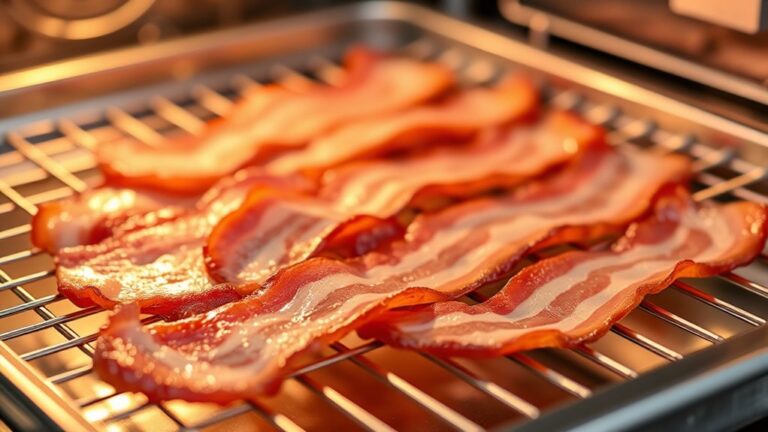
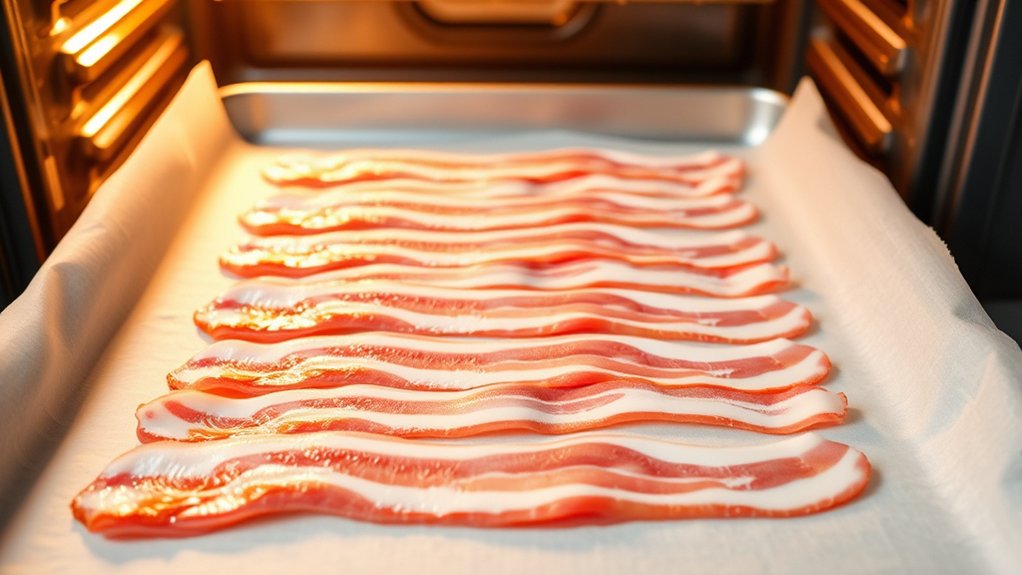
Think of cooking bacon in the oven as the quiet stage where bacon can do its best work. You’ll get the most even results by preheating to 400°F, lining a rimmed sheet with foil or parchment, and laying the slices in a single layer.
Bake until they’re deep brown and crisp, then drain them well. The exact timing shifts more than you’d expect, and a few small choices change everything.
Key Takeaways
- Preheat oven to 400°F and line a rimmed sheet with foil, parchment, or a wire rack.
- Arrange bacon in a single layer with space between strips; avoid crowding or overlap.
- Bake standard slices 15–20 minutes, checking early; thick-cut may need 20–25 minutes.
- Remove when deeply browned and crisp, then drain on paper towels or a rack.
- Cool leftovers before storing airtight, and reheat briefly in the oven or skillet for crispness.
What Bacon Cooks Best in the Oven?
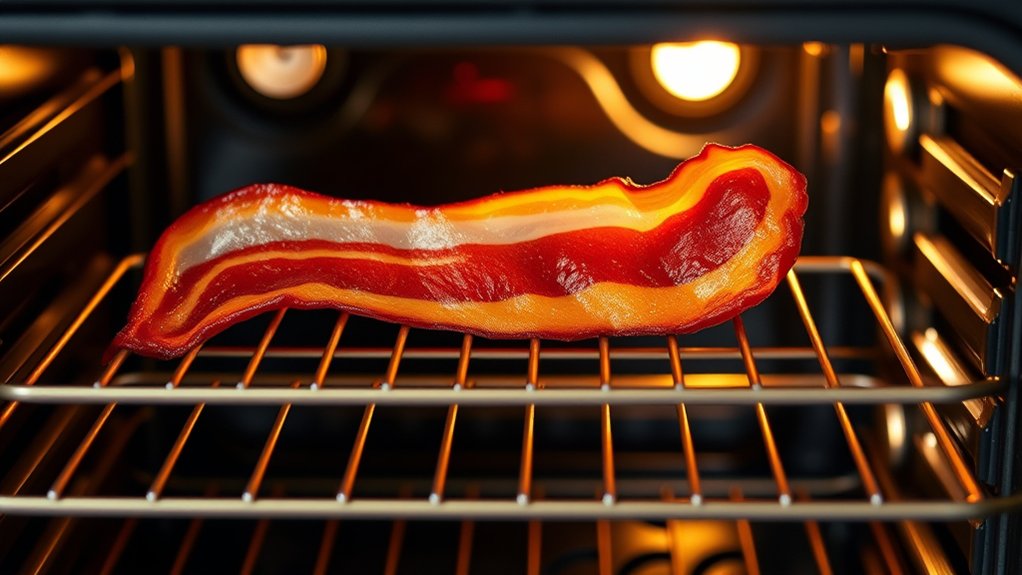
For oven cooking, standard sliced bacon works best because it lays flat, cooks evenly, and renders fat consistently. You should choose medium-cut strips for reliable results, since very thin bacon can overcrisp quickly and thick-cut bacon needs more time and closer monitoring.
Among common bacon types, smoked or unsmoked both work well; pick based on flavor preference, not texture. If you want extra-lean strips, expect less rendered fat and a drier finish. Avoid curled, irregular cuts when you want uniform browning.
Turkey bacon can also go in the oven, but it behaves differently and won’t crisp the same way as pork bacon. Use oven safe pans or sturdy sheet pans that can handle heat and fat without warping.
You’ll get the best outcome when you match the cut to your target texture: classic crisp strips, chewy center, or substantial thick-cut pieces.
Prep Your Oven and Baking Sheet
Preheat your oven to 400°F and position a rack in the center so the heat circulates evenly. While it heats, prep oven by checking that the rack clears the top element and leaves enough room for air to move.
Preheat the oven to 400°F and center the rack so the heat can circulate evenly.
Line a rimmed bake sheet with aluminum foil for quick cleanup, or use parchment if you prefer. Make sure the sheet is sturdy and large enough to hold the bacon in a single layer without overlap.
If you want less mess, place a wire rack on the bake sheet so fat can drip away, but it’s optional. Keep the sheet level on the counter before you add anything.
A properly prepared oven and bake sheet help the bacon cook consistently and reduce sticking. Once everything’s ready, you can move on without pausing to assemble tools or adjust the setup.
How to Cook Bacon in the Oven
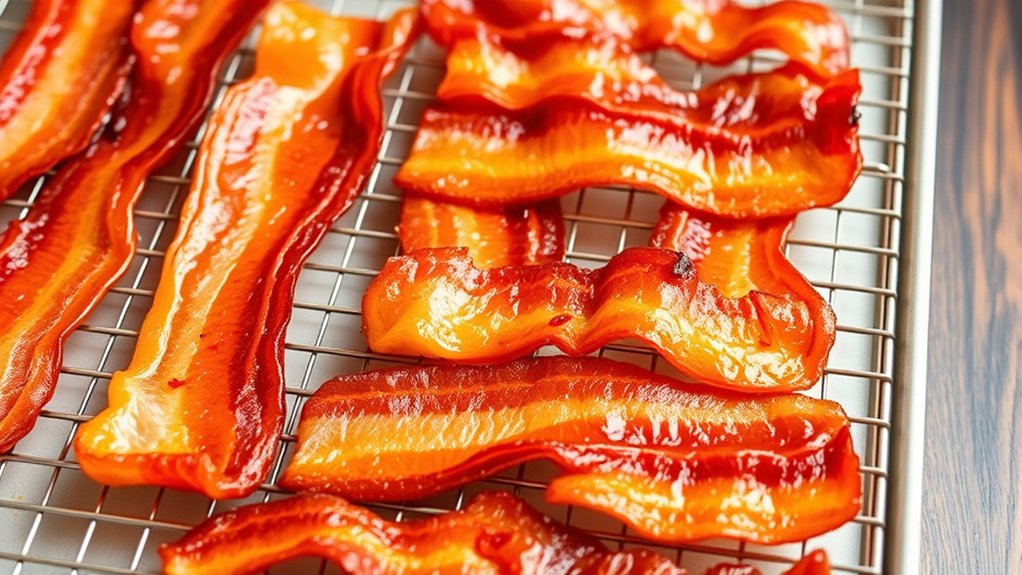
With your oven hot and the baking sheet ready, arrange the bacon in a single layer on the foil- or parchment-lined sheet, or on the wire rack if you’re using one. Keep each strip flat so the heat reaches every surface evenly. This setup supports crisp edges while preserving bacon flavor.
- Leave space between strips to let air circulate and prevent steaming.
- Choose your surface based on texture: foil yields easy cleanup, parchment reduces sticking, and a rack promotes more even rendering.
- Slide the sheet in carefully so you don’t shift the bacon and disrupt the layout.
As the fat begins to render, oven chemistry works for you: moisture evaporates, proteins set, and sugars and amino compounds contribute browning. Watch for the strips to tighten and darken, but don’t crowd them or cover them. Maintain a steady oven environment, and you’ll get consistent, professional results with minimal effort.
How Long to Bake Bacon in the Oven?
How long bacon takes in the oven depends on its thickness, your oven’s temperature, and how crisp you want it. For standard slices, plan on 15 to 20 minutes at 400°F; thick-cut bacon may need 20 to 25 minutes. If you’re using a lower temperature, extend the baking time a few minutes.
Lightly brushing the sheet with olive oil can help prevent sticking, but you don’t need much.
| Bacon type | Temp | Time |
|---|---|---|
| Thin-cut | 400°F | 12–15 min |
| Standard | 400°F | 15–20 min |
| Thick-cut | 400°F | 20–25 min |
Start checking near the earliest time so you can stop when the edges turn deep brown and the fat looks rendered. Remove the bacon promptly, then transfer it to a paper towel-lined plate to finish crisping. Your exact baking time will vary, so use color and texture, not the clock alone.
Should You Flip Bacon While It Cooks?
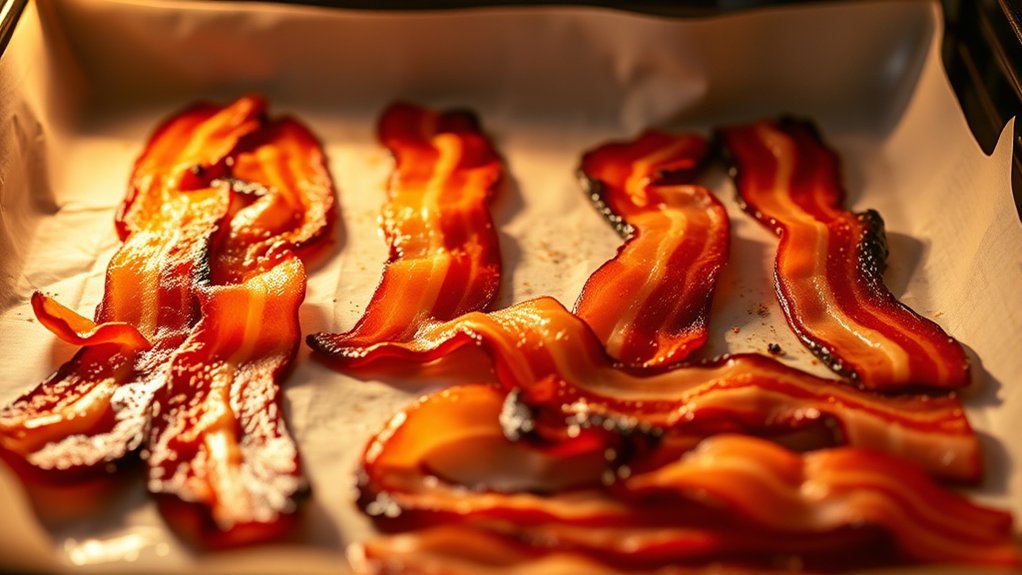
Usually, you don’t need to flip bacon when you bake it; the oven’s circulating heat cooks both sides evenly enough for most batches. You can leave the strips on the rack or sheet pan and trust the heat to do the work, which saves time and keeps your process simple.
- Choose thin, even strips for more consistent results.
- Space the bacon apart so the heat reaches each piece.
- Check once near the end if your slices vary in thickness.
You should consider flipping bacon only if your oven has hot spots, the slices overlap, or you use very thick-cut bacon. In those cases, one quick turn can improve even cooking without interrupting the bake.
Keep your focus on consistency rather than constant movement. If you do flip, do it once, quickly, and return the bacon to the oven immediately so it cooks steadily.
How to Keep Bacon Crispy
For crisp bacon, you need to let the oven do the work without trapping steam. Arrange strips in a single layer on a wire rack set over a foil-lined sheet pan so heat can circulate around each piece. Keep the oven at a steady temperature, and avoid overcrowding, which softens edges and dulls bacon flavor.
Bake until the fat renders and the strips look deeply colored but not brittle. Then transfer them to a paper towel-lined plate for a moment, but don’t leave them there too long, or residual moisture can soften the surface.
If you want extra crunch, serve bacon right away or return it to the oven briefly before plating. You can also help preserve texture by cutting portions with clean tongs instead of stacking them.
For cleanup tips, let the pan cool, then discard the foil and wipe away rendered fat.
How to Drain Oven-Baked Bacon
To drain oven-baked bacon, set the slices on a wire rack so excess fat can drip away as they finish cooking.
Then transfer them to paper towels to absorb any remaining grease and keep the bacon crisp.
If you want to save the drippings, pour them into a heat-safe container once they’ve cooled slightly.
Use a Wire Rack
Set a wire rack inside a rimmed baking sheet before you lay down the bacon, because it lifts the strips above the fat and lets the grease drip away as they cook. Proper rack placement helps you keep the slices evenly exposed to heat, which supports a crisp texture without soggy spots. Arrange the bacon in a single layer, leaving space between strips so air can circulate.
- Choose a sturdy rack that fits the sheet tightly.
- Center each strip so grease falls through, not pools under it.
- Rotate the pan once if your oven heats unevenly.
Keep the pan level and avoid overcrowding, and you’ll drain more fat during baking while maintaining consistent browning.
Transfer to Paper Towels
Once the bacon finishes baking, transfer the strips to a plate lined with paper towels so the towels absorb any remaining surface grease. Arrange the pieces in a single layer, and don’t stack them, or the steam will soften the texture.
If you want extra crispness, blot the top lightly with another towel after a few seconds. Let the bacon rest briefly before serving, because the surface will be very hot and delicate.
This step also makes kitchen cleanup easier by removing excess grease before you plate anything else. Use fresh towels if needed, especially after cooking a large batch.
If you’re serving bacon and coffee for breakfast, this quick drain keeps the strips crisp and presentable without adding extra mess.
Save Bacon Drippings
Don’t pour the bacon fat down the sink; save it for later use. Let the drippings cool slightly, then carefully tilt the pan and pour the liquid fat through a fine-mesh strainer into a heatproof jar. This protects bacon safety by removing browned bits that can spoil faster.
Store the jar in the refrigerator, where the fat will solidify and stay usable for weeks.
- Use a clean, dry container.
- Strain while the fat is still liquid.
- Label the jar with the date.
You can use the drippings to roast vegetables, fry eggs, or season beans. When you drain oven-baked bacon correctly, you preserve flavor and support a crisp texture without wasting anything.
How to Cook Bacon for a Crowd
When you’re cooking bacon for a crowd, the oven is your best tool for producing large, even batches without standing over the stovetop. Line several rimmed sheet pans with foil or parchment, then arrange the bacon in a single layer with slight gaps.
For crowd-sized bacon, the oven wins: line sheet pans, spread strips in a single layer, and bake evenly.
If you need extra capacity, use multiple racks and rotate the pans halfway through for even browning. For crowd friendly tips, choose bacon with uniform thickness so it finishes at the same time.
Manage kitchen logistics by preheating the oven fully, keeping one pan ready while another cooks, and staging serving trays near the oven. Watch the bacon closely during the last few minutes, since large batches can go from crisp to overdone quickly.
When it reaches your preferred texture, transfer it to a paper towel-lined platter so it drains efficiently and stays neatly arranged for serving.
How to Store and Reheat Bacon
Store leftover bacon in an airtight container or zip-top bag once it has cooled to room temperature. For reliable bacon storage, place parchment between layers so the slices don’t stick, and refrigerate them within two hours. You can keep them chilled for up to four days, or freeze portions for longer storage.
Use these reheating methods to restore crispness without drying the bacon out:
- Skillet: Warm slices over medium-low heat for 30 to 60 seconds per side.
- Oven: Arrange bacon on a lined sheet and heat at 350°F for 5 to 7 minutes.
- Microwave: Layer bacon between paper towels and heat in short bursts.
Choose the method that matches your timing and texture goals. If you want the best flavor, reheat only the amount you’ll eat right away, and keep the rest stored cold until needed.
Troubleshooting Oven-Baked Bacon
If your oven-baked bacon isn’t turning out evenly crisp, a few simple adjustments usually fix the problem. First, check your rack position; center placement promotes steady heat, while a crowded pan traps steam and softens the slices.
Center the rack for steady heat, and avoid crowding the pan to keep bacon crisp.
If some pieces brown faster, rotate the pan halfway through cooking and separate overlapping strips. For thicker bacon, extend the time in short intervals so the fat renders without burning the edges.
If the bacon still tastes flat, use a lighter salt cure or select a higher-quality brand to improve bacon flavor. Line your pan with foil or parchment for easier cleanup, but keep it flat so grease doesn’t pool and spatter.
You should also watch closely during the last few minutes, because bacon can go from crisp to burnt quickly. Always drain hot fat carefully and follow oven safety by using mitts and a rimmed sheet pan.
Frequently Asked Questions
Can I Bake Bacon on Parchment Paper?
Yes, you can bake bacon on parchment paper. You’ll line your baking sheet with oven parchment, arrange the bacon parchment, and bake until crisp.
This helps reduce sticking, speeds cleanup, and keeps your pan neat.
Should I Season Bacon Before Baking?
Usually, you shouldn’t season bacon before baking; it’s already salty. If you want flavor enhancement, add black pepper, brown sugar, or spices lightly.
Keep it simple, so you don’t muddy the bacon’s natural taste.
Can I Cook Bacon With Other Foods in the Oven?
Yes, you can cook bacon with other foods if you manage timing, spacing, and oven temperature guidance carefully. You’ll want compatible bacon flavor pairing, avoid crowding, and place foods on separate racks when possible.
Does Oven Bacon Splatter Less Than Stovetop Bacon?
Yes, oven bacon usually splatters less than stovetop bacon, because the heat surrounds it more evenly. You’ll get less bacon splatter, especially if you use a lined tray.
Oven vs stovetop, it’s cleaner and easier.
Can I Use a Cooling Rack for Bacon?
Yes, you can use a cooling rack for bacon if it’s oven-safe. Set it over a sheet pan, arrange the strips, and let fat drain.
For flavor, try bacon rack-friendly marinade ideas later.
Conclusion
With just a few simple steps, you can cook bacon in the oven for crisp, even results every time. Set your rack, line your pan, and keep the slices in a single layer so they brown properly.
Once you know the timing, you’ll have bacon ready for breakfast, salads, or batch cooking in a snap. Save the drippings, store extras well, and you’ve got a foolproof method that really hits the spot.
This easy technique to cook bacon in the oven ensures perfect texture and flavor every time.