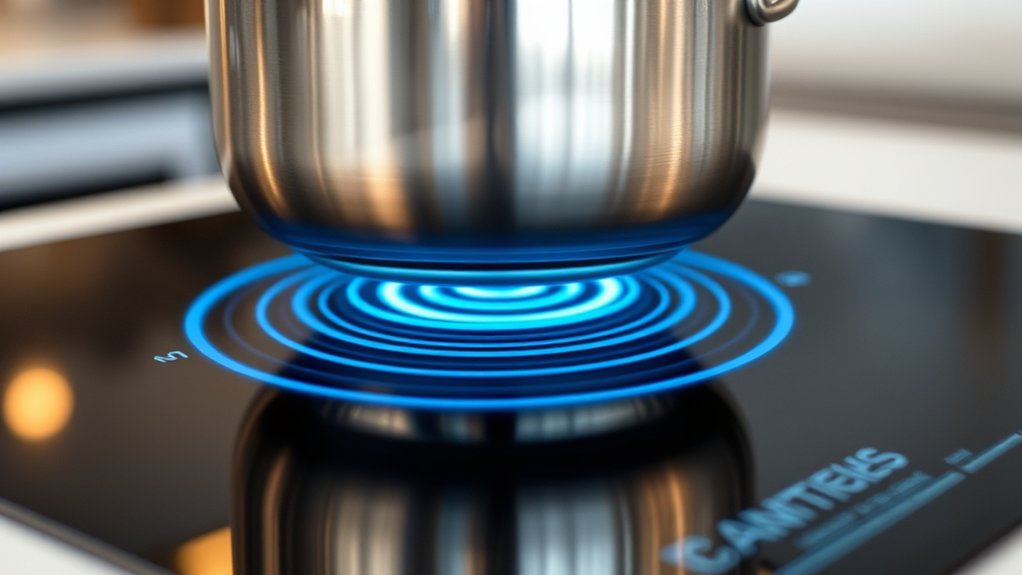
How Does an Induction Oven Work
An induction oven works by warming a pan on a smooth glass surface as if heat is rising from nowhere. In an induction oven, you send alternating current through a coil under the cooktop, and that coil creates a rapidly changing magnetic field.
If your pot has a ferromagnetic base, the field induces currents in the metal, and resistance turns that energy into heat. Nonmagnetic cookware barely responds, which is why the next detail matters.
Key Takeaways
- An induction oven uses electromagnetic energy, not a flame, to heat cookware directly.
- A copper coil beneath the glass creates an alternating magnetic field.
- The magnetic field induces electrical currents in compatible pans, producing heat from resistance.
- Only magnetic, conductive cookware heats efficiently; glass and nonmagnetic metals work poorly.
- The glass surface stays relatively cool, making induction faster, safer, and easier to clean.
How Induction Cooking Heats Cookware
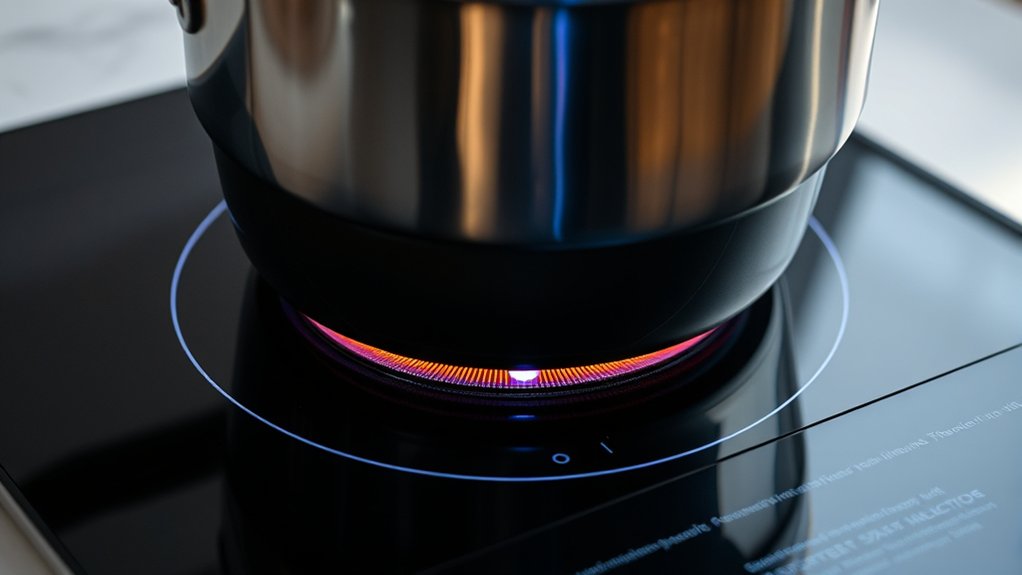
Induction cooking heats cookware by using electromagnetic energy instead of a flame or electric coil. You place induction cookware on the glass surface, and the cooktop sends alternating electrical energy into a coil beneath it.
That coil produces magnetic fields that interact with ferromagnetic metal in the pan. The changing field induces electrical currents inside the cookware itself, and those currents encounter resistance. Resistance converts electrical energy into heat directly in the metal, so the pan warms fast and efficiently.
You don’t heat the burner first; you heat the vessel. Because the glass top doesn’t generate much heat, you reduce wasted energy and lower surface temperatures.
For best results, you need cookware with magnetic properties, such as cast iron or compatible stainless steel. Nonmagnetic pans won’t couple well with the system, so they won’t transfer energy effectively or cook evenly.
How Induction Creates a Magnetic Field
Beneath the cooktop’s glass surface, an alternating current flows through a copper coil, and that changing current creates a changing magnetic field around the burner zone. You can think of this as induction electromagnetic coupling: the coil acts as the source, and its oscillating field extends upward through the surface.
Because the current reverses rapidly, the field also reverses, following magnetic flux principles that describe how flux varies with time and space.
Rapidly reversing current makes the magnetic field alternate too, as magnetic flux shifts through space and time.
- The coil’s geometry concentrates the field in a tight area.
- Higher-frequency current makes the magnetic field switch faster.
- The field remains strongest directly above the coil.
When you place cookware nearby, you don’t see the field, but you do get a controlled, high-rate magnetic influence in the metal below. The cooktop’s electronics regulate this process precisely, so you get repeatable energy transfer without heating the glass itself.
Why Induction Works Only With Certain Pans
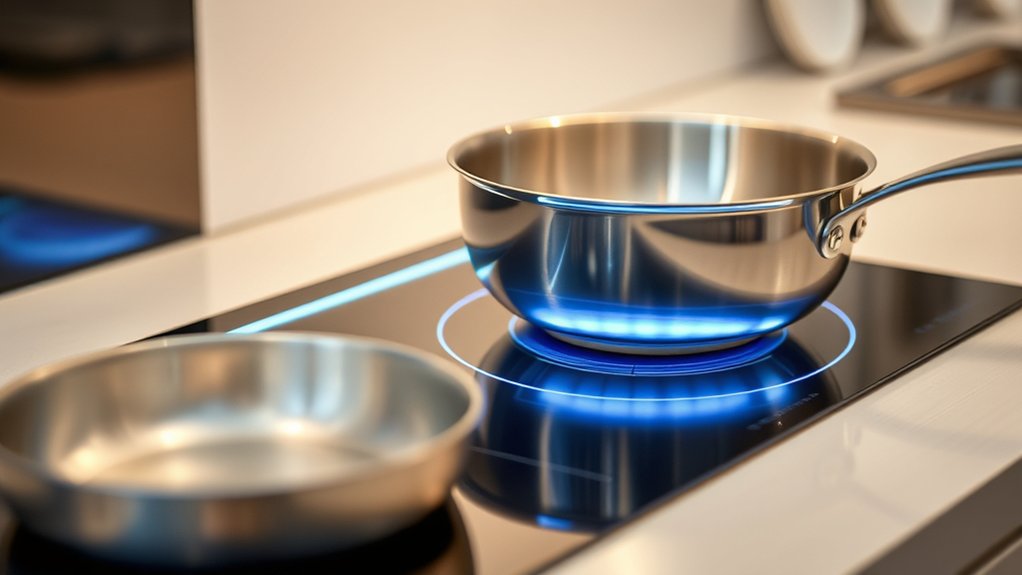
That changing magnetic field only heats pans made from materials that can respond to it. You need cookware with enough magnetic permeability and electrical conductivity for the field to induce strong currents in the base.
If your pan’s materials are nonmagnetic, such as aluminum, copper, glass, or most ceramics, the field won’t couple effectively, so the oven can’t transfer energy into the pan body. Ferromagnetic steels and some cast irons work because their structure lets the field create eddy currents and magnetic losses in the metal.
Manufacturers often label cookware compatibility because a pan may look suitable yet still contain too little magnetic content in its base. You can test a pan with a magnet: if it sticks firmly to the bottom, the pan is usually compatible. The magnetic response depends on the base composition, thickness, and uniformity, so only specific pans perform properly on induction surfaces.
Why Induction Cooking Heats Faster
Why does induction cooking seem so quick? You get heat almost immediately because the cooktop creates a magnetic field that induces electrical currents directly in compatible cookware, so energy transfers into the pan instead of warming the air or a burner surface first. That direct coupling boosts induction efficiency and shortens startup time.
Induction cooktops feel so fast because they heat the pan directly, not the air or burner first.
Since the glass top itself doesn’t become the primary heat source, you lose less energy before the pan reaches target temperature. You also control power precisely, so the system responds fast when you raise or lower heat.
Current generation starts the moment you switch it on. Cookware compatibility determines whether the magnetic circuit works. Minimal thermal lag means rapid temperature changes.
You’ll notice faster boiling, quicker searing, and shorter preheat intervals because the process concentrates energy exactly where you need it.
Safety and Cleanup Benefits of Induction Cooktops
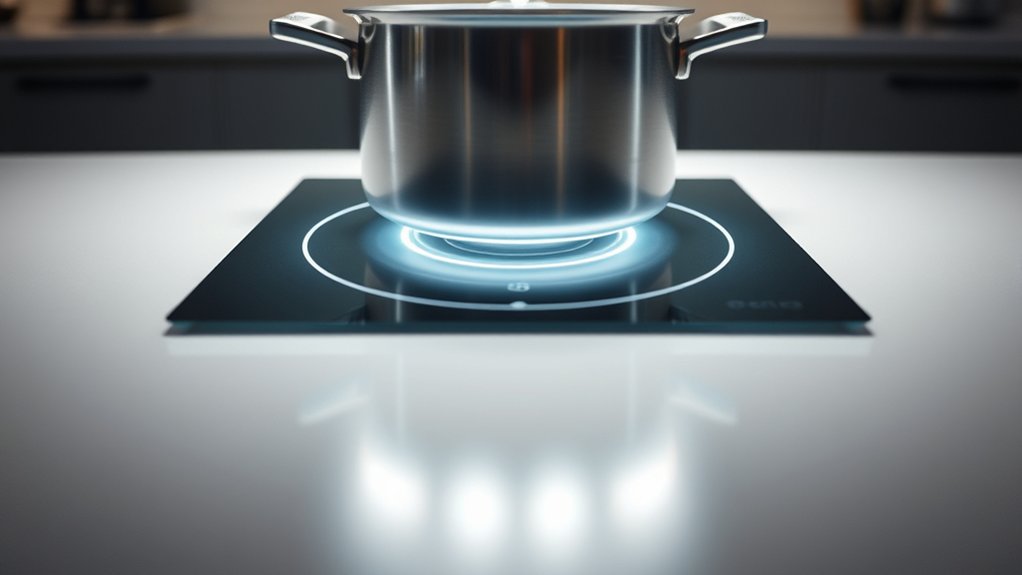
Beyond speed, induction cooktops also improve everyday safety and make cleanup easier. You heat the pan directly, so the glass surface stays cooler than a radiant burner. If you touch the cooktop briefly after cooking, you’re less likely to get burned, though residual heat from the pan can still transfer to the surface.
Because the hob doesn’t glow and won’t ignite spilled food, you reduce fire risk and keep better control during busy cooking.
Cleanup is simpler because spills usually don’t bake onto the surface. You can often wipe away splatter with a damp cloth after the unit cools. The flat top also eliminates grates and burner wells where residue collects.
For best performance, choose compatible cookware with magnetic bases; your pan material determines whether the magnetic field couples efficiently. This cookware compatibility matters for both safety and efficiency, since unsuitable pans won’t heat properly and can cause uneven results.
Frequently Asked Questions
Can Induction Cooktops Be Used With Cast Iron Pans?
Yes, you can use cast iron on induction cooktops because its cast iron base provides magnetic compatibility. You’ll get efficient heating, though you should lift, not slide, pans to protect the glass surface.
Do Induction Ovens Require Special Electrical Wiring?
Yes, you’ll often need dedicated wiring requirements for an induction oven, depending on its power draw. You should verify induction safety specs, match voltage and amperage, and use a licensed electrician for proper installation.
Is Induction Cooking More Energy Efficient Than Gas?
Yes, typically you’ll use less induction energy than gas because induction heats cookware directly with minimal losses.
In gas comparison, you’ll waste more heat to air, so your cooking efficiency usually improves noticeably with induction.
How Loud Are Induction Cooktops During Operation?
They’re usually quite quiet; you’ll hear a soft induction noise, like a distant hum. The burner sound may rise briefly as power cycles, but most cooktops stay far quieter than gas or electric coils during operation.
Can Induction Cooktops Work During a Power Outage?
No, you can’t use most induction cooktops during an outage because they need electricity to power the coil and controls.
With a suitable power backup, you might keep cooking if it supplies enough wattage.
Conclusion
You now know that an induction oven doesn’t heat the cooktop; it sends a rapidly changing magnetic field into a ferromagnetic pan, and the pan heats itself through electrical resistance. That’s why the right cookware matters, and why induction cooks so quickly and efficiently.
It’s a smart system: energy goes where it’s needed, not where it isn’t. In the end, induction turns invisible fields into precise heat—like a silent handshake between science and your meal.
This efficient process is what makes an induction oven such a revolutionary cooking technology.