How to Cook Brats in the Oven
If you want to cook brats in the oven and have them come out juicy with browned casings and almost no fuss, the oven is a simple place to start.
You’ll need a hot oven, a lined baking sheet, and a quick way to check doneness so you don’t overcook them.
The method is straightforward, but a few small details make a big difference.
The next step matters more than you might think.
Key Takeaways
- Preheat oven to 400°F and line a baking sheet with foil or parchment for easy cleanup.
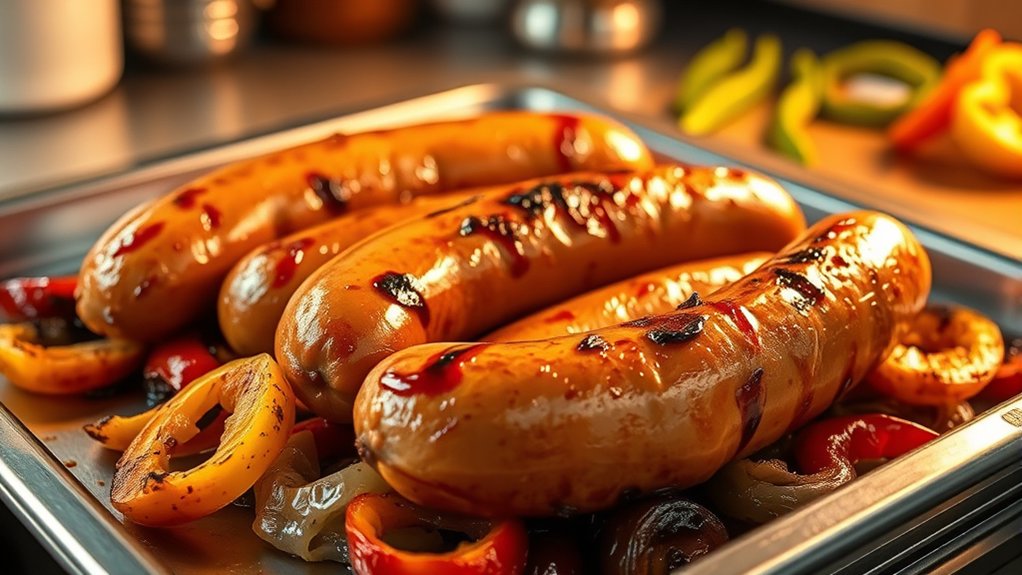
- Arrange brats in a single layer with space between; add onions or peppers beside them if desired.
- Bake brats for 20–25 minutes, flipping halfway through for even browning.
- Cook until casings are browned and crisp and the internal temperature reaches 160°F, or 140°F for fully cooked brats.
- Rest briefly, then serve with mustard, onions, sauerkraut, or your favorite sides.
What You Need to Bake Brats
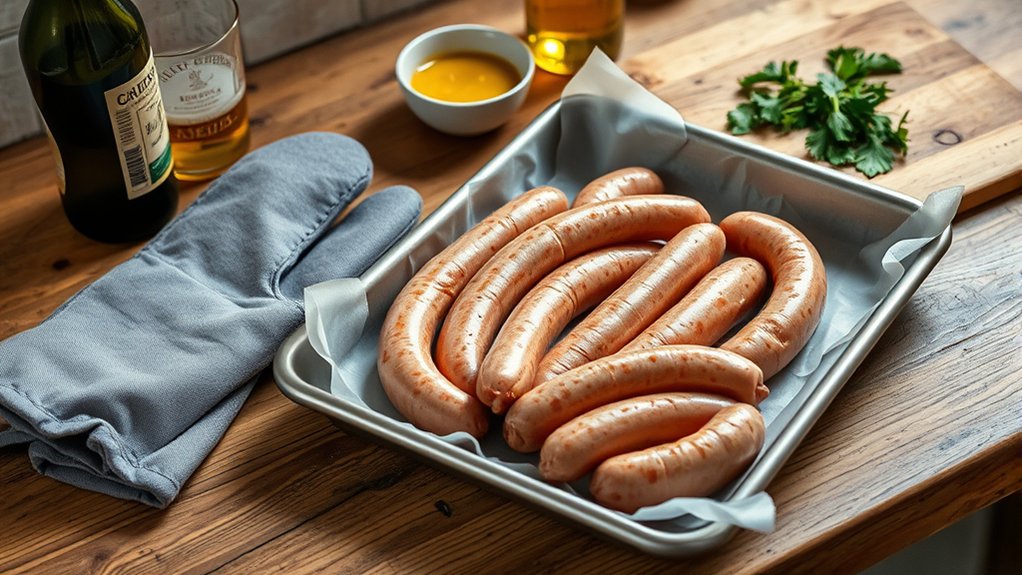
To bake brats in the oven, you’ll need just a few simple tools and ingredients: bratwursts, a baking sheet or oven-safe skillet, and, if you want easier cleanup, parchment paper or foil. Choose fresh or fully cooked brats, depending on what you have on hand.
Use oven safe cookware that fits the sausages in a single layer so they cook evenly and brown well. A rimmed baking sheet works for simplicity, while a skillet gives you a little more control over juices.
You can also keep a few basics nearby for brats flavor pairing, such as onions, peppers, mustard, or sauerkraut, if you want to serve them with extra depth. A pair of tongs helps you handle the brats safely, and a meat thermometer lets you check doneness with confidence.
With these items ready, you’re set to make oven-baked brats with minimal fuss.
Preheat the Oven and Prep the Pan
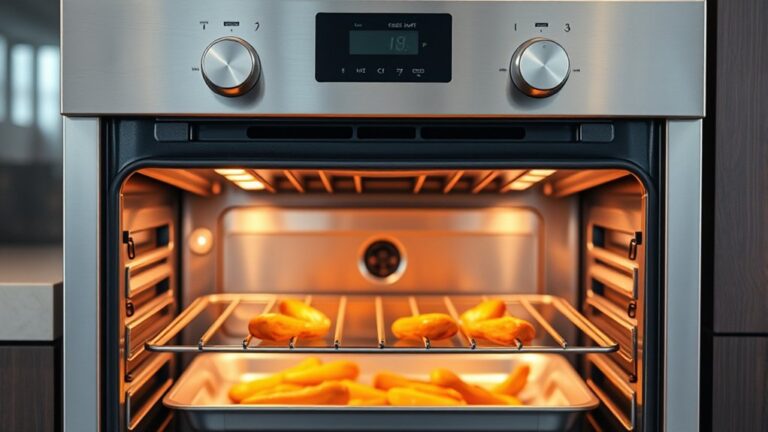
Set your oven to 400°F and let it fully preheat while you prep the pan. Line a rimmed baking sheet with foil or parchment for easy cleanup, then set a wire rack on top if you want better airflow.
This simple setup helps the bratwurst cook evenly and keeps the pan from getting messy. Arrange the brats in a single layer with a little space between each link so heat can move around them. That pan arrangement matters, because crowding traps steam and can soften the casing.
If you’re adding onions or peppers, spread them out beside the sausages instead of piling them up. You can also brush the pan lightly with oil to limit sticking, though most brats release enough fat on their own.
At this stage, skip extra seasoning unless your recipe calls for it; you’ll preserve more preseasoning flavor and keep the brats’ savory taste front and center.
How to Bake Brats in the Oven
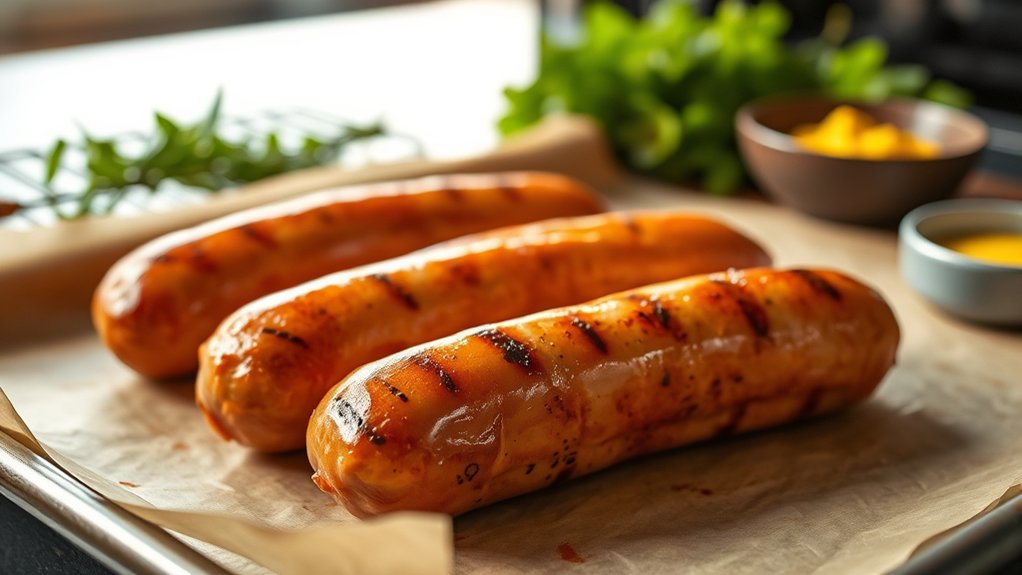
Slide the baking sheet into the preheated 400°F oven and bake the brats for about 20 to 25 minutes, flipping them once halfway through so they brown evenly on both sides. Keep the pan on the center rack for steady heat and better control.
Use oven mitts when you turn the brats, and keep hands clear of steam and hot metal for good oven safety. As they bake, the casings should tighten and take on a rich golden color.
If you want extra flavor, brush the brats lightly with oil or a little broth before they go in. You can also sprinkle on brat seasoning before baking, but keep it simple so the natural sausage flavor shines.
Check that the brats sit in a single layer with space between them, so air can circulate and the outside cooks evenly without steaming.
How Long to Bake Brats
Brats usually need 20 to 25 minutes in a 400°F oven to cook through and brown nicely, though thicker sausages may need a few extra minutes. You can keep the timing simple by turning them once halfway so the heat hits both sides evenly.
If you use the braise technique with a little beer, broth, or water in the pan, the brats stay juicier and may finish a touch faster. For extra flavor, choose spice combinations that match your toppings, like garlic and paprika for classic brats or fennel and pepper for a bolder profile.
Check your oven’s true temperature for reliable timing. Give each brat space so hot air can circulate. Let the pan’s moisture work with the oven, not against it.
Plan on the lower end for thinner links and the full window for larger ones. When you want even color and steady results, the oven rewards patience and a little attention.
How to Tell When Brats Are Done
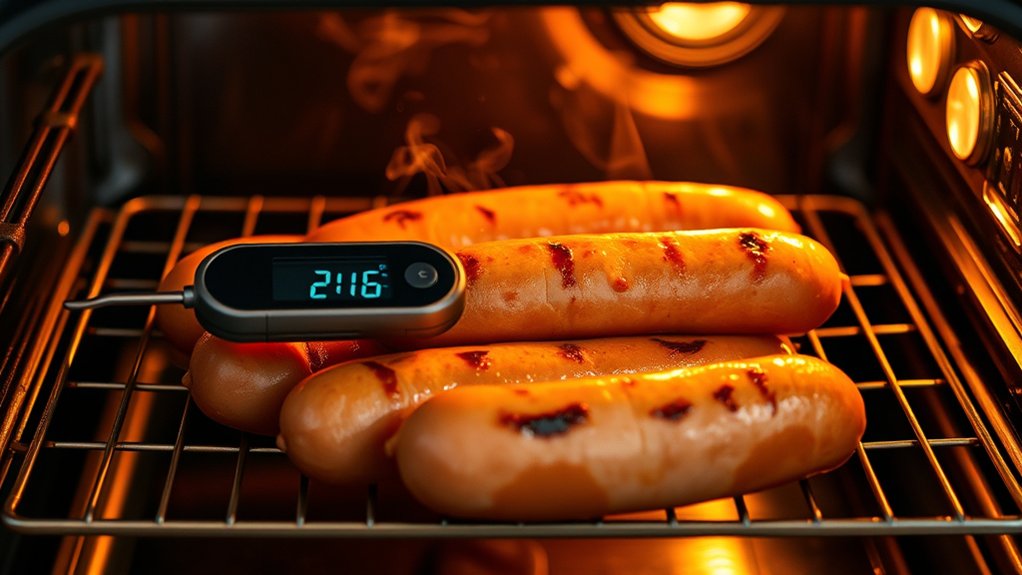
You can tell brats are done when the casings look browned and slightly crisp, with no pink showing at the center. For the most reliable check, use a meat thermometer and look for an internal temperature of 160°F.
They should feel firm to the touch and release clear juices when you cut into them.
Visual Doneness Cues
When the brats are done, their casings should look deeply browned and a little crisp, with no pale or rubbery spots left behind. You can rely on simple visual cues and texture cues to judge doneness without cutting into them. The surface should look taut, not wrinkled, and the links should feel firm when you gently nudge them with tongs.
- Look for even browning across the whole brat.
- Notice a slight sheen from rendered fat, not wetness.
- Check that the casing springs back lightly instead of sagging.
If you spot split casings, that’s a sign they’ve cooked a bit too long, but they can still taste great. Keep your eyes on color, shape, and surface texture, and you’ll know when to pull them from the oven.
Internal Temperature Check
The most reliable way to know brats are done is to check the internal temperature with an instant-read thermometer. Insert it into the thickest part of a brat, away from the pan or baking tray, so you get an accurate reading.
You want the internal temperature to reach 160°F for pork or mixed-meat brats. If you’re cooking fully cooked brats, aim for 140°F just to heat them through.
Check more than one brat if they vary in size, since larger links can lag behind. This method gives you confidence and supports safe handling, especially when you’re serving food to guests or family.
Don’t guess based on time alone; ovens vary, and thermometer checks remove uncertainty. Once they hit the right temperature, you can serve them right away.
Juices And Firmness
Another helpful clue is the juices and firmness of the brats. You’ll notice done brats release clear, not pink, juices when you pierce them. They should feel firm enough to hold shape, but not hard or shriveled. That balance tells you the brats texture dynamics are right after baking.
Clear juices mean the center has cooked through.
Gentle firmness shows the casing and filling have set.
A springy feel usually signals juicy, finished meat.
If the brats feel soft and leak cloudy juices, give them more time in the oven. If they’re overly tight, you may have gone a bit too far. Use this quick check with temperature for confident results.
Get Brats Browned and Crispy
For a crisp, browned finish, switch your oven to broil for the last few minutes of cooking. Move the brats to a baking sheet or oven-safe skillet and set them a few inches below the heat. Watch them closely, because broil can turn perfect links dark fast.
Turn them once so each side gets even exposure and develops crispy browning without drying out. If you want extra color before broiling, use pan searing tips: preheat the skillet well, add a thin film of oil, and let the brat casings contact the hot surface long enough to sizzle.
Don’t crowd the pan, or steam will soften the exterior. When the skins look blistered and golden, pull the brats out right away. Rest them briefly so the juices settle, then serve while the casing still cracks slightly under your bite.
Choose the Best Brat Toppings
Now that your brats are browned and crisp, you can top them with classic yellow or spicy brown mustard for sharp, simple flavor.
Add fresh onion options like raw sliced, sautéed, or caramelized onions for crunch, sweetness, or depth.
You can also layer savory combos like mustard, onions, and sauerkraut to make each brat taste balanced and satisfying.
Classic Mustard Choices
Mustard is one of the easiest ways to give oven-baked brats bold, balanced flavor, and you’ve got a few classic options to choose from. A smooth classic mustard adds clean tang that highlights the sausage without overpowering it, while spicy mustard brings more heat and sharper bite.
You can keep it simple or mix your favorite style into the bun for extra depth.
- Yellow mustard gives you a bright, familiar finish.
- Dijon adds a refined, slightly sharp note.
- Stone-ground mustard gives texture and a rustic look.
You should spread mustard lightly so each bite stays juicy and focused. It works best when you want the brat’s savory flavor to stay front and center.
Fresh Onion Options
Fresh onion slices add crisp bite and a little sweetness that balance oven-baked brats beautifully. You can layer a fresh onion over each brat right before serving for maximum crunch, or thinly slice it and let the heat soften the edges.
Red onions give a sharper, brighter taste, while white or yellow onions stay milder and sweeter. If you want a richer finish, use caramelized onion instead; its deep flavor works well when you want something softer and more savory.
Keep the slices thin so they don’t overpower the sausage. Pat them dry first if they’re watery, and chill them until serving so they stay crisp. With the right fresh onion choice, your brats taste cleaner, brighter, and more balanced.
Savory Topping Combos
What toppings make oven-baked brats taste their best? You can build a savory topping that matches the brat’s rich snap without hiding it. Start with caramelized onions for sweetness, then add mustard for sharpness and pickles for brightness. This flavor pairing keeps each bite balanced and lively.
If you want more depth, try sauerkraut with spicy brown mustard, or sautéed peppers with melted Swiss.
- Onions and mustard give you classic comfort.
- Sauerkraut and mustard cut through fat well.
- Peppers and cheese add warmth and creaminess.
Keep toppings warm so they don’t cool the sausage too fast. Choose one bold accent and one mellow partner, then taste before adding more. That way, you’ll let the brat stay the star while your toppings support every bite.
Serve Brats With Easy Sides
Round out your brats with a few easy sides that keep dinner simple and satisfying. You can pair them with crisp coleslaw, roasted potatoes, buttered corn, or a fresh green salad to balance the rich sausage flavor.
The Brats aroma fills your kitchen, so choose sides that stay light and quick. For easy planning, try this:
| Side | Why it works |
|---|---|
| Coleslaw | Cool crunch |
| Potato wedges | Hearty match |
| Corn on the cob | Sweet contrast |
| Green salad | Fresh balance |
| Pickles | Sharp bite |
Keep your sides moving at the same pace as the brats so everything lands on the table hot. Use Oven safety by setting hot pans on dry trivets and keeping handles turned inward.
If you want extra comfort, add warm dinner rolls to soak up juices. These simple pairings let you serve a meal that feels complete without adding stress or fuss.
Store and Reheat Leftover Brats
Once your brats cool, tuck them into an airtight container and refrigerate them within two hours to keep them safe and juicy. To store leftovers, wrap each brat tightly or separate them with parchment so they don’t stick together. Eat them within three to four days for the best flavor and texture.
If you want to freeze them, seal them in a freezer bag, press out extra air, and label the date.
When you’re ready to eat, choose simple reheat methods that protect the casing and keep the inside moist. Low heat works best.
- Warm them in a 325°F oven for 10 to 15 minutes.
- Reheat them in a skillet with a splash of water, then cover briefly.
- Use the microwave only in short bursts if you’re in a hurry.
Check that the center is steaming hot before serving. Add mustard, onions, or a bun, and you’ve got an easy second meal.
Frequently Asked Questions
Can I Cook Frozen Brats in the Oven?
Yes, you can cook frozen brats in the oven, but you’ll need extra time for safe, even heating. Follow oven safety by baking them until they reach 160°F, turning once for better browning.
Should I Pierce Brats Before Baking?
No, you shouldn’t pierce brats before baking; you’ll lose juices. If you prefer extra browning, use a braising technique instead: bake them covered briefly, then uncover.
Keep piercing brats off your list for better flavor.
Can I Use a Wire Rack for Oven-Baked Brats?
Yes, you can use a wire rack for oven baked brats; it lets air circulate, promotes even browning, and keeps grease draining away. This way, you get crispier skins and better oven baked flavors.
What Temperature Is Best for Juicy Brats?
300°F is your sweet spot; you’ll keep brats juicy without blasting them dry.
You’ll get a juicy texture and flavor balance, especially if you cook them gently until they’re done through and lightly browned.
Can I Bake Brats With Onions and Peppers?
Yes, you can bake brats with onions and peppers. You’ll get great brat prep by slicing them thick, tossing with oil, and adjusting oven timing so everything turns tender, browned, and flavorful together.
Conclusion
Now you know how to cook brats in the oven with confidence. Preheat to 400°F, line your pan, and bake the brats until they’re browned, crisp, and reach 160°F inside.
Want even better flavor? Flip them halfway through baking and let them rest before serving. Add your favorite toppings, pair them with easy sides, and you’ve got a simple meal that feels satisfying every time.
Store leftovers well, and you’re set for later, too. With these tips, cooking brats in the oven is easy and delicious every time.