How to Roast Vegetables in the Oven
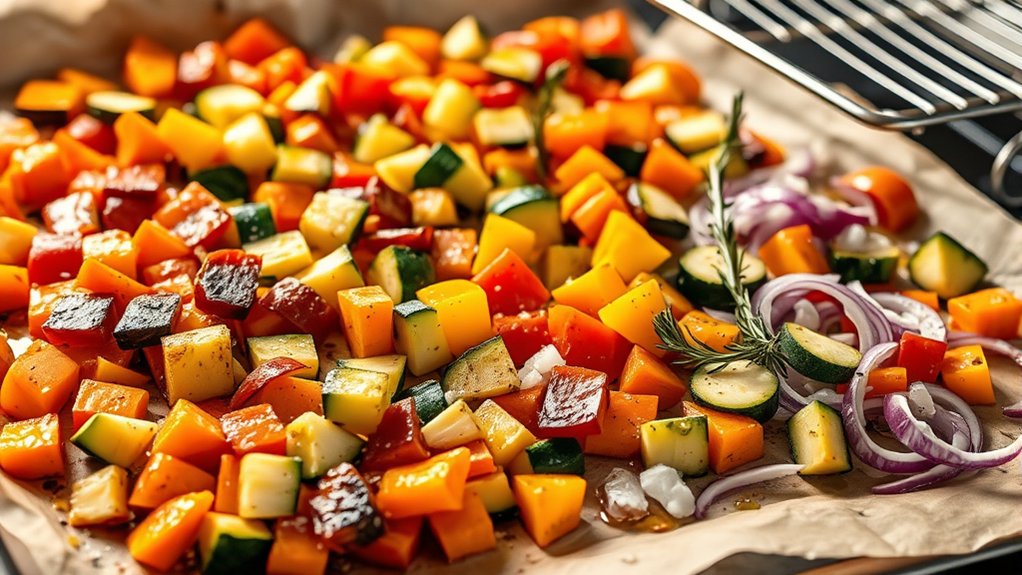
You don’t need fancy equipment to roast vegetables well. Roasting vegetables in the oven is simple and requires just sturdy produce like carrots, broccoli, cauliflower, Brussels sprouts, potatoes, or squash. Cut them into even pieces and spread them in a single layer.
Toss the vegetables with a light coat of oil and seasoning, then roast at 425°F until the edges turn golden and crisp. Flip them once during roasting. Watch for the moment when the aroma deepens and the centers turn tender.
Key Takeaways
- Choose sturdy vegetables like carrots, potatoes, broccoli, cauliflower, Brussels sprouts, squash, and onions for better caramelization.
- Cut vegetables into evenly sized pieces so they roast uniformly.
- Toss them lightly with oil, salt, pepper, and optional herbs or spices for even seasoning.
- Roast at about 425°F on a preheated baking sheet, spreading vegetables out to avoid crowding.
- Flip halfway through and roast until edges are golden, centers are tender, and surfaces are caramelized.
Choose the Best Vegetables for Roasting
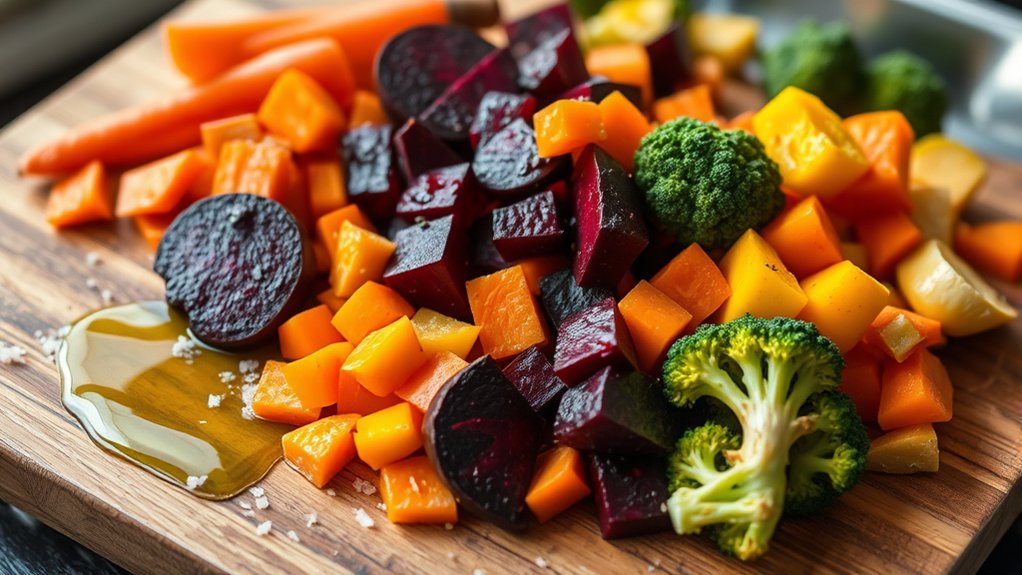
When you’re choosing vegetables to roast, look for sturdy, naturally sweet options that can handle high heat and caramelize well, like carrots, broccoli, cauliflower, Brussels sprouts, potatoes, sweet potatoes, squash, and onions. You’ll get the best flavor from vegetables that turn crisp at the edges and tender inside.
Choose sturdy, naturally sweet vegetables that caramelize well for a roast with crisp edges and tender centers.
Mix colors and textures for side dish ideas that feel balanced and vibrant. Root vegetables and winter squash bring sweetness, while cruciferous vegetables add savory depth and nutty notes.
If you’re building a roast from pantry staples, onions, potatoes, and sweet potatoes are reliable choices that work with almost any meal. You can also use mushrooms, bell peppers, or cherry tomatoes for extra variety, as long as you pair them with heartier vegetables.
Choose fresh, firm produce without soft spots, and you’ll set yourself up for a pan that roasts evenly and tastes rich, warm, and satisfying.
Prep Vegetables for Even Browning
Cut your vegetables into even pieces so they roast at the same pace, with smaller, quicker-cooking ingredients like broccoli florets or Brussels sprouts halved and denser vegetables like potatoes or carrots sliced into similarly sized chunks. Trim off bruised spots and leave tender skins on for color and texture.
If you’re handling slippery squash or hot trays, wear cotton gloves for grip and keep oven mitts nearby for safety. Spread everything out after cutting; crowded pieces steam instead of browning. A clean, steady cut helps each piece develop crisp edges and a caramelized, golden finish.
- ruby beet cubes
- pale carrot batons
- green broccoli crowns
- golden potato wedges
- glossy Brussels sprout halves
Aim for shapes that look balanced on the tray, with flat sides where possible. When every piece matches, you’ll get tender centers, browned edges, and a sheet pan that smells rich and savory.
Toss Vegetables With Oil and Seasoning
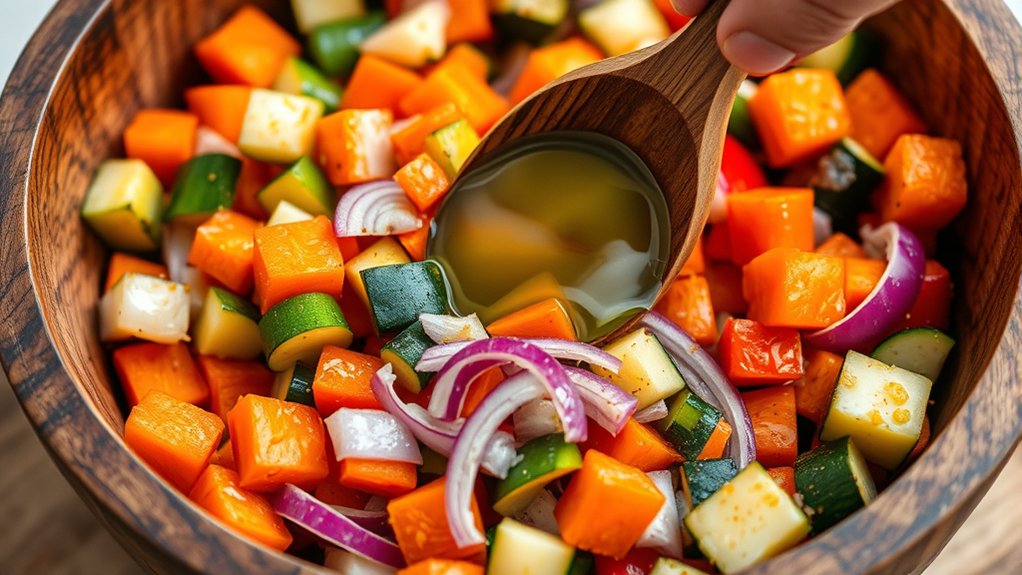
Drizzle the cut vegetables with enough oil to lightly coat every surface, then toss them well with your hands or a spatula so the seasoning clings evenly. Use just enough toss oil to make the edges glossy, not greasy, because too much can drown the natural flavor.
Lightly coat the cut vegetables with oil, tossing until every surface glistens and seasoning can cling evenly.
Sprinkle on salt, black pepper, and any herbs or spices you love, then mix again so every piece gets its share. You want the seasonings to settle into crevices and on cut sides, where they’ll build deeper taste as they roast.
Keep the coating even, especially in mixed pans, so carrots, peppers, and potatoes all finish with the same savory appeal. If you like, add garlic powder, paprika, or a pinch of cumin for extra warmth.
This simple step turns plain vegetables into a fragrant, golden tray worth repeated seasonings bake offs.
Roast Vegetables at the Right Temperature
For evenly browned vegetables with crisp edges and tender centers, roast them in a hot oven, usually around 425°F. This roast temperature gives you quick browning without drying out the inside, and it works well for carrots, broccoli, cauliflower, Brussels sprouts, and sweet potatoes.
Set your oven heat setting high enough to encourage caramelization, but don’t go so hot that the vegetables scorch before they soften. Preheat fully before you slide in the pan, so the vegetables hit steady heat right away.
- Golden broccoli florets with toasted tips
- Carrot coins glistening at the edges
- Brussels sprouts with nutty, crunchy leaves
- Cauliflower turning pale gold and fragrant
- Sweet potatoes soft beneath a bronzed surface
If your oven runs hot or uneven, lower the roast temperature a little and check early. You’ll know they’re ready when the edges look crisp and the centers feel fork-tender and juicy.
Flip Vegetables for Even Caramelization
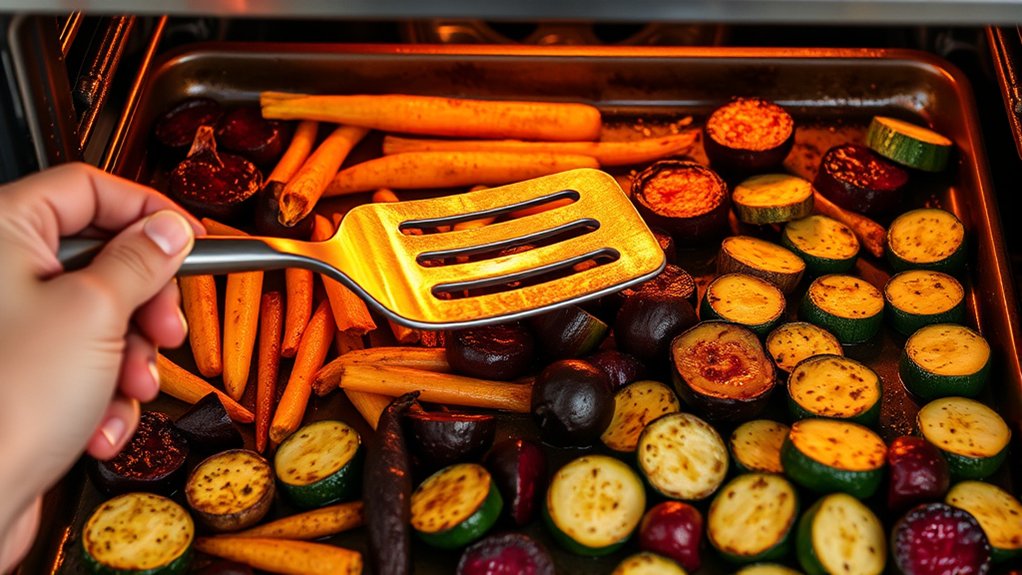
Halfway through roasting, flip the vegetables so each side gets a chance to meet the hot pan and brown evenly. Use a wide spatula and turn them gently, giving crowded pieces a little space. This tip: flipping technique helps potatoes, carrots, and Brussels sprouts pick up deeper color and sweeter edges without tearing.
| Vegetable | Best Flip Time |
|---|---|
| Zucchini | 10 minutes |
| Carrots | 15 minutes |
| Cauliflower | 18 minutes |
For better browning tips, keep the cut sides in contact with the pan after you flip them. If some pieces brown faster, move them toward the center where heat runs strongest. Toss only once or twice; too much stirring can stop those crisp, caramelized spots from forming.
You’ll notice the surfaces turning glossy, amber, and just a little blistered. That’s when the vegetables start tasting rich, nutty, and irresistible.
How to Tell When Roasted Vegetables Are Done?
Roasted vegetables are done when they’re tender enough to pierce easily with a fork and browned at the edges with a deep, caramelized color. You should check the thickest piece first; it should feel soft inside, not firm with an undercooked texture.
Look for clear browning indicators: blistered skins, crisp tips, and golden patches that turn mahogany in spots. If the surface still looks pale or wet, give them a few more minutes and check again.
Spear a carrot and feel it yield like warm butter. Watch cauliflower florets turn nutty and speckled. Notice zucchini edges shrink into bronzed ribbons. See potatoes develop crisp, amber corners. Smell sweet, toasted aromas rising from the pan.
When the vegetables look glossy, smell deeply savory, and release cleanly from the tray, pull them out. Let them rest briefly so the heat settles and the flavors concentrate before serving.
Frequently Asked Questions
Can I Roast Vegetables on Parchment Paper?
Yes, you can roast vegetables on parchment paper. It helps prevent sticking and makes cleanup easy.
You’ll get tasty roasted veg with parchment? Add fresh herbs, follow roasting tips, and avoid overcrowding for crisp edges.
How Do I Store Leftover Roasted Vegetables?
Let leftovers cool, then tuck them into an airtight container; they’ll keep their caramelized glow. For smart storage tips, refrigerate promptly.
When you’re ready, use reheating leftovers in a hot oven or skillet.
Can I Roast Vegetables With Fresh Herbs?
Yes, you can roast vegetables with fresh herbs; you’ll get fragrant, savory results. Add sturdy herbs early, delicate ones late.
Adjust roast timing for crispness, and experiment with herb variations like thyme, rosemary, and parsley.
What Sauces Pair Well With Roasted Vegetables?
You’ll love tahini, chimichurri, and yogurt sauces; they make veggies shine. About 70% of flavor comes from aroma, so choose pairings with dressings thoughtfully and match roasting oil choices to each vegetable’s sweetness.
Can I Freeze Roasted Vegetables After Cooking?
Yes, you can freeze roasted vegetables after cooking; cool them first, then pack them airtight.
You can reheat roasted vegetables later in a hot oven, and they’ll still taste savory, tender, and satisfying.
Conclusion
Now you know how to roast vegetables in the oven, and it’s easy to make every tray shine. Choose sturdy veggies, cut them evenly, coat them lightly, and roast them hot so they caramelize instead of steam. Don’t crowd the pan; give each piece room to brown beautifully.
Flip once, listen for the sizzle, and pull them when they’re tender and golden. What’s better than crisp edges, sweet centers, and that irresistible roasted aroma? Mastering these tips will ensure your roasted vegetables in the oven come out perfect every time.