How to Bake Ribeye in Oven
To bake a ribeye in the oven, you need the right cut, proper seasoning, and careful heat control. You’ll start with a thick, well-marbled steak, pat it dry, and season it well before it goes into a hot oven.
The difference between a good ribeye and a great one often comes down to timing, temperature, and rest.
Get those details right, and the next step gets much easier.
Key Takeaways
- Choose a well-marbled, center-cut ribeye, pat it dry, and season generously with kosher salt before baking.
- Bring the steak to room temperature for about 30 minutes, but do not leave it out longer than 1 hour in a warm kitchen.
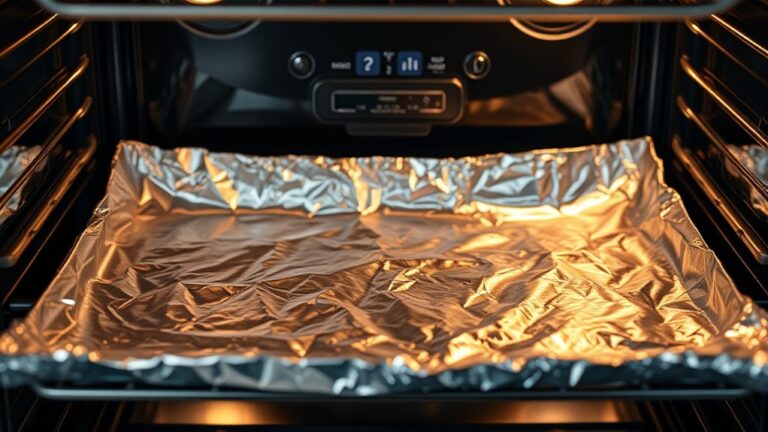
- Preheat the oven to 400°F and use a heavy oven-safe skillet or foil-lined baking sheet for even cooking.
- Bake until the internal temperature reaches 125–130°F for medium-rare, checking with an instant-read thermometer.
- Rest the ribeye 5 to 10 minutes before slicing, then serve with simple sides like potatoes, asparagus, or salad.
Ribeye Ingredients and Tools
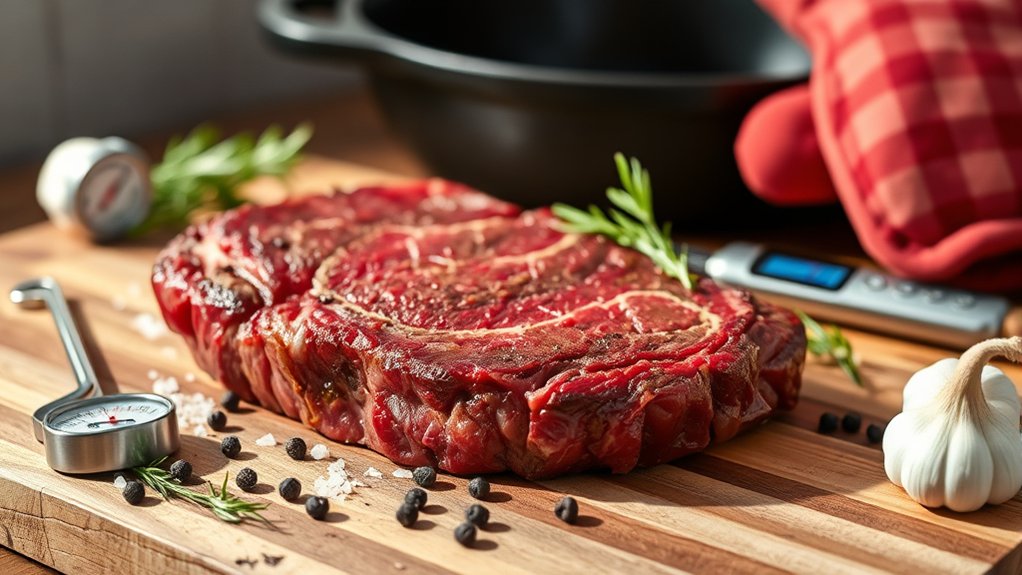
To bake ribeye in the oven, you’ll need a well-marbled ribeye steak, kosher salt, black pepper, and a little oil or butter for searing and finishing. For ribeye sourcing, choose a steak that’s 1 to 1.5 inches thick, with even marbling and a firm, dry surface.
Buy from a butcher or trusted market that labels the cut clearly and trims excess exterior fat without stripping flavor. You should also gather a heavy skillet, preferably cast iron, plus tongs, a rimmed baking sheet, and a reliable instant-read thermometer.
For kitchen preparedness, preheat your oven-safe pan plan before you start so you can move quickly once the steak’s seasoned. Keep paper towels nearby to dry the meat, and set out a cutting board for resting.
If you want consistent results, use a thermometer instead of guessing doneness. With the right ingredients and tools ready, you’ll cook with control, efficiency, and confidence.
Prep the Ribeye for Baking
Choose a ribeye with even marbling and a thick, firm cut, because quality meat gives you better flavor and texture in the oven. Season it generously on both sides before baking with salt, pepper, and any dry spices you want, then let it sit uncovered or lightly covered so the seasoning starts to penetrate.
Bring the steak to room temperature for about 30 minutes before it goes into the oven so it cooks more evenly from edge to center.
Select Quality Ribeye
Start with a ribeye that has even marbling, a bright red color, and a firm texture, because fat distribution drives flavor and tenderness in the oven. When you select ribeye sourcing, choose steaks cut from the rib section with visible intramuscular fat, since that fat bastes the meat as it heats.
Check grader notes for USDA Prime or Choice, and prioritize a thick cut, ideally 1 to 1.5 inches, so the center cooks evenly. Avoid packages with excess purge, gray edges, or dry surfaces, which signal poor handling.
If you can, ask for center-cut ribeye for uniform shape and consistent baking. Quality at this stage gives you better browning, better juiciness, and more control once the steak goes into the oven.
Season Before Baking
Seasoning does the heavy lifting before the steak ever hits the oven: pat the ribeye dry with paper towels, then coat both sides generously with kosher salt and freshly ground black pepper, pressing the seasoning into the surface so it adheres evenly.
- Salt early enough for seasoning timing to work, so the meat’s surface starts drawing out moisture and reabsorbing flavor.
- Add pepper just before baking, because oven preheating can intensify its aroma without burning it prematurely.
- Finish with a light, even layer on the edges, where fat and muscle need the same coverage as the center.
Keep your seasoning simple and exact; ribeye’s marbling already delivers richness, so you’re building flavor, not masking it.
Bring To Room Temperature
Take the ribeye out of the refrigerator 30 to 45 minutes before baking so it can warm slightly and cook more evenly. Set it on a plate or wire rack and let it rest uncovered, or loosely tented, while you handle oven preheating and prepare the pan.
Bringing the steak to room temperature reduces the temperature gap between the surface and center, which helps you avoid a gray band and promotes even doneness. Don’t leave it out longer than 1 hour, especially in a warm kitchen.
If the ribeye feels cold in the middle, give it a few more minutes, but don’t rush this step. A properly tempered steak sears and bakes more predictably, giving you better control over texture, juiciness, and final internal temperature.
Season the Ribeye Well
Use simple seasonings that support the ribeye’s beefy flavor, such as kosher salt and a modest amount of black pepper. Salt the steak early so it can draw in and retain moisture as it rests before baking.
Add the pepper later, since it can darken in the oven and lose its sharp edge if you season too soon.
Choose Simple Seasonings
For a ribeye that tastes rich and clean, keep the seasoning simple: kosher salt, black pepper, and a little oil are usually enough. You don’t need marinades or spice blends that hide the beef’s natural flavor. Use just enough oil to help the seasoning cling and promote even browning.
This restrained approach also reduces cooking pitfalls and supports kitchen cleanliness, since fewer ingredients mean less mess and fewer chances to burn sugary coatings.
- Coat the surface lightly with oil.
- Season evenly with kosher salt.
- Finish with black pepper for a sharp edge.
Press the seasoning in gently so it stays put when the steak enters the oven. Keep the layer thin and balanced, and you’ll let the ribeye’s marbling do the real work.
Salt Early, Pepper Later
Salt the ribeye well ahead of cooking so the seasoning has time to work into the meat; pepper can wait until just before it goes into the oven. When you salt early, the crystals draw out surface moisture, then dissolve and reabsorb, seasoning the steak deeper and improving browning.
Use enough kosher salt to coat both sides evenly, then let the ribeye rest uncovered or lightly wrapped in the refrigerator for at least 40 minutes, or overnight for best results. Add pepper later because it can toast harshly and lose aroma if it sits too long.
Right before baking, grind on fresh black pepper and press it in lightly. This timing gives you a better crust, cleaner flavor, and more control over the final taste.
Set the Oven Temperature
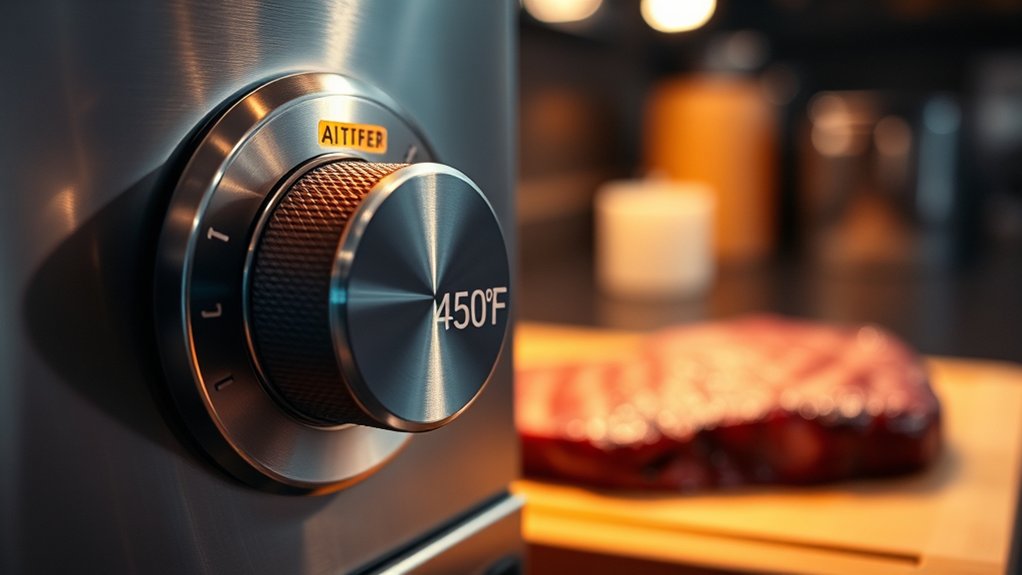
Set your oven to 400°F for a standard ribeye, and give it time to fully preheat before the steak goes in. You need steady heat so the exterior browns evenly and the interior cooks predictably.
Set your oven to 400°F and let it fully preheat for evenly browned, predictable ribeye results.
If your oven runs hot or cool, adjust by 10 to 15 degrees after checking it with an oven thermometer, one of the most useful handy kitchen gadgets. For budget friendly tips, use what you already have instead of buying specialty equipment.
- 400°F suits most 1-inch ribeyes.
- 425°F works when you want faster surface browning.
- 375°F helps with thicker cuts or gentler cooking.
Keep the rack in the center for balanced heat. Avoid opening the door while preheating, because temperature swings weaken results.
When the oven signals ready, wait another 5 minutes so the walls and air stabilize. That extra patience gives you a more accurate, consistent environment for the steak.
Bake the Ribeye
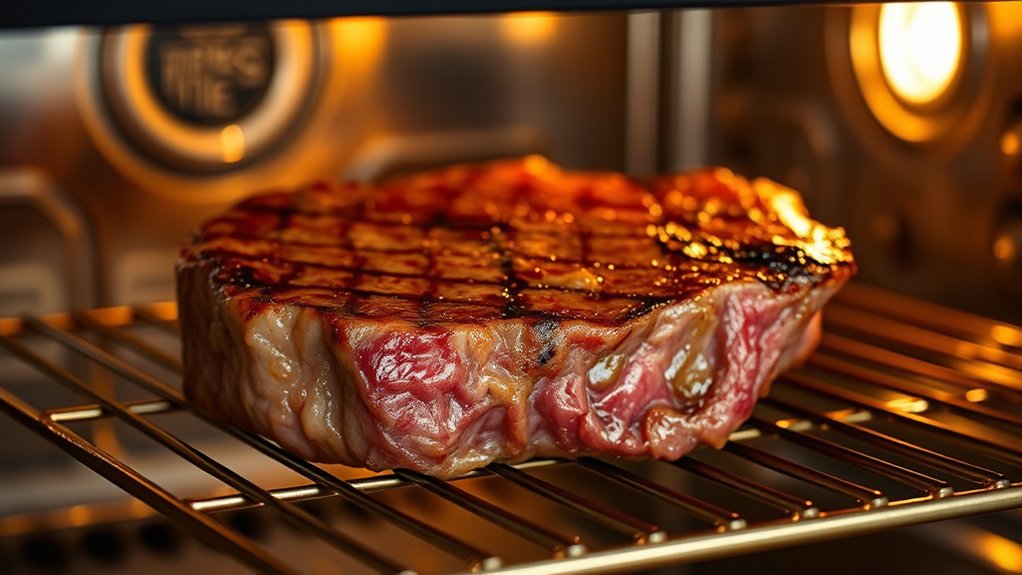
Now that your oven’s fully heated, place the ribeye on a foil-lined baking sheet or in a cast-iron skillet and slide it onto the center rack. Bake it without crowding the pan, so hot air can circulate and the meat cooks evenly.
Use the oven’s steady heat to build a browned exterior while protecting the juices inside. If you’re working within budget constraints, choose a well-marbled cut; it rewards careful baking with rich flavor and tender texture.
Keep the steak in a single layer and resist opening the door, since heat loss slows the process and disrupts browning. This method reflects culinary history, where controlled dry heat became a reliable way to cook thicker cuts with precision.
As the ribeye bakes, the surface will darken and the fat will render, creating a savory crust and a clean, beefy aroma that signals you’re on the right track.
Check for Doneness
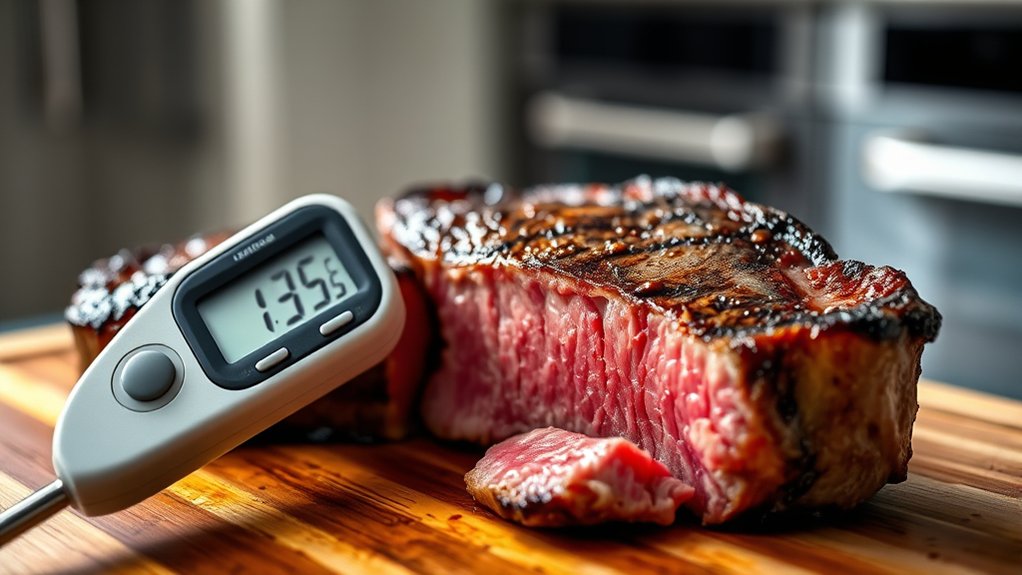
Check for doneness by inserting an instant-read thermometer into the thickest part of the ribeye. For medium-rare, pull it at 125°F to 130°F, since the temperature will rise a few degrees as it rests. Use careful thermometer use and doneness testing to avoid overcooking.
Aim for the center, not the fat cap or bone, and read the number after the display stabilizes. If you want another level, use these checkpoints:
- Rare: 120°F to 125°F
- Medium-rare: 125°F to 130°F
- Medium: 135°F to 140°F
You can also verify the surface: it should look deeply browned and feel firm with slight give when pressed. Don’t rely on color alone, because juices and crust can mislead you.
For accuracy, test in the same spot only once, and keep the probe away from hot pan contact. When the steak hits your target, remove it promptly so you preserve the exact level of doneness you want.
Rest the Ribeye
Once the ribeye reaches your target temperature, move it to a warm plate or cutting board and let it rest undisturbed for 5 to 10 minutes. This pause lets the juices redistribute, so you don’t lose them when you slice.
If you cut too soon, the steak will shed moisture and eat drier than it should. Keep it loosely tented with foil if you want to slow heat loss, but don’t wrap it tightly or you’ll trap steam and soften the crust.
During this time, the internal temperature can rise a few degrees, which is normal. Use this window to finish any last-minute prep, but leave the meat alone. When you rest the ribeye properly, the texture firms slightly, the juices settle, and each bite stays tender.
For best results, serve it while it’s still warm, after it has rested briefly at room temperature.
Serve With Easy Side Dishes
Serve the ribeye with easy sides that don’t compete with its rich flavor, such as roasted potatoes, steamed asparagus, a crisp green salad, or buttered green beans. Choose sides that add texture, color, and balance, not heavy sauces. When you plan ribeye sourcing, think about the steak’s marbling and thickness, then match it with clean, simple accompaniments that let the meat stay central.
- Roast potatoes at 425°F until crisp outside and tender inside.
- Steam asparagus just until bright green, then season with salt, lemon, and olive oil.
- Toss salad greens with vinaigrette right before serving to keep them fresh.
Keep oven safety in mind when you plate hot steak and sides: use dry mitts, stable baking sheets, and heatproof plates. You’ll create a polished meal without extra effort, and each side will support the ribeye’s flavor instead of masking it.
Frequently Asked Questions
Can I Bake a Frozen Ribeye Directly in the Oven?
Yes, you can bake a frozen ribeye directly in the oven, but you’ll get better results by oven thawing it first.
You’ll cook more evenly, keep juices in, and avoid a tough exterior.
Should I Use a Cast Iron Skillet or Baking Sheet?
You should choose cast iron vs baking sheet based on sear and heat retention; cast iron’s superior. Use a baking sheet vs only if you’re prioritizing convenience.
Cast iron gives you better browning and juicier results.
How Do I Add a Crust Without Overcooking the Steak?
Use a hot skillet for crust formation, then finish in a low oven. You’ll control temperature precisely, searing 1–2 minutes per side, then baking until internal temp reaches your target without overcooking.
Can I Use a Meat Thermometer for Ribeye Doneness?
Yes, you can use a meat thermometer for ribeye doneness; you’ll get the most accurate result. Insert it into the thickest center, and pull the steak at your target temperature to avoid overcooking.
How Long Should Ribeye Sit Before Slicing?
You should let it take a brief pause: rest your ribeye 10–15 minutes before slicing. That resting time lets juices redistribute and carryover cooking finish gently, so you’ll slice a juicier, more tender steak.
Conclusion
Now you’re ready to bake ribeye in the oven with confidence. When you start with a well-marbled steak, season it properly, and bake it at 400°F until it reaches 125–130°F, you set the stage for a juicy, tender result.
Let it rest so the juices settle, then slice and serve. A good ribeye should feel like a well-tuned instrument: balanced, rich, and perfectly in sync with every bite.
Mastering these steps ensures your ability to bake ribeye in the oven will deliver a delicious and satisfying meal every time.