How to Cook Pork Shoulder in Oven
A pork shoulder can turn remarkably tender in the oven when you handle it right.
Cooking pork shoulder in the oven requires choosing a well-marbled cut, seasoning it generously, and roasting it low and slow until the meat almost falls apart.
The real payoff comes near the end, when temperature and rest decide whether it slices cleanly or shreds easily—so the next step matters.
Key Takeaways
- Choose a bone-in pork shoulder with good marbling; bone-in stays moist and flavorful during roasting.
- Pat the meat dry, season evenly with salt, pepper, and spices, then rest it at least 30 minutes or overnight.
- Roast fat-side up at 275°F to 300°F, uncovered for a crust or covered for extra moisture, until tender.
- Cook until the thickest part reaches 195°F to 205°F and a probe slides in easily, avoiding the bone.
- Rest the pork 20–30 minutes, then shred with forks and season with pan juices before serving.
Choose the Best Pork Shoulder Cut
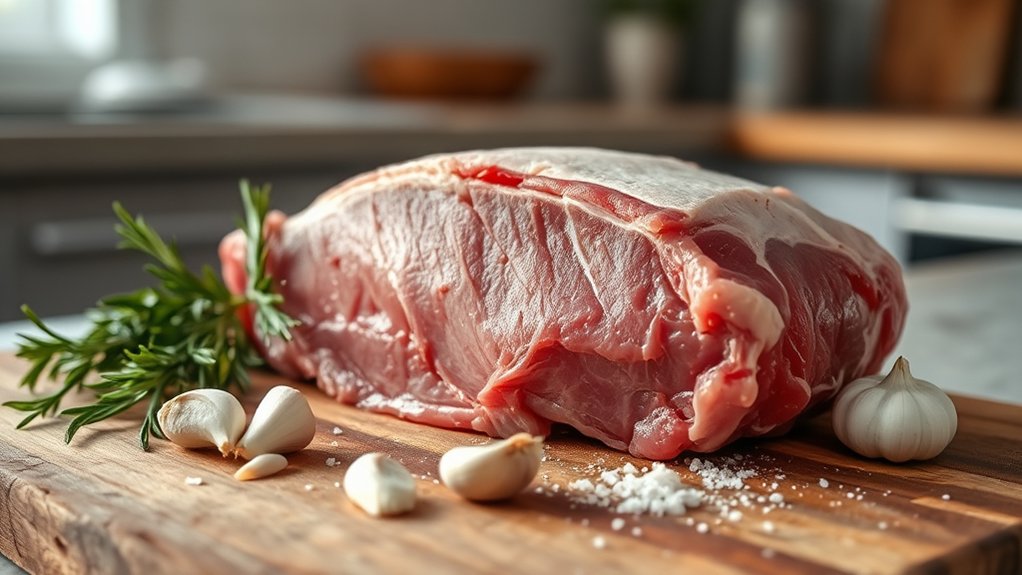
Choosing the right pork shoulder cut starts with knowing what you want from the final dish. You should pick a bone-in shoulder if you want deeper flavor and better moisture retention during roasting. A boneless shoulder cooks a little faster and slices more neatly, so it works well when you need easy carving.
Choose bone-in pork shoulder for richer flavor and juicier roasting, or boneless for faster cooking and cleaner slices.
Look for even marbling throughout the meat; that fat melts as it cooks and helps keep the roast succulent. If the skin is attached, choose a piece with a clean, dry surface and a tender rind that’ll crisp well in the oven.
You can also compare shoulder picnic and Boston butt cuts: picnic is leaner and often less expensive, while Boston butt usually has more intramuscular fat. For reliable results, buy from budget cuts that feel heavy for their size, because that usually means better moisture and fewer trim losses.
Avoid pieces with dark spots, excess surface liquid, or a sour smell.
Season the Pork Shoulder
Once you’ve picked a good pork shoulder, season it generously so the outside can build flavor while the meat roasts. Pat the surface dry first, then coat every side with salt, black pepper, and your preferred spices.
For even coverage, mix the seasoning blend in a bowl before you apply it, and press it into the fat cap and crevices. Good seasoning timing matters: do it at least 30 minutes before cooking, or refrigerate it uncovered overnight if you want deeper penetration.
Keep your spice balance focused so the pork tastes savory, not muddy.
- Salt the meat evenly for better seasoning.
- Use paprika, garlic powder, and cumin for depth.
- Add sugar only if you want mild caramelized edges.
Taste your blend before it touches the pork, and adjust heat or sweetness as needed. If you’re using a rub, keep the layer thin enough to cling without clumping.
Roast the Pork Shoulder Slowly
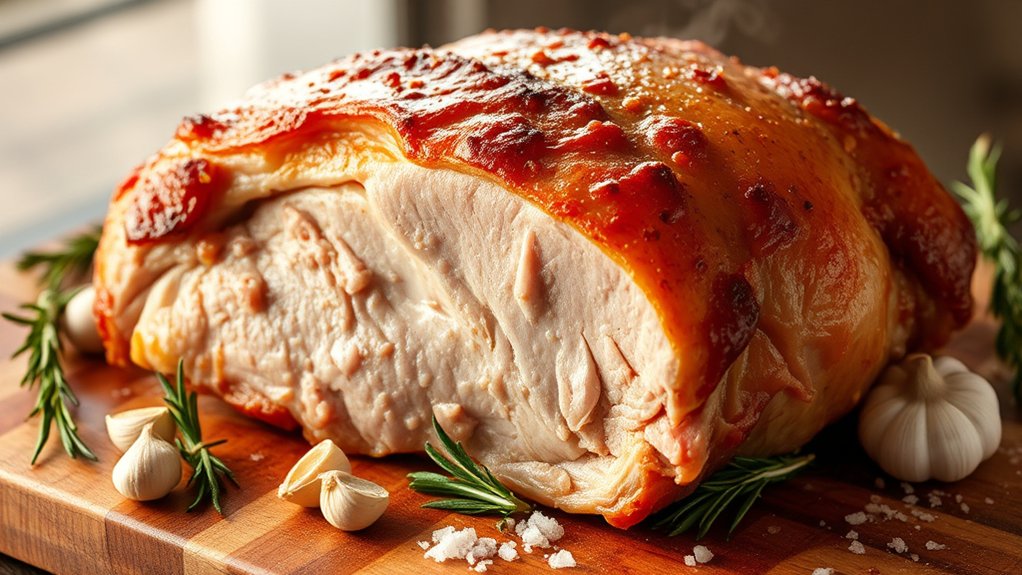
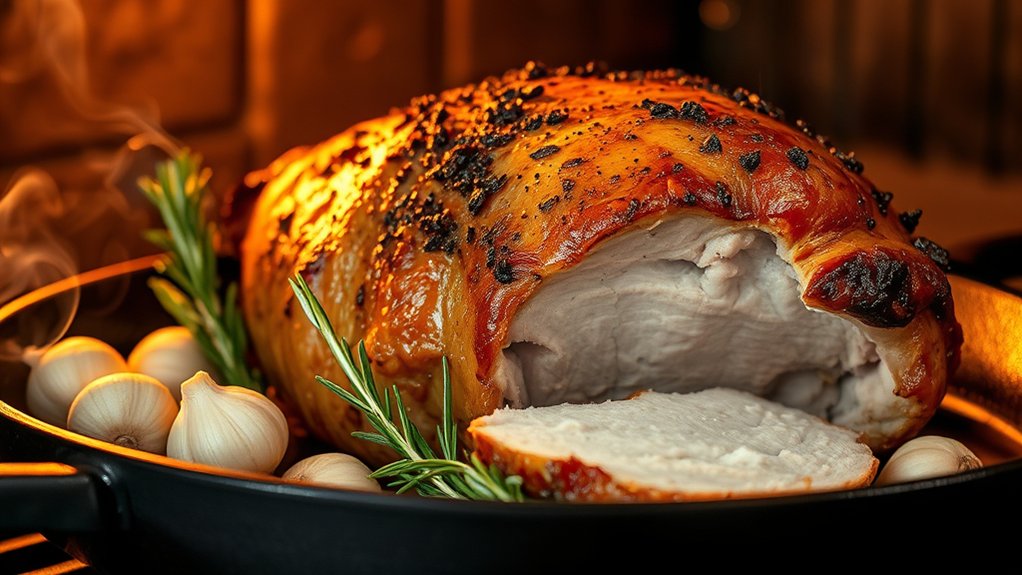
Set the seasoned pork shoulder fat-side up in a roasting pan or Dutch oven, and roast it low and slow at 275°F to 300°F so the connective tissue has time to break down. Keep the pan uncovered for a deeper crust, or cover it tightly if you want steadier moisture retention; both are useful oven tricks.
Roast the pork shoulder low and slow, fat-side up, for tender meat and a deeper crust.
Position the rack in the lower-middle of the oven so heat surrounds the meat evenly. If your oven runs hot, lower the temperature slightly and rotate the pan once during roasting to prevent uneven browning.
The fat cap will baste the surface as it renders, while the seasoning science you used earlier helps salt and spices penetrate gradually. Avoid opening the door too often, since each burst of heat loss slows the cook and dries the exterior.
Let the shoulder roast patiently until it becomes tender enough to shred with gentle pressure.
Check For Doneness and Rest It
How do you know when the pork shoulder is ready? Insert an instant read thermometer into the thickest part, avoiding bone. You’re looking for an internal temperature of 195°F to 205°F for tender, pullable meat.
If the reading falls short, return it to the oven and check again after 15 minutes. Also test the texture: the probe should slide in with little resistance. That’s your best doneness check.
Confirm the temperature in two spots for accuracy. Look for deep, even browning and rendered fat. Use a clean thermometer, not a guessing tool.
Once it’s done, move the roast to a cutting board and tent it loosely with foil. Rest it for 20 to 30 minutes so the juices redistribute and the meat settles.
This resting step keeps every slice moist and makes handling easier. Don’t skip it; cutting too soon lets the juices run out.
Shred, Slice, and Serve
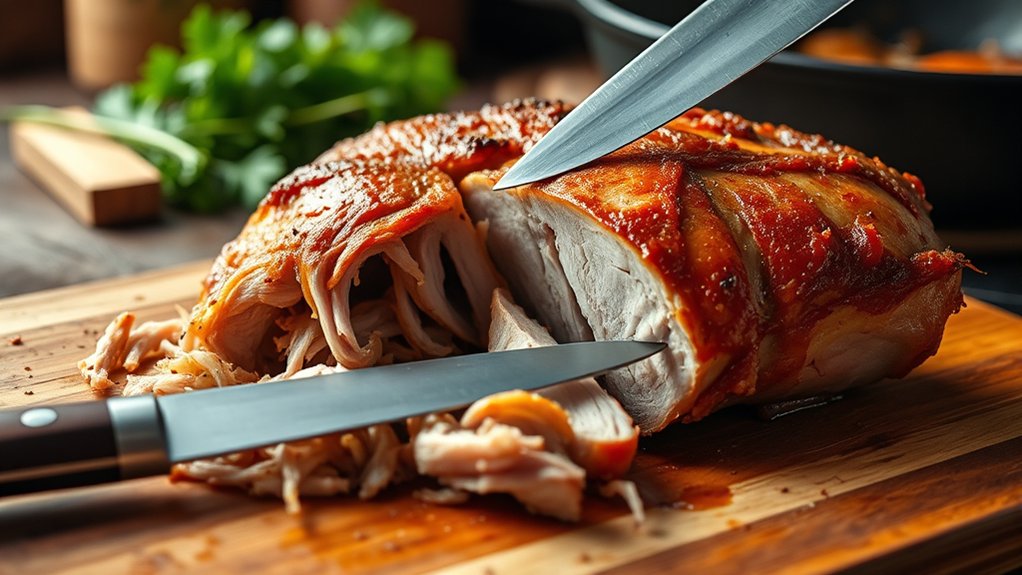
After the pork shoulder has rested, use two forks or meat claws to shred it, pulling along the natural grain and discarding any large pieces of fat or connective tissue you don’t want to serve. If some sections hold together, slice them with a sharp knife into thin pieces, then tear those slices into bite-size strands.
Keep your shred technique steady so the meat stays tender and the texture looks even. Taste the pork and adjust with a pinch of salt, a splash of pan juices, or a little cooking liquid if it seems dry.
For serving, pile it onto buns, tuck it into tacos, spoon it over rice, or pair it with slaw and pickles. Warm the meat gently before plating, and pass extra sauce on the side so everyone can season to taste. This finish makes your pork shoulder versatile, juicy, and ready for easy serve ideas.
Frequently Asked Questions
Can I Cook Pork Shoulder From Frozen?
Yes, you can, but you shouldn’t. Thaw it first for safer, even cooking.
If you must use shoulder freezer meat, expect longer time and uneven results during frosty roasting; use a thermometer.
What Oven Temperature Works Best for Pork Shoulder?
You’ll get the best results at 300°F; it renders fat slowly, keeping the meat tender. For tips for crust, raise to 425°F at the end.
For tips for juiciness, cover tightly and rest it.
Should I Cover the Pork Shoulder While Roasting?
Yes, you should cover it at first, then uncover it to finish; that’s the sweet spot. Covering keeps moisture in, reduces unnecessary scrubbing, and uncovering builds crispy edges while you roast.
How Long Does Pork Shoulder Take per Pound?
You’ll need about 1.5 to 2 hours per pound at 325°F, depending on size and doneness.
Consider topic ideas like seasoning and flavor considerations like fat content, because they’ll change cooking time slightly.
Can I Use a Bone-In Pork Shoulder for This Recipe?
Yes, you can use a bone-in pork shoulder; you’ll just need slightly longer cooking time. For bone-in alternatives, trim excess fat, and note freezing considerations: thaw it fully before roasting for even results.
Conclusion
Now you know how to cook pork shoulder in oven with confidence. Pick a well-marbled cut, season it generously, and roast it low and slow until the internal temperature reaches 195–205°F.
Let it rest before you shred or slice it so the juices stay put. I once rushed a roast by 45 minutes, and it turned stringy—like pulling wet rope.
Give it time, and you’ll get tender, flavorful pork every time. Following these steps ensures you master how to cook pork shoulder in oven perfectly.