How to Keep Food Warm in Oven
After a dinner party, you may notice that one tray stays hot while another cools fast, like two clocks running at different speeds. To keep food warm in the oven, you’ll want the lowest safe setting, usually 170–200°F, and a little planning before the food goes in.
The key is balancing heat, moisture, and time so your meal stays safe and still tastes good—but a few common mistakes can undo that quickly. Paying attention to these details will help maintain the quality and temperature of your dishes until serving time.
Key Takeaways
- Set the oven to its lowest warming setting, usually 170°F to 200°F, and verify the actual temperature with a thermometer.
- Keep food covered with a lid or loose foil to retain moisture and prevent drying.
- Place dishes on the center rack with space around them for even airflow and gentle heating.
- Avoid opening the oven door often, since temperature drops can cool food and affect holding quality.
- Hold food only as long as needed, ideally 30 to 60 minutes, and keep it above 140°F for safety.
What Oven Temperature Keeps Food Warm?
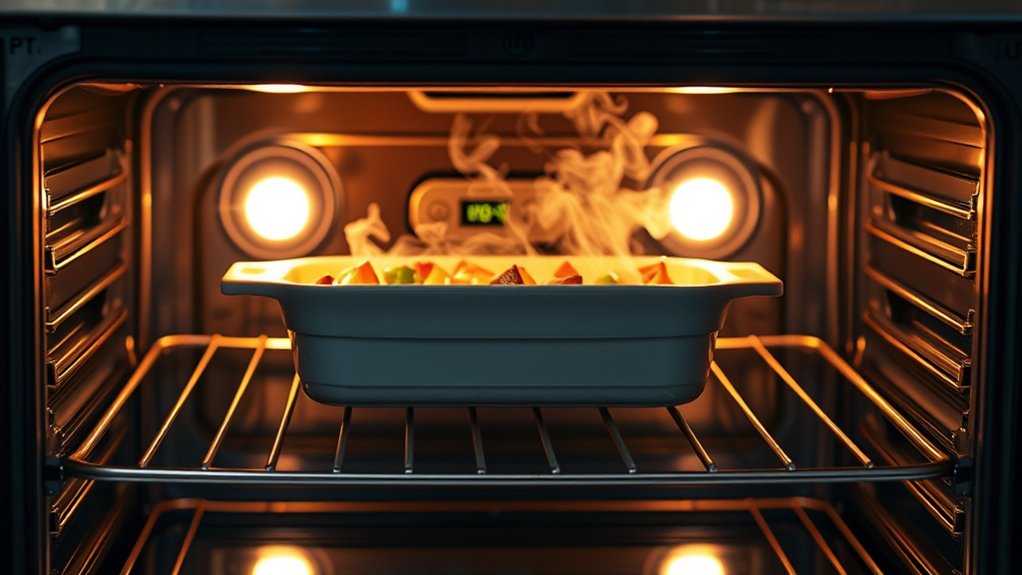
To keep food warm in the oven, set the temperature as low as your oven allows, usually between 170°F and 200°F. You want gentle heat, not cooking heat, so check your oven’s actual dial and let it stabilize before you add food.
If your oven runs hot, choose the lowest setting and use a thermometer to verify it. Many oven warming misconceptions come from assuming “warm” means the same on every model; it doesn’t. Heat can swing enough to dry out food or push it past safe holding time.
For two word discussion ideas, think “low setting” and “safe holding.” Watch temperature ticking details closely, because a few degrees matter when you’re holding sauces, casseroles, or bread. Keep the door closed as much as you can, and recheck often if you’re holding food for more than a short time.
How to Prepare Food for the Oven
Before you put food in the oven, preheat it so the temperature stays steady. Use oven-safe dishes that can handle gentle heat, and cover the food well to help it hold moisture and warmth.
Preheat the Oven
Why preheat the oven first? You need a stable temperature before food goes in, so it stays warm evenly instead of cooling while the oven catches up. Set the oven to the lowest safe warming setting your recipe or appliance allows, then give it enough time to reach that temperature fully.
Use preheating tips like checking the rack position early and closing the door promptly after you’re done. If your oven seems inconsistent, check oven calibration; a thermometer can show whether the displayed temperature matches the actual heat.
Avoid opening the door often, because each check drops the temperature and can reduce results. Once the oven is fully preheated, you can move on quickly and keep food at a steady, safe warmth without overcooking.
Use Oven-Safe Dishes
Once the oven is preheated, place your food in oven-safe dishes that can handle steady heat without cracking, warping, or leaching chemicals. Choose glass, ceramic, cast iron, or other items labeled oven safe, and check for chips, hairline cracks, or loose handles before you use them.
A sturdy baking dish helps food warm evenly and reduces the risk of spills in the oven. If you don’t have the right pan, use dish alternatives such as a metal tray, roasting pan, or covered casserole that’s rated for heat. Avoid plastic, thin decorative ware, and containers with unknown materials.
Set dishes on the center rack so they stay stable and heat consistently.
Cover Food Properly
Cover your food so it warms through evenly and doesn’t dry out in the oven. Choose a cover that traps heat without sealing in too much moisture. If you’re using covering dishes, fit lids snugly on casseroles, soups, and saucy foods.
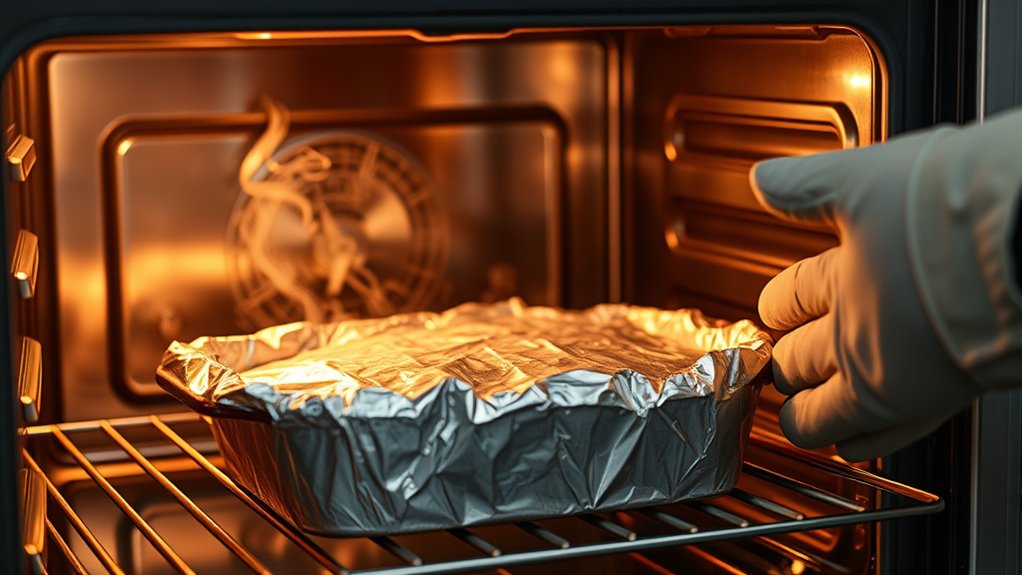
For baked items or mixed plates, tent foil loosely over the top so steam can escape a little. When comparing foil vs lids, lids usually hold moisture better, while foil gives you more control and works with odd-shaped pans.
Keep the cover from touching cheese, crumbs, or delicate toppings if you want them to stay intact. Check the dish now and then, and don’t press the heat too high. A gentle cover helps food stay warm, safe, and appealing until you serve it.
How to Hold Food Warm in the Oven
To hold food warm in the oven, set it to its lowest safe temperature, usually around 170°F to 200°F, and keep the food covered so it doesn’t dry out. Use keeping warm settings only if your oven has one, and check that the rack sits in the center for even heat.
For oven safety, avoid placing containers too close to the heating element, and use oven-safe cookware.
| Step | What you do |
|---|---|
| 1 | Preheat briefly, then lower the heat |
| 2 | Cover dishes with foil or lids |
| 3 | Stir or rotate if needed |
| 4 | Check for steam and dryness |
You should also leave space between dishes so air can circulate. If you’re holding multiple items, keep sauces separate when possible.
Watch the food, not the clock, and adjust the heat if it starts to lose texture or scorch.
How Long Food Stays Safe and Tasty
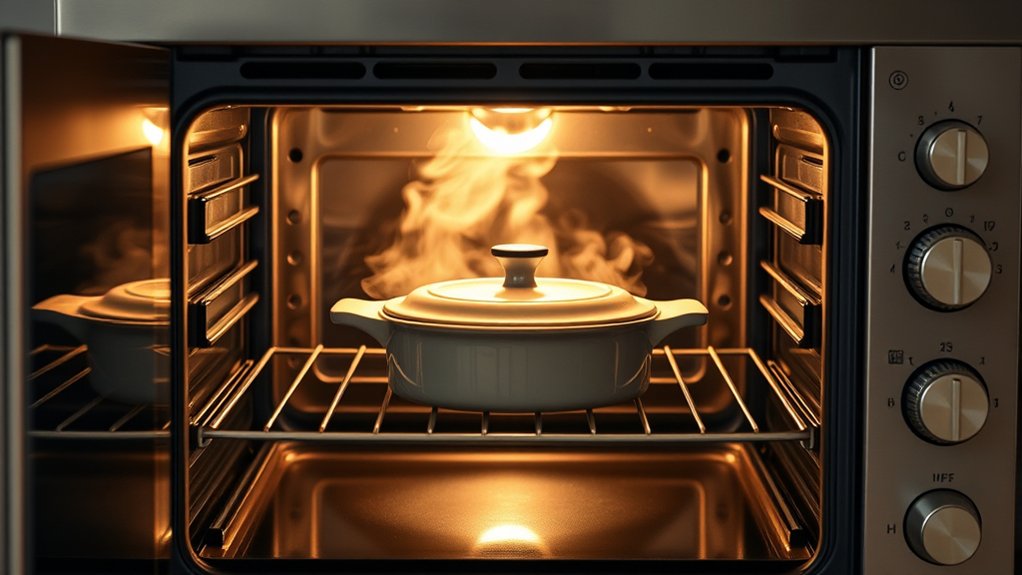
You can usually keep food safe in a warm oven for a limited time, but you should still follow safe holding times and keep the food above 140°F when possible.
For best taste and texture, you’ll want to serve it sooner rather than later because moisture, crispness, and tenderness can fade as it sits. If the food has been warming for a while, check it carefully before serving and don’t keep it out longer than necessary.
Safe Holding Times
How long can food stay warm in the oven without losing quality or safety? You can usually hold cooked food safely if you keep it at 140°F or higher, but don’t treat the oven as a long-term warmer.
For most dishes, aim for short holding times: 30 to 60 minutes is practical, and 2 hours is a common upper limit for quality if the temperature stays steady. Use a covered dish, check the oven with a thermometer, and avoid frequent door opening.
If you’re managing multiple items, note each dish’s holding times so nothing sits too long. Overheating safety matters too, because temperatures that are too high can dry food out or push edges past the safe zone. When in doubt, reheat properly instead of stretching the hold.
Taste And Texture Window
Even when food stays in the safe zone, taste and texture start to slip after a while. You can hold many dishes for a short window and still protect taste preservation, but quality won’t last forever. Moist foods soften, crisp foods go limp, and sauces may tighten or separate.
For better texture retention, keep lids slightly vented, avoid excess steam, and check the food often.
- Serve fried or roasted foods first.
- Hold saucy dishes longer than crusty ones.
- Reheat gently if you need more time.
As a practical guide, aim to serve within 30 to 60 minutes for best results. After that, flavor may fade, and the surface can dry out. Keep a close eye on each dish and adjust your timing.
How to Prevent Food From Drying Out
To keep food from drying out in the oven, trap moisture as much as possible while it stays warm. Cover the dish with foil or a lid, and leave one small vent if steam could soften a crust you want to keep.
Add a splash of broth, water, or sauce before warming, especially when you’re reheating sauces or maintaining moisture in cooked grains, meat, or vegetables. Set the oven low, check often, and avoid long hold times.
| Method | Helps | Watch for |
|---|---|---|
| Foil cover | Locks in steam | Soggy tops |
| Small added liquid | Reduces evaporation | Too much pooling |
| Low heat | Slows drying | Uneven warming |
If the food already looks dry, stir it gently or spoon liquid over the top. Use an oven-safe thermometer if you’re unsure, because overheating can sap moisture fast.
Best Foods to Keep Warm in the Oven
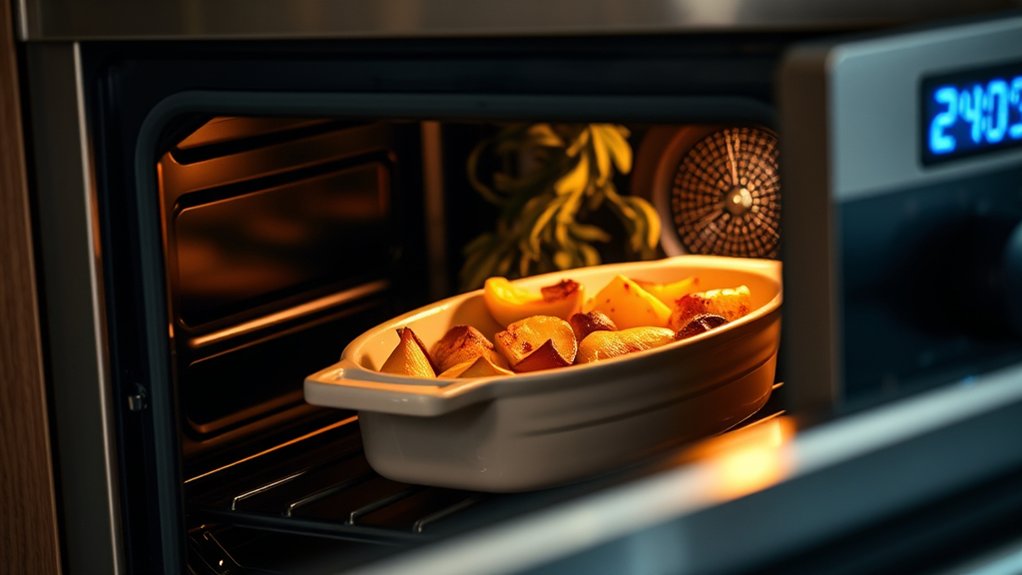
Foods with some structure and moisture hold up best in a warm oven, especially casseroles, roasted vegetables, baked pasta, meatloaf, and braised meats. You can keep these dishes at serving temperature with less quality loss than delicate foods. Aim for covered pans when possible, since they help retain texture and moisture.
For mixed meals, warm the hearty components first and add quick items later.
- Casseroles and baked pasta stay steady and reheat evenly.
- Braised meats and meatloaf keep their tenderness better than lean cuts.
- Roasted vegetables work well if you monitor them closely.
You can also hold rolls, biscuits, and some dessert pastries briefly, but watch them so they don’t dry out. If you’re serving drinks, warm mugs for the best beverages that pair with the meal. In general, choose foods that won’t collapse, separate, or lose crispness too quickly.
Common Oven Warming Mistakes to Avoid
What mistakes most often ruin warm food? You often lose heat by using an oven that’s too hot, which keeps cooking the food instead of holding it. Another of the common mistakes is leaving dishes uncovered; steam escapes, and moisture drops fast.
Don’t stack containers tightly unless you have enough airflow, or you’ll get uneven warming. You should also avoid placing food directly on a cold rack without a pan or insulation layer, because improper insulation lets heat drain away quickly.
Check internal temperatures occasionally, but don’t keep opening the door; each peek releases warm air. If you use foil, wrap loosely so it traps heat without softening crisp textures too much.
Finally, don’t hold food longer than necessary. The longer it sits, the more quality declines, even at low heat. Set a timer, monitor carefully, and serve as soon as the meal reaches a safe, pleasant temperature.
Frequently Asked Questions
What Is the Best Oven Rack Position for Keeping Food Warm?
You’ll usually keep food warm on the middle oven rack, since it promotes even heat. Use the best warming strategies and these oven rack tips: avoid the top rack, and keep dishes loosely covered.
Can You Keep Food Warm in a Convection Oven?
Yes, you can, but you should lower the temperature and monitor closely for convection safety. You’ll keep food covered, stir occasionally, and use warming plates so everything stays hot without drying out.
How Do You Warm Plates Before Serving Food?
You can warm plates by placing them in a low oven, about 150°F, for 5 to 10 minutes. Use mitts, check they’re not too hot, and avoid overheating. Warm plates improve plate warming safely.
Is It Safe to Keep Food Warm Overnight in the Oven?
No, about 48 million Americans get sick from foodborne illness yearly, and you shouldn’t risk it. You’re better off refrigerating food within 2 hours.
Safe handling and food safety mean reheating thoroughly tomorrow.
Can Foil Pans Go Directly Into a Warm Oven?
Yes, you can place foil pans in a warm oven, but you should check the pan’s thickness and food weight. For long term oven warming, you’ll want sturdier support, since flimsy pans can warp or spill.
Conclusion
To keep food warm in the oven, you’ll do best with a low, steady temperature and a little patience. Cover your dishes, use oven-safe containers, and keep the door closed so heat doesn’t escape.
Check food often enough to stay safe, but not so often that you dry it out. As the adage goes, “A stitch in time saves nine.”
With careful monitoring, you’ll keep meals warm, tasty, and ready to serve. Following these steps is the best way to keep food warm in the oven.