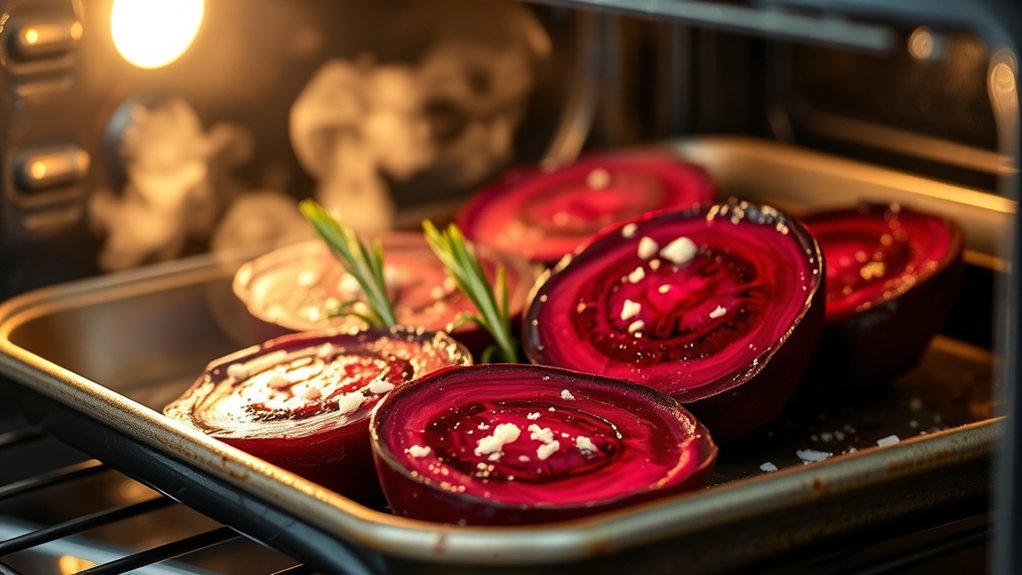
How to Cook Beetroot Oven
To cook beetroot in the oven, you start by choosing firm, unblemished beets and trimming the greens, not the roots. Keeping the skins on helps protect moisture during cooking. Lightly season the beets and wrap each one in foil so the heat stays even.
Bake them at 400°F for 45 to 60 minutes. The real test is when a knife meets little resistance, signaling they are tender and ready. The next step changes everything.
Key Takeaways
- Choose firm, similar-sized beetroots with smooth skin, then wash, trim tops and roots, and dry completely.
- Lightly oil and season with salt and pepper, then wrap each beetroot tightly in separate foil parcels.
- Preheat the oven to 400°F (200°C) and place wrapped beets on a baking tray or middle rack.
- Roast for 45 to 60 minutes, checking with a knife until it slides through the thickest part easily.
- Cool slightly, then peel warm skins with fingers or a paper towel, and refrigerate leftovers airtight.
How to Cook Beetroot in the Oven
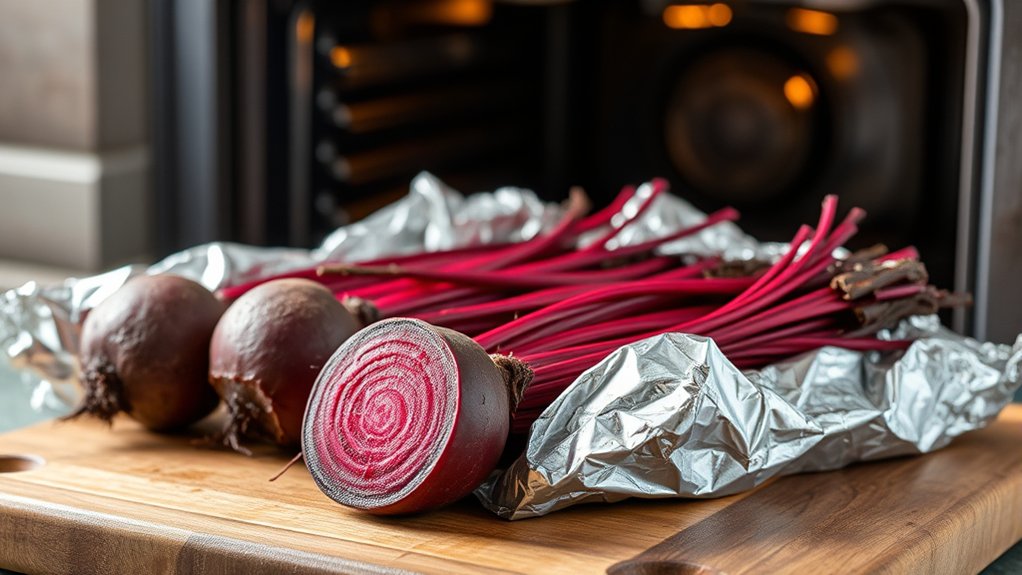
To cook beetroot in the oven, start by preheating it to 400°F (200°C) and washing the beetroot thoroughly. Trim the tops and roots, then dry each piece. Use roasting equipment such as a baking tray, parchment paper, and foil if you want easier cleanup.
Place the beetroot on the tray and rub it lightly with oil. Keep the skin intact to retain moisture and support beetroot nutrition during roasting. Cover the tray with foil for softer results, or leave it uncovered for a firmer texture.
Roast for 45 to 60 minutes, depending on size, until a knife slides in easily. Let the beetroot cool briefly, then peel off the skin with your hands or a paper towel. Slice, dice, or serve it whole.
You can season it after roasting to preserve flavor control and maintain a clean, precise cooking process.
Choose Beetroot for Roasting
Choose firm beetroots with smooth skin, intact roots, and no soft spots or cracks. You’ll get better roasting results when you select specimens of similar size, since they cook at the same rate.
Smaller, uniformly sized roots also reduce the risk of uneven texture in the finished dish.
Selecting Fresh Beetroots
Look for beetroots that feel firm, smooth, and heavy for their size, with deep, even color and fresh, intact greens if the tops are attached. You should prioritize selecting texture over cosmetic perfection; a taut skin signals low dehydration and dense flesh suited to oven roasting.
When sourcing farmers, ask when they harvested and how they stored the crop, because recently lifted roots retain more moisture and sweetness.
Check for cracks, soft spots, or shriveling. Avoid roots with excessive scarring or corky patches. Prefer unblemished skin that resists gentle thumb pressure. Choose greens that are crisp, not wilted or yellowed.
These indicators help you choose roots that roast cleanly, develop balanced sweetness, and cut with minimal waste.
Picking Similar Sizes
For even roasting, pick beetroots that are close in diameter and shape so they finish at the same time. You should compare each beetroot by eye and by hand, then sort out any that are much larger or smaller.
This picking sizes step reduces uneven heat penetration and prevents some roots from overcooking while others stay firm. Aim for batch consistency, especially if you’re roasting on one tray.
Round, uniform beetroots behave predictably; long or irregular ones can need separate timing. If sizes vary slightly, group the smallest together and the largest together on different trays.
Trim leaves and roots evenly so the surface doesn’t create extra size differences. Consistent sizing also improves peeling, slicing, and texture after roasting, giving you a more controlled result.
Prep Beetroot for the Oven
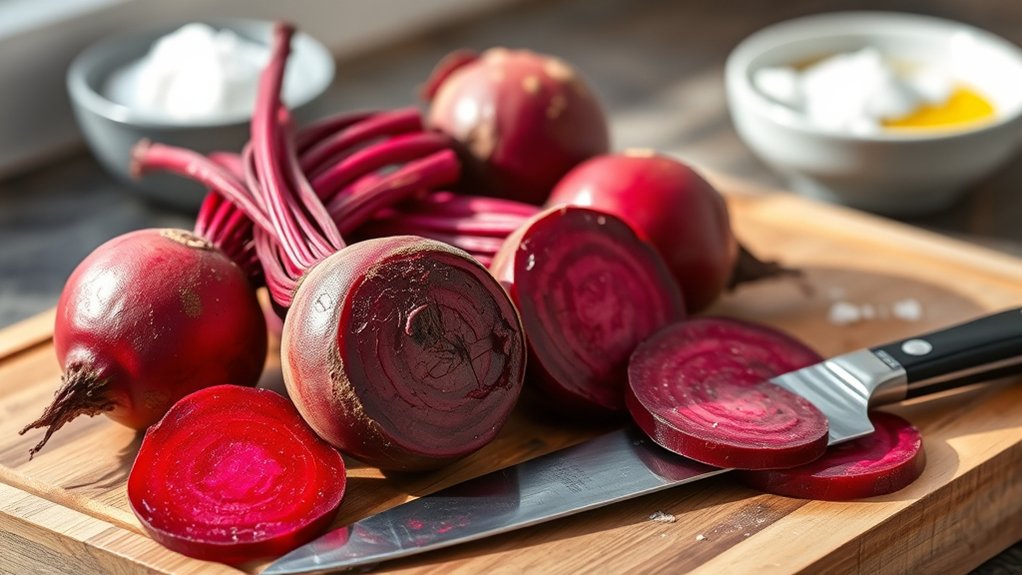
Wash the beetroot thoroughly under cold running water to remove soil and debris. Trim off the leaves and roots with a sharp knife, leaving the skin intact.
Pat the beetroot dry before roasting so it cooks evenly in the oven.
Wash Beetroot Thoroughly
Rinse the beetroot under cold running water and use your hands or a soft vegetable brush to remove all soil from the skin. You should wash beetroot one piece at a time so grit doesn’t stay trapped in creases. Scrub roots with firm, even pressure, especially near the crown and tapered end.
Hold each beetroot securely while rinsing. Rotate it to expose every surface. Remove mud from shallow indentations. Inspect for remaining debris before drying.
Keep the skin intact; it helps retain moisture during roasting. Avoid soap or abrasive pads, which can damage the surface and leave residue. Once clean, pat the beetroot dry with a paper towel so excess water won’t steam the exterior in the oven.
Trim Leaves And Roots
Once the beetroot is clean and dry, trim off the leafy tops, leaving about 1 inch of stem attached if possible, and cut away the thin root tip. You should trim leaves with a sharp knife to reduce juice loss and keep the flesh intact.
Hold each beetroot firmly on a stable board, then trim roots flush without gouging the skin. Don’t remove the crown unless damaged, because that exposed area can bleed moisture during roasting.
Keep the cut ends small and even so the beetroot cooks uniformly. If any fibrous stems remain, pare them back cleanly. Handle each piece gently after trimming, since bruising can affect texture.
Once you’ve finished, inspect for loose fibers and irregular cuts before moving to the next prep step.
Dry Before Roasting
Why dry the beetroot before roasting? You remove surface water so the skins don’t steam in the oven. Pat each beetroot with a clean towel, then let it air-dry for a few minutes if needed. This simple step improves heat transfer, supports even browning, and limits moisture retention. Use these drying techniques before you oil or wrap the beets.
- Blot after washing to remove visible droplets.
- Set beets on a rack for faster air exposure.
- Rotate them while drying for uniform results.
- Check creases near the stem end for trapped water.
When the surface feels matte, you’re ready for the next stage. Dry beets roast more efficiently, develop better texture, and keep their flavor concentrated.
Season Beetroot Before Roasting
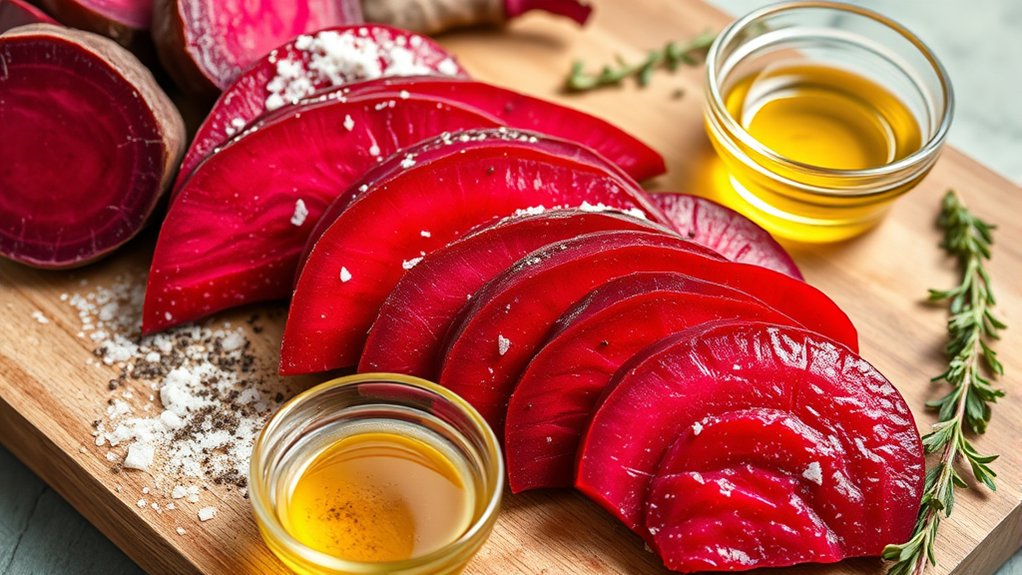
Before you roast beetroot, toss the trimmed roots with a little oil, salt, and pepper to coat them evenly. Use just enough oil to create a thin film; excess oil can soften the surface and reduce browning.
Toss trimmed beetroot with a light film of oil, salt, and pepper for even roasting and better browning.
Fine salt distributes quickly, so season lightly at first and adjust after roasting if needed. Freshly ground pepper adds sharpness without masking beetroot’s natural sweetness. If you’re handling mixed sizes, season each piece after beetroot trimming so the coating stays consistent.
For season sourcing, choose a neutral oil with a high smoke point, such as canola or refined olive oil, so the flavor stays clean during roasting. Work the seasoning over every exposed surface, including cut ends, to keep the texture balanced.
A uniform coat improves heat transfer and supports even caramelization. Keep the seasoning simple at this stage; you’re building a controlled base before cooking, not finishing the dish.
Wrap Beetroot for Even Cooking
Wrap each beetroot in foil before roasting to create an even-cooking packet. This seals in moisture and helps the heat distribute consistently around the vegetable.
It also prevents the outer edges from drying out before the center cooks through.
Wrap In Foil
For even roasting, enclose each beetroot tightly in aluminum foil after lightly oiling the skin and seasoning as needed. You’ll want to wrap foil smoothly so heat distributes consistently and the beetroot cooks through at the same rate, supporting even cooking.
Keep each piece fully covered, with no exposed patches that could dry or scorch.
- Use a separate foil sheet for each beetroot.
- Press the foil snugly around the surface.
- Leave a small air pocket for heat circulation.
- Place wrapped beetroot directly on a baking tray.
This method helps standardize doneness and simplifies handling after roasting. When you wrap foil correctly, you reduce surface dehydration and improve texture uniformity across the batch.
Seal Moisture In
Sealing the beetroot in foil locks in steam and slows moisture loss, which helps the flesh cook evenly and stay tender. You create moisture sealing by folding the foil tightly around each root, leaving no vents for vapor escape. This preserves beetroot moisture and stabilizes internal temperature during roasting.
| Step | Action | Effect |
|---|---|---|
| 1 | Wash roots | Removes grit |
| 2 | Dry surface | Improves foil contact |
| 3 | Wrap tightly | Traps steam |
| 4 | Seal edges | Reduces leakage |
| 5 | Roast covered | Promotes even cooking |
Keep each parcel snug, but don’t crush the skin. A secure wrap minimizes evaporative loss, so you get uniform texture and better color retention.
Prevent Dry Edges
To prevent dry edges, you should wrap each beetroot in a tight, even foil parcel so the outer flesh doesn’t overexpose to hot air and toughen before the center finishes cooking. This insulated barrier keeps heat distributed and protects beetroot texture from shrinking or cracking.
- Fold foil firmly around each root.
- Leave no gaps for steam loss.
- Place parcels on a tray for stable heat.
- Check doneness with a skewer through the foil.
If you roast multiple sizes, separate them, because smaller roots finish sooner and can develop dry edges. When you unwrap, let trapped steam escape briefly, then test softness.
Proper wrapping preserves moisture, prevents uneven browning, and gives you tender, uniform beetroot texture every time.
Roast Beetroot at the Right Temperature
Set your oven to 400°F (200°C) for evenly roasted beetroot with tender flesh and concentrated flavor. You’ll keep heat high enough to build roasted flavors without scorching the skin.
At this temperature, the surface dehydrates steadily while the center softens at a controlled rate, so your kitchen timing stays predictable. If your oven runs hot, place the beetroot on a middle rack and rotate the tray once for uniform exposure.
Use this quick guide:
| Temperature | Effect |
|---|---|
| 375°F | Slower browning |
| 400°F | Balanced roast |
| 425°F | Faster caramelization |
| 350°F | Gentle cooking |
| 450°F | Risk of overdarkening |
Higher heat sharpens edges and deepens color; lower heat delays flavor development. Maintain consistent oven temperature throughout the roast, and don’t crowd the tray. Airflow around each beet helps the heat penetrate evenly and supports clean, concentrated roasted flavors.
Check When Beetroot Is Tender
Once the beetroot has roasted at 400°F, check for tenderness by piercing the thickest part with a paring knife or skewer. You want slight resistance, not a hard center. If the tool slides in cleanly, the beetroot’s done; if it meets firmness, keep roasting in 5 to 10 minute intervals.
Test each beetroot separately, because size changes cook time. Rotate the tray if one side browns faster, and avoid overcooking, which can make the flesh dry and dull in flavor. Accurate tenderness matters for clean cutting, balanced texture, and reliable side dish ideas. It also supports better flavor pairings with citrus, herbs, cheese, or nuts.
- Pierce near the core for the most accurate read.
- Compare larger and smaller beets before removing them.
- Recheck after brief roasting to prevent overshooting doneness.
- Let residual heat finish the final few minutes.
Peel and Slice Roasted Beetroot
Let the roasted beetroot cool until you can handle it, then slip off the skins with your fingers or a paper towel; they should peel away easily. If any patches resist, trim them with a small knife instead of scraping hard.
You’ll peel beetroot most cleanly while it’s still warm, because the skin separates from the flesh with minimal pressure. Work over a board or tray to catch juice and prevent staining.
After peeling, inspect each root and remove fibrous ends or bruised spots. Then slice beetroot into uniform pieces with a sharp knife. Make thin rounds for even portions, or cut wedges if the beetroot is large.
Keep your cuts consistent so the texture stays balanced and the pieces hold their shape. Handle the beetroot gently; overworking it can crush the edges and release excess moisture.
Use the slices immediately or chill them in a sealed container.
Ways to Use Roasted Beetroot
Roasted beetroot is versatile enough to serve warm or chilled in salads, grain bowls, and side dishes. You can cube it for goat cheese salads, slice it for citrus plates, or mash it into spreads. Its earthy sweetness pairs well with sharp, creamy, and acidic elements, so test flavor combinations with feta, yogurt, horseradish, dill, or orange.
Roasted beetroot is endlessly adaptable, pairing its earthy sweetness with creamy, sharp, and bright flavors.
- Toss cubes with arugula, walnuts, and vinaigrette.
- Layer slices into grain bowls with quinoa and herbs.
- Blend roasted beetroot into hummus for color and depth.
- Add it to flatbreads, pasta, or pureed soups.
Use storage tips to keep portions ready for quick assembly: refrigerate airtight and portion before mixing with dressings. You can also roast extra for later use in dips, relishes, and smoothie bases. Keep seasoning light, then adjust salt, acid, and oil at serving so you preserve texture and balance.
Store Cooked Beetroot Safely
After you’ve used roasted beetroot in salads, bowls, or spreads, cool the leftovers quickly and store them in airtight containers. Keep storage safety tight: refrigerate within two hours, hold at 4°C or below, and use clean utensils to prevent contamination. Labeling dates helps you track freshness and reduce waste.
| Storage method | Temperature | Max time |
|---|---|---|
| Refrigerator | 4°C or below | 3–5 days |
| Freezer | -18°C | 2–3 months |
| Room temp | Not safe | 2 hours max |
Check for slime, sour odor, or discoloration before you eat it. If you want longer storage, portion the beetroot before chilling so you only open what you need. For freezing, drain excess moisture first; this limits ice crystals and texture loss.
Reheat only the amount you’ll serve, and don’t return leftovers to the container. Good storage safety protects quality and lowers foodborne risk.
Frequently Asked Questions
Can I Roast Beetroot With the Skin On?
Yes, you can roast beetroot with the skin on; you’ll just need to scrub it first. Beetroot skins protect moisture, and roasting timing stays similar, though larger roots may need longer until tender.
How Do I Prevent Beetroot From Staining My Hands?
You prevent beetroot staining by wearing kitchen gloves; for example, if you’re peeling two beets, glove remedies stop dye transfer.
You can also rub lemon juice on hands afterward and wash immediately.
Can I Roast Beetroot With Other Vegetables?
Yes, you can roast beetroot with other vegetables. You’ll just match roasting timings and cut sizes, then use flavor balancing with herbs, oil, and salt so everything cooks evenly and tastes cohesive.
Should I Use Foil or Parchment for Roasting Beetroot?
You should use foil for better heat retention and moisture sealing; its foil benefits improve tenderness. Use parchment alternatives if you want easier cleanup and less direct contact, though results may be slightly drier.
Can I Freeze Roasted Beetroot for Later Use?
Yes, you can freeze roasted beetroot for later use; it can be frozen in airtight containers for up to three months. Cool it first, then thaw overnight.
For reheating tips, gently warm it covered.
Conclusion
When you roast beetroot, you guide a small earth-bound lantern through heat, and it emerges richer, softer, and ready to serve. You’ve chosen firm roots, trimmed and wrapped them, then waited until a knife slips through without resistance.
After peeling and slicing, you can add them to salads, grain bowls, or sides. Store the cooked beetroot chilled, and you’ll keep that deep color and sweet flavor ready for the week.
This simple process is the heart of how to cook beetroot oven, transforming it into a versatile and delicious ingredient.