How to Clean Oven Door Glass
Like a quiet stage after a long performance, your oven door glass can hold a surprising amount of grease and baked-on film. Cleaning oven door glass requires a few simple ingredients and some careful attention.
You’ll need warm water, dish soap, baking soda, a soft microfiber cloth, and a nonabrasive sponge. Start with a cool oven, then make a thin paste and apply it carefully, keeping clear of metal trim.
A few precise wipes can change everything, but the real difference comes from what you do next.
Key Takeaways
- Let the oven cool completely, then gather a microfiber cloth, nonabrasive sponge, warm water, dish soap, and baking soda.
- Make a baking soda paste, apply a thin layer to the glass, and let it sit to loosen grime.
- Wipe softened residue with a damp cloth using straight strokes, avoiding circular scrubbing or metal tools.
- Treat stubborn spots with extra paste or warm, soapy water, and use a plastic scraper only if needed.
- Finish by buffing dry, cleaning spills promptly, and checking seals and edges regularly to prevent buildup.
Gather Your Cleaning Supplies
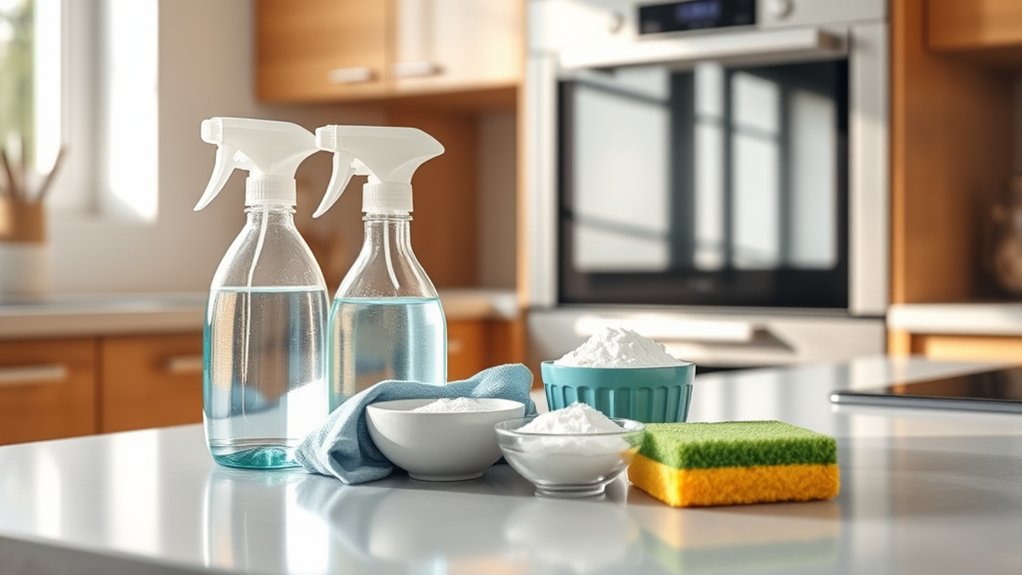
Before you begin, gather a few basic supplies: a soft microfiber cloth, a nonabrasive sponge, a spray bottle, warm water, dish soap, baking soda, and a plastic or silicone scraper if needed. Arrange them within arm’s reach so you can work efficiently and avoid interruptions.
When you gather supplies, inspect each item for grit, frayed edges, or contamination that could scratch the glass. Fill the spray bottle with warm water and a small amount of dish soap, then label it if you plan to reuse it. Keep the microfiber cloth dry and clean for final wiping.
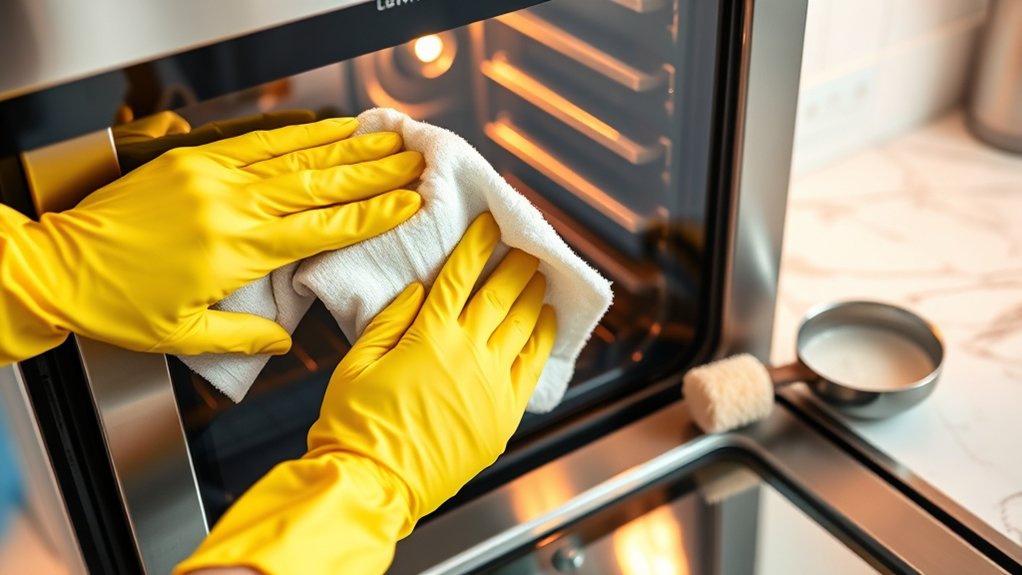
Follow basic safety tips: wear gloves if your skin is sensitive, and make sure the oven is completely cool before you start. If you need to loosen stuck residue later, use only nonmetal tools. Preparing this setup first reduces mistakes, improves control, and helps you clean the door glass methodically and safely.
Clean Oven Glass With Baking Soda
Now that your supplies are ready, use baking soda to break down stuck-on grease and baked residue on the oven door glass. Mix baking soda with a small amount of water until you form a spreadable paste.
Mix baking soda with water to form a paste that loosens grease and baked-on residue.
Wear gloves and follow basic safety precautions if the oven is warm or if you have sensitive skin. Apply the paste in a thin, even layer across the glass, focusing on discolored areas and corners.
Let it sit long enough to soften surface buildup without drying completely. This cleaning with baking soda method works by lifting grime through mild abrasion and alkalinity.
Use a nonabrasive sponge or microfiber cloth to spread the paste smoothly and avoid scratching the glass. Keep the paste off metal trim and seals. When the dwell time ends, inspect the surface for loosened residue and prepare for the next cleaning step.
Remove Baked-On Grease
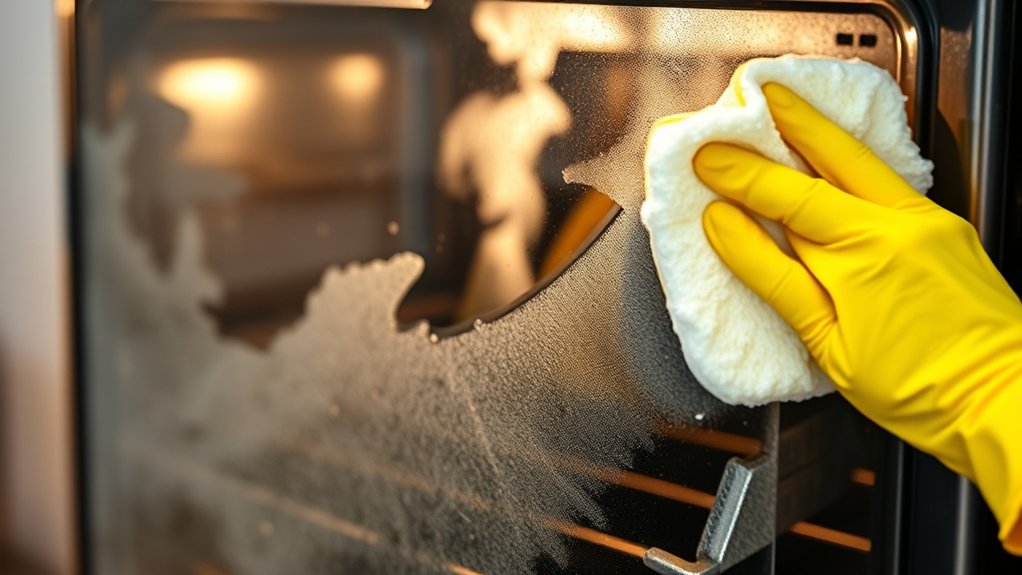
If stubborn grease remains, apply a little extra baking soda paste directly to those spots and let it sit for 5 to 10 minutes. Then dampen a microfiber cloth with warm water and press it onto the softened residue. Use firm, even strokes to lift the film without grinding it into the glass.
For thicker deposits, work in small two word ideas like short passes and steady pressure so you control the contact area. Wipe the blade clean often if you use a plastic scraper, and keep the edge flat to avoid scratches. Continue until you’ve cleared grease from the surface and the glass looks evenly transparent.
Finish by buffing with a clean, dry cloth to remove streaks and verify that no residue remains. If needed, repeat the process on any remaining spots rather than increasing pressure, which can damage the finish.
Clean Between the Glass Panels
To clean between the glass panels, you’ll need to remove the inner door panel so you can access the hidden space. Once the cavity is open, use a soft, lint-free cloth with a mild cleaner to wipe the glass carefully.
Keep your motions controlled and dry each surface fully before reassembling the door.
Remove Inner Panel
Before you can clean the space between the oven door glass panes, you need to remove the inner panel and open the door assembly. First, shut off power and let the oven cool completely. Then support the door, locate the retaining screws or clips, and release them in the correct order.
If your model uses a removing latch, disengage it gently to avoid bending hardware. Lift the inner panel straight away, keeping track of fasteners. As you separate the parts, note panel alignment so you can reinstall everything without stress or gaps.
Place the panel on a padded surface and inspect the edges for damage. Handle the glass carefully; even slight twisting can crack it. Keep screws organized so reassembly stays accurate and secure.
Access Hidden Space
Now you can reach the hidden cavity between the glass panes. Before you insert any tool, check that the inner panel is already removed and the door is stable. Use a flashlight to locate screws, clips, or vent slots that open the hidden space.
When you’re accessing interior gaps, support the glass with one hand and work slowly to avoid stress on the frame. Slide in a thin, nonabrasive cleaning wand only as far as needed.
You prevent trapped grease from hardening.
You reduce streaks that frustrate you.
You protect seals from accidental damage.
You regain clear visibility through the door.
You feel confident the job’s done right.
If debris remains, repeat the access step before reassembly.
Wipe Glass Carefully
With the cavity open, wipe the inner surfaces of the oven door glass using a thin microfiber wand, lint-free cloth, or soft sponge lightly dampened with warm water and a small amount of dish soap. Move in straight passes from top to bottom, then side to side, so you can carefully wipe residue without streaking.
Keep pressure light to avoid stressing the seals or shifting the panels. If debris remains between the panes, repeat with a clean, damp tool rather than oversaturating the cavity. Dry the edges with a separate microfiber cloth to prevent trapped moisture.
During glass handling, support each panel evenly and never use abrasive pads, razor tools, or harsh chemicals. Reassemble only when all surfaces are dry, clear, and secure.
Avoid Scratching the Glass
Use only soft cleaning tools, such as a microfiber cloth, nonabrasive sponge, or nylon pad, so you don’t mark the glass. Apply gentle scrubbing methods with light pressure and short strokes to lift residue without grinding particles into the surface.
If debris feels gritty, rinse it away first instead of scrubbing over it.
Soft Cleaning Tools
Choose soft cleaning tools that won’t scratch the oven door glass, such as a microfiber cloth, non-abrasive sponge, or plastic scraper. You’ll protect the surface by selecting soft cleaning tools with fine fibers and smooth edges. Keep a dedicated cloth for this task so grit doesn’t transfer and cause damage.
Use a non-abrasive sponge for loose residue, and reserve the plastic scraper for hardened spots only. Avoid steel wool, scouring pads, or rough brushes; they can leave permanent marks. For gentle scrubbing, apply light pressure and work in small sections.
Feel confident
Reduce worry
Prevent costly damage
Maintain clarity
Restore shine
Gentle Scrubbing Methods
To scrub oven door glass safely, move in small circles or short strokes with a damp microfiber cloth or non-abrasive sponge, applying only light pressure. Keep the surface moist so debris lifts instead of grinding into the glass.
Use gentle scrubbing on stubborn spots, but never press hard or use edge tips that can score the finish. If residue resists, reapply a small amount of cleaner and let it sit briefly before continuing.
Work methodically from one area to the next, checking for grit that could scratch. Wipe away loosened soil with a clean damp cloth, then dry the glass with a lint-free towel. Stick with non abrasive tools at every step so you protect the door and maintain a clear, polished surface.
Keep the Glass Clean Longer
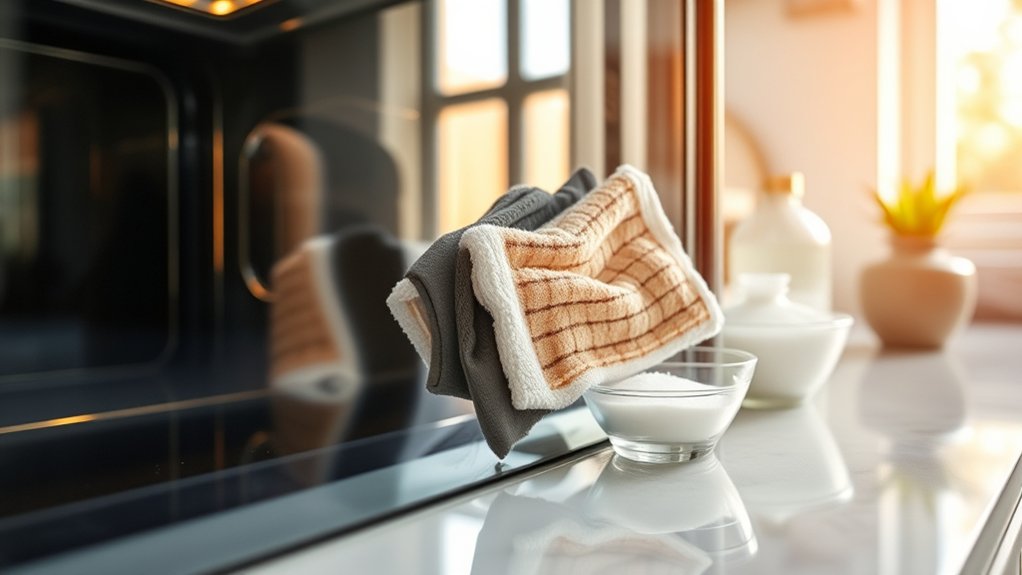
After you’ve cleaned the oven door glass, keep it clear by wiping spills and splatters as soon as the oven cools. This prevents baked-on residue and reduces the need for aggressive scrubbing.
Wipe spills and splatters as soon as the oven cools to prevent baked-on residue and keep the glass clear.
For how to prevent smudges, use a microfiber cloth with a small amount of glass cleaner or diluted vinegar, then dry the surface completely. Tips for daily maintenance include checking the door after each use, removing drips from the handle and frame, and avoiding abrasive pads that can scratch the finish.
You’ll feel in control when stains don’t set. You’ll save time by stopping buildup early. You’ll protect the glass from dull, etched marks. You’ll reduce odors from repeated overheating of residue. You’ll keep your kitchen looking cleaner every day.
If grease persists, warm the area slightly with a damp cloth, then wipe in straight strokes. Inspect the seal regularly so residue can’t collect along the edges.
Frequently Asked Questions
Can I Use Vinegar Instead of Baking Soda on Oven Glass?
Yes, you can use vinegar instead, but it’s usually less effective on baked-on grime. You’ll get better results if you pair vinegar with baking soda alternatives like mild scrub pads or detergent.
How Often Should Oven Door Glass Be Deep Cleaned?
Usually, you should deep clean it every 1–3 months, more often if you cook greasy meals.
For repainting recommendation and exterior panel care, you’ll protect seals, visibility, and efficiency by keeping buildup from hardening.
Is It Safe to Remove the Oven Door Completely?
Yes, you can remove it, but only if your model’s manual allows it. Discussing safety concerns, removal steps, and reattachment risks, use cleaning methods and cleaning precautions carefully, then reattach it securely.
What Should I Do if the Glass Is Cloudy After Cleaning?
Like mist on a window, you should wipe the glass again with a clean microfiber cloth and vinegar solution. If foggy residue remains, use a nonabrasive scraper.
Check seals to restore glass clarity.
Can Commercial Oven Cleaners Damage the Door Glass?
Yes, commercial cleaners can damage the glass if you use them incorrectly or choose harsh formulas. You should check labels, protect glass safety, and test commercial cleaners on a small area before full application.
Conclusion
Now you can finish the job and let your oven door glass shine like a well-tended pane in a spotless kitchen. When you use baking soda, soft cloths, and careful strokes, you remove grime without risking scratches or clouding.
Wipe it dry, keep the edges clean, and stay ahead of buildup with regular light cleaning. With these simple steps, you’ve restored clarity, reduced odors, and made your oven look ready for its next use.
By following these tips, you ensure your oven door glass remains clear and spotless, making your cleaning efforts truly effective.