How Long to Reheat Pizza in Oven
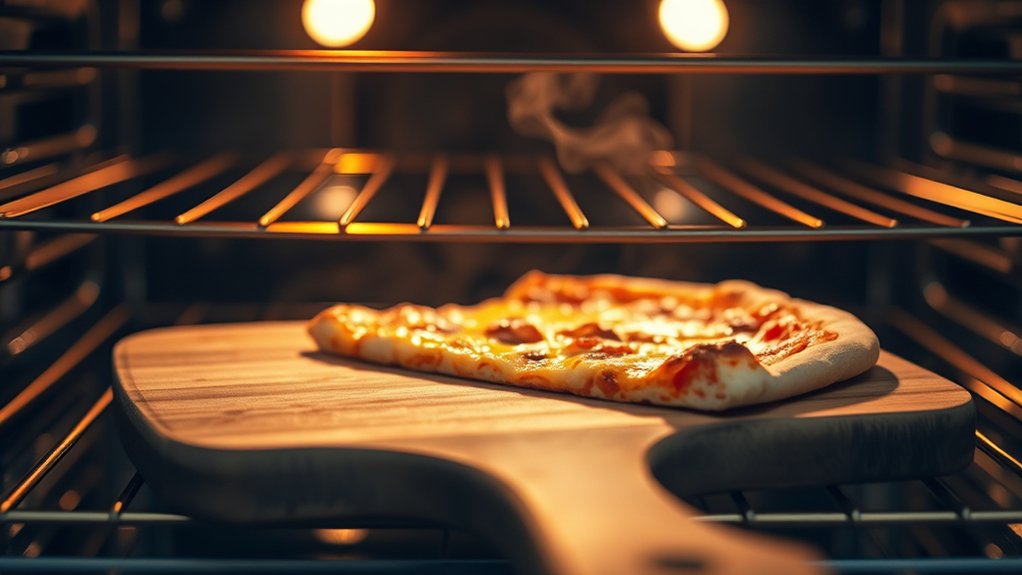
Like a scene from a diner window at midnight, knowing how long to reheat pizza in the oven can bring your slices back to life perfectly. You can reheat pizza in about 8 to 12 minutes at 375°F to 400°F.
You’ll get faster results with thin slices and need more time for thick, loaded pieces. Use a preheated stone or sheet for a crisper crust, and start checking early so you catch the exact moment the cheese melts and the edges turn firm.
Key Takeaways
- Reheat pizza in a fully preheated oven at 375°F to 400°F for about 8 to 12 minutes.
- Thin slices may finish in 5 to 7 minutes, while thick or loaded slices can take 12 to 15 minutes.
- Use 400°F for thicker pizza and 375°F for thinner crusts to balance crispness and heating.
- Place pizza on a baking sheet, stone, or direct rack for a crisper bottom and even reheating.
- Remove pizza when the cheese bubbles, edges are crisp, and the center is hot through.
What’s the Best Oven Temperature?
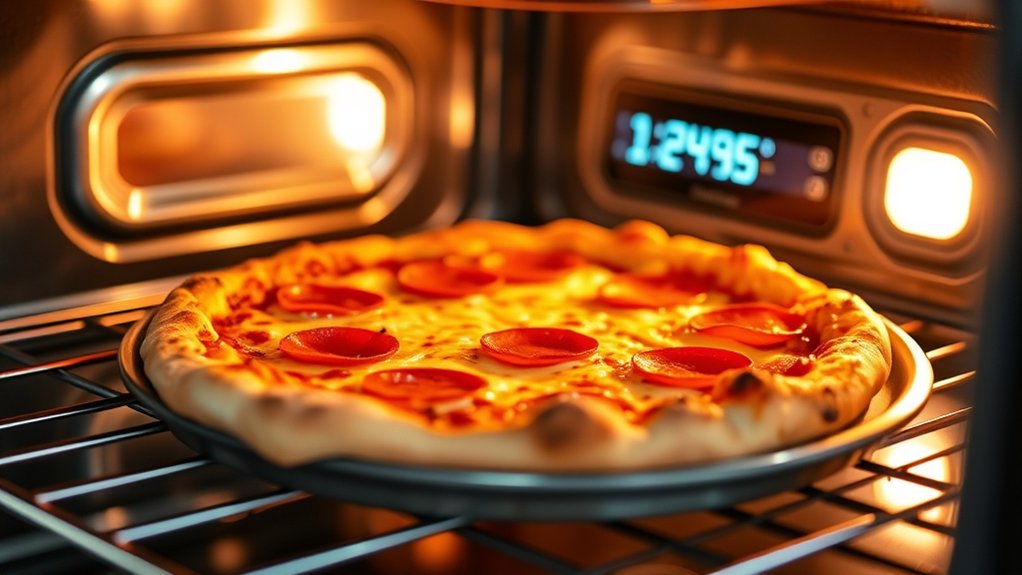
The best oven temperature for reheating pizza is usually 375°F to 400°F. At this range, you warm the slice evenly without drying the cheese or scorching the crust. You’ll get better results than with lower heat, which can leave the center limp, or higher heat, which can toughen the edges too fast.
For most reheating methods, preheating the oven fully matters because stable heat helps preserve the original crust textures. Place the pizza on a baking sheet or directly on a rack if you want a crisper base. Use the lower end of the range for thin crust pizza and the higher end for thicker slices.
If your oven runs hot, start at 375°F and adjust next time. You should keep your goal simple: restore texture and flavor, not cook the pizza again. Consistent temperature gives you reliable results every time.
How Long to Reheat Pizza in the Oven?
Set your oven to the right temperature first, since heat level directly affects how evenly your pizza reheats. At 375°F to 400°F, you’ll usually need about 8 to 12 minutes, depending on crust thickness and topping amount.
Check for a hot center and crisp edges, then pull it out before the cheese dries out.
Oven Temperature
What oven temperature works best for reheating pizza? Set your oven temperature to 375°F for reliable reheating consistency. This heat warms the crust, melts the cheese, and avoids drying out the toppings.
You can go a little higher, up to 400°F, if your pizza slice is thick or loaded with moisture, but don’t exceed that range unless you want a tougher crust. Preheat fully before you place the pizza inside; an unstable oven temperature causes uneven results.
Use a baking sheet, pizza stone, or directly on the rack, depending on your texture preference.
- 350°F: gentler, slower warming
- 375°F: best all-around choice
- 400°F: firmer crust, faster finish
- Preheat completely first
- Keep slices spaced evenly
Reheating Time
Usually, pizza takes 8 to 12 minutes in a 375°F oven, though thinner slices may be ready in as little as 5 to 7 minutes and thicker, loaded slices can need closer to 12 to 15 minutes. You should check it early, because reheating science depends on slice thickness, moisture, and topping density.
Use the lower end if you want to preserve crust texture without drying the cheese. For a crisp bottom, place the pizza directly on the rack or a preheated sheet. If the center still feels cool, give it 1 to 2 more minutes and test again.
Don’t overbake; once the cheese bubbles and the edges firm, you’re done. Timing matters, but your oven and pizza style decide the final minute.
Reheat Thin Crust Pizza Faster
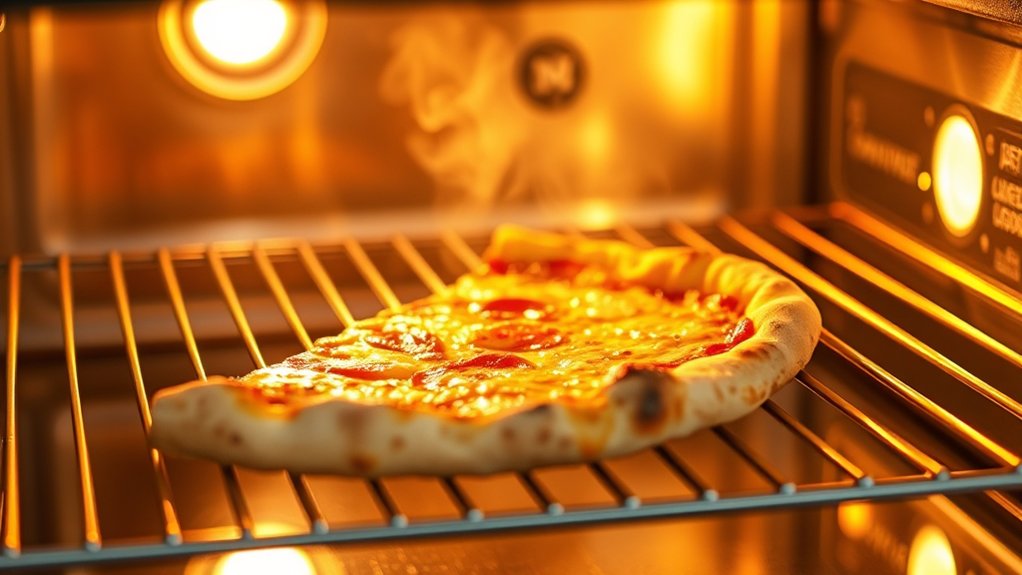
For thin crust pizza, you can speed up reheating by using a higher oven temperature and a shorter bake time. Preheat your oven to 425°F to 450°F, then place the slice directly on a preheated sheet or rack so heat reaches the bottom fast. This reheating science works because thin dough loses moisture quickly, so you only need enough time to restore heat without overcooking the crust texture.
- Use foil only if the bottom browns too quickly.
- Check the pizza after 3 to 5 minutes.
- Rotate the slice once for even heating.
- Avoid stacking slices; air circulation matters.
- Add toppings after reheating if they need freshness.
Watch for bubbling cheese and crisp edges as your cue. Remove the pizza as soon as the center feels hot; waiting too long will dry it out and make the crust brittle.
Reheat Thick Crust Pizza Without Drying It Out
Thick crust pizza needs gentler heat than thin crust because the center takes longer to warm through and the edges can dry out before the middle is hot. Preheat your oven to 325°F to 350°F, then place the slice on a rack or tray and heat it for 10 to 15 minutes.
If the slice is large, start checking at 8 minutes. You’re aiming for a hot center and a firm, not brittle, crust texture. To limit moisture loss, keep the pizza uncovered only while reheating, and don’t push the temperature higher just to speed things up.
That extra heat will toughen the rim before the cheese fully melts. If the top looks ready but the center still feels cool, give it 1 to 2 more minutes instead of adding a blast of heat. When you reheat this way, you preserve flavor, maintain structure, and avoid the dried-out edge that ruins thick crust slices.
Should You Use a Pizza Stone or Baking Sheet?
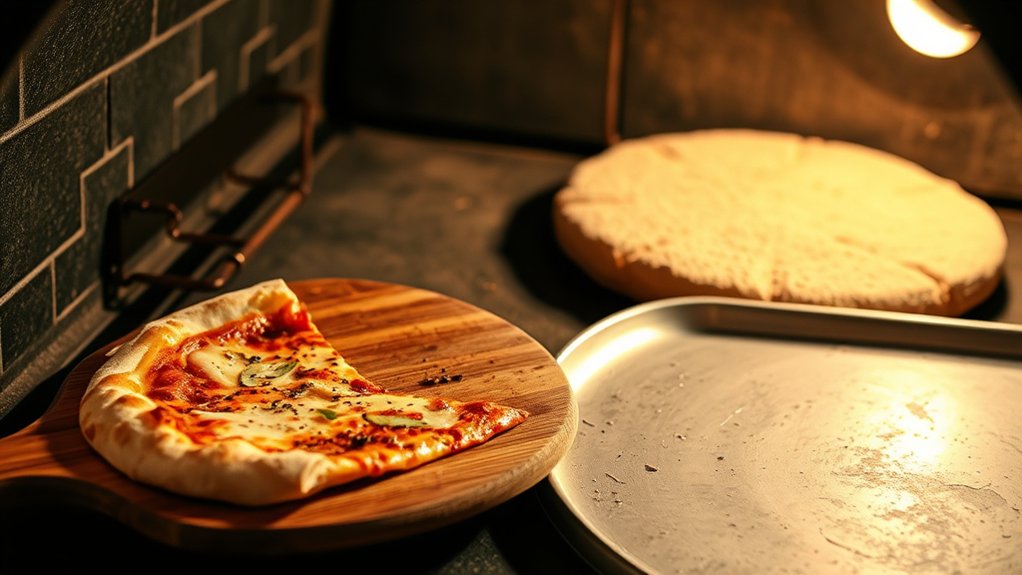
A pizza stone gives you the crispest result because it holds steady heat and helps the bottom reheat evenly, while a baking sheet is the simpler, more forgiving option if you’re reheating just a slice or two. For reheating leftovers, choose the tool that matches your batch size and your oven basics.
You’ll usually get better contact and faster recovery with a preheated stone, but a sheet pan works well when you need convenience and easy handling.
- Use a stone for full pies or multiple slices.
- Use a baking sheet for quick, small portions.
- Preheat either surface before adding pizza.
- Place pizza in the center of the oven.
- Check the slice after a few minutes.
If your oven runs hot or unevenly, the stone can help stabilize the heat. If you want speed, simpler cleanup, and less risk of overhandling, the baking sheet wins.
How to Keep Pizza Crust Crispy
To keep pizza crust crispy, focus on moisture control and direct heat. Preheat your oven fully, then use a hot surface so the bottom sets fast. This protects crust texture and prevents steaming. Reheating science shows that quick, dry heat evaporates surface moisture before it softens the dough.
| Action | Why it helps |
|---|---|
| Preheat thoroughly | Builds instant bottom heat |
| Use a hot pan | Promotes browning |
| Avoid foil | Traps steam |
| Skip extra toppings | Adds moisture |
| Rest briefly | Lets crust firm up |
Place the pizza on the preheated surface and watch closely. If you need extra crunch, finish with a short burst of heat, not a long bake. Don’t cover it, and don’t add water to the oven. Those choices dull the crust. With the right timing, you’ll preserve crispness without drying out the slice.
Reheat Pizza Slices Versus a Whole Pie
Reheating pizza slices and reheating a whole pie aren’t quite the same, and the difference affects both timing and texture. When you reheat pizza by the slice, heat reaches the center fast, so you can use a shorter window and keep the crust from drying out.
A whole pie needs more time because oven dynamics distribute heat across a larger mass, especially in the middle.
- Slices usually reheat in 5 to 8 minutes.
- A whole pie often needs 10 to 15 minutes.
- Use a preheated oven for steadier results.
- Place slices directly on a rack or hot sheet.
- Check the center before you remove a whole pie.
You should watch the edges closely. Thin slices can crisp before the cheese fully loosens, while a full pie may need extra minutes for even heating. Adjust timing based on size, thickness, and your oven’s behavior, not guesswork.
When to Add More Cheese or Toppings
If you want extra cheese, add it about halfway through reheating so it melts without burning.
You can add toppings like fresh herbs, cooked meats, or thin-cut vegetables near the end to keep their texture and flavor intact. Time each addition carefully so your pizza finishes hot, balanced, and not overcooked.
Adding Cheese Midway
When should you add extra cheese or toppings while reheating pizza? Add them midway, once the slice warms and the base starts to crisp. This cheese timing helps the toppings melt without overcooking the crust texture.
For best results, preheat your oven, place the pizza on a sheet or stone, and heat it until the surface loosens. Then add a light layer of cheese or approved toppings, and return it briefly to finish melting.
- Use small amounts to avoid sogginess.
- Add moisture-rich toppings sparingly.
- Check melt after 2 to 3 minutes.
- Keep the oven hot enough for quick fusion.
- Remove the pizza as soon as the cheese bubbles.
Topping Timing Tips
Add extra cheese or toppings after the pizza has warmed through and the crust has started to crisp, not at the start of reheating. You’ll keep the base from getting soggy and preserve better crust moisture balance.
If you’re adding meats, vegetables, or fresh herbs, wait until the last 2 to 4 minutes so they heat without overcooking. Use a light hand; too much topping traps steam and slows reheating.
When you’re storing leftovers, separate wet ingredients, like tomatoes or mushrooms, if you can, so you don’t need to fight excess moisture later. Check the cheese for melt and the crust for firmness before you pull it out.
This timing gives you a hotter slice, cleaner texture, and better results every time.
Common Pizza Reheating Mistakes to Avoid
Reheating pizza well takes more than just turning on the oven, and a few common mistakes can leave you with soggy crust, dried-out cheese, or unevenly warmed slices. You should avoid guessing the oven temp, because too low wastes time and too high scorches the edges before the center softens.
Don’t pile slices on a crowded tray; steam builds up and weakens the crust. Skipping preheating also hurts results, since cold metal steals heat from the bottom. Use these practical checks:
- Set the oven temp before you start.
- Space slices apart for airflow.
- Put pizza directly on a hot rack or stone.
- Avoid covering slices with foil unless moisture is your goal.
- Don’t reheat at random intervals; keep one steady cycle.
If you handle the heat carefully, you’ll preserve texture, flavor, and structure without turning leftovers into a limp, rubbery mess.
How to Tell When Pizza Is Done
You’ll know pizza is done when the cheese is fully melted and bubbling, the crust looks crisp at the edges, and the center feels hot through to the bottom. Check the underside with a spatula; it should feel firm, not limp.
Use optimal reheating temps around 375°F to 400°F, then watch closely near the end. If the cheese blisters lightly and the sauce steams, you’re close. To help with how to avoid sogginess, keep pizza on a preheated stone, steel, or rack so moisture can escape.
| Sign | What to Look For | Action |
|---|---|---|
| Cheese | Melted, bubbling | Remove soon |
| Crust | Golden, crisp edges | Keep heating |
| Center | Hot through | Serve now |
| Underside | Firm, dry | Good to go |
| Sauce | Steaming lightly | Finish reheating |
Cut and lift a slice; if it holds shape without drooping, you’re done.
Frequently Asked Questions
Can You Reheat Pizza Straight From the Freezer?
Yes, you can reheat pizza straight from the freezer, but you’ll get better reheating texture if you use freezer techniques like thawing first.
You’ll heat it more evenly, with a crispier crust and melted cheese.
Does Foil Affect Pizza Reheating in the Oven?
Yes, foil can affect pizza reheating in the oven. Wait, there’s a catch. You’ll trap moisture, soften the crust, and alter heat flow.
Use it only if you want gentler warming; keep your reheating temperature moderate.
Can You Reheat Pizza in a Toaster Oven?
Yes, you can reheat pizza in a toaster oven. You’ll get crisp crust texture and melted cheese faster than most reheating appliance options.
Use medium heat, watch closely, and avoid overcooking.
Is It Safe to Reheat Pizza More Than Once?
No, you shouldn’t reheat pizza more than once; each cycle weakens reheating safety, like a bridge tired by repeated crossings. You’ll protect flavor and health best by heating only the portion you’ll eat.
Should Leftover Pizza Be Covered While Reheating?
Yes, you should cover leftover pizza while reheating if you want it moist; use a reheating cover or loose foil. You’ll trap heat, prevent drying, and still keep the crust from getting soggy.
Conclusion
To reheat pizza in your oven, preheat it to 375°F to 400°F. Then heat slices for about 8 to 12 minutes. Thin crust may be ready in 5 to 7 minutes, while thick, loaded slices can need 12 to 15.
Use a hot stone or sheet for a crisp base. Watch for bubbling cheese and golden edges—you don’t want a sad, leathery disc. When the center’s hot, pull it out and eat it fast.
Knowing how long to reheat pizza in oven ensures your slice is perfectly warmed and delicious every time.