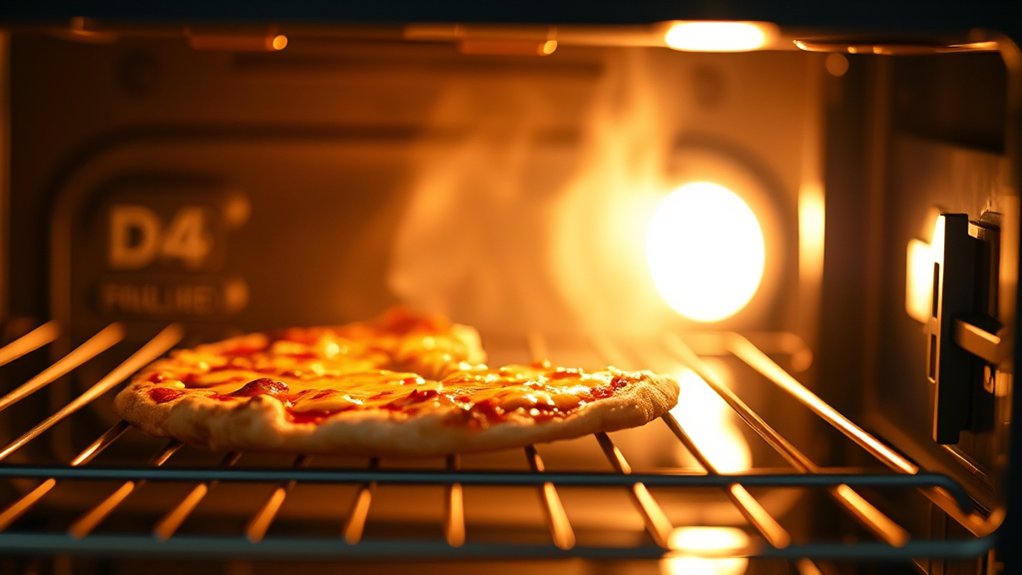
How to Reheat Pizza in Oven
Most people don’t realize that your oven rack placement changes how well leftover pizza reheats. When reheating pizza in the oven, setting the rack in the middle and preheating to 375°F gives the crust a better chance to stay crisp while the cheese melts evenly.
Using a preheated pan or pizza stone can improve the results even more. However, the timing and setup matter more than you might think. Paying attention to these details ensures your reheated pizza tastes almost as good as fresh.
Key Takeaways
- Preheat the oven to 375°F and place the rack in the middle for even heating and a crisp crust.
- Reheat slices on a baking sheet or preheated pizza stone in a single layer, with space between pieces.
- Heat most leftovers for 8–12 minutes, checking near the end so toppings and cheese do not overcook.
- Use 425°F for thin crust, 375°F for deep dish, and adjust slightly if your oven runs hot or cool.
- Look for firm crust edges and melted cheese, then serve immediately for the best texture.
Preheat the Oven and Rack It Properly
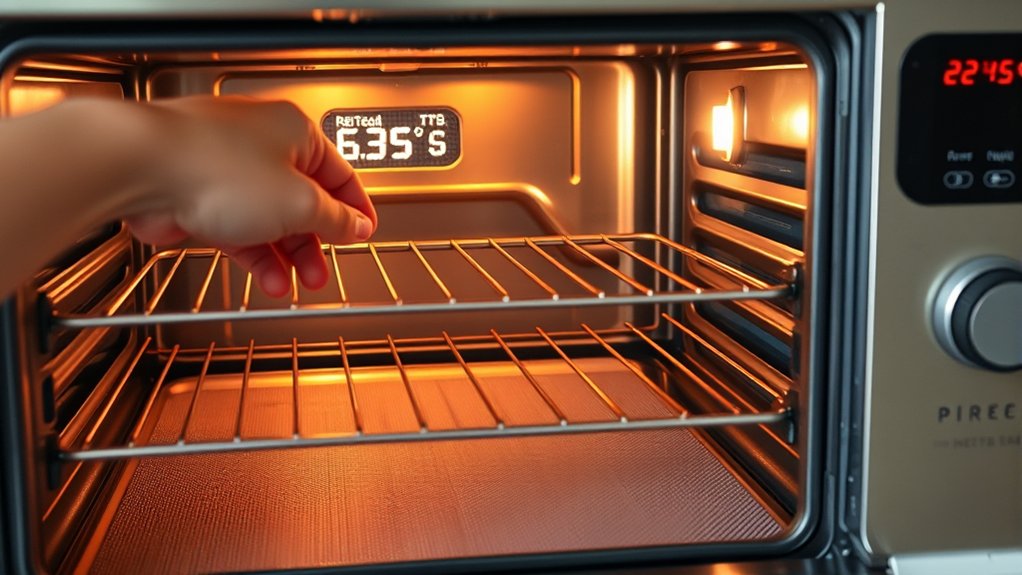
Start by preheating your oven to 375°F, since a properly heated oven helps the crust crisp up without drying out the toppings. While it heats, move an oven rack to the middle position so the pizza gets even airflow and browning.
Preheat to 375°F and place the rack in the middle for crisp, evenly browned pizza.
This placement also keeps the slice away from the top element, which supports kitchen safety and helps prevent scorching. If you’re reheating leftovers, put the pizza on a baking sheet or preheated pizza stone once the oven is ready.
Use oven mitts, keep hands clear of hot metal, and open the door carefully. A stable middle rack gives you predictable results, especially with thick or loaded slices.
Don’t crowd the oven with other pans, because blocked heat can leave the crust limp. Taking a moment to set the rack properly makes the rest of the reheating process simpler and more reliable.
Set the Best Oven Temperature
For most leftover pizza, set your oven to 375°F, since that temperature reheats the slice evenly without toughening the crust or drying the cheese. You get a reliable balance of speed and texture, so the slice warms through while the top stays pleasant.
Watch how your pizza reacts: thinner pies often need less heat, while thicker ones benefit from the same moderate setting because it supports steady cheese behavior.
| Pizza type | Temp | Result |
|---|---|---|
| Thin crust | 375°F | quick crust, crisp edge |
| Hand-tossed | 375°F | even center warmth |
| Deep-dish | 375°F | gentle melt, less drying |
If you want a little more browning, raise the oven only slightly, but don’t chase high heat. That can overcook the top before the middle warms. Stick with 375°F as your default, then adjust by a small amount based on thickness and your preferred finish.
Reheat Pizza on a Baking Sheet
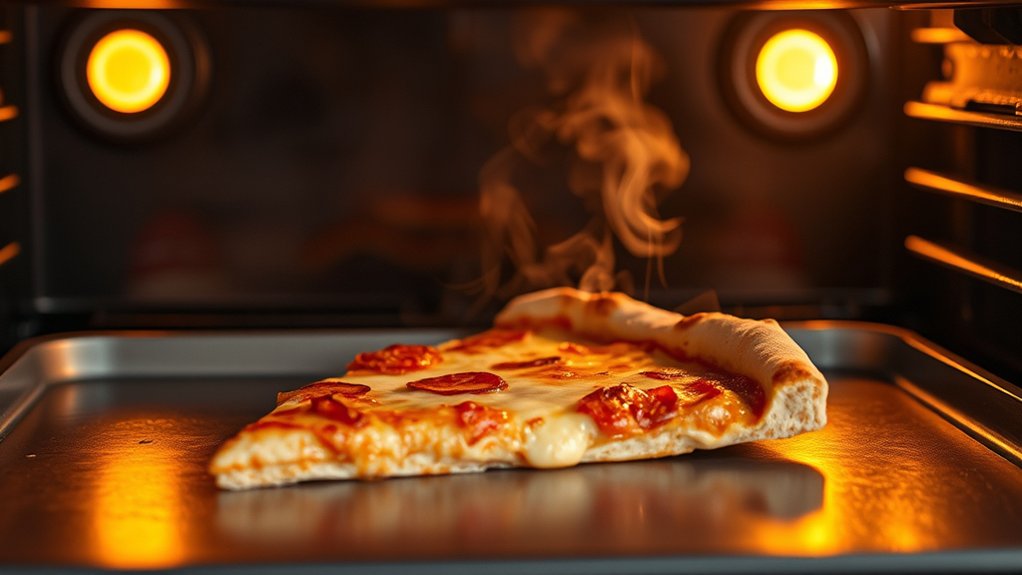
Place the pizza slices on a baking sheet so they heat evenly and stay easy to move in and out of the oven. Arrange them in a single layer with a little space between each slice. This helps hot air circulate and keeps the crust from steaming.
If you want extra protection, line the sheet with foil or parchment, but don’t overcrowd the pan. Slide the baking sheet onto the middle rack and heat the slices until the cheese melts and the crust feels firm.
Check them after a few minutes so you don’t overheat the toppings. You’re looking for crisp cheese, not burnt edges. If the slices seem soft, give them another minute or two.
Remove the sheet carefully, then let the pizza rest briefly before serving. That short pause helps the cheese set and keeps the slice easier to handle. This method is simple, reliable, and helps avoid sogginess.
Reheat Pizza on a Pizza Stone
A pizza stone gives you a crisper, more evenly heated crust than a baking sheet. Place the stone in your oven before preheating so it heats gradually and stores steady heat. Slide your pizza onto the hot stone with a peel or parchment, and keep an eye on crust care so the bottom stays firm, not dried out.
Use topping balance to your advantage: heavy layers can trap steam, while a lighter topping mix helps the cheese melt evenly.
| Step | What you do | Why it helps |
|---|---|---|
| 1 | Preheat stone | Builds strong heat |
| 2 | Transfer pizza | Keeps shape intact |
| 3 | Check once | Protects texture |
You’ll get a more bakery-style finish, especially on thinner slices. If the pizza was refrigerated, let it sit briefly first so the stone doesn’t cool too fast.
Reheat Pizza for the Right Time
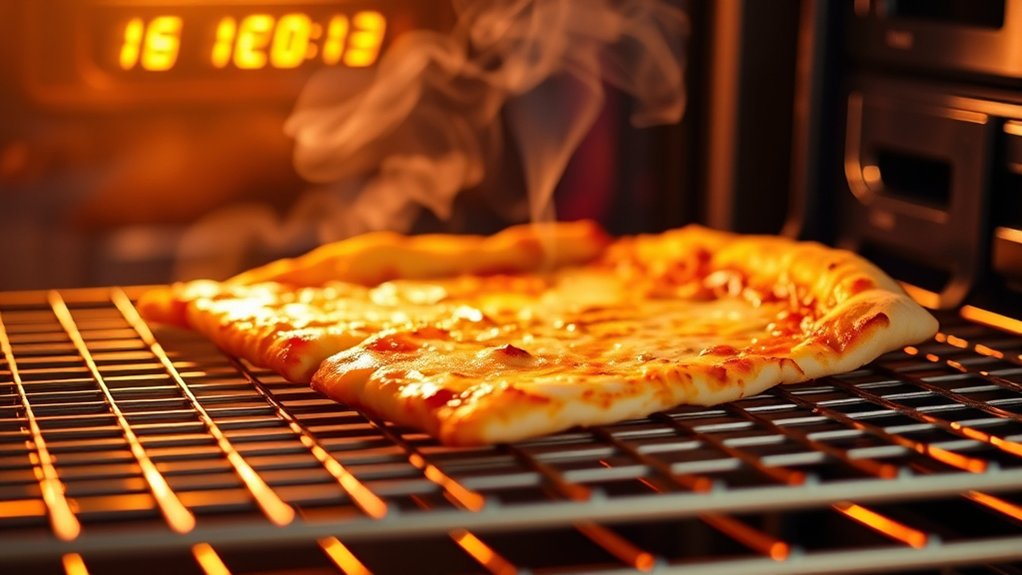
Set your oven to the right temperature so the pizza heats evenly without drying out. Reheat it for just a few minutes, watching closely so the cheese melts and the crust warms through.
Check for crispness as the final cue, and pull it out once the bottom feels firm and the slice looks ready.
Oven Temperature
What oven temperature works best for reheating pizza? Set your oven to 375°F for a balanced result. This temperature warms the slice through without drying the cheese or burning the edges.
If you want a crisp crust, preheat fully before you add the pizza. A hot oven helps the bottom recover texture and supports even heating across the toppings.
Use a middle rack so the heat reaches both the base and the top in a steady way. If your oven runs hot, lower the setting a little. If it runs cool, raise it slightly.
Keep the temperature consistent, and you’ll get better control over the finish. Don’t rush the preheat; it makes a noticeable difference.
Reheating Duration
How long should you reheat pizza in the oven? At 350°F, plan on 8 to 12 minutes for most slices or 12 to 15 minutes for a whole pie. Use the shorter end if you’re reheating thin crust, and the longer end for thicker crust or dense toppings.
This timing supports crust optimization by giving the base enough time to warm through without overcooking. Keep the pizza on a sheet pan or directly on the rack, depending on your setup, and avoid guessing.
If you’re reheating multiple slices, add a minute or two. For topping safety, make sure the center is hot enough to serve evenly. If the cheese and sauce are heated through, you’ve likely reached the right point.
Check For Crispness
You’ll know the pizza’s ready when the crust turns crisp at the edges and the bottom feels firm, not soft, when you lift a slice. Check the center too: it should feel hot without steaming wet.
If the cheese bubbles lightly and the toppings look heated through, pull it out. Keep a close eye during the last minute, since ovens can shift from ideal to overdone fast.
For crispness maintenance, avoid leaving the pizza in long enough for the cheese to dry out or the crust to harden too much. The goal is a balanced crust texture: firm enough to hold, but still pleasant to bite.
Let it rest briefly on a rack or board before slicing so moisture doesn’t soften the base.
Keep Pizza Crispy and Moist
To keep pizza crispy on the outside and moist inside, reheat it on a preheated baking sheet or pizza stone so the crust can firm up quickly without drying out the toppings. You’ll get the best crisp texture when you place the slice directly on the hot surface instead of a pan lined with foil.
Set your oven to a moderate temperature, then warm the pizza just until the cheese softens and the center feels hot. That short heating time supports moisture retention in the sauce and toppings while helping the crust stay snappy.
If the crust starts browning too fast, move the pizza to a lower rack for the last minute. You can also cover the slice loosely with a small piece of foil for part of the reheating time, then uncover it at the end to finish crisping. This balance gives you pizza that tastes freshly baked, not dried out.
Fix Soggy or Cold Pizza Slices
If your pizza comes out soggy or still cold in the middle, raise the heat a bit and give it a short blast directly on a hot baking sheet or pizza stone. This quick contact helps the bottom firm up fast, so you get a crisp texture instead of a limp slice.
Move the pizza to the oven’s center rack for even heating, and avoid crowding the pan with too many slices. If the cheese looks hot but the center lags, leave it in for 1 to 2 more minutes, then check again.
You can also rotate the slice once during reheating to catch any hot spots. If moisture pools on top, blot it lightly with a paper towel before heating. Keep the oven fully preheated so the pizza doesn’t steam.
With a hot surface, steady heat, and brief timing, you’ll fix soggy or cold slices without drying them out, and the crust will stay pleasantly firm.
Reheat Thin Crust, Deep Dish, and Frozen Pizza
Thin crust, deep dish, and frozen pizza each need a slightly different reheating approach, so adjust the temperature and timing to match the style. For thin crust, preheat your oven to 425°F and place the slices directly on a sheet pan or pizza stone. Heat them for 4 to 6 minutes so the base stays crisp.
For deep dish, lower the oven to 375°F and give it 15 to 20 minutes; the thicker layers need more time to warm through without burning the top. For frozen pizza, follow the package as a starting point, but check it a few minutes early so the crust doesn’t overbrown.
These reheat techniques help you control moisture and protect crust textures. If you want extra crunch, set the pizza on a preheated pan. Watch closely near the end, since every oven heats a little differently and timing can shift fast.
Serve and Store Leftover Pizza
Once your pizza’s hot and crisp, serve it right away for the best texture and flavor. Use a wide spatula so the slice stays intact, and place it on a warm plate if you want the cheese to stay soft longer.
Serve pizza immediately for the best crisp texture, using a wide spatula and a warm plate.
For serving best practices, cut only what you’ll eat now and keep the rest in the box or on a clean tray until you’re ready. If you have leftovers, let them cool for no more than two hours before packing them up.
Stack slices with parchment between them, then seal them in an airtight container or wrap them tightly in foil for proper leftover storage. Refrigerate them promptly, and eat them within three to four days for the best quality.
If you need to store them longer, freeze the slices individually so you can reheat only what you need later.
Frequently Asked Questions
Can I Reheat Pizza in a Toaster Oven Instead?
Yes, you can reheat pizza in a toaster oven. Use toaster oven reheating at 350°F until hot and crisp.
For reheating leftovers safety, heat it to 165°F, and don’t leave it sitting out.
Is It Safe to Reheat Pizza More Than Once?
Usually, no you shouldn’t reheat pizza more than once. For reheating safety, each cooling cycle raises risk if you leave it out too long.
Is doubling reheats safe? Not really; reheat only what you’ll eat.
Should I Add Toppings Before Reheating Leftover Pizza?
Usually, you shouldn’t add toppings before reheating leftover pizza; coincidentally, a soggy crust shows why. Keep topping safety in mind, reheat first for better crust texture, then add fresh toppings after if you want.
Can I Reheat Pizza Directly From the Refrigerator?
Yes, you can reheat pizza directly from the refrigerator. You’ll preserve crust texture better if you let it sit briefly, then heat it evenly.
Check refrigerator storage timing, and avoid overheating for crisp, not soggy, slices.
What Drinks Pair Well With Reheated Pizza?
You can’t go wrong: choose a crisp lager, cola, or sparkling water for great drink pairing and beverage compatibility. You’ll cut through richness, refresh your palate, and make reheated pizza taste even better.
Conclusion
To reheat pizza in the oven, you’ve got a simple win: preheat to 375°F, use a middle rack, and let a hot pan or pizza stone do the heavy lifting.
In about 8–12 minutes, your slices should come out with a crisp crust and melted cheese, like yesterday’s leftovers got a second chance at glory.
Let them rest briefly, then serve hot so every bite stays sturdy, warm, and satisfying.
This method is the best way to reheat pizza in the oven, ensuring it tastes just as delicious as when it was first baked.