How Long to Cook Meatballs in Oven
You might not know that meatball size matters more than oven time alone when it comes to how long to cook meatballs in the oven.
When you bake them at 400°F, small meatballs can be ready in about 12 minutes, standard 1 1/2-inch ones in 15 to 20 minutes, and larger ones in up to 25 minutes.
You should still check the center temperature, because that’s what tells you if they’re truly done—and one simple step can keep them juicier.
Key Takeaways
- Bake standard 1 1/2-inch meatballs at 400°F for 15 to 20 minutes.
- Smaller meatballs may be done in about 12 minutes; larger ones can take up to 25 minutes.
- Cook until the center reaches 160°F for beef, pork, veal, or lamb, and 165°F for poultry.
- Preheat the oven fully and leave space between meatballs for even browning and cooking.
- Rest meatballs for 3 minutes after baking to help juices redistribute.
How Long to Bake Meatballs in the Oven?
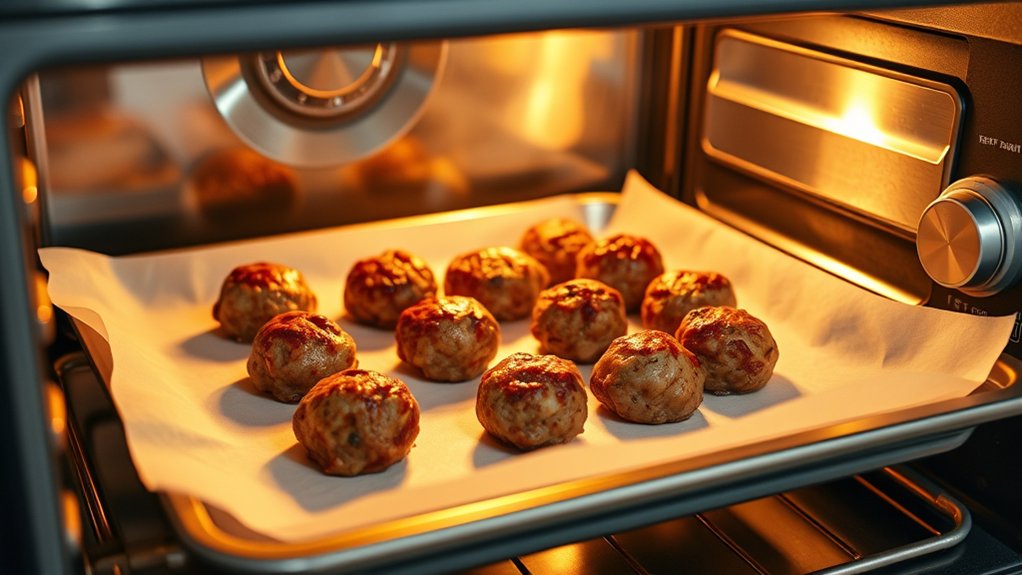
How long should you bake meatballs in the oven? For standard 1 1/2-inch meatballs, you should bake them 15 to 20 minutes at 400°F, turning once halfway through.
If you make smaller meatballs, start checking at 12 minutes; larger ones may need up to 25 minutes. You want the outside browned and the center cooked through, but you don’t want to dry them out.
Use a meat thermometer and pull them when the center reaches 165°F for poultry or 160°F for beef and pork. Let them rest for 3 minutes so the juices settle and the juicy texture stays intact.
If you’re adding sauce, bake them just until set, then finish simmering in the sauce for flavor balance. Always space them evenly on the pan so they cook at the same rate and keep their shape.
What Temperature Should You Bake Meatballs?
For most meatballs, bake at 400°F for the best balance of browning and even cooking. This temperature helps you build even browning on the outside while keeping the center tender and juicy. You’ll get a good crust without drying out the meat, especially if you shape the meatballs uniformly and space them well on the pan.
- Use 400°F for reliable results.
- Preheat the oven fully before baking.
- Line the baking sheet for cleaner release.
- Leave space so hot air can circulate.
- Watch for a firm, lightly browned surface.
If you want a softer finish, you can lower the heat slightly, but 400°F remains the most dependable choice for home cooking. It gives you control, efficiency, and a juicy texture that holds up well in sauces or on its own.
How Long to Bake Different Meatball Sizes?
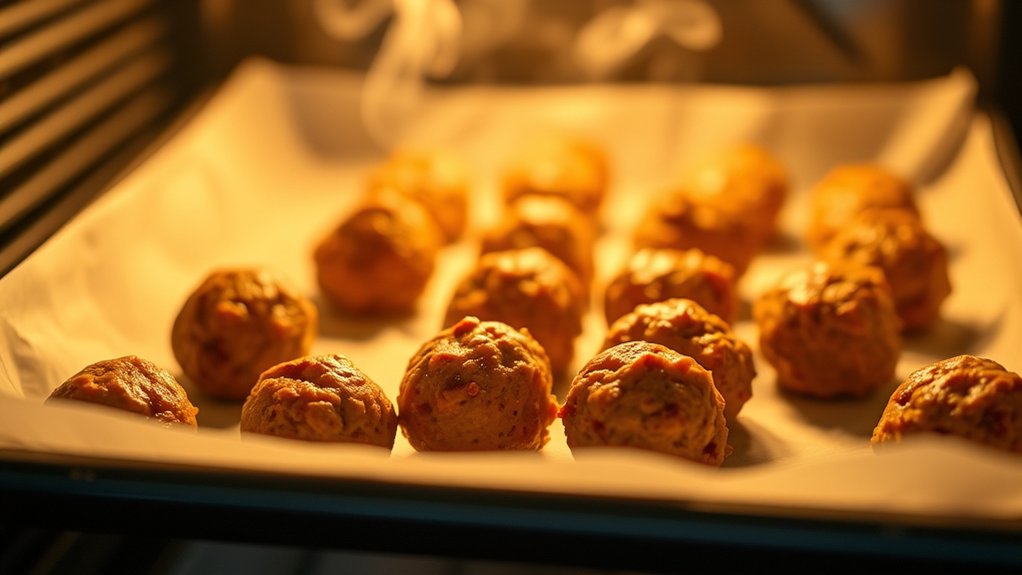
The size of your meatballs determines the baking time more than anything else: smaller meatballs usually need about 10 to 12 minutes, medium meatballs about 15 to 18 minutes, and larger meatballs closer to 20 to 25 minutes at 400°F.
Smaller meatballs bake faster, while larger ones need more time—size is the biggest factor at 400°F.
You should keep your cooking timing matched to the diameter you shape, because size variations, even a half-inch, can change the result. If you make 1-inch meatballs, arrange them in a single layer and expect them to finish fastest.
For 1 1/2-inch meatballs, give them a little more room and more time. If you form 2-inch meatballs, bake them longer and avoid crowding so hot air can circulate evenly.
For the most consistent batch, use a scoop or scale to portion each one the same way. When all of your meatballs are close in size, your oven work becomes predictable, and you can serve them with better texture and less guesswork.
How Do You Know Meatballs Are Done?
You can tell meatballs are done when they’re browned on the outside, firm to the touch, and no longer pink in the center. For the most accurate check, use an instant-read thermometer to measure the internal temperature.
Cook beef, pork, or veal meatballs to 160°F, and poultry meatballs to 165°F.
Visual Signs of Doneness
A well-browned exterior is the first clue that your meatballs are nearing done, but color alone isn’t enough. You should watch for even color changes across the surface: the meatballs should look matte, not wet or glossy, and the edges should feel firm when lightly touched.
If you’re aiming for visually appealing plating, choose meatballs that hold a round shape without collapsing or spreading. Look for a slight crust, which signals the outside has set while the center has finished cooking. Avoid pale spots, raw seams, or any wobble that suggests undercooking.
- Choose uniform size for even browning
- Rotate the pan if one side darkens faster
- Look for firm, springy surfaces
- Check that juices run clear, not pink
- Rest briefly so the shape stays tidy
Internal Temperature Check
Temperature is the most reliable signal that meatballs are done, so use an instant-read thermometer to check the center of the largest one. For beef, pork, veal, or lamb meatballs, aim for an internal temperature of 160°F; for ground poultry, cook to 165°F.
Insert the probe from the side so you reach the middle without touching the pan, which can give a false reading. If you’re cooking mixed-size batches, check a few pieces, especially the thickest ones, because smaller meatballs finish sooner.
These doneness checks matter more than color alone, since browning can happen before the center is safe. Once the target temperature appears, pull the tray, let the meatballs rest briefly, and serve them juicy, tender, and fully cooked.
How Can You Keep Meatballs Juicy?
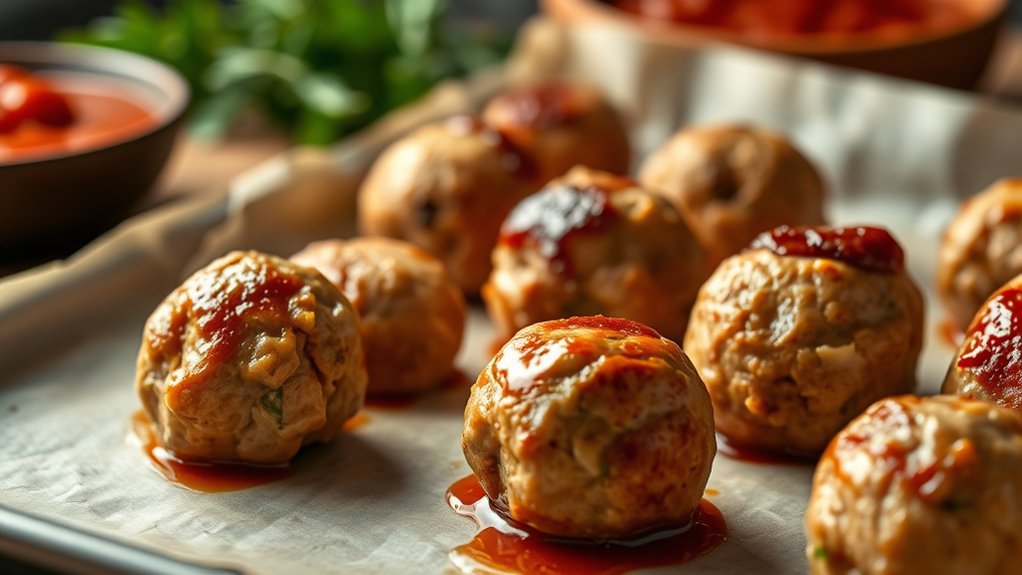
Tender meatballs start with the right balance of moisture and fat, so use ground meat with enough richness, avoid overmixing, and add a binder like breadcrumbs soaked in milk or broth. Shape them gently so you don’t compress the mixture, then chill them briefly to help them hold moisture in the oven.
Season evenly, because salt supports juicy textures by helping the meat retain liquid, and keep spice balance focused so heat doesn’t distract from flavor. Brush or lightly coat the meatballs with oil before baking to slow surface drying and encourage a tender crust.
When you pull them from the oven, let them rest a few minutes so the juices redistribute instead of spilling out.
Choose meat with moderate fat content
Mix just until combined
Use a soaked binder
Season with measured spice balance
Rest before serving
How Do Baking Times Change by Meat Type?
Baking times shift with the meat you choose, so you’ll need to adjust for fat content and density. Beef and pork meatballs usually take similar time, but pork can stay juicier a bit longer, while beef may cook more evenly at the same temperature.
Turkey and chicken meatballs cook faster and dry out sooner, so you should check them early and pull them as soon as they reach doneness.
Beef Versus Pork Times
Beef meatballs usually need a little longer in the oven than pork meatballs because beef is denser and often made with less fat. You should expect beef to finish in about 2 to 4 minutes more, depending on size.
For beef tenderness, bake until the center is just set, then rest them briefly so juices redistribute. Pork cooks faster and gives you a softer bite with a richer pork flavor, so watch it closely to avoid dryness.
Use a thermometer for accuracy. Check the largest meatball first. Keep sizes uniform for even baking. Raise time, not heat, for thicker meatballs. Pull them when they’re nearly done.
Turkey And Chicken Adjustments
Turkey and chicken meatballs usually need slightly less time than beef and can dry out faster, so you’ll want to watch them closely. Bake them at 400°F for about 15 to 18 minutes for 1 1/2-inch meatballs, then check the center with an instant-read thermometer. Aim for 165°F for both meats.
If you make turkey substitutions, add moisture with grated onion, breadcrumbs, or a little olive oil, because lean meat loses juiciness quickly. For better chicken texture, avoid overmixing and keep the mix uniform so it cooks evenly.
If your meatballs are larger, extend the time by a few minutes, but don’t rely on color alone. Pull them as soon as they’re done, then rest briefly to help the juices settle.
How Do You Fix Common Meatball Problems?
If your meatballs turn out dry, crumbly, or unevenly cooked, you can usually fix the problem by adjusting the mix and the bake. Add a little milk, broth, or grated onion to boost moisture, and don’t overwork the meat. Use enough binder to hold shape without making them dense.
For a juicy texture, keep the meatballs uniform in size so they cook evenly, and leave space on the pan for hot air to circulate. Check doneness early; overbaking steals moisture fast. If the outside browns too quickly, lower the oven temperature and finish gently.
Taste-test a small batch to confirm flavor balance before shaping the rest.
Mix until combined, not packed.
Chill shaped meatballs for 15 minutes.
Bake on parchment for steady heat.
Turn large meatballs once if needed.
Rest briefly before serving.
Frequently Asked Questions
Can I Bake Meatballs on a Wire Rack?
Yes, you can bake meatballs on a wire rack set over a baking sheet. You’ll let fat drip away, promote even browning, and keep them from steaming.
Just monitor closely so they don’t dry out.
Should I Cover Meatballs While Baking?
No, you usually don’t need to cover meatballs while baking; uncovered heat browns them better.
If you’re slow baking meatballs, cover them only to retain moisture, then uncover near the end for color and texture.
Can I Freeze Meatballs Before Baking?
Yes, you can freeze them before baking, like tucking tomorrow’s dinner into hibernation. Shape them during freezing prep, then freeze on a tray.
This supports texture retention; bake from frozen, adding a few minutes.
Do I Need to Turn Meatballs Halfway?
Usually, you don’t need to turn meatballs halfway if you bake them on a rack, though flipping helps browning.
This two word discussion matters because meatball chemistry changes as you heat, set, and caramelize them evenly.
What Pan Is Best for Oven-Baked Meatballs?
You’ll do best with a rimmed sheet pan, a broiler pan, or a shallow roasting pan. Each offers pan versatility, even browning, and easy cleanup.
For bakeware selection, choose sturdy metal, not glass, for hotter, more consistent heat.
Conclusion
Now you know how long to cook meatballs in the oven: bake them at 400°F and adjust the time based on size. For standard meatballs, plan on 15 to 20 minutes; smaller ones cook faster, and larger ones need a bit longer.
Don’t guess—check the center with a thermometer. Why risk dry or undercooked meatballs? Let them rest briefly before serving.
This way, you’ll enjoy hot, juicy, and perfectly cooked meatballs every time. Knowing how long to cook meatballs in the oven ensures delicious results.