How to Cook Salmon in the Oven
To cook salmon in the oven, you’ll want to start with a good fillet, the right temperature, and a few simple seasonings that won’t hide the fish’s flavor.
You can get tender, flaky results fast, but only if you know how thick the salmon is and when to pull it from the heat.
The small details make the difference, and that’s where the next steps matter.
Key Takeaways
- Choose fresh, skin-on salmon fillets with bright flesh, a clean smell, and firm, even cuts.
- Preheat the oven to 400°F and line a baking sheet with parchment or foil for easy cleanup.
- Pat salmon dry, brush with olive oil or butter, then season simply with salt, pepper, lemon, garlic, or dill.
- Bake about 4–6 minutes per half inch of thickness, checking early; salmon is done at 125–130°F and flakes easily.
- Finish with herb butter, citrus zest, or sesame seeds, then serve immediately with vegetables, rice, or salad.
Ingredients and Tools for Baked Salmon
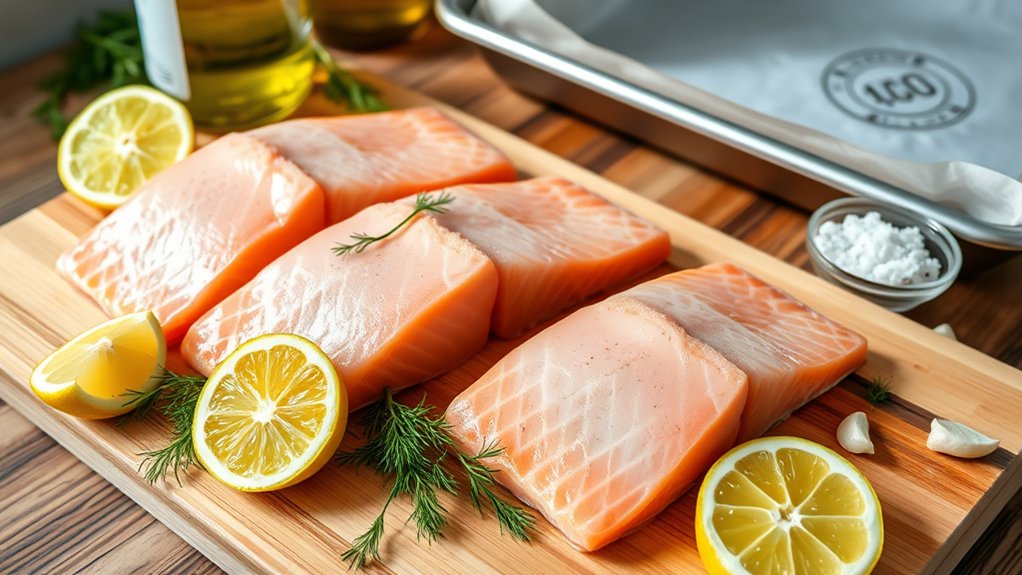
Before you turn on the oven, gather the right ingredients and tools so your salmon cooks evenly and tastes its best. You’ll need salmon fillets, olive oil or melted butter, salt, black pepper, and any flavorings you prefer, such as garlic, lemon, dill, or paprika. Keep parchment paper or foil ready for easy cleanup, and use a rimmed baking sheet to catch juices.
Gather salmon, oil or butter, and seasonings first so your fillets cook evenly and taste their best.
A small bowl and pastry brush help you mix and apply seasonings evenly. If you want to test doneness accurately, use an instant-read thermometer.
For topic ideas, think about simple combinations that support your cooking technique: lemon herb, garlic butter, or paprika and olive oil. Measure ingredients before you start so you can season quickly and avoid overhandling the fish.
Preheat your oven fully, line your pan, and place everything within reach. When you prep these basics first, you create a smooth workflow and better results every time.
Choose the Best Salmon Fillet
Choose a salmon fillet with bright, moist flesh, a clean ocean smell, and no dull spots or browning, since those are strong freshness indicators. Decide between wild and farmed based on your preference for flavor and texture, but look for firm, even cuts that hold up well in the oven.
Pick skin-on fillets when you can, because the skin helps protect the flesh from drying out and makes handling easier during baking.
Freshness Indicators
Look for salmon that looks vibrant and smells clean, because freshness starts with what you can see and sniff right at the counter. Check the color for even, lively tones; dull patches can signal age.
Press the fillet gently with your fingertip: it should spring back instead of leaving a dent. Examine the surface for moisture that looks clear, not slimy, and make sure the flesh holds together without separating.
Use the smell test next; fresh salmon should smell like cold water or the sea, never sour, fishy, or ammonia-like. Look at the skin, too: it should appear moist and intact, not dry or curling.
These freshness indicators help you choose a fillet that cooks evenly and tastes clean.
Wild Vs Farmed
Ever wondered whether wild or farmed salmon is best for the oven? You can choose either, but you should match it to your texture goal and budget. Wild salmon tastes leaner and firmer; farmed salmon usually feels richer and more forgiving.
Use this wild carmed salmon and farmed clarity comparison to decide quickly:
| Type | Best for |
|---|---|
| Wild salmon | Firm slices, lighter flavor |
| Farmed salmon | Juicier results, easier roasting |
| Wild salmon | Faster cooking, watch closely |
| Farmed salmon | Even doneness, less drying |
| Either | Pick fresh, odor-free fillets |
If you want a clean, robust bite, pick wild. If you want a buttery, moist fillet, choose farmed. Either way, season simply and roast with confidence.
Skin-On Selection
Why does skin-on matter when you buy salmon for the oven? It helps you keep moisture in, protects the flesh, and makes fillet handling easier before and after cooking. Choose a fillet with tight, shiny skin and firm, springy flesh; avoid dull color or a fishy smell.
- Pick even thickness so the salmon cooks uniformly.
- Check that the skin lies flat, with no tears or slime.
- Look for clear eyes if you’re buying a whole side, then ask for a clean cut.
These skin on benefits matter most when you roast at high heat, because the skin shields the bottom and lifts off more cleanly after baking. When you select well, you set up a better texture, better flavor, and easier serving.
Season Salmon for the Oven
Choose seasonings that complement the salmon, such as salt, pepper, garlic, lemon zest, or dill, and keep the flavors balanced. Sprinkle them evenly over both sides of the fillet so every bite has consistent seasoning.
Pat the spices gently into the surface before baking so they stay in place and cook into the fish.
Choose Your Seasonings
What seasonings will bring out the best in your salmon? Start with a clean, balanced base that highlights the fish’s rich flavor. Use seasoning salt sparingly so you enhance, not mask, the salmon.
Add freshly ground black pepper; pepper grinding right before use gives stronger aroma and sharper bite. Then choose one accent that suits your meal.
- Lemon zest: brightens the fish and cuts richness.
- Dill: adds a fresh, herbal note that pairs well with oven heat.
- Garlic powder: gives depth without overpowering delicate flesh.
Keep your seasoning mix simple and focused. You want each ingredient to support the salmon’s natural taste, not compete with it.
Test your blend on a small piece if you’re unsure, then adjust the next time.
Apply Evenly Before Baking
Once you’ve settled on your seasoning mix, apply it evenly so every bite of salmon tastes balanced. Pat the fillet dry first, then drizzle oil lightly so the spices cling.
Sprinkle from 8 to 10 inches above the fish to avoid clumps, and press the seasonings gently into the surface. Keep the coating thin; heavy layers can cause topic drift from clean salmon flavor and create an unrelated pairing with overpowering salt or sugar.
| Step | Action |
|---|---|
| 1 | Dry the salmon thoroughly |
| 2 | Add oil, then season evenly |
| 3 | Press gently and rest 5 minutes |
Season the skin side too if you want extra depth. Check the edges, because they need the same coverage as the center before baking.
Set the Oven Temperature
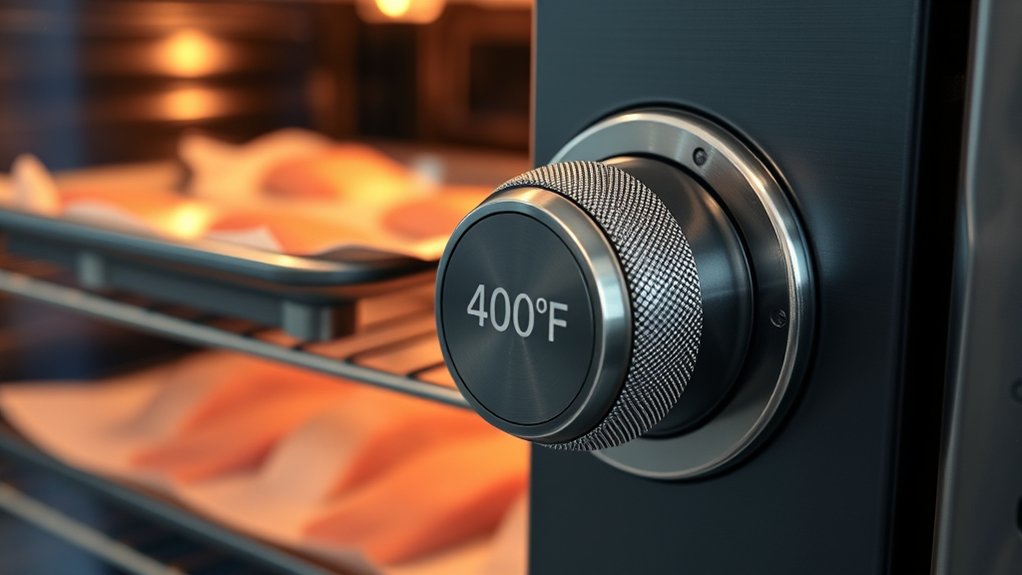
Set your oven to 400°F for a standard fillet, which gives the salmon enough heat to cook through quickly while staying moist. Let it fully preheat so the temperature stays steady when you slide the fish in.
If your oven runs hot or uneven, use an oven thermometer; that detail matters more than guesswork for consistent results and kitchen safety. A hotter setting isn’t relevant unless you’re adjusting for a specific recipe.
- Confirm the rack sits in the center for even heat circulation.
- Check that the oven display matches the target temperature before baking.
- Avoid opening the door repeatedly, because each drop in heat can affect the cook.
For thicker pieces, the same temperature still works well; you’ll just rely on the fish’s size later. Keep the setting stable, and you’ll create the right environment for tender salmon every time.
How Long to Bake Salmon by Thickness?
How long should you bake salmon by thickness? Use a simple rule: bake 4 to 6 minutes per 1/2 inch of thickness at the oven temperature you set. A 1-inch salmon piece usually needs 8 to 12 minutes. A thick fillet, around 1 1/2 inches, often needs 14 to 18 minutes. If your salmon is thinner than 1/2 inch, start checking earlier so it doesn’t overcook.
Adjust slightly for skin on vs. skinless. Skin-on salmon often handles heat a bit better and may need the full time. Skinless pieces can dry out faster, so keep them toward the lower end of the range. Measure the thickest part, not the narrow tail end, because that section controls the total bake time.
Place evenly sized portions on the tray so they cook at the same rate. If you use multiple fillets, follow the thickest piece’s timing and keep the rest close in size.
Check When Salmon Is Done
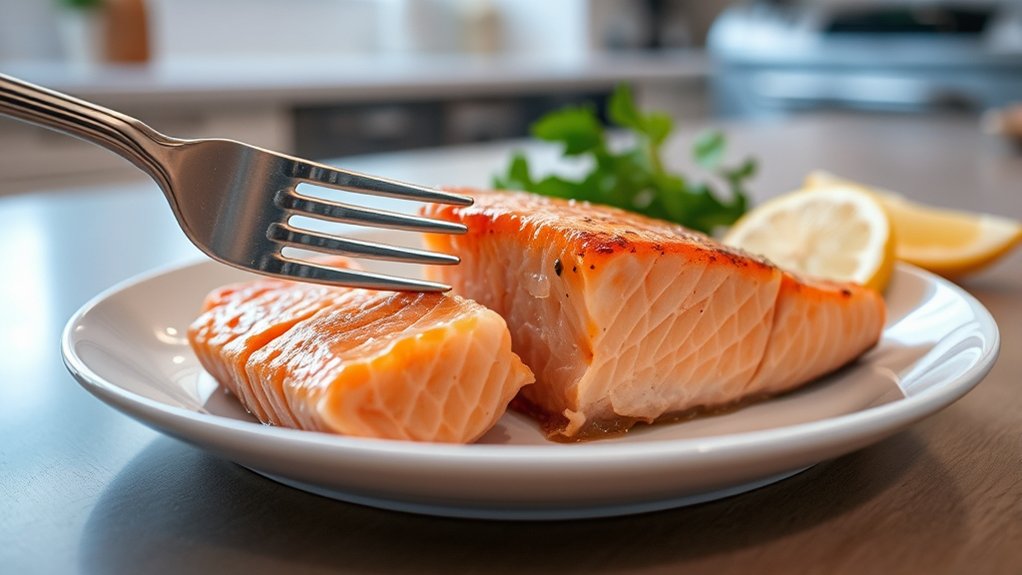
Now that you know how long to bake salmon by thickness, check doneness with the same care. You can tell it’s ready when the center turns opaque and flakes easily with a fork, but don’t rely on color alone.
- Insert an instant-read thermometer into the thickest part; aim for an internal temperature of 125°F to 130°F for moist, tender salmon.
- Press the top gently with a fork or finger. It should separate in large, clear flakes, not feel raw or mushy.
- Watch the edges closely. They’ll turn lighter and firm up before the center finishes, so use that cue to avoid overcooking risks.
If you’re unsure, pull it from the oven early and let carryover heat finish the job. Salmon keeps cooking after you remove it, so checking a minute sooner protects texture and flavor. Trim any translucent middle before serving.
Easy Toppings for Oven-Baked Salmon
After your salmon comes out of the oven, top it with a small pat of herb butter so it melts into the flesh and adds rich flavor. You can also finish it with fresh citrus zest for a bright, clean lift, or press on sesame seeds before baking for a light, crisp crust.
Each topping is simple to apply, and you can choose one or combine two for a balanced finish.
Herb Butter Finish
A simple herb butter finish adds rich flavor and keeps oven-baked salmon moist and glossy. Mix softened butter with chopped dill, parsley, garlic, and a little lemon zest, then spoon it over hot salmon as soon as it leaves the oven.
The heat melts the herb butter into the flesh, so you get a silky coating without overcooking.
- Use unsalted butter so you can control seasoning.
- Add herbs finely so they spread evenly.
- Serve immediately for the best texture and aroma.
For extra balance, season the salmon lightly before baking, then let the butter finish do the work. This topping turns a simple fillet into a polished, restaurant-style dish with minimal effort.
Citrus Zest Sprinkle
If you want a brighter finish than herb butter, a light citrus zest sprinkle can wake up oven-baked salmon with fresh aroma and clean flavor. Grate lemon, lime, or orange zest finely, then scatter it over the fish right after baking so the heat releases oils without drying the surface.
Use about 1 teaspoon per fillet, and focus on the top instead of the skin side. You can add a small pinch of salt to sharpen the flavor, but keep the layer thin so the salmon still tastes rich.
This simple finish adds a crisp kitchen aroma and highlights the fish’s natural sweetness. For the best result, choose unwaxed citrus and zest only the colored peel, avoiding the bitter white pith.
Sesame Seed Crust
Want a topping that adds crunch without overpowering the fish? Mix white and black sesame seeds with a little salt, pepper, and olive oil, then press the blend onto the salmon’s top surface to form a thin sesame crust. It should cling without burying the flesh.
Use these steps:
- Pat the fillets dry so the seeds stick.
- Brush the surface lightly with oil or mustard.
- Bake, watching oven timing closely, until the crust turns golden and the center stays moist.
Keep the oven at 400°F for about 10 to 12 minutes, depending on thickness. If you want extra color, broil for 30 seconds at the end. Serve right away so the crust stays crisp and the salmon remains tender.
How to Serve Baked Salmon
Serve baked salmon hot from the oven or let it cool slightly for easier plating, then transfer each fillet to warmed plates so it stays moist. Arrange the fish with the skin side down, if present, and keep the thicker end toward the back of the plate for a clean look.
Add a measured portion of vegetables, rice, potatoes, or salad to create balanced plating and give every serving enough color, texture, and volume. Spoon any pan juices lightly over the salmon, but don’t drown the crust.
Finish with lemon wedges, chopped dill, parsley, or chives so each guest can brighten the flavor at the table. If you want a wine pairing, choose a crisp Sauvignon Blanc, a dry Riesling, or a light Pinot Noir, depending on your seasoning.
Serve immediately with a fork and knife, and keep the portions neat so the salmon remains the centerpiece.
Store and Reheat Leftovers
Cool the salmon to room temperature, then transfer the leftovers to an airtight container and refrigerate them within two hours of cooking. For the best storage methods, keep the fish on a shallow plate or wrap it tightly before sealing it. Use it within 3 days for the best flavor and texture.
Cool salmon to room temperature, then refrigerate it within two hours in an airtight container.
When you’re ready to eat it, choose reheating techniques that protect moisture and prevent overcooking.
- Reheat it in a 275°F oven, covered loosely with foil, until it reaches 125°F to 130°F.
- Warm it gently in a skillet over low heat with a teaspoon of water or broth.
- Microwave it at 50% power in short bursts, checking often so it doesn’t dry out.
If you want cold leftovers, flake the salmon over salads or grain bowls straight from the fridge. Always discard leftovers that smell sour, feel slimy, or have sat out too long, and reheat only the portion you plan to eat.
Fix Common Baked Salmon Mistakes
Even a simple baked salmon can go wrong if you overcook it, skip seasoning, or start with a fillet that isn’t prepared properly. Pat the fish dry, then remove pin bones and trim thin edges so it cooks evenly.
Season both sides with salt, pepper, and oil; don’t rely on sauce alone. Use a preheated oven and check doneness early, because salmon dries fast. Pull it when the thickest part flakes and still looks slightly translucent.
If the top browns too quickly, tent it loosely with foil. If the center stays raw, move the pan to a lower rack and bake a few minutes longer.
Choose salmon with firm flesh and a clean scent, and compare price trends before buying. When selecting between farmed and wild fish, consider fish oil sustainability, since it affects quality and supply.
Test your method once, then repeat it consistently.
Frequently Asked Questions
Can I Bake Salmon From Frozen?
Yes, you can bake frozen salmon. You’ll need extra time, so place skin on salmon on a lined tray, season it, and bake until it reaches 145°F.
Expect about 20 to 30 minutes.
Should I Remove Salmon Skin Before Baking?
You don’t need to remove it; skin on helps shield the fish and keeps it moist, while skin off gives cleaner slices.
If you’re baking, leave skin on, then slide it off after cooking.
What Internal Temperature Is Safe for Salmon?
You’re safe at 145°F internal temperature, per temperature guidelines for safe cooking. Handle fish properly, then check doneness tests: flesh should flake easily and look opaque.
Rest briefly before serving.
Can I Use Parchment Paper Instead of Foil?
Yes, you can use parchment paper instead of foil; it’s gentler on fish and cleanup. Just line your tray, add salmon, and bake.
Choose parchment paper from sustainable sourcing, and you’ll protect texture and flavor.
How Do I Tell if Wild Salmon Is Fresh?
You can spot fresh wild salmon by checking freshness indicators: use the smell test, texture check, and color clues. Bright flesh, firm springy feel, and clean ocean scent help you judge wild vs farmed freshness.
Conclusion
Now you’ve got the basics to cook salmon in the oven with confidence. Choose a fresh fillet, season it simply, and bake it at 400°F until it’s just opaque and flakes easily. Keep an eye on thickness, because that’s the compass that guides your timing.
Finish with your favorite toppings, serve it right away, and store leftovers properly. With these steps, you’ll turn a simple fillet into a reliable, delicious meal every time.
By mastering these techniques, cooking salmon in the oven becomes an easy and rewarding experience.