How Long to Cook Drumsticks in Oven
You might not know that cooking time for drumsticks in the oven depends more on their size than the oven temperature. If you bake them at 400°F, most drumsticks finish in 35 to 45 minutes. However, smaller pieces can be done sooner, and larger ones will need longer.
You still need to confirm they reach 165°F in the thickest part, because color alone can be misleading. The exact setup you use next can make the difference between dry skin and evenly cooked meat.
Key Takeaways
- Bake chicken drumsticks at 400°F for 35 to 45 minutes for typical size and best texture.
- Smaller drumsticks may finish in 30 to 35 minutes, while larger ones can take 45 to 50 minutes or more.
- Preheat the oven fully and use a rimmed sheet pan or wire rack for even cooking.
- Check doneness with a thermometer; the thickest part should reach 165°F without touching bone.
- Rest drumsticks 5 minutes after baking, and adjust time based on size rather than appearance.
What Temperature to Bake Drumsticks?
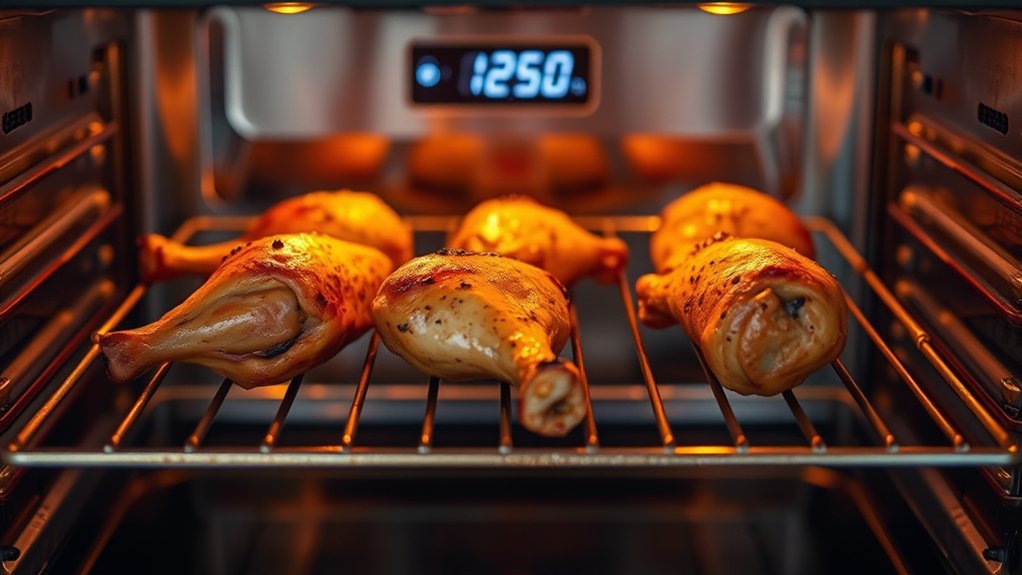
For the best texture and even cooking, bake chicken drumsticks at 400°F. You’ll get crisp skin, steady heat penetration, and reliable browning without drying the meat too quickly. This season temperature works well because it’s hot enough to render surface fat and set the skin, yet moderate enough to cook the dark meat evenly.
Preheat your oven fully before you put the drumsticks in; an underheated oven can extend bake times and reduce skin quality. Use a rimmed sheet pan or wire rack so hot air can circulate around each piece. If you need a slightly gentler approach, 375°F can work, but 400°F remains the most efficient standard for balanced texture and consistent results.
Keep your seasoning dry and evenly distributed so the skin can brown properly. For best control, check doneness with a thermometer instead of relying on appearance alone.
How Long to Cook Drumsticks in the Oven?
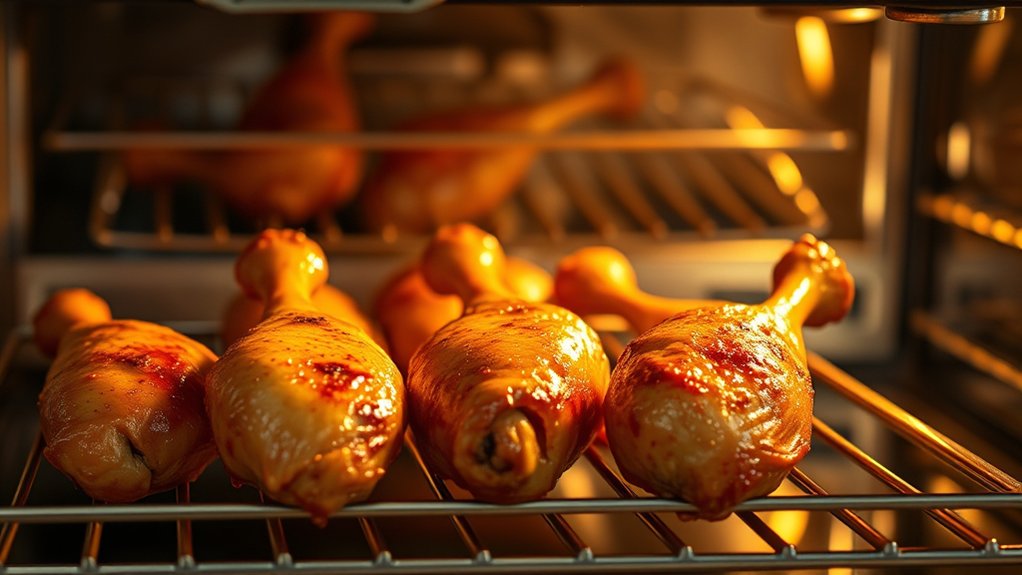
At 400°F, chicken drumsticks typically need 35 to 45 minutes in the oven, depending on size and whether they start cold or room temperature. You should place them on a wire rack or lined pan so hot air circulates evenly and the skin renders properly.
At 400°F, chicken drumsticks usually need 35 to 45 minutes, depending on size and starting temperature.
Rotate the pan once during cooking if your oven has hot spots, but don’t keep opening the door, because that drops temperature and extends the bake. Use the internal temperature, not appearance alone, to confirm doneness.
Insert a thermometer into the thickest part without touching bone; you need 165°F for safe eating, though juices may still look slightly pink near the bone. Avoid wrong cooking methods like overcrowding the pan or using excess moisture, which can steam the skin.
Skip off topic ingredients that add sugar-heavy coatings before the drumsticks are nearly done, since they can burn before the meat finishes.
Bake Times for Drumstick Sizes
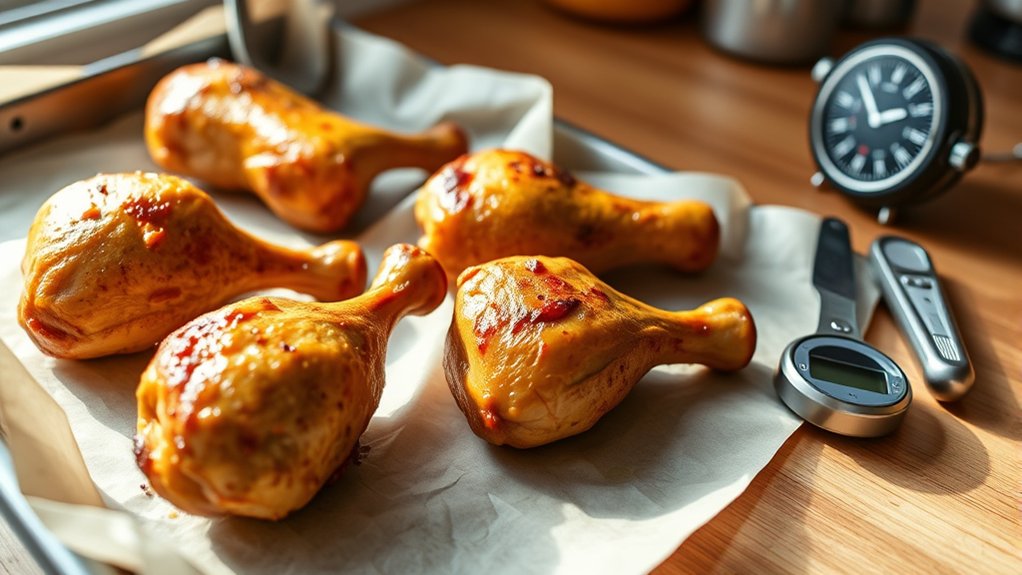
Drumstick size directly affects bake time: smaller pieces may finish in about 30 to 35 minutes at 400°F, while larger drumsticks can take 45 to 50 minutes or more. You should treat these differences as drumstick sizing variables, not fixed rules, because mass, bone diameter, and skin coverage all influence heat transfer.
Expect bake time variations whenever you cook mixed-size pieces in the same pan. To keep timing consistent, separate the smallest drumsticks from the largest or arrange them by size so airflow and radiant heat affect each piece more evenly.
If you increase oven temperature, you’ll shorten the total bake window, but the gap between sizes still remains. Likewise, lowering temperature extends both ranges.
For precise planning, estimate the batch by the largest drumsticks, then adjust the smaller ones earlier in the cycle. That approach helps you manage timing with technical accuracy and reduces scheduling uncertainty during meal prep.
How to Tell When Drumsticks Are Done
How do you know when drumsticks are done? Use a probe thermometer and insert it into the thickest part without touching bone. You’re looking for 165°F, the minimum safe internal temperature for poultry.
Use a probe thermometer in the thickest part, avoiding bone, and look for 165°F for safe drumsticks.
If you cook drumsticks past that point, the meat can dry out, so verify temperature near the end of the estimated bake time. Check juices too: they should run clear, not pink. The meat should feel firm, and the leg should move freely at the joint when you twist it.
If you’re comparing doneness across alternative cooking methods, keep the same temperature standard, since roasting, air frying, and grilling all depend on internal heat, not appearance alone. Don’t rely on skin color or how to season the drumsticks; seasoning changes flavor, not safety.
Rest the drumsticks for 5 minutes after removal so carryover heat finishes the center and the juices redistribute evenly throughout each piece before serving.
Seasoning Ideas for Crispy Skin
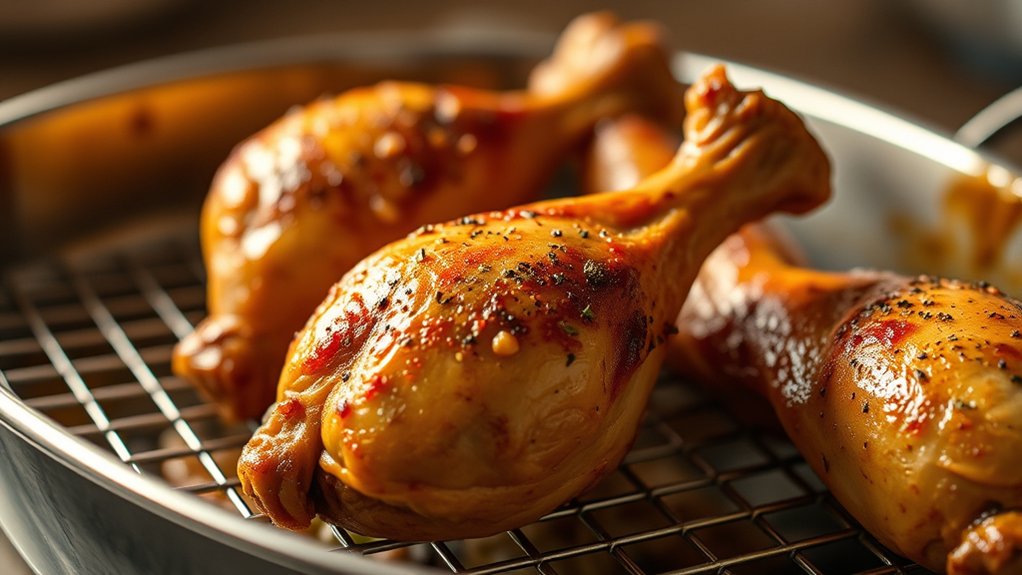
For crisp drumstick skin, you can combine salt with a small amount of baking powder to promote surface drying and stronger browning. A paprika-garlic blend adds color, mild sweetness, and savory depth without masking the chicken, while an herbs-and-pepper rub gives a sharper, more aromatic finish.
Apply seasonings evenly and let them adhere before roasting so you get consistent texture and flavor.
Salt And Baking Powder
Want crisp, bronzed chicken skin? Use salt and baking powder together because they improve moisture control and surface alkalinity, which accelerates browning and tightens the skin. You should dry the drumsticks first, then coat them evenly with a measured blend.
This technique supports drumstick flavor by preserving juices while sharpening the exterior texture.
- Pat drumsticks completely dry before seasoning.
- Mix 1 teaspoon salt and baking powder per pound of chicken.
- Rest the coated drumsticks uncovered in the refrigerator for 30 minutes to 12 hours.
Apply the mix lightly; excess powder can leave a chalky finish. Keep the layer thin and uniform, and roast on a rack so hot air circulates freely. That combination gives you efficient rendering and a crisp, stable crust.
Paprika Garlic Blend
Paprika and garlic make a strong seasoning base for oven drumsticks because they add color, aroma, and savory depth without blunting crisp skin. You should coat the skin lightly with a paprika blend and garlic blend, then let it sit briefly so the surface absorbs flavor without drawing excess moisture.
| Mix | Ratio | Effect |
|---|---|---|
| Paprika blend | 2 tsp | Builds red color |
| Garlic blend | 1 tsp | Adds savory intensity |
| Combined coat | Even layer | Promotes balanced browning |
Apply the seasoning after drying the drumsticks well. Keep the layer thin; heavy paste can steam the skin and delay crisping. This approach supports even roasting and clean, efficient browning in the oven.
Herbs And Pepper Rub
A herbs and pepper rub gives drumsticks sharp aroma and a crisp finish when you keep the layer thin and dry. Use kosher salt, black pepper, dried thyme, rosemary, and sage to build heat-resistant flavor without excess moisture. You should pat the skin dry, coat lightly with oil, then apply the rub evenly for strong seasoning compatibility with poultry fat and roasted skin.
- Use coarse pepper for surface bite.
- Add fine salt for penetration and drying.
- Store extra rub airtight, away from light, for reliable storage tips.
This blend works best before high-heat baking, because herbs toast cleanly while pepper stays pungent. Avoid sugar-heavy mixes, which can darken too fast and soften crispness.
Tips for Juicy Oven-Baked Drumsticks
How do you keep oven-baked drumsticks juicy? Start by drying the skin, then coat the pieces lightly with oil so heat transfers evenly and the surface browns without excessive moisture loss.
Use a measured rub of salt, pepper, and herbs, and let the drumsticks rest briefly so seasoning penetrates the flesh and supports a juicy texture. Bake them on a wire rack set over a pan, which promotes airflow and reduces steaming.
Keep the oven at a steady moderate-high temperature, and turn the drumsticks once for balanced exposure. For tender juiciness, monitor the internal temperature with a probe and remove the chicken at the target doneness before carryover heat finishes the center.
After baking, let the meat rest on a clean plate for several minutes; this redistributes juices through the muscle fibers. Serve immediately for the best moisture retention and flavor.
Common Mistakes to Avoid
You can compromise texture and doneness if you skip drying the drumsticks before baking, since excess surface moisture blocks browning.
Don’t overcrowd the pan, because tight spacing traps steam and slows heat transfer.
Always verify internal temperature with a thermometer; if you ignore it, you can undercook the meat or dry it out.
Skipping Drying Steps
Skipping the drying step is one of the quickest ways to sabotage crisp, evenly browned drumsticks, because surface moisture steams the skin instead of letting it render and crisp in the oven. Before seasoning, you should pat each piece dry with paper towels and let it rest briefly uncovered.
This reduces splatter, improves heat transfer, and tightens drumstick texture. For best results:
- Pat all surfaces dry, including the underside.
- Rest the drumsticks 10 to 15 minutes before seasoning.
- Apply oil and spices only after the skin feels dry.
When you’re skipping drying, the skin stays rubbery and pale. Drying creates better Maillard browning, so your oven time works more efficiently and the finished meat has a cleaner bite and firmer exterior.
Overcrowding the Pan
Overcrowding the pan traps steam around the drumsticks, which prevents the skin from crisping and slows browning. When you place pieces too close together, an overcrowded pan blocks hot air circulation and creates uneven surface heat.
You should leave at least 1 inch between drumsticks so each piece can roast instead of steam. If your baking sheet is too small, use two pans rather than forcing everything onto one tray.
Pan overcrowding also causes drippings to pool, which can soften the underside and reduce overall texture quality. Arrange the drumsticks in a single layer, with the thick ends facing outward for more even exposure.
Proper spacing helps the oven maintain stable convection and gives you more consistent color, texture, and cooking performance.
Ignoring Internal Temperature
Even with proper spacing, drumsticks can still come out undercooked if you rely on appearance alone. You need to verify internal temperature, not guess from color or juices. Oven math tells you that time varies with size, rack position, and calibration, so your thermometer is the only reliable endpoint. Target 165°F at the thickest point, away from bone.
- Insert the probe correctly.
- Check multiple drumsticks.
- Rest the meat briefly.
If you skip this step, you risk drumstick fatigue: dry exterior, rubbery connective tissue, and inconsistent doneness. Pulling at the exact temperature preserves texture and food safety. Use a fast-read thermometer, and confirm accuracy before each batch.
Frequently Asked Questions
Can I Bake Drumsticks From Frozen?
Yes, you can bake drumsticks from frozen, but you’ll need extra time and lower heat. You should allow frozen thawing in the oven, and marinade timing isn’t effective until they’ve partially thawed.
Should I Marinate Drumsticks Before Baking?
Yes, you should marinate drumsticks before baking; marinating benefits include improved flavor absorption and surface seasoning penetration.
You’ll get juicier, more flavorful meat if you let them sit chilled for at least 30 minutes.
Do I Need to Flip Drumsticks While Cooking?
Yes, you should flip them once for even browning and juicier texture. The flip timing matters; texture impact improves. A slideshow not relevant, roasting technique not relevant.
Use a rack, then turn halfway through.
Can I Use Convection Oven for Drumsticks?
Yes, you can use a convection oven for drumsticks; you’ll shorten cooking time and improve browning.
If you don’t have one, choose convection alternatives and try flavor experimentation with seasonings, glazes, and spice rubs.
Should I Cover Drumsticks With Foil?
Usually, you shouldn’t cover drumsticks with foil; uncovered heat crisps skin. About 70% of moisture loss happens early, so you can tent briefly for a juicy texture, or use a foil alternative like parchment.
Conclusion
In the oven, your drumsticks should roast at 400°F for about 35 to 45 minutes, though size can shift that window. Check the thickest part with a thermometer; you’re aiming for 165°F, not guesswork.
Let them rest 5 minutes so the juices settle like a well-planned blueprint. With proper spacing, full preheating, and careful timing, you’ll get chicken that’s crisp outside, tender inside, and reliably cooked every time.
Following these steps ensures you know exactly how long to cook drumsticks in the oven for perfect results every time.