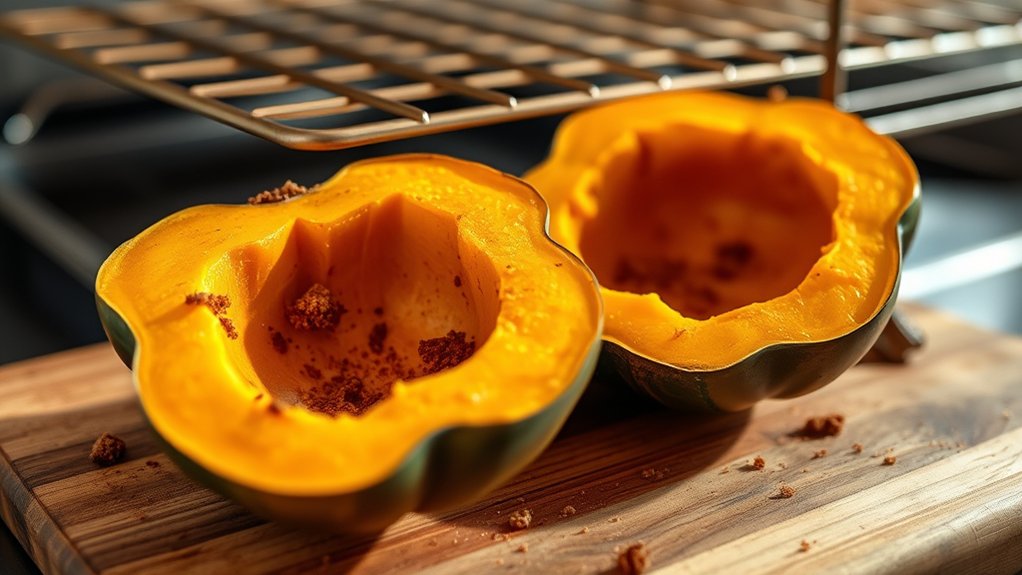
How to Cook Acorn Squash Oven
Nearly 80% of home cooks say they want simpler vegetable sides, and cooking acorn squash in the oven fits that goal well. You’ll start by halving the squash, scooping out the seeds, and trimming the bottom if it won’t sit flat.
Then you’ll season the cut sides, roast at 400°F, and watch for a tender, browned finish that tells you it’s ready for one last step.
Key Takeaways
- Wash, halve stem to tip, scoop out seeds, and pat the cut sides dry for even roasting.
- Place halves cut-side down on a parchment-lined baking sheet and roast at 400°F for 30–40 minutes.
- Add thin seasoning like butter, olive oil, brown sugar, maple, garlic powder, cinnamon, or paprika before roasting.
- Check for fork-tender flesh, crisp edges, and slightly flexible skin; avoid overcooking until mushy.
- Serve warm with herbs, nuts, cheese, or lemon, and refrigerate leftovers up to four days.
How to Prep Acorn Squash for Roasting
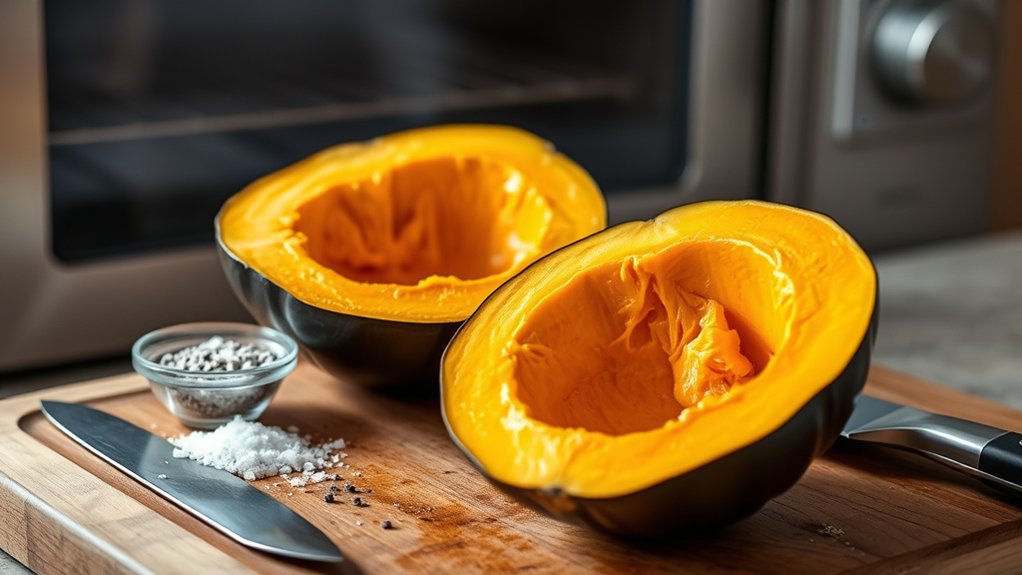
Before you roast acorn squash, wash the exterior, then set it on a stable cutting board and use a sharp knife to slice it in half from stem to base. Scoop out the seeds and stringy pulp with a spoon, pressing firmly into the ridged center.
Wash the squash, halve it with a sharp knife, then scoop out the seeds and pulp.
If the squash rocks, trim a thin slice from the rounded bottom so it sits flat. Pat the cut sides dry with a clean towel; this helps it roast evenly and keeps the flesh from steaming.
For easier handling, cut each half into wedges or leave them whole for a deeper cavity. Use a sturdy baking sheet and line it with parchment if you want faster cleanup.
At this stage, you can also note topping ideas for later, such as nuts, cheese, or herbs, and plan storage tips for leftovers. Keep prepped squash refrigerated in an airtight container and cook it within two days.
How to Season Acorn Squash for the Oven
When you season acorn squash for the oven, choose flavors that match how you plan to serve it: sweet, savory, or a mix of both. For a sweeter finish, you can brush on butter or oil and add brown sugar, maple syrup, cinnamon, or nutmeg.
For a savory version, use olive oil, salt, black pepper, garlic powder, paprika, or rosemary to bring out the squash’s natural flavor.
Choosing Seasonings
For a simple, savory finish, brush the cut sides of the acorn squash with melted butter or olive oil, then season them with salt, black pepper, and a little garlic powder. Taste matters, so keep your seasoning balance light at first; acorn squash carries its own mild sweetness and needs support, not cover-up.
Use paprika for gentle depth, or try dried thyme, rosemary, or sage for classic flavor pairings that work well in the oven. If you want more bite, add a pinch of onion powder or crushed red pepper.
Mix the seasonings with the fat before brushing for even coverage, then adjust after roasting if needed. Keep the coating thin so the squash caramelizes cleanly and the edges brown instead of steaming.
Sweet Flavor Options
Sweet flavors bring out acorn squash’s natural caramel notes, so you can keep the seasoning simple and still get a rich result. Brush the cut sides with melted butter, then add a light dusting of brown sugar for deeper sweetness.
For a warm finish, mix cinnamon maple into the butter before spreading it on the flesh.
- Use 1 teaspoon brown sugar per half.
- Add a pinch of cinnamon to amplify aroma.
- Drizzle maple syrup after roasting for extra gloss.
You can also balance sweetness with a little salt, which sharpens the squash’s flavor without making it savory. Roast until the edges turn golden and the center feels tender, then taste and adjust. Keep the coating thin so the squash browns instead of steaming.
Savory Spice Blends
If you want a more savory profile, season acorn squash with olive oil, salt, black pepper, and spices that add warmth without overpowering the flesh. You can build savory blends with garlic powder, smoked paprika, thyme, and a pinch of cumin for depth.
Keep spice balance tight: use about 1/2 teaspoon total dried spices per half squash, then toss well so every ridge gets coated. If you like more aroma, add rosemary, sage, or oregano, but use only one of those at a time to avoid muddling the flavor.
For a finishing touch, sprinkle Parmesan after roasting, or add red pepper flakes if you want mild heat. Roast until tender and caramelized, then taste and adjust with a final pinch of salt.
How to Roast Acorn Squash Halves
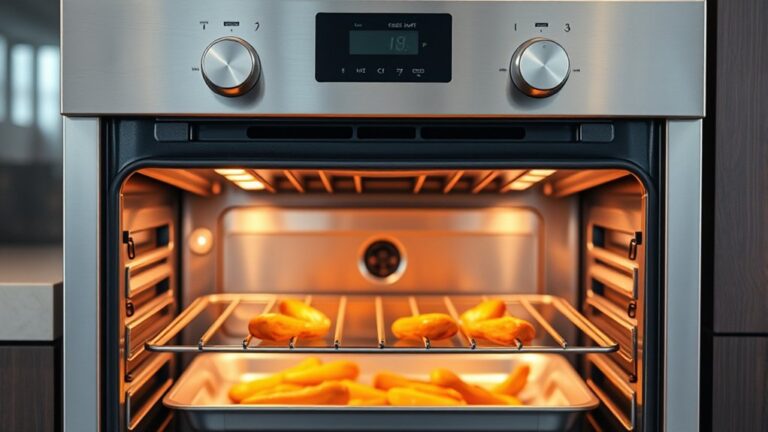
Cut the acorn squash in half, scoop out the seeds, and place the halves cut-side down on a lined baking sheet. Roast them in a preheated oven at 400°F until the flesh turns fork-tender, usually about 30 to 40 minutes.
You can check doneness by pressing the skin lightly; it should give easily without feeling mushy.
Preparing Squash Halves
To prepare acorn squash halves for roasting, place each half cut-side down on a stable cutting board and use a sharp chef’s knife to slice the squash lengthwise from stem to tip. Check your prepping tools before you begin so you’re not reaching for anything mid-task, and keep kitchen safety front and center.
Scoop out the seeds and stringy pulp with a sturdy spoon. Trim a thin slice from the rounded side if you need the squash to sit flat. Pat the flesh dry with a clean towel for cleaner handling.
If the squash feels slippery, steady it with a folded kitchen towel under the board. Work slowly and keep your fingers curled away from the blade. Once the halves are cleanly prepared, they’re ready for the next step.
Roasting Until Tender
Arrange the prepared acorn squash halves cut-side up on a rimmed baking sheet, then brush or drizzle the flesh with a little oil and season with salt and pepper. Roast at 400°F, placing the pan on the center rack so the heat cooks evenly.
Bake for 35 to 50 minutes, depending on size, until a knife slides through the thickest part with little resistance. If you want a deeper caramelized edge and a slightly crispy texture, leave the squash uncovered and watch the last 5 minutes closely.
Let the halves rest for 5 minutes before serving, then scoop, slice, or mash as needed. For storage ideas, cool leftovers completely, seal them airtight, and refrigerate for up to 4 days.
How Long to Roast Acorn Squash
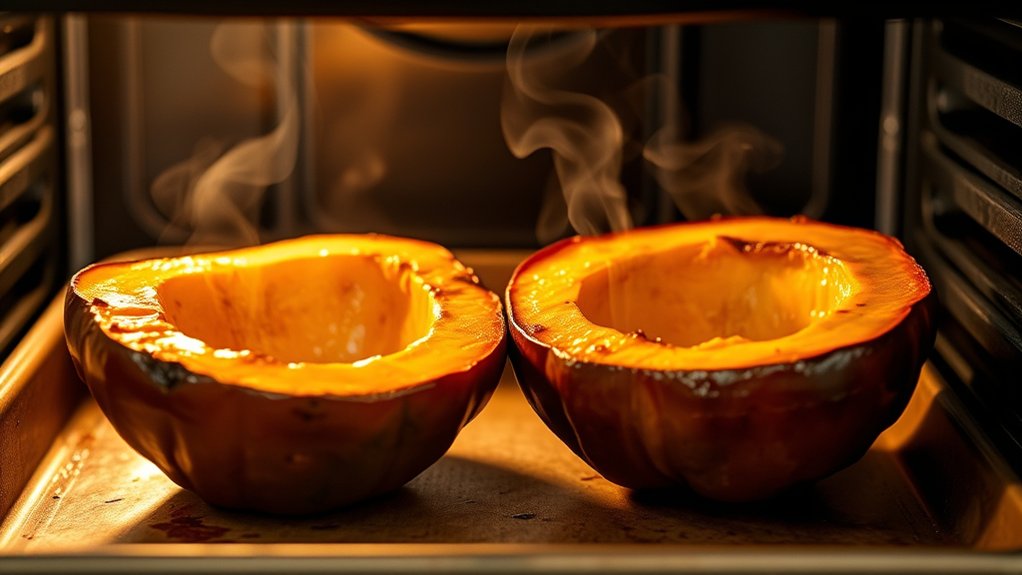
How long you roast acorn squash depends on its size and how tender you want it, but most halves need about 30 to 45 minutes in a 400°F oven. You can shorten or extend that range slightly based on thickness, pan material, and whether you cut the squash into wedges.
Most acorn squash halves roast in a 400°F oven for about 30 to 45 minutes, depending on size.
- Small halves: 28 to 35 minutes
- Medium halves: 35 to 45 minutes
- Thick wedges: 25 to 35 minutes
Keep the cut side down if you want faster roasting and less drying. If you plan ahead, this timing also helps with how to store leftovers, since you can roast only what you need.
For flavor pairing, match the squash’s sweet, nutty taste with maple, sage, cinnamon, butter, or chili flakes. If your oven runs hot, check earlier and adjust future batches. Always give yourself a few extra minutes for larger squash, because size affects roasting more than anything else.
How to Tell When Acorn Squash Is Done
You’ll know acorn squash is done when the flesh turns deeply tender and a fork slides in easily with little resistance, usually near the thickest part. The skin may look slightly darker, and the cut edges can appear glossy, but tenderness matters most.
If you press the center, it should yield without feeling firm or stringy. Use this quick check:
| Check | What to look for |
|---|---|
| Fork test | Slides in smoothly |
| Texture | Soft, not fibrous |
| Color | Deeper, richer flesh tone |
| Aroma | Sweet, nutty scent |
If it still feels tight, give it a few more minutes and test again. Once done, you can plan your taste pairing with butter, maple, sage, or cinnamon.
For storage tips, cool it first, then refrigerate leftovers in an airtight container for up to four days. Avoid overcooking, since the flesh can collapse and lose its clean, nutty flavor.
How to Roast Acorn Squash Cubes
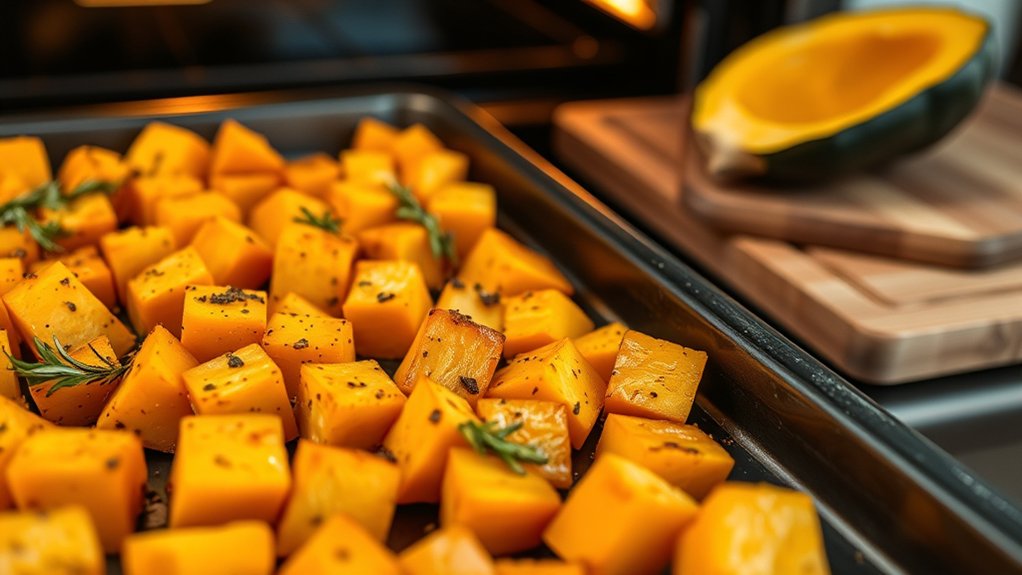
To roast acorn squash cubes, start by peeling the squash if needed, then cut it into evenly sized 1-inch pieces so they cook at the same rate. Toss the cubes with a little oil, salt, and pepper in a bowl, then spread them on a parchment-lined baking sheet in a single layer. Keep space between pieces so the edges brown instead of steam.
Roast at 425°F, turning once halfway through, until the cubes are tender and lightly caramelized, usually 25 to 30 minutes.
- Cut uniform cubes for even roasting.
- Use parchment for quick cleanup.
- Flip once for better browning.
If you want extra flavor, add garlic powder, paprika, or cinnamon before roasting. Check for a fork-tender center and crisp edges, then remove them right away. Proper roasting gives you a smooth texture without mushiness.
Best Ways to Serve Roasted Acorn Squash
Once your roasted acorn squash is tender and caramelized, you can serve it in several simple, flavorful ways. Spoon the wedges onto a warm platter and finish them with butter, maple syrup, or olive oil, then add salt, pepper, and chopped herbs for balance.
Serve roasted acorn squash warm with butter, maple syrup, or olive oil, then finish with herbs.
If you want more contrast, top the squash with toasted pepitas, crushed walnuts, or a crisp texture from fried sage. You can also pair it with grain bowls, roasted chicken, lentils, or quinoa for a complete meal.
For a brighter finish, add goat cheese, feta, pomegranate seeds, or a squeeze of lemon. If you’ve made extra, use quick storage in an airtight container and refrigerate it for up to four days.
Reheat gently in the oven so the edges stay firm. You can also mash the flesh and fold it into soups, risotto, or pasta for easy use later.
Frequently Asked Questions
Can You Eat Acorn Squash Skin After Roasting?
Yes, you can eat roasted acorn squash skin if it’s tender; some varieties still stay tough. Check skin texture after roasting timing, and if it’s chewy, you’ll want to peel it or scoop out the flesh.
Should Acorn Squash Be Peeled Before Cooking?
No, you usually don’t need to peel acorn squash before cooking. Test that theory yourself: the skin softens when roasted, though a peel consideration affects texture impact.
You’ll get easier prep and better slices.
Can You Roast Acorn Squash With the Seeds Inside?
Yes, you can roast acorn squash with the seeds inside, but you’ll get better results with basic seed management. Scoop them out first for even cooking, cleaner flesh, and a more reliable roasting technique.
What Temperature Is Best for Roasting Acorn Squash?
You’ll roast acorn squash best at 400°F; that hot glow turns the dull shell into tender sweetness. Use roasted techniques, then add seasoning ideas like butter, salt, cinnamon, or maple for balanced, practical flavor.
Can You Freeze Leftover Roasted Acorn Squash?
Yes, you can freeze leftover roasted acorn squash. Cool it completely, then pack portions airtight.
Use freezing leftovers storage tips: label containers, remove air, and thaw in the fridge before reheating for best texture.
Conclusion
Now you know how to cook acorn squash in the oven, and the process is simpler than it looks. If you’ve heard that it’s only sweet when roasted, that’s only partly true: the oven mainly deepens its natural flavor and softens the flesh.
Preheat well, season it your way, and roast until the skin gives easily. Once you try it, you’ll see how quickly this humble squash turns tender, rich, and ready for any meal.
With these easy steps, cooking acorn squash in the oven becomes a delicious and effortless addition to your menu.