How to Clean Oven Grates
To clean oven grates, you’ll want to loosen the grime first, then tackle the stuck-on grease without damaging the finish.
You can soak them in hot, soapy water or use the tub for larger racks, but the real difference comes from how you scrub and dry them afterward.
Rust and stubborn stains need a separate approach, and a poor reinstall can cause problems you’ll notice right away.
Key Takeaways
- Soak oven grates in hot, soapy water for at least 30 minutes, using a stable container that fully covers them.
- Use a nonabrasive sponge, nylon pad, or soft brush to scrub one section at a time and loosen baked-on grease.
- For stubborn buildup, let cleaner sit briefly again, rinse tools often, and use gentle, controlled strokes.
- If scrubbing fails, soak grates in the tub with hot water and dish soap, then wipe and rinse thoroughly.
- Remove rust with baking soda paste, dry grates completely, and reinstall them once fully clean and moisture-free.
Soak Oven Grates to Loosen Grime
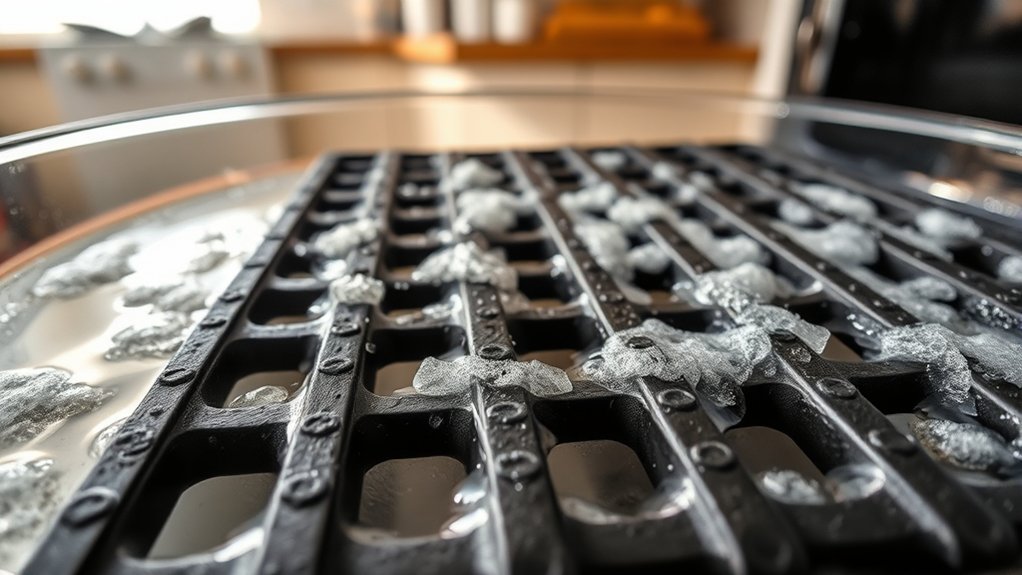
To loosen stubborn baked-on grime, start by soaking the oven grates in hot, soapy water. Choose soaking containers large enough to hold each grate flat or slightly angled, so the dirty surfaces stay covered.
Fill them with hot water and a few drops of dish soap, then let the grates sit for at least 30 minutes. If the buildup is heavy, extend the soak to several hours.
Check that your soaking containers can handle high heat and won’t crack or warp. For water safety, place them on a stable, level surface and keep the area clear of children and pets.
Use gloves if the water feels too hot. If one container isn’t big enough, soak one side, then turn the grate and repeat. After soaking, lift each grate carefully and let excess water drip off before you move on.
Scrub Off Grease and Baked-On Residue
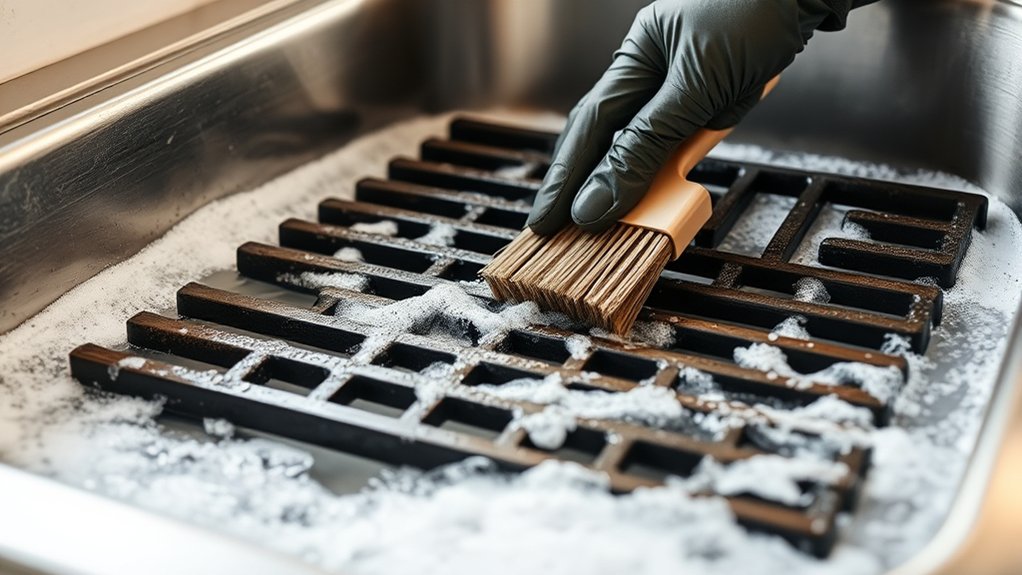
Use a nonabrasive scrub brush, sponge, or nylon pad to work off the loosened grease and baked-on residue. Focus on one section at a time so you can apply steady pressure without scratching the finish.
If buildup remains, reapply your cleaner and let it sit briefly before scrubbing again. Keep your strokes short and controlled, and rinse the tool often to avoid smearing grime back onto the grate.
| Tool | Best Use | Note |
|---|---|---|
| Nylon pad | Light residue | Safe on most finishes |
| Sponge | Loosened grease | Wring out often |
| Scrub brush | Crevices | Use gentle pressure |
| Soft cloth | Final wipe | Removes film |
| Alternative cleaners | Stubborn spots | Check safety concerns |
Watch for drips and wear gloves if the cleaner irritates your skin. If one product isn’t cutting through residue, try alternative cleaners that fit your grate material and your safety concerns.
Clean Oven Grates in the Tub
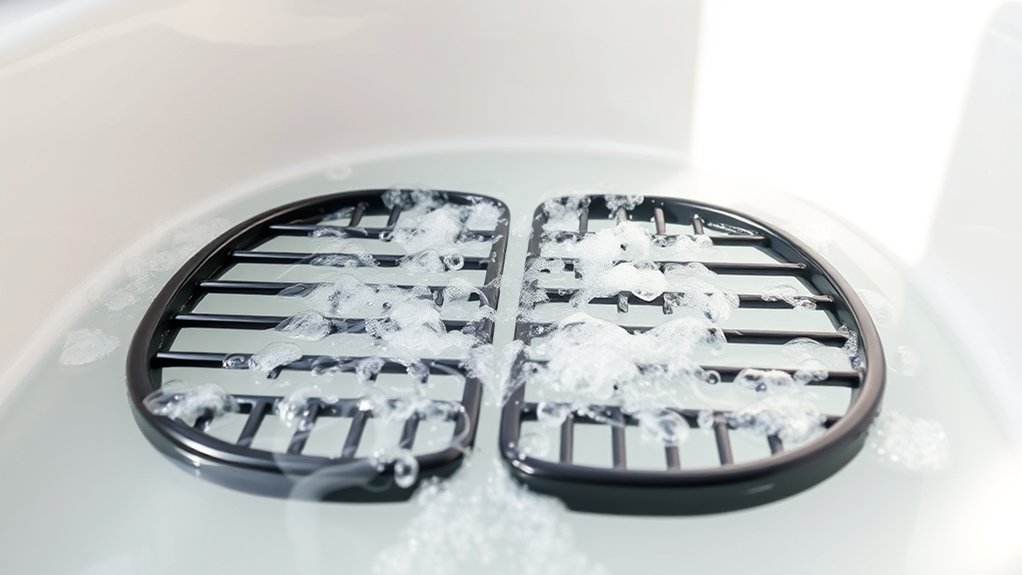
If scrubbing by hand hasn’t removed all the grime, move the oven grates to the tub for a deeper soak. Lay an old towel or bath mat in the bottom to protect the finish, then set the grates on top.
Fill the tub with hot water until the grates are covered, and add a small amount of dish soap or a grease-cutting cleaner. Let them soak for at least 30 minutes so residue loosens without extra effort.
Fill the tub with hot water and a little grease-cutting cleaner, then soak the grates for 30 minutes.
After soaking, use a nonabrasive sponge or nylon brush to wipe each bar clean. Rinse the grates well with warm water, then dry them completely with a towel to prevent water spots.
Keep the area around the tub clear so you don’t track grime elsewhere. If you’re looking for topic ideas, focus on simple cleaning steps that save time. Avoid unrelated exploration while you work; stay on the grates until they’re clean and ready to return to the oven.
Remove Rust and Stubborn Stains
For rust or stains that won’t lift with soap and water, make a paste with baking soda and a little water, then apply it directly to the affected spots. Let it sit for 15 to 20 minutes so the rust loosens.
Then scrub with a nonabrasive sponge or a soft-bristled brush, working in small circles. If the mark stays, use a little white vinegar on a cloth to break down mineral residue, but don’t soak cast iron or specialty finishes.
For tough rust removal, repeat the paste once more and scrub again with steady pressure. Wipe the grate clean with a damp cloth, then inspect for pitting or flaking.
If you see exposed metal, consider sealant options made for high-heat cookware before you use the grate again. Keep your scrubbing controlled so you don’t damage the surface, and stop once the stain is gone and the metal looks even.
Dry and Reinstall Oven Grates
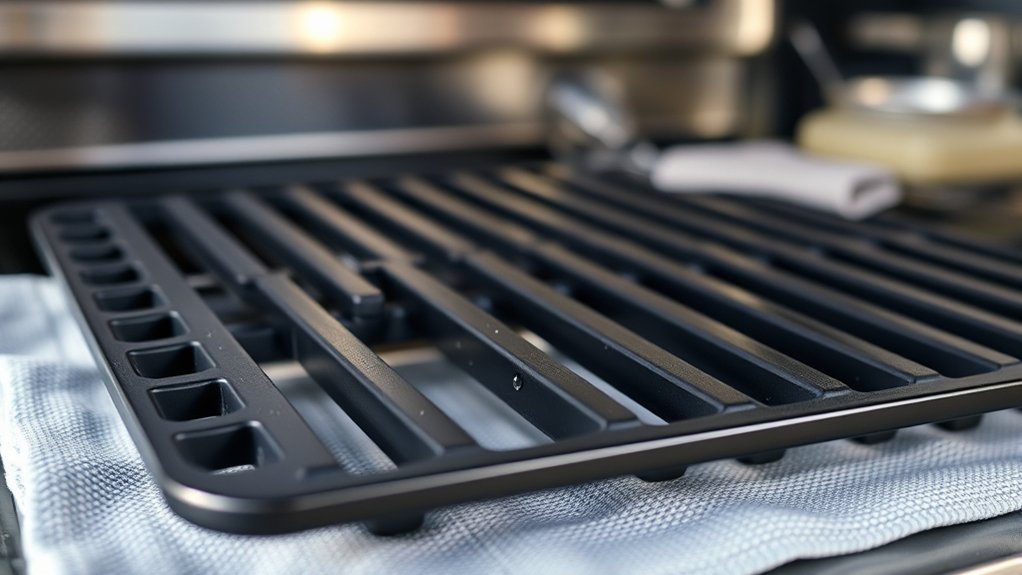
Once the grates are clean, dry them completely with a lint-free towel and let them air-dry until no moisture remains, especially in corners and along the bars. In How to Clean Oven Grates, this step matters because trapped water can cause rust and make the grates slip.
Dry oven grates thoroughly to prevent rust, slipping, and moisture hidden in corners and along the bars.
Check the underside and joints before you move them back. If you spot dampness, wait longer or wipe again. When you Dry and Reinstall Oven Grates, lift each grate by the strongest points and set it into the original position.
Make sure it sits flat and lines up with the burners or supports. Don’t force it into place, since that can scratch the finish or shift the fit. After reinstalling, open and close the oven door to confirm nothing obstructs movement.
If you cleaned multiple grates, return them in the same order so the spacing stays even and the cooktop works safely.
Frequently Asked Questions
How Often Should Oven Grates Be Cleaned?
You should clean oven grates every 1 to 3 months, or sooner after spills. Your cleaning schedule depends on use; if you cook often, check them monthly and tackle buildup before it hardens.
Can Oven Grates Go in the Dishwasher?
Not usually; you should check your grates’ dishwasher safety first. Like a tough coat facing rain, finish and material matter.
Verify cleaning method compatibility, because cast iron or coated grates can warp, rust, or lose their finish.
What Cleaning Products Are Safe for Oven Grates?
You can use safe cleaners like dish soap, baking soda, or vinegar. Avoid abrasive scrubbers that can scratch coatings.
Even if something seems dishwashing safe, check labels and consider self cleaning risks carefully.
How Do I Prevent Oven Grates From Rusting?
You can stop rust before it starts by drying grates completely, then applying preventive coatings lightly.
Keep rust prevention strong by avoiding moisture, wiping spills quickly, and storing grates in a dry, airy spot.
Should Oven Grates Be Removed Before Self-Cleaning?
Yes, you should usually remove grates before self cleaning; removing grates protects their finish and improves self cleaning effectiveness.
Check your manual first, since some ovens allow grates inside only if they’re specifically rated for that cycle.
Conclusion
Clean oven grates are more than shiny metal—they’re the quiet backbone of a dependable kitchen. When you soak, scrub, and dry them well, you clear away grime that can weigh down every meal.
Treat rust like a warning sign, and don’t rush the finish: a secure, flat fit keeps the oven working smoothly.
With each careful step, you’re restoring order, turning the grate from a dirty barrier into a clean stage for better cooking. Clean oven grates are essential for maintaining a reliable and efficient cooking environment.