How to Cook Butternut in the Oven
To cook butternut in the oven, you start by washing the squash, trimming the ends, and peeling it with a sturdy peeler. This initial preparation is essential for a smooth cooking process.
You’ll then cut it safely, remove the seeds, and cube it into even pieces so it roasts evenly. A little oil, salt, and pepper help it brown at 400°F.
But the real difference comes from timing and one simple test you can use to know when it’s done.
Key Takeaways
- Rinse, peel, seed, and cut the butternut squash into even cubes or thick halves for uniform roasting.
- Toss pieces lightly with oil, salt, pepper, and optional spices like cinnamon, sage, or paprika.
- Line a sheet pan with parchment and roast at 400°F in a single layer for even browning.
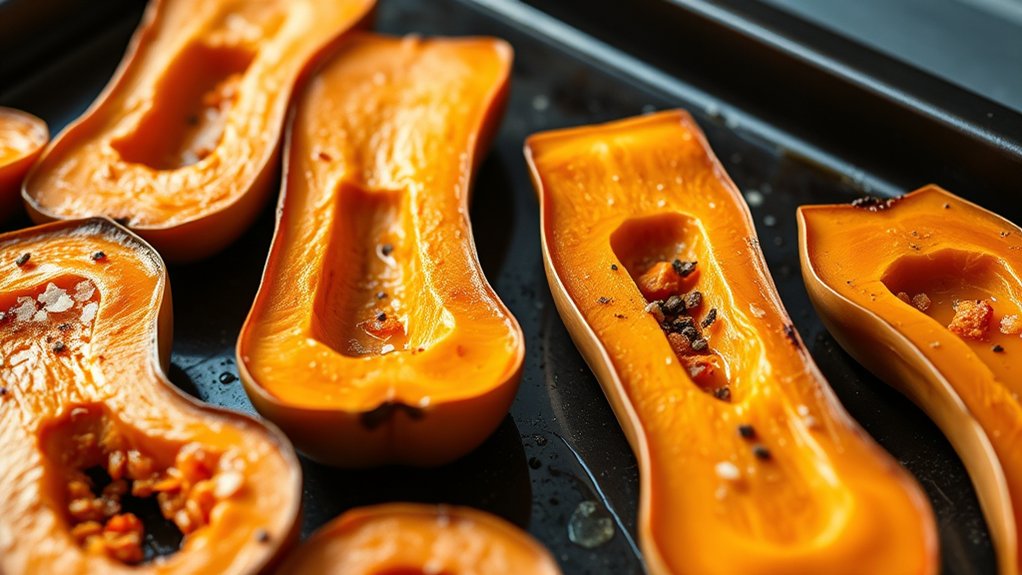
- Roast cut-side down for cubes or cut-side up for halves until fork-tender and deeply browned.
- Timing varies by size: small pieces need 25 to 30 minutes, larger pieces up to 50 to 60 minutes.
How to Prepare Butternut Squash
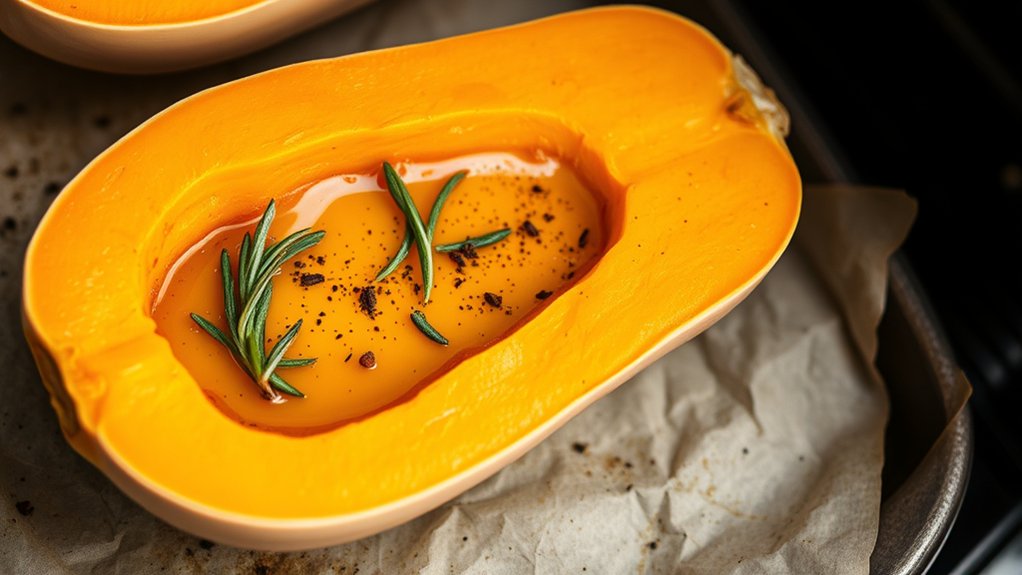
Before you roast butternut squash, rinse it well, dry it, and use a sharp knife to trim off the stem and base. Then peel the skin with a sturdy vegetable peeler, working in long strokes until you expose the orange flesh.
Rinse and dry the squash, trim the ends, then peel in long strokes until the orange flesh shows.
Scoop out the seeds and stringy center with a spoon, and discard or save them for another use. Cut the squash into even cubes or thick half-moons so it cooks at the same rate.
Toss the pieces with oil, salt, and pepper, or add cinnamon, sage, or paprika if you want more depth. Keep the coating light to avoid savory missteps that can mask the squash’s natural sweetness.
If you’re not roasting right away, store the cut squash in an airtight container in the fridge for up to four days. You can also roast extra for creative leftovers, then add them to salads, soups, grain bowls, or pasta.
How to Cut Butternut Squash Safely
Set the squash on a stable cutting board and use a sharp chef’s knife to split it lengthwise with steady, controlled pressure. Hold each half flat-side down so it won’t roll, and keep your guiding hand curled away from the blade.
Peel the skin with a sturdy vegetable peeler, working from top to bottom in short strokes.
Secure Cutting Technique
To cut butternut squash safely, start by stabilizing it on a dry cutting board with a damp towel underneath. Keep your butternut safety focused on control, not speed. Use a sharp chef’s knife and lock in a firm knife grip, thumb and forefinger pinching the blade’s base while the other fingers wrap the handle. Press the squash flat, then make confident cuts without sawing.
- Set the squash stem-end down and check it doesn’t wobble.
- Curl your guiding hand into a claw, keeping fingertips tucked.
- Slice straight through the thick neck, then reposition the squash.
If the squash shifts, stop and reset your stance. Cut in one steady motion, letting the blade work. Stay centered over the board and keep your eyes on the cut path.
Safe Peeling Method
How do you peel a butternut squash safely? Set the squash on a stable cutting board and trim off both ends so it stands flat. Hold it firmly with your non-dominant hand, tucking your fingertips under.
Use a sharp vegetable peeler or a paring knife with a secure knife grip, and work from the neck downward in short strokes. Peel away from your body, and rotate the squash as you go to keep each pass controlled.
If the skin resists, score shallow lines first, then peel again. For safe peeling, keep the blade moving slowly and never force it through thick skin. Once the rind’s gone, cut the squash in half and remove the seeds before roasting.
How to Roast Butternut Squash at 400°F
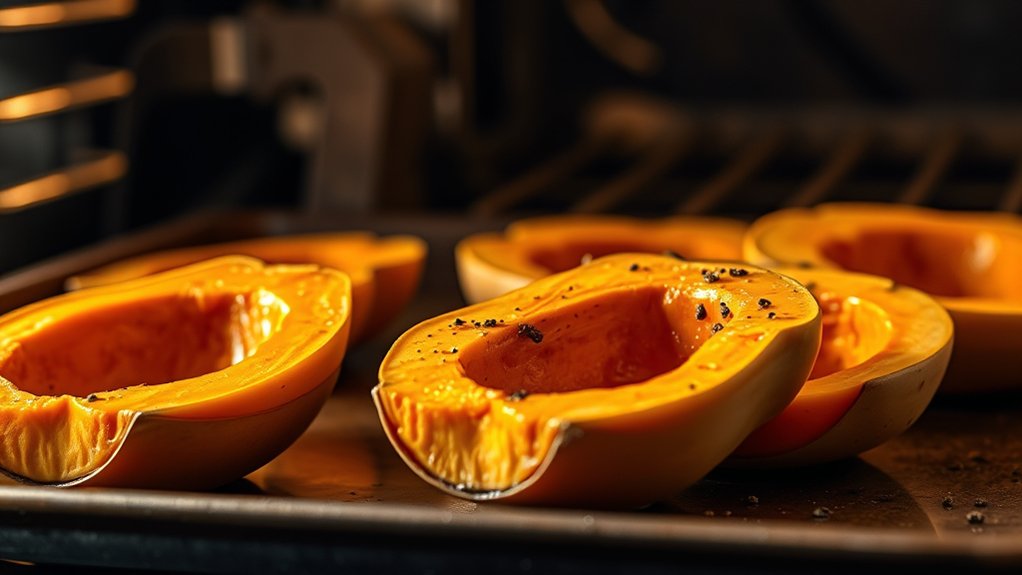
Roasting butternut squash at 400°F gives you tender, caramelized cubes or halves in about 25 to 45 minutes, depending on size and cut. You should line a sheet pan with parchment, then toss the squash with oil, salt, and any pre roasting flavor boosters you like, such as cinnamon, paprika, or thyme.
Keep pieces in a single layer so they brown instead of steam. If you’ve planned perfect squash storage, use firm, unblemished squash for the best texture and sweetness.
- Brush cut sides lightly with oil.
- Place cubes cut-side down or halves cut-side up.
- Roast until the edges look deeply browned and the flesh yields easily to a fork.
Turn the pan once for even color, and let the squash rest briefly before serving. You can serve it plain, mash it, or add it to salads, bowls, and soups.
How Long to Roast Butternut Squash
Roast time depends on the size of your squash pieces, so smaller cubes finish faster than large wedges. Check for doneness by piercing the flesh; it should feel tender and easily slip off a fork.
You’ll also want a lightly browned surface and a soft, creamy texture at the right oven temperature.
Roast Time By Size
Wondering how long your butternut squash needs in the oven? Size controls your roast time, so match the timer to the squash.
A small squash, about 1 to 1.5 pounds, usually needs 25 to 30 minutes. A medium squash, 2 to 3 pounds, takes 35 to 45 minutes. A large squash, over 3 pounds, can need 50 to 60 minutes.
Use reliable roasting equipment and keep your knife, peeler, and tray ready. If you’ve stored the squash properly in butternut storage, it’ll cut and roast more evenly.
- Small halves: 25–30 minutes
- Medium halves: 35–45 minutes
- Large halves: 50–60 minutes
Signs Of Doneness
How can you tell when butternut squash is done? Check the easiest signs of doneness: the flesh should look dry at the edges, the skin should feel lightly browned, and a fork should slide in without resistance.
If you’re roasting halves or wedges, the cut surface should look caramelized, not pale. Use oven timing as a guide, but rely on the squash itself, since size and thickness change the schedule.
You’ll know it’s ready when the flesh gives easily and the pieces hold their shape without turning mushy. If you’re unsure, test the thickest part first. When it passes these checks, remove it from the oven right away so it doesn’t overcook.
Temperature And Texture
For tender, evenly roasted butternut squash, set the oven to 400°F and expect most halves or wedges to finish in about 30 to 45 minutes. This temperature gives you a creamy center and caramelized edges without drying the flesh.
Roast until a knife slides in easily and the surface looks deeply golden. If you want softer texture, give it 5 to 10 extra minutes; if you want firmer pieces, start checking early. You’ll know it’s right when the squash feels yielding, not mushy.
- Golden edges at the cut side
- Steam rising when you open the pan
- A spoon slipping through the flesh
Adjust time based on size, thickness, and your oven’s heat.
Best Seasonings for Roasted Butternut Squash
The best seasonings for roasted butternut squash bring out its natural sweetness without overpowering it. You can keep it simple with olive oil, salt, and black pepper, then add one or two accents for balance. Cinnamon, nutmeg, and a pinch of clove work well if you want warm spice notes.
For savory flavor, try garlic powder, thyme, rosemary, or sage. These options create reliable flavor pairings that suit both weeknight sides and holiday dishes.
If you want more depth, add smoked paprika, cumin, or a little chili powder. A drizzle of maple syrup or honey can enhance browning and sweetness, but use it sparingly. Fresh herbs like parsley or chives brighten the finished squash after roasting.
Use discussion ideas such as sweet versus savory seasoning, or whether you prefer bold spices or subtle herbs. Choose one direction, season evenly, and roast with confidence.
How to Tell When It’s Done
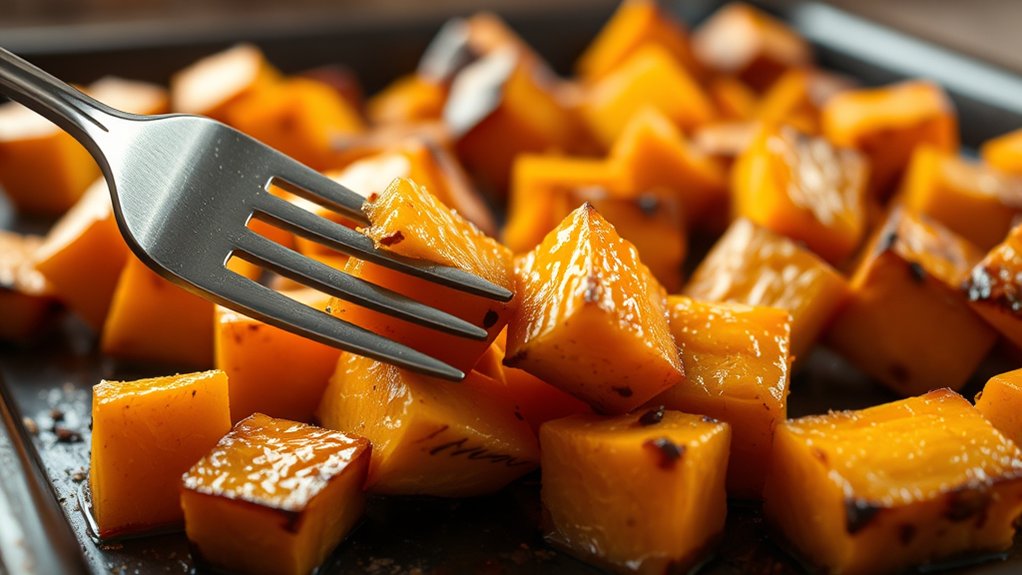
You’ll know roasted butternut squash is done when a fork slides in easily with little resistance and the edges look browned and caramelized. Check the thickest pieces first; they should feel tender all the way through, not firm or watery.
If you want extra color, leave them in for 3 to 5 more minutes, but watch closely so they don’t dry out.
- The flesh should look glossy and golden, not pale.
- A knife should cut cleanly through the center.
- The cubes should hold shape but mash slightly at the edges.
When you plate it, transfer the squash while it’s hot so the caramelized sides stay visible. Let it cool before you store it in an airtight container. Refrigerate within two hours, and use it within 4 days for the best texture and flavor.
Frequently Asked Questions
Can I Roast Butternut Squash With the Skin On?
Yes, you can roast butternut squash with the skin on; you’ll get roasted skins and a pleasant texture contrast. Wash it well, halve it, remove seeds, season, then roast until the flesh turns tender.
Should I Peel Butternut Squash Before Cooking?
Yes, you should usually peel butternut squash before cooking, depending on your texture preferences. If you’re unsure, test small peeling questions: the skin’s tough when roasted, but you can leave it on for some recipes.
Can I Freeze Roasted Butternut Squash?
Yes, you can freeze roasted butternut squash. If you’ve tested the theory that freezing ruins texture, you’ll still store it well.
Cool it, portion it, seal tightly, and follow storage tips for best quality.
What Dishes Pair Well With Roasted Butternut Squash?
You’ll pair roasted butternut squash with grain bowls, salads, risotto, pork, chicken, and lentil soup; its butternut flavor balances salty cheeses and herbs, while roasting textures add sweetness, depth, and contrast.
Can I Cook Butternut Squash Halves Instead of Cubes?
Yes you can roast butternut squash halves instead of cubes. Use a simple roasting technique: cut, seed, oil, season; place cut-side down, roast until tender, then scoop or slice.
You’ll get caramelized, flavorful flesh.
Conclusion
Now you know how to cook butternut in the oven: you prep it, cut it safely, roast it at 400°F, and check it for deep color and fork-tender texture.
You can keep it simple with salt and pepper, or you can season it with cinnamon, sage, or paprika. You’ll get the best results when you cut it evenly, coat it lightly, and roast it in a single layer.
Now slice, season, and roast with confidence to enjoy perfectly cooked butternut in the oven every time.