How to Make Pork Riblets in Oven
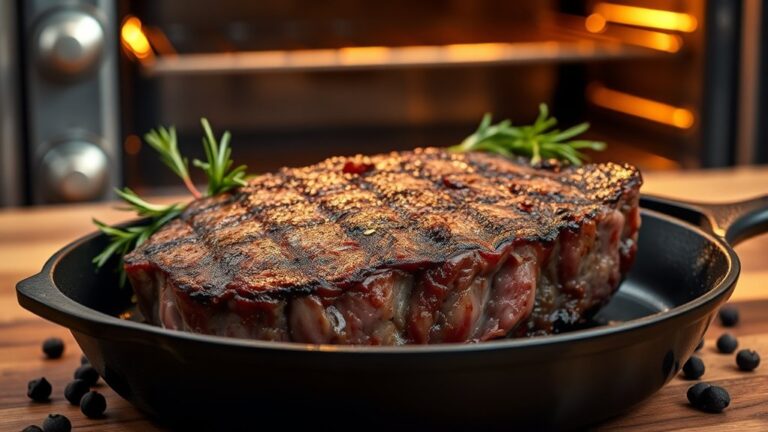
You can turn humble pork riblets into something far better than expected with a simple oven method. Making pork riblets in the oven is an easy way to achieve tender, flavorful results without much fuss.
Choose evenly sized riblets with a good fat balance, line a rimmed pan with foil, and heat the oven to 350°F.
Then season them well with oil, salt, pepper, garlic, onion, paprika, and a little brown sugar.
Once they start to brown and soften, you’re close to the part that changes everything.
Key Takeaways
- Choose riblets with good marbling, pink color, and a clean smell; cut similar sizes for even baking.
- Preheat the oven to 350°F and line a rimmed pan with foil for easier cleanup and better heat circulation.
- Season riblets with salt, pepper, garlic powder, onion powder, paprika, and optional brown sugar or spices.
- Bake on the center rack until tender and browned, minimizing oven opening and moving lower if they darken too fast.
- Brush with sauce near the end, bake 5–8 minutes more until glossy, then rest briefly and serve.
How to Choose Pork Riblets
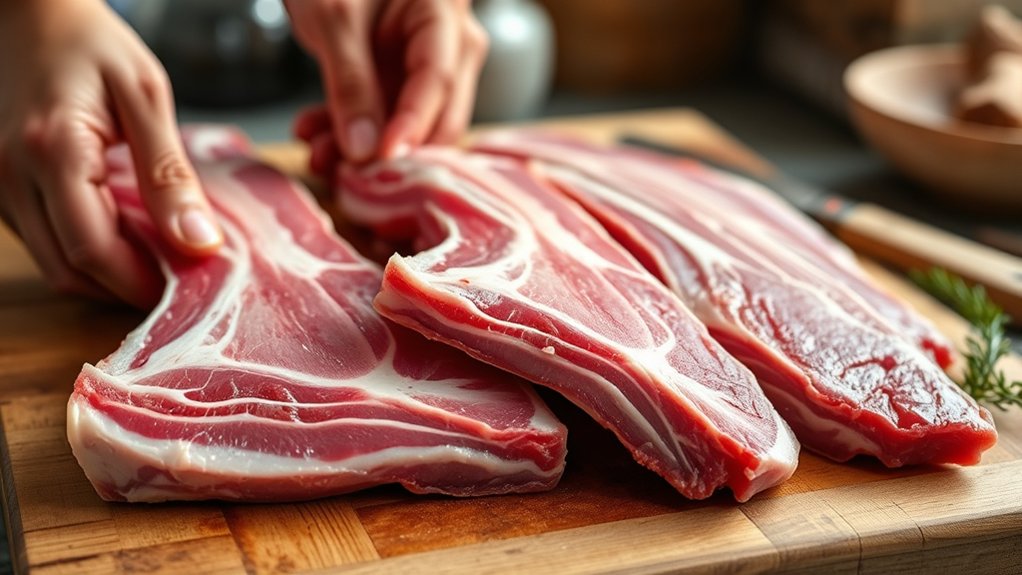
When you’re choosing pork riblets, look for pieces with a good balance of meat and fat, since that helps them stay juicy and flavorful in the oven. Check the color first: good riblets should look pink to light red, not gray or dull.
Then inspect the surface for even marbling and avoid cuts with excessive surface fat or lots of exposed bone. You should also pay attention to pork quality by choosing riblets that feel firm and smell clean, with no sour or strong odor.
If possible, buy riblets that are cut into similar sizes so they cook more evenly. For budget tips, compare prices per pound and consider family packs if you plan to cook several servings.
You can trim extra fat yourself, which often saves money without sacrificing taste. Finally, ask your butcher for fresh riblets from the meaty end if you want better texture and more consistent results.
Prep the Pan and Heat the Oven
Set your oven to 350°F so it has time to fully preheat while you prepare the pan. As you heat oven, position a rack in the center for even airflow and stable browning.
Next, prep pan by lining a rimmed baking sheet or roasting pan with heavy-duty foil for easy cleanup. If you want extra protection from sticking, add a layer of parchment over the foil, or lightly coat the surface with cooking spray. Use a pan with low sides if you want better heat circulation around the riblets.
Keep the setup simple and organized: place the prepared pan near your workspace, and make sure oven mitts are ready before you move on. Check that the oven reaches the full temperature before you load anything inside. A fully heated oven helps the riblets cook consistently, so you get reliable results from the start.
Season the Riblets for Baking
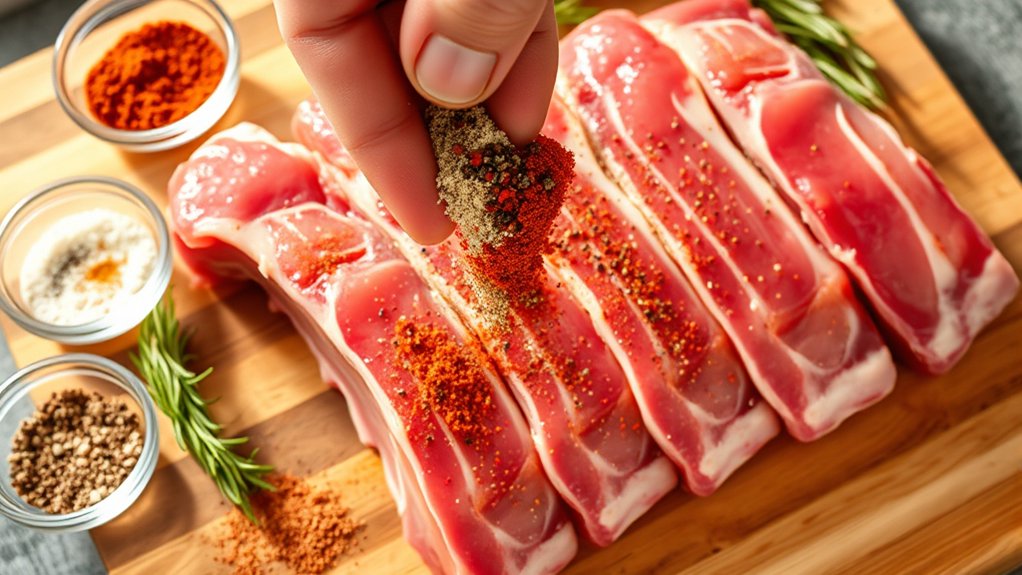
Choose seasonings that suit your flavor goal, such as salt, pepper, garlic powder, paprika, or a dry rub with a little sweetness. Sprinkle the riblets evenly on all sides, then use your hands to press the seasoning into the meat so it sticks well.
Make sure every piece gets a consistent coating, since even coverage helps the riblets bake with balanced flavor.
Choosing Seasonings
For flavorful oven-baked pork riblets, you’ll want a seasoning mix that balances salt, savoriness, and a touch of sweetness. Start with kosher salt, black pepper, garlic powder, onion powder, and paprika for a solid base.
Add brown sugar to support browning and round out the flavor, then use chili powder or cayenne if you want mild heat. You can also include dried thyme, oregano, or mustard powder for extra depth.
This cooking technique works best when you keep spice balance in mind, so don’t overload any single ingredient. Taste your blend before using it, and adjust it to match your preference.
A well-chosen mix gives the riblets a clean, bold profile that holds up well during baking and lets the pork stay the focus.
Coating Riblets Evenly
To coat riblets evenly, pat them dry first so the seasoning sticks better, then place them in a large bowl or on a baking sheet for easy access. Drizzle or brush the riblets lightly with oil, which helps the spices adhere and promotes browning.
Sprinkle your seasoning blend over every surface, using a steady coating technique so you don’t leave bare spots. Turn each riblet with your hands or tongs, pressing the rub into the meat for even distribution.
Check the edges, ends, and crevices, since those areas often get missed. If you want stronger flavor, add a second light layer instead of dumping on more at once. When you finish, the riblets should look uniformly seasoned, not clumped or patchy.
Bake Pork Riblets Until Tender
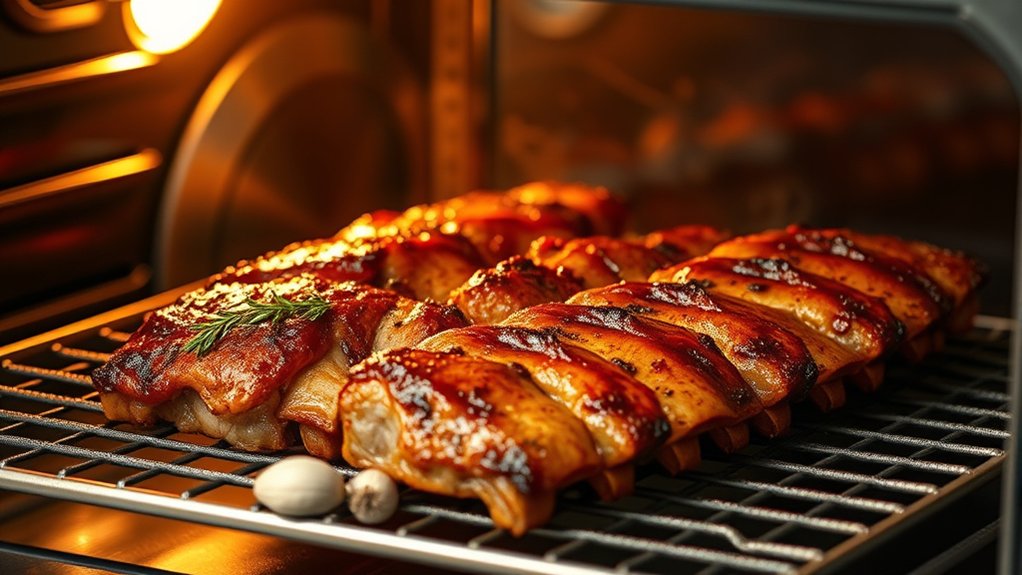
Once the oven is hot and the riblets are seasoned, slide the tray onto the center rack and bake them until the meat turns tender and starts to pull back from the bone. Keep the heat steady so the surface browns without drying out.
Check the riblets near the end of the cooking time, but don’t open the door often, or you’ll lose heat and slow the softening.
| Check | What you want | Why it matters |
|---|---|---|
| Color | Deep brown | Shows steady roasting |
| Edges | Slightly crisp | Signals a ripe rind |
| Meat | Easy bone pullback | Confirms tenderness |
If you notice the top darkening too quickly, move the tray to a lower rack for even cooking. Let the riblets finish until they feel supple when pressed and the juices run clear. At this stage, they’re ready for the next step, where a smoky glaze can cling well.
Brush on Sauce and Finish
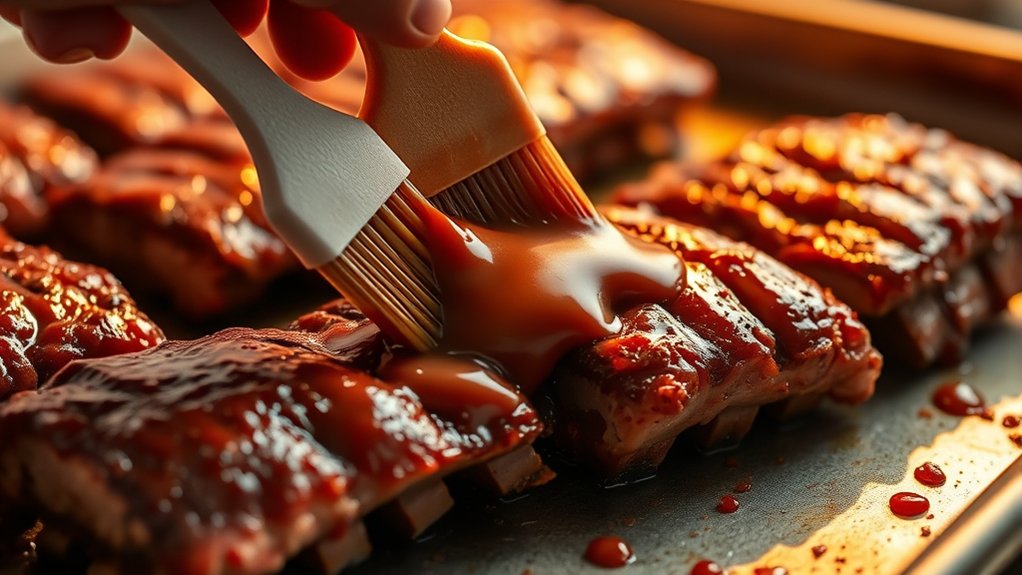
Brush on your sauce generously over the tender riblets, making sure each piece gets an even coat.
Flip them and coat the other side so the flavor covers every edge.
Return them to the oven for a final glaze time, just long enough for the sauce to set and turn sticky.
Brush On Sauce
Now comes the finishing touch: you’ll brush the sauce over the riblets in a thin, even layer, then return them to the oven so the glaze can set and the flavors can deepen. Keep the focus on seasoning vs glaze: seasoning builds the base flavor, while the sauce adds sheen, sweetness, and caramelized depth.
Use oven temp strategies that match your goal; a moderate heat lets the coating cling without burning.
- Brush lightly, covering all exposed surfaces.
- Bake just until the sauce looks glossy and tacky.
- Let the riblets rest briefly so the glaze firms up.
You want a balanced finish, not a heavy crust. Apply a second thin coat only if the first layer looks dry after heating.
Flip And Coat
Flip the riblets over so you can coat the underside evenly, then brush on a thin layer of sauce across all exposed surfaces. Use tongs or a wide spatula for how to flip riblets without tearing the meat.
Keep the rack steady, and work from the center outward so the sauce reaches edges and crevices. For how to coat riblets, spread the sauce in a thin, even film rather than a heavy layer; this helps the surface stay balanced and prevents pooling.
Check the bone side, the ends, and any exposed fat. If the rack looks dry in spots, add a small extra swipe, but don’t overload it. Return the riblets to the oven promptly so the coating sets evenly and stays attached.
Final Glaze Time
As the riblets near the finish, apply one final glaze to build shine and lock in flavor. Brush the sauce on in a thin, even layer, then return the pan to the oven for 5 to 8 minutes.
Watch the glaze consistency closely; it should look glossy, not runny, and cling to the meat without pooling. Use timing precision here, because too long can scorch the sugars and too short won’t set the coating.
- Warm the sauce slightly for smoother brushing.
- Coat both sides, focusing on exposed edges.
- Finish under broil only if you can monitor it closely.
When the surface bubbles and deepens in color, pull the riblets out and let them rest briefly before serving.
Serve Pork Riblets With Easy Sides
A simple side can turn oven-baked pork riblets into a full, balanced meal. Choose budget friendly sides that support the riblets’ tender texture without overpowering the glaze. Start with a crisp coleslaw, buttered corn, or roasted potatoes; each adds contrast and soaks up juices.
If you want extra freshness, serve steamed green beans or a simple cucumber salad for a clean finish. Keep portions moderate so the riblets stay the focus. You can also add warm dinner rolls to help mop up sauce and give the plate a fuller feel.
For a complete spread, pair two sides with a light garnish of chopped parsley or green onions. Serve everything hot, and place the riblets beside the sides rather than on top, so the crust stays intact and appealing.
Frequently Asked Questions
Can Pork Riblets Be Marinated Overnight Before Baking?
Yes, you can marinate pork riblets overnight before baking. You’ll boost marinade timing and flavor pairing, letting seasonings penetrate deeper.
Keep them refrigerated, then pat dry before oven baking for better browning and texture.
How Do I Know if Riblets Are Fully Cooked?
You’ll know they’re done when a thermometer reads 145°F and the meat pulls back from the bone. My uncle’s ribs once looked finished early, but the center stayed pink. Check doneness indicators, then follow resting guidance.
Can I Use Frozen Pork Riblets in the Oven?
Yes, you can, but you’ll get better results if you thaw them first. For frozen thawing, use the refrigerator.
Keep marinade safety in mind: don’t marinate at room temperature, and cook until fully done.
What Temperature Works Best for Crispy Riblets?
425°F works best for crispy riblets. You’ll get better crispiness with oven temperature tips: roast hot, then finish under broil briefly.
Use a crispiness technique like a rack, so air circulates and edges brown evenly.
How Long Should Riblets Rest Before Serving?
You should rest riblets 5 to 10 minutes before serving so juices redistribute. During rest time, tent them loosely with foil.
For plating ideas, arrange on warmed plates with fresh herbs and sauce.
Conclusion
You’ve got everything you need to make oven-baked pork riblets that turn out tender, seasoned, and deeply satisfying. Choose even pieces, coat them well, and bake until the meat starts to pull from the bone.
Finish with sauce, rest them briefly, and serve with simple sides for a complete meal. A little patience goes a long way—good things come to those who wait.
Now, you’re ready to bring these pork riblets in oven to the table.