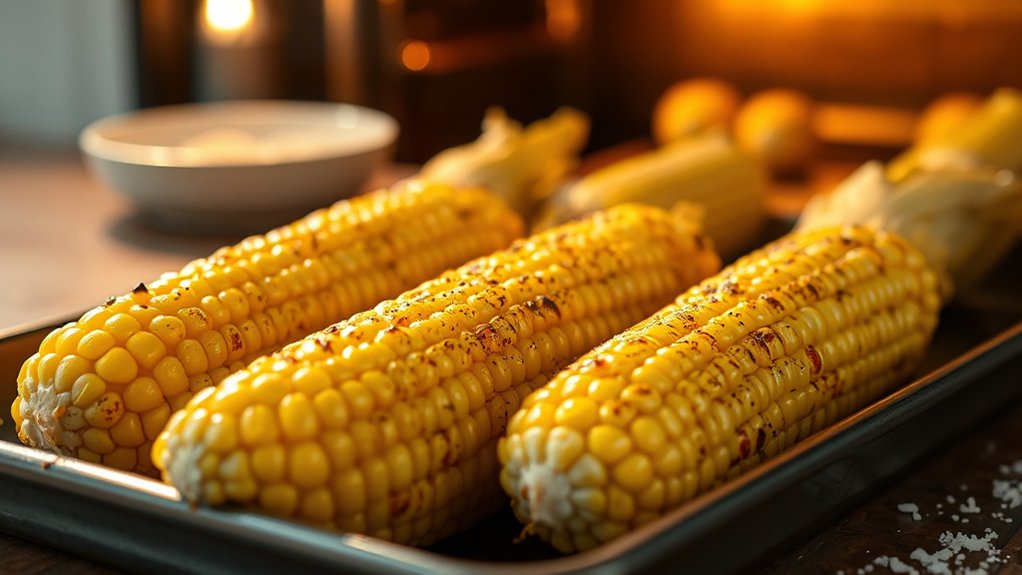
How to Roast Corn in the Oven
To roast corn in the oven, you start with fresh ears, a hot oven, and a simple prep that makes a big difference.
Roasting corn in the oven brings out its natural sweetness and adds a delicious smoky flavor.
You’ll husk the corn, remove the silk, coat it lightly with butter or oil, and season it before it hits the heat.
The timing and method matter, though, because small changes affect texture, browning, and flavor more than you might expect.
Paying attention to these details ensures perfectly roasted corn every time.
Key Takeaways
- Choose fresh corn with tight green husks, moist silk, and plump kernels for the best roasted flavor and texture.
- Preheat the oven to 400 to 425°F and do not soak the corn before roasting.
- Husk the corn, remove silk, trim the stem end, and brush ears evenly with butter or oil.
- Roast husked corn 20 to 25 minutes or foil-wrapped corn 25 to 30 minutes, turning halfway through.
- Serve immediately with salt, pepper, or toppings like lime, cheese, herbs, or chili for the best taste.
What You Need for Roasted Corn
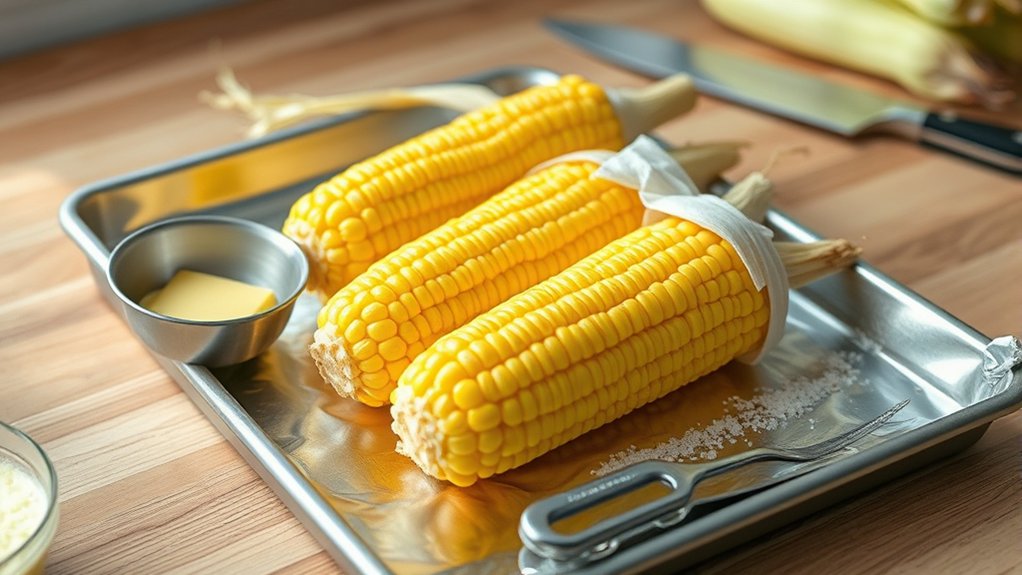
To roast corn in the oven, you only need a few simple ingredients and tools: fresh corn on the cob, butter or oil, salt, and aluminum foil or a baking sheet. You should choose ears with tight green husks and moist silk, because they’ll roast with better flavor.
Keep the corn cold until you’re ready, and follow basic tips for corn storage: refrigerate it in the husk and use it within a few days. If you’re shopping, note common corn naming conventions; sweet corn is the standard type for roasting, while field corn isn’t suited to this method.
You’ll also want a sharp knife if you plan to trim the ends, and a brush for applying fat evenly. Use unsalted butter for more control, or choose a neutral oil when you want a lighter finish. Measure salt sparingly at first, then adjust after roasting.
How to Prepare Corn for Roasting
Start by husking the corn and removing every strand of silk, then rinse the ears under cool water and pat them dry so the butter or oil will cling evenly. Trim any ragged stem ends with a sharp knife, but leave enough of the base intact to keep the kernels supported.
If you want cleaner handling, snap off loose outer leaves and inspect each ear for bruised spots or missing kernels. Choose ears that feel firm and full, with plump rows and bright green husks; that freshness delivers succulent sweetness after roasting.
When your corn is dry, brush each ear lightly with melted butter or oil, coating all sides without pooling. Sprinkle salt now if you prefer a seasoned interior, or wait until after roasting for a brighter finish.
Set the prepared ears on a tray so you can move them easily to the oven, and you’re ready to roast toward charred brilliance.
How to Roast Corn in the Oven
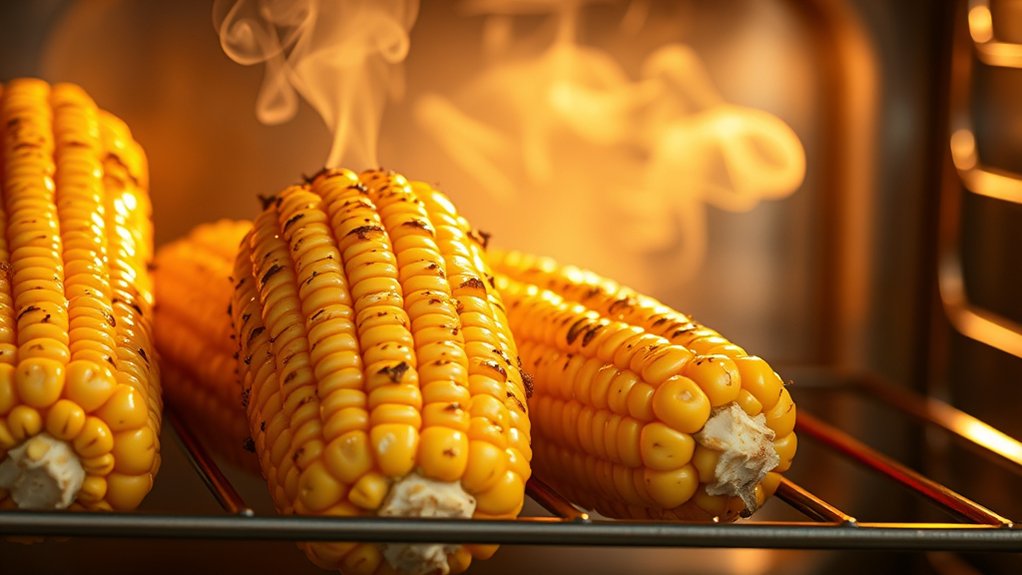
Choose fresh corn with bright green husks, plump kernels, and moist silk so you get the best flavor and texture. Roast the ears in a hot oven until the kernels turn tender and lightly caramelized, turning them once for even cooking.
Finish with your preferred seasoning or serving butter right away, while the corn’s still hot.
Choosing Fresh Corn
How do you pick the best corn for roasting? Start with fresh corn that feels heavy for its size and has tight, moist husks. Check husk storage at the store: the outer leaves should look green, not dry or yellowed. Then inspect the silk and kernels carefully.
- Press the kernels through the husk; they should feel plump and firm.
- Look for silks that are pale, slightly sticky, and not brittle.
- Avoid ears with gaps, mold, or insect damage.
- Choose ears with snug husks and even rows of kernels.
Buy corn the same day you plan to cook it when possible. Store it in the refrigerator, unshucked, and use it soon for the sweetest flavor and best texture.
Oven Roasting Basics
Once you’ve picked fresh ears, roasting them in the oven is simple and reliable. Heat your oven to 400°F, then place the corn directly on the rack or on a sheet pan for easier handling. You don’t need to soak it; dry heat drives off excess moisture and concentrates flavor.
Roast the ears for 25 to 30 minutes, turning them once halfway through so they cook evenly. You’ll notice roasty aromas as the husks darken and the kernels become tender. To check doneness, press a kernel with a fork; it should feel plump, not hard.
Proper oven roasting preserves a clean kernel texture while adding gentle sweetness and a lightly browned finish. Remove the corn carefully, since steam can escape when you peel it.
Serving and Seasoning
Right after the corn comes out of the oven, season it while it’s still hot so the toppings cling well. Slide it onto a platter and serve immediately for the best texture and aroma.
You can match seasonings to corn types: sweet corn handles butter and herbs, while firmer corn takes bolder spices. Keep kitchen acoustics in mind if you’re entertaining; a quiet rest lets guests hear the crackle of steam and signals peak freshness.
- Brush with melted butter.
- Add salt, pepper, or chili.
- Finish with lime, cheese, or herbs.
- Serve in husks or on skewers.
If you need extra flavor, toss the kernels with paprika or garlic powder before serving.
How Long to Roast Corn in the Oven
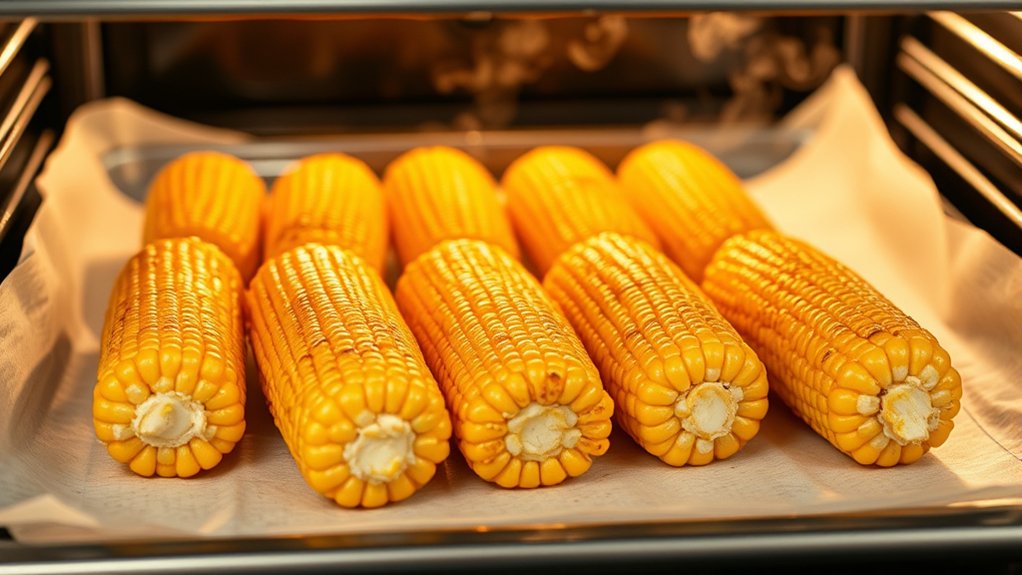
Roast corn in the oven for about 25 to 30 minutes at 400°F, turning it once halfway through for even browning. You’ll know it’s done when the kernels look tender, lightly browned, and slightly caramelized at the edges.
Higher heat shortens the roast time and deepens color faster, while lower heat cooks the corn more gently and takes a bit longer.
Roast Time Guide
How long should you roast corn in the oven? Your roast timing depends on husked or foil-wrapped ears, but most corn needs 20 to 30 minutes at 400°F. For steady corn texture, keep the ears in a single layer and turn them once halfway through.
- Husked corn: Roast 20 to 25 minutes.
- Foil-wrapped corn: Roast 25 to 30 minutes.
- Extra-large ears: Add 3 to 5 minutes.
- Smaller ears: Check at 18 minutes.
If you want softer kernels, roast a little longer; for firmer kernels, pull them earlier. Keep your oven fully preheated so the timing stays accurate. Don’t crowd the pan, or the corn won’t cook evenly.
Doneness Visual Signs
You can tell corn is done when the kernels look plump, bright yellow, and slightly caramelized at the edges, with a tender bite when pierced with a fork. Watch for doneness indicators that show steady color change across the ear, not just on one side.
The husk, if present, should look dry and lightly browned, while exposed kernels should appear glossy, not shriveled. Use visual cues at the surface: each row should look full, and the kernels shouldn’t feel hard or starchy when you test one.
If you want even results, rotate the corn once during roasting and check the earliest signs near the tip and outer edges. When the kernels give easily and look evenly roasted, pull the corn right away and serve hot.
Heat Level Impact
Oven temperature changes corn’s roasting time more than almost any other factor: at 400°F, most ears need about 20 to 25 minutes, while 425°F can finish them in 15 to 20 minutes. You should match the heat level to your goal: higher heat speeds browning, but it can slightly reduce corn sweetness if you overcook it.
- Use 400°F for even cooking.
- Use 425°F for faster caramelization.
- Check early if your ears are small.
- Pull corn when kernels look plump and lightly browned.
If you roast wrapped corn, add a few minutes. If you roast uncovered, watch closely near the end. Always rest the corn briefly, then serve it hot for the best texture and flavor.
How to Season Corn Before Roasting
Before the corn goes into the oven, coat it lightly with melted butter or oil so the seasonings adhere evenly. For a clean base, add black pepper, garlic powder, smoked paprika, or chopped herbs after the fat.
Coat corn lightly with butter or oil first, then add seasonings so they cling evenly and roast cleanly.
If you want seasoning without salt, lean on citrus zest, chili flakes, and toasted cumin to build flavor without masking the corn variety flavor. Keep the layer thin; heavy seasoning can clump and burn.
Toss or brush each ear so you cover every kernel, then arrange the corn in a single layer on the pan. For richer results, mix softened butter with minced garlic, parsley, and a little pepper, then spread it over the corn before roasting.
If you prefer oil, choose olive or avocado oil for a neutral, even coating. Taste your seasoning blend first, then adjust it to match the sweetness and freshness of the corn you bought.
How to Tell When Corn Is Done
Once the corn is seasoned and lined up on the pan, watch for the kernels to turn bright, tender, and lightly caramelized at the edges. You’ll know it’s done when the color deepens and the kernels give slightly under gentle pressure, not mushy, but crisp-tender.
- Check the earliest ears at 15 minutes, then rotate the pan.
- Look for browned tips and a glossy surface.
- Pierce one kernel with a fork; it should release juice.
- Taste a cool spot: sweet, smoky, and fully softened.
If the kernels still feel starchy, roast a few minutes longer and check again. Don’t rely on color alone, because oven heat varies. When you want topping ideas later, a properly cooked ear gives better texture contrast and holds up to bolder flavors.
For now, focus on tenderness, light char, and even doneness across the pan.
Best Ways to Serve Oven-Roasted Corn
How should you serve oven-roasted corn so it tastes its best? Serve it hot, straight from the foil or pan, so the kernels stay juicy. Brush on melted butter, then season with salt, black pepper, or a little smoked paprika for clean flavor.
Serve oven-roasted corn hot, straight from the pan, with butter, salt, and a touch of paprika.
If you want more contrast, add lime juice, chopped cilantro, grated Parmesan, or a light chile sprinkle. You can serve the ears whole for a simple side, or slice the kernels off and fold them into salads, tacos, grain bowls, or chowders.
Keep portions on a warm platter if you’re serving several people. For oven safety, use dry mitts and stable tongs when unwrapping hot corn. Ignore kitchen myths that say corn must rest for a long time; it’s best enjoyed right away.
If needed, hold it briefly covered, but don’t let it sit until the texture dulls or the butter separates.
Simple Tips for Better Roasted Corn
Want sweeter, more evenly roasted corn? Start with fresh ears; older corn dries out and won’t caramelize as well. Husk them, remove silk, and pat each ear dry so heat can work directly on the kernels.
- Preheat your oven fully to 425°F for steady browning.
- Brush corn lightly with oil or butter alternatives to help promote crisp textures.
- Rotate the ears halfway through roasting so every side cooks evenly.
- Season after roasting, when the kernels still hold heat and absorb flavor best.
If you want deeper color, wrap the corn loosely in foil for the first half, then uncover it to finish. Keep the ears spaced apart on the baking sheet so steam doesn’t soften the kernels.
For extra flavor, add salt, pepper, smoked paprika, or lime right after baking. These small adjustments make your roasted corn sweeter, juicier, and more consistent.
Frequently Asked Questions
Can I Roast Frozen Corn on the Cob?
Yes, you can roast frozen corn on the cob. You’ll get roasted corn with good texture if you add a little time.
Brush with butter, season well, and choose a flavor pairing like herbs or chili lime.
Do I Need to Soak Corn Before Roasting?
No, you don’t need to soak corn before roasting, though soaking corn can help if you want extra moisture.
Fresh vs canned corn changes timing, but you’ll usually roast either directly for better browning and flavor.
Should I Remove the Husks Before Oven-Roasting?
No, you don’t need full husks removal before oven-roasting; you can leave them on for protection. For silk considerations, peel back and remove loose silk, then rewrap or trim husks for cleaner, more even roasting.
Can I Roast Corn With the Silk Still On?
Yes, you can, but you’ll get better roasting corn results if you trim excess silk first. Husk removal helps limit scorching, while your oven technique should keep silk retention minimal for cleaner, sweeter kernels.
What Temperature Is Best for Roasting Corn?
You’ll get the best roasting at 400°F; it browns kernels evenly without drying them out.
For wiki style ideas, try technique tips like rotating halfway and checking tenderness after 20 to 25 minutes.
Conclusion
Now you know how to roast corn in the oven with confidence: prep the ears well, roast them at 400–425°F, and turn them once for even browning. Keep an eye on tenderness, since plump kernels and a little char tell you it’s ready.
I once pulled corn out two minutes late, and the difference was like dusk turning to midnight—still good, but the sweetness had already faded.
Serve it hot and enjoy the delicious results of roasting corn in the oven.