How to Roast Beets in the Oven
Roasting beets in the oven can transform them from tough to tender, much like how a cold pan turns glossy with heat. You’ll scrub, trim, and coat the beets lightly with oil and salt before roasting them.
Place them in a hot oven until the skins wrinkle and a knife slips in easily. The method is simple, but the timing and peeling step make all the difference.
Key Takeaways
- Wash and scrub whole beets, trim stems and roots, and pat them dry before roasting.
- Rub beets with olive oil, salt, and optional pepper or herbs like rosemary.
- Place beets on a foil-lined pan or covered dish and roast at 400°F.
- Roast for 45 to 60 minutes, depending on size, until a knife or skewer slides in easily.
- Cool completely, then peel off skins and store roasted beets in an airtight container.
What You Need to Roast Beets
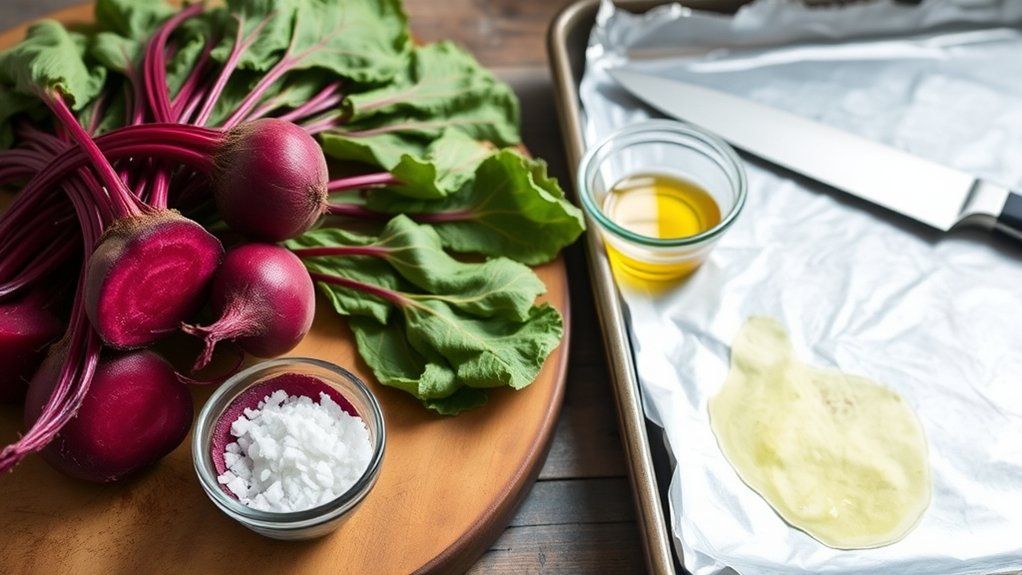
To roast beets in the oven, you’ll need fresh beets, a baking sheet or roasting pan, aluminum foil or a lid, olive oil, salt, and a sharp knife for trimming. Choose beets that feel firm, smooth, and heavy for their size; they’ll deliver the best beet roasting results. Use similar-sized beets so they cook evenly on the sheet.
If you want cleaner handling, line your pan with foil, then cover the beets tightly to trap steam and concentrate flavor. Olive oil helps the skins blister and the flesh turn tender, while salt sharpens the natural sweetness. Keep kitchen tips simple: use a knife with a sturdy blade, and set out tongs or a spatula for easy transfer.
You don’t need elaborate equipment, just the right basics. With these items ready, you can roast beets efficiently and get reliable texture, color, and taste every time.
How to Prep Beets for the Oven
Start by washing the beets well under cool running water to remove any dirt, then trim off the leafy tops and root ends.
If the skins are thin and tender, you can scrub them clean and roast them as is. For thicker-skinned beets, peel them before roasting so they cook evenly and taste clean.
Washing And Trimming
Give your beets a thorough rinse under cool running water, then scrub away any dirt with a vegetable brush since grit can cling to the skin and affect the final flavor. Use a small paring knife or kitchen shears as your trimming tools, and remove the leafy tops, leaving about 1 inch of stem to reduce bleeding. If roots are ragged, snip off just the dried tip.
| Task | Why it matters | Tip |
|---|---|---|
| Rinse | Lifts loose soil | Use cool water |
| Scrub | Clears hidden grit | Focus on creases |
| Trim tops | Keeps juices in | Leave a short stem |
| Trim root | Neat, even roasting | Cut only the rough end |
A simple washing budget starts with water, a brush, and one sharp knife. Keep the beets whole and dry them briefly before roasting for cleaner handling.
Peeling Or Scrubbing
For roasting, you usually don’t need to peel beets before they go into the oven; a good scrub is enough. Keep the skin on vs peeled decision simple: roast whole beets with the skin intact, then remove it after cooking if you want a smoother texture.
When comparing peeling vs scrubbing, scrubbing wins for speed, less waste, and better beet flavor retention. Use a vegetable brush under cold running water, then pat the beets dry before oiling and seasoning.
- Scrub off dirt, especially near the root end.
- Leave skins on for roasting; they slip off easily later.
- Peel only if you want raw beets or a very polished finish.
How to Roast Beets in the Oven
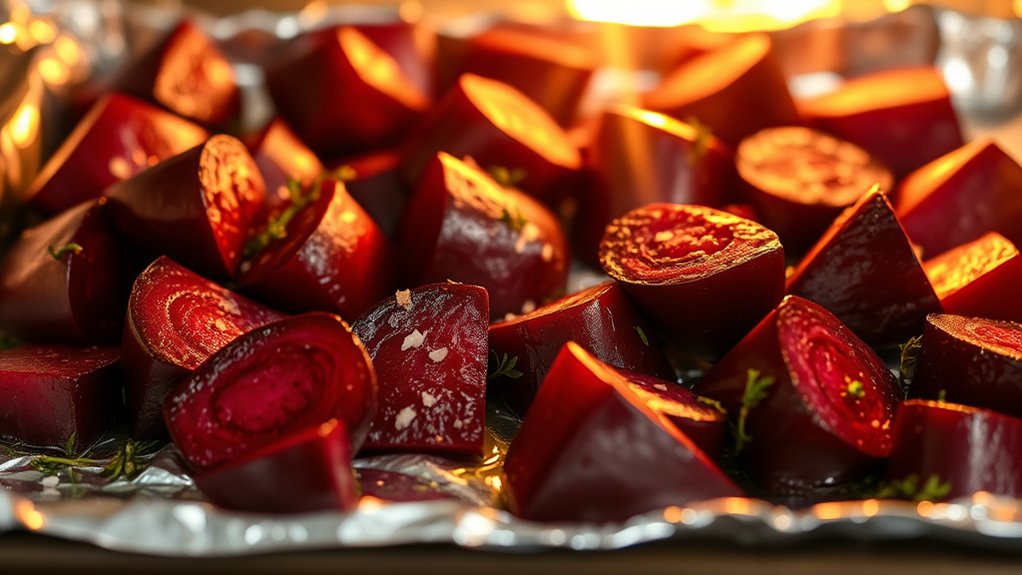
Choose fresh beets that feel firm and heavy, with smooth skins and vibrant color. Trim them, toss them with a little oil and salt, then wrap or cover them so they roast evenly.
Roast at a steady oven temperature until a knife slides in easily and the beets turn tender.
Choose Fresh Beets
Look first for beets that feel firm, smooth, and heavy for their size, with vibrant skin and fresh, leafy tops if they’re still attached. You want the freshest roots because they roast evenly and deliver clean sweetness.
Check for fresh beet color: deep red, golden, or striped beets should look vivid, not dull or shriveled. Choose small to medium beets for tender texture and consistent roasting.
When you buy well, you’ll taste better beet flavor after cooking.
Avoid beets with soft spots or wrinkled skin.
Pick tops that look crisp, not limp or yellowed.
Select roots with intact skin for maximum farm to table flavor.
Prep and Season
Once you’ve picked good beets, get them ready for roasting by trimming off the greens, leaving about 1 inch of stem attached, and scrubbing the roots well under cool water. Pat them dry, then keep the skins on to support beet color preservation and a cleaner roast.
If the beets are large, cut them into even pieces for consistent seasoning.
| Seasoning | Use |
|---|---|
| Olive oil | Coat lightly |
| Kosher salt | Season evenly |
| Black pepper | Add mild heat |
| Rosemary | Try for rosemary pairing |
| Lemon zest | Brighten flavor |
Rub each beet with oil, salt, and pepper, then scatter rosemary over them if you want a herbal note. Keep the seasoning modest so the beet’s natural sweetness stays front and center.
Roast Until Tender
Set the beets on a foil-lined baking sheet or in a covered baking dish and roast them in a preheated 400°F oven until a knife slips in easily, usually 45 to 60 minutes depending on size. You’ll notice the beet color changes as they cook, deepening from bright magenta to a richer, darker tone.
Check larger beets first; they should yield without resistance but still hold their shape. This gentle roast concentrates moisture and builds roasted beet flavor.
Test with a paring knife at the thickest point.
Add a splash of water to covered dishes if needed.
Roast similar-sized beets together for even cooking.
How Long to Roast Beets in the Oven
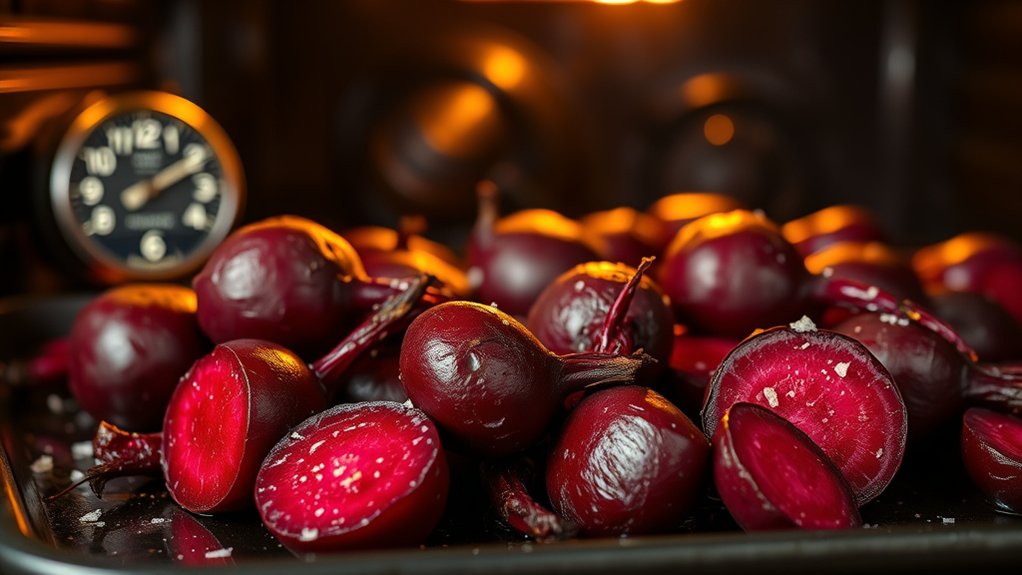
How long you roast beets in the oven depends on their size, but most medium beets need about 45 to 60 minutes at 400°F. You can roast smaller beets in 30 to 40 minutes, while larger ones may need 70 minutes or more.
Keep the beets in a single layer on a lined sheet so heat circulates evenly, and plan extra time if you’re roasting several at once. If you want roasted beet variations, use similar-sized beets together so they finish at the same pace.
Don’t rely on beet storage myths that claim old beets always take longer; freshness helps, but size matters more than age. For efficiency, trim the greens, scrub the skins, and wrap each beet only if your method calls for it.
Otherwise, let the dry heat do the work. Once you know your oven’s behavior, you’ll roast beets with consistent timing every time and save yourself from overcooking.
How to Know When Beets Are Done
You’ll know beets are done when a knife or skewer slides into the center with little resistance. Check the thickest beet first, since smaller ones finish sooner.
Watch for subtle beet color changes: the skins may look slightly wrinkled, and juices can appear more concentrated. If the beet still feels firm or the tool meets a hard core, keep roasting and test again in 5-minute intervals.
Look for wrinkled skins and concentrated juices; if beets still feel firm, roast a few minutes longer.
Use knife safety when you probe; hold the beet steady on the pan and keep your fingers clear of the blade. The goal is tender flesh that gives easily but doesn’t collapse.
Insert a skewer from the widest side for the most accurate test.
Test beets of similar size together for even doneness.
Remove the pan once all beets feel uniformly tender.
How to Peel Roasted Beets
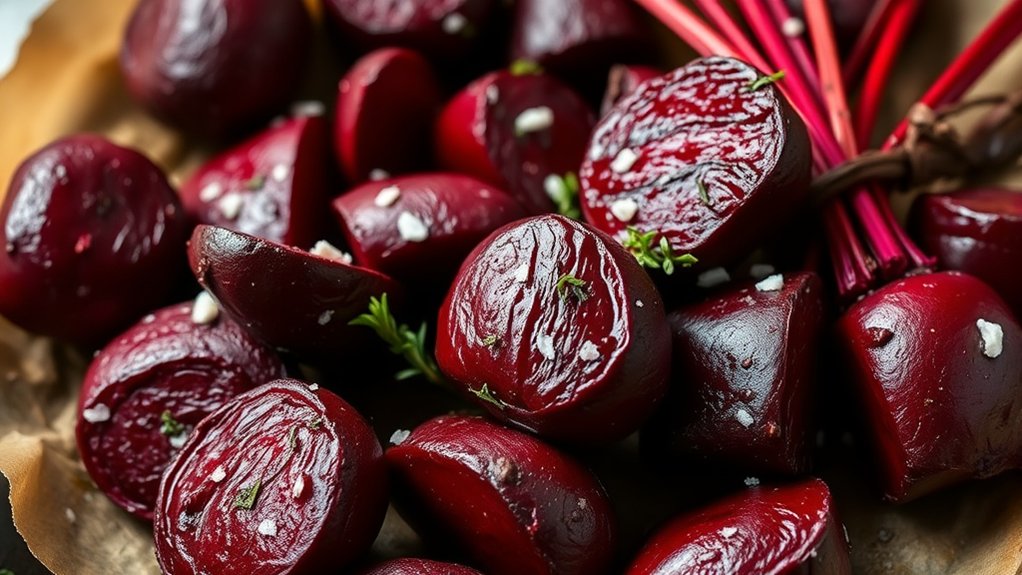
Once the beets are tender, let them cool just enough to handle, then peel away the skins with your fingers or the edge of a paring knife. Slip on thin gloves if you want to keep your hands clean; beet pigment stains quickly.
Hold each beet under cool running water and rub gently to loosen any stubborn bits. For smooth, even results, use peeling techniques that start at the crown and work toward the tip, removing only the thin outer layer.
If a beet feels slippery, set it on a cutting board and scrape lightly with the knife edge. Trim the stem and root ends after peeling so you waste less flesh.
Collect the skins and trimmings in a bowl, then follow your composting tips by adding them to your compost bin if they’re untreated. Pat the peeled beets dry before slicing, grating, or serving them whole.
Simple Ways to Season Roasted Beets
Season roasted beets while they’re still warm so they absorb flavor more readily. Start with olive oil, flaky salt, and black pepper for a clean, earthy finish. For sweeter beet varieties, add a splash of balsamic vinegar or orange juice to sharpen the flavor.
If you want brightness, grate in lemon zest and a little fresh thyme. For savory depth, try cumin, coriander, or dill, which flatter earthy notes without masking them. Match your seasoning to seasonal pairings: in spring, use herbs and citrus; in fall, add maple and warm spices.
Taste after tossing, then adjust salt so the beets stay balanced.
- Olive oil, salt, pepper
- Balsamic, orange, or lemon
- Thyme, dill, cumin, or coriander
How to Store Roasted Beets
After seasoning, store roasted beets properly so they keep their texture and flavor. Let them cool completely, then peel off the skins if you haven’t already. Cut them into uniform pieces, or leave them whole if you plan to slice later.
Pack them in an airtight container and refrigerate within two hours of roasting. These beet storage tips help prevent moisture loss and off flavors.
| Storage method | Best use |
|---|---|
| Whole, uncut beets | Longer refrigeration, up to 5 days |
| Sliced or cubed beets | Quick salads, bowls, and roasted beet recipes |
If the beets seem dry, add a spoonful of their cooking juices or a light drizzle of olive oil before sealing. For longer keeping, freeze portions in a freezer bag after patting them dry.
Thaw them in the refrigerator, then use them cold or gently rewarm.
Frequently Asked Questions
Can You Roast Beets With the Skin On?
Yes, you can roast beets with the skin on. For roasted beet prep, scrub them well, trim the tops, and roast covered.
Skin on roasting helps retain moisture; you’ll peel them easily afterward.
Do Different Beet Colors Need Different Roasting Times?
No, beet colors don’t usually need different roasting times; they’re like siblings in the same oven. You’ll roast them by size, not hue.
Check tenderness with a knife, and you’ll avoid overcooking.
Can I Roast Beets Without Foil or Parchment?
Yes, you can roast beets without foil or parchment. You’ll just scrub, trim, oil, and place them in a covered dish or baking pan, using parchment alternatives like a lidded Dutch oven.
What’s the Best Way to Roast Beet Greens Too?
You’ll get the best roast beet greens by tossing them with oil, salt, and garlic, then roasting briefly until crisp-tender.
For roast beet greens discussion, use beet greens texture tips: high heat, short time, and watch closely.
Can Roasted Beets Be Frozen for Later Use?
Yes, you can freeze roasted beets for later. Think of them as winter gems: cool, peel, slice, then seal airtight.
You’ll preserve flavor best with proper beet freezing techniques. Thaw and reheat gently, avoiding roasted beet microwaving.
Conclusion
Roasting beets is wonderfully simple: once you scrub, trim, oil, and season them, the oven does the rest. At 400°F, they slowly soften, their skins wrinkle, and their sweetness deepens. When a knife slides in easily, you know they’re ready.
Peel them while warm, then slice or cube them for salads, sides, or meal prep. Coincidentally, the same beets that look humble at the start become the most memorable thing on your plate. This easy process is why roasting beets in the oven is such a beloved cooking method.