How Long to Cook Meatloaf in Oven
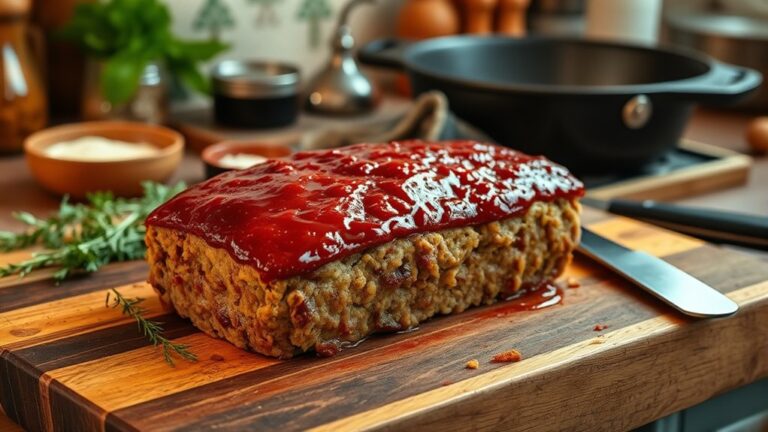
If you’re baking meatloaf, you’ll usually need 55 to 75 minutes in a 350°F oven, though smaller loaves can finish closer to 45 minutes. The exact time depends on the shape, pan, and ingredients, so you shouldn’t trust the clock alone.
Aim for an internal temperature of 160°F, then let it rest before slicing. The difference between a moist loaf and a dry one often comes down to what you do next.
Key Takeaways
- Bake meatloaf at 350°F for the most reliable results.
- A standard loaf usually takes 55 to 75 minutes in the oven.
- Smaller loaves may finish in about 45 to 50 minutes.
- Thicker or taller loaves can need 60 to 75 minutes or more.
- Use a thermometer and remove it at 160°F in the center.
What Oven Temperature Works Best for Meatloaf?

For the best meatloaf, bake it at 350°F, a steady temperature that cooks the loaf through evenly without drying out the edges. You get a tender center and a browned, flavorful crust without rushing the loaf.
Keep your oven rack in the middle so heat reaches the meat evenly, and follow oven safety by checking that pans sit flat and don’t block airflow. If you want easier cleanup, use nonstick pans or line a loaf pan with parchment; both help release the meatloaf cleanly after baking.
You can raise the heat slightly for a deeper crust, but 350°F usually gives you the most reliable results. It lets the fat render slowly, so the loaf stays juicy while the seasonings develop.
Preheating matters too: don’t slide the pan in before the oven reaches temperature, or you’ll lose control over the bake and the texture.
How Long Does Meatloaf Take at 350°F?
At 350°F, you’ll usually bake meatloaf for about 45 to 60 minutes, depending on how thick it is. Check the center with a meat thermometer, and pull it when it reaches 160°F for a juicy, safe loaf.
A smaller loaf cooks faster, while a larger one needs extra time to heat through evenly.
Typical Baking Time
How long does meatloaf take at 350°F? You’ll usually bake a standard 2-pound loaf for 55 to 75 minutes. If your loaf is thicker, add time; if it’s thinner or shaped in a wide pan, reduce it slightly.
Keep your loaf in the oven until it sets and turns deeply browned on top. This range helps you get a moist meat texture without drying out the edges, while the seasoning settles into a rich flavor balance.
A pan loaf often cooks a bit faster than a free-form loaf, so plan accordingly. For the most even results, let the meatloaf rest briefly after baking so the slices hold together and the juices stay in place.
Internal Temperature Check
The surest way to know your meatloaf is done is to check its internal temperature with an instant-read thermometer. Insert it into the center, and aim for 160°F for ground beef, or the safe doneness point in meat terminology.
At 350°F, kitchen timing varies, so temperature beats guesswork every time.
| Checkpoint | Meaning |
|---|---|
| 145°F | Still underdone |
| 155°F | Close, but not ready |
| 160°F | Fully cooked and juicy |
When you see 160°F, pull the loaf, then let carryover heat finish the job. This keeps the slices moist, tender, and savory, with no pink surprise in the middle.
If you want confident results, trust the thermometer, not the clock.
Loaf Size Matters
A meatloaf’s size changes its bake time more than almost anything else, so a smaller loaf can finish in about 45 to 50 minutes at 350°F, while a larger, thicker one may need 60 to 75 minutes or more. You should shape it evenly so the center cooks at the same pace as the edges.
If you pack the loaf too tall, the bake time rises and the outside can dry out before the middle is done. For best results, keep loaf size consistent and aim for a uniform oval or rectangle. Then check the internal temperature instead of relying on the clock alone.
When you slice it, the juices should run clear and the texture should look moist, tender, and savory, not crumbly or raw.
How Meatloaf Size Changes Baking Time
Bigger loaves need more time in the oven because heat takes longer to reach the center, so a 2-pound meatloaf will usually bake longer than a 1-pound loaf. You’ll notice that thickness matters as much as weight: a tall, compact loaf can need extra minutes, while a flatter one cooks faster.
For the best meatloaf texture, shape the loaf evenly so the heat moves through at a steady pace. Your pan choice also changes timing; a loaf pan holds the sides close, which can slow browning, while a sheet pan lets the edges cook and caramelize sooner.
Check the center with a thermometer instead of guessing, since size alone doesn’t guarantee doneness. When you adjust the loaf’s dimensions carefully, you’ll get a tender slice with a browned exterior and no dry overcooked edges.
How Ingredients Affect Meatloaf Cook Time
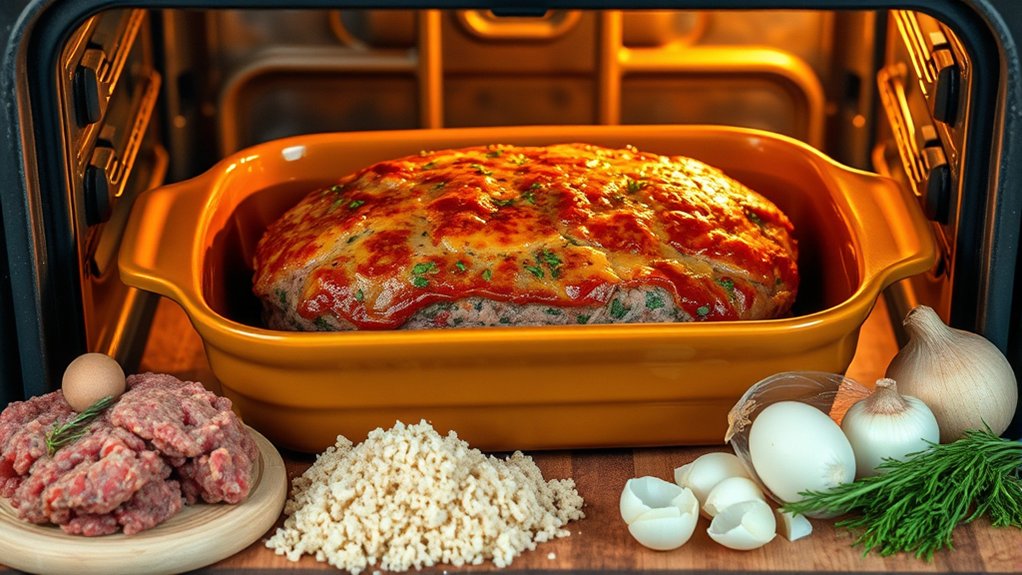
Ingredients matter just as much as loaf size because they change how quickly heat moves through the meatloaf and how much moisture it holds while baking. If you use lean beef, your loaf cooks a little faster, but it can dry out sooner and develop a firmer meat texture.
Ingredients affect cooking speed and moisture as much as loaf size, especially with lean beef.
Add pork, veal, or extra-fat beef, and the loaf stays juicier, though it may need a few more minutes in the oven. Breadcrumbs, oats, and soaked bread all trap moisture, which softens the crumb and can slow browning slightly.
Eggs help bind everything, giving you a slice that holds together without turning dense. Vegetables like onions, peppers, and mushrooms add flavor and water, so they can extend cook time while improving tenderness.
You should also watch seasoning balance, since salty sauces and wet glazes change both moisture level and surface color, affecting how your meatloaf bakes.
Why a Meat Thermometer Matters
A meat thermometer takes the guesswork out of meatloaf, so you can check the exact internal temperature with confidence. You’ll know when the center is truly done, which helps you avoid an undercooked loaf or a dry one.
For the best result, aim for a safe doneness check before you pull it from the oven.
Accurate Internal Temperature
Pinning down the right internal temperature is the surest way to keep meatloaf juicy, safe, and fully cooked. You’ll get the best results when you insert a meat thermometer into the thickest part of the loaf, avoiding the pan and any pockets of fat.
That reading tells you more than guesswork ever can, especially when recipe times vary by shape, size, or oven quirks. For accurate internal temperature, aim for a steady, reliable number before you pull it out.
This two word discussion ideas point may seem subtopic irrelevant to some cooks, but it keeps your timing focused. A thermometer lets you cook with confidence, preserve moisture, and avoid an overbaked, crumbly slice.
Safe Doneness Check
When you check meatloaf for safe doneness, a meat thermometer takes the guesswork out of the oven and helps you avoid serving an undercooked center or a dry edge. For meatloaf safety, insert it into the thickest part and aim for 160°F.
You’ll know the loaf is ready when the juices run clear and the center feels firm, not spongy. Oven thermometers help you trust the reading, especially if your oven runs hot or cool.
| Check | What to Look For | Why It Matters |
|---|---|---|
| Thermometer | 160°F in center | Confirms safe doneness |
| Texture | Firm, springy loaf | Signals even cooking |
| Juices | Clear, not pink | Adds visual reassurance |
Let the meatloaf rest, then slice and serve warm.
Signs Your Meatloaf Is Fully Cooked
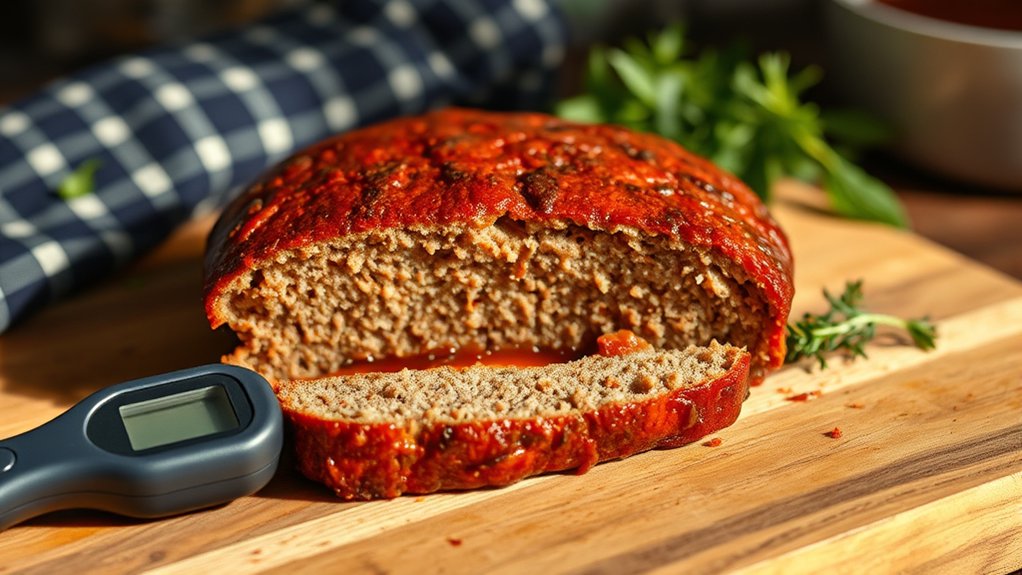
How can you tell your meatloaf is done? You’ll see clear signs before you slice it. First, the center should register 160°F on an instant-read thermometer. Next, the loaf should feel firm when you press it lightly, not jiggly in the middle.
The juices may run clear, and the top will look browned and slightly caramelized. You can also check the edges: they’ll pull slightly from the pan or loaf shape, showing the meat has set.
If you’re making meatloaf variations with extra vegetables, cheese, or glaze, rely on temperature first, not appearance alone. Once it’s fully cooked, let it rest so the slices hold together neatly.
Then you can enjoy juicy slices tonight and use meatloaf leftovers for sandwiches, pasta, or crumbled fillings tomorrow. Precise doneness gives you safe, savory results every time.
How to Cook Meatloaf Without Drying It Out
A meatloaf can hit 160°F and still turn dry if it’s overmixed or baked too long, so a few small choices make a big difference. Use ground beef with some fat, and mix just until the ingredients hold together.
Add soaked breadcrumbs, milk, or broth to lock in meatloaf moisture without making the loaf soggy. Shape it into a compact loaf so it cooks evenly, then place it in a preheated oven for steady heat.
Keep an eye on oven timing and start checking early with an instant-read thermometer. Pull the meatloaf when the center reaches 160°F, then rest it for 10 minutes so the juices settle back into the slices.
If you want extra flavor, brush on sauce during the last part of baking so it caramelizes instead of burning. These steps help you serve a tender, juicy meatloaf every time.
When to Cover Meatloaf With Foil
If the top of your meatloaf starts browning too quickly, you can cover it loosely with foil about halfway through baking to protect it from overbrowning while the center finishes cooking. Use this move when your oven runs hot, your loaf is tall, or the glaze darkens before the meat reaches doneness.
Tenting the foil, rather than sealing it tight, lets heat circulate and keeps the surface from steaming. You’ll uncover secrets to better color control by checking the loaf during the last third of baking and removing the foil once the crust looks balanced and appetizing.
To avoid pitfalls, don’t cover it too early, or you’ll miss that savory browned top. Keep the foil away from the glaze so it doesn’t stick and tear. When you time it right, you get a juicy interior and a rich, caramelized finish that makes each slice look and taste better.
How to Rest Meatloaf Before Slicing
Once your meatloaf comes out of the oven, let it rest for 10 to 15 minutes before slicing. This short pause helps the juices settle, so each slice stays moist, neat, and flavorful. For better meatloaf slicing, transfer it to a cutting board and leave it uncovered unless you want a lighter tent of foil.
Use these resting tips to protect texture and taste:
- Keep the loaf in its pan for 5 minutes first.
- Move it to a board with a rim to catch juices.
- Slice with a sharp knife after resting.
- Wipe the blade between cuts for clean servings.
During rest, the center finishes setting without drying out, and the crust keeps its savory edge. If you cut too soon, the slices can crumble and lose their rich juices. Give it that brief wait, and you’ll serve firm, tender meatloaf that holds together beautifully on the plate.
Common Meatloaf Baking Mistakes to Avoid
What mistakes most often turn a good meatloaf dry, dense, or undercooked? You may pack the mix too tightly, skip a thermometer, or guess at oven time. Each error hurts meat consistency and can ruin spice balance, leaving you with a bland, crumbly loaf or a wet center.
| Mistake | What happens | Fix |
|---|---|---|
| Overmixing | Tough texture | Stir just until combined |
| Underseasoning | Flat flavor | Taste and adjust spices |
| Skipping binder | Crumbles apart | Use egg and breadcrumbs |
| Wrong pan size | Uneven baking | Match loaf to pan |
| Cutting too soon | Juices spill | Rest before slicing |
You should also avoid baking at too high a temperature, since the outside can scorch before the middle sets. For the best results, check doneness at 160°F, then let the loaf rest so the juices settle and every slice stays moist, tender, and savory.
Frequently Asked Questions
Can I Cook Meatloaf in a Glass Baking Dish?
Yes, you can cook meatloaf in a glass baking dish; use glass bakeware for even heating. You’ll want to grease it well, shape the loaf evenly, and bake until the center reaches 160°F.
Should I Use Convection for Meatloaf?
Yes, you should use convection for meatloaf; it offers convection benefits like even browning and faster cooking. Lower the oven temperature by 25°F, and you’ll keep it moist, tender, and nicely caramelized.
Can I Freeze Meatloaf Before Baking?
Yes, you can freeze meatloaf before baking; think of it as tucking a packed suitcase into winter. Freeze it well, note freezing timing, then use safe thawing methods in your fridge before baking.
What Pan Size Is Best for Meatloaf?
You’ll want a 9×5-inch loaf pan for classic meatloaf; it gives even shape and reliable timing considerations.
For a flatter loaf, use a sheet pan so you get more crust and quicker cooking.
Can I Make Meatloaf Ahead of Time?
Yes, you can make meatloaf ahead. Like a meal-prep Sunday, it’s a small investment with big payoff.
You’ll use ahead prep and time saving tips: mix, shape, chill up to 24 hours, then bake.
Conclusion
You’ve got the recipe for a meatloaf that bakes like a well-tuned drum, not a dry brick. Keep your oven steady at 350°F, watch the size and shape, and trust a thermometer over the clock—160°F in the center is your finish line.
Then let it rest so the juices settle like gold in a pan. Slice it too soon, and you’ll lose the payoff.
Patience turns simple meatloaf into a tender, savory reward. Knowing how long to cook meatloaf in the oven is key to achieving that perfect texture and flavor.