Can You Put Glass in the Oven
A clear dish can be a calm promise, but can you put glass in the oven safely? You can only do so when it’s labeled oven-safe and designed to withstand heat, such as borosilicate or tempered glass.
Always check the manufacturer’s temperature limit before use. Avoid placing glass under broilers or on stovetops, as these can cause damage.
Prevent sudden temperature changes, as even one small flaw can lead to breakage. Remember, careful handling is the next step to keeping your glassware intact.
Key Takeaways
- Yes, but only if the glass is explicitly labeled oven-safe or heat-resistant by the manufacturer.
- Borosilicate and some tempered glass can be oven-safe; decorative, drinking, or storage glass often is not.
- Check the product’s temperature limit and follow manufacturer instructions exactly.
- Avoid broilers, direct flame, stovetops, and sudden temperature changes to prevent thermal shock.
- If glass is cracked, chipped, scratched, or clouded, do not use it in the oven.
Which Types of Glass Are Oven-Safe?
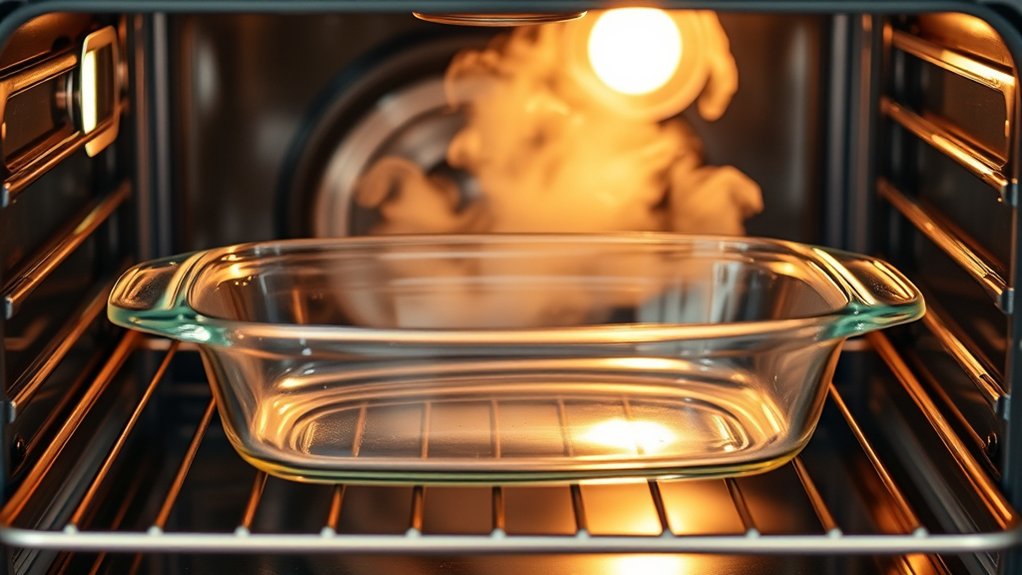
When it comes to oven use, not all glass is equal. You should rely on glass specifically made for thermal exposure, such as borosilicate and tempered glass.
For oven use, choose glass made for heat, such as borosilicate or tempered glass.
Borosilicate tolerates rapid temperature changes better because its low expansion rate reduces stress. Tempered glass can also work when the manufacturer rates it for oven use, but you still need to avoid direct contact with broilers, burners, or stovetops.
You shouldn’t assume decorative, drinking, or storage containers are safe, even if they look sturdy. Check for published temperature limits and use the item only within that range.
For careful glass care, let the dish warm gradually and never place cold glass into a hot oven. Good storage tips also matter: keep safe glass free of chips, scratches, and stacked pressure, since damage weakens heat resistance.
If you need certainty, choose cookware labeled for baking rather than repurposed glass.
How Can You Tell If Glass Is Oven-Safe?
You can tell if glass is oven-safe by checking the manufacturer’s label or packaging for explicit oven-safe instructions. You should also look for tempered glass, since that material is designed to tolerate higher heat than standard glass.
If you can’t verify either marker, don’t assume the glass is safe for oven use.
Check Manufacturer Label
The surest way to tell whether glass is oven-safe is to check the manufacturer’s label, packaging, or product instructions. You should look for explicit wording such as “oven-safe,” “heat-resistant,” or a stated maximum temperature.
Read the care labeling carefully, because some products allow only limited heat exposure or specific uses. If the label is missing, don’t assume the glass can handle oven conditions.
Contact the manufacturer or review the product page for documented safety testing and verified specifications. Keep the original packaging or manual for reference, since generic glassware often lacks standardized heat ratings.
If any instruction conflicts with your intended use, follow the stricter guidance. When in doubt, treat the item as unsuitable for oven use rather than risk thermal damage or breakage.
Look For Tempered Glass
If the label doesn’t give a clear answer, check whether the glass is tempered, since tempered glass is generally stronger and more heat-tolerant than standard glass. You can sometimes find a stamp, logo, or etched mark on the base or rim that identifies tempered construction.
Even then, don’t assume all tempered items are oven-safe, because some products are designed for cold use, serving, or glass storage only. Compare the marking with the manufacturer’s guidance and look for explicit oven instructions and maximum temperature ratings.
Avoid guessing with older non oven glassware, especially if you can’t verify its origin or history. If you see chips, scratches, or cloudiness, treat the piece cautiously, since damage can weaken thermal resistance.
When in doubt, choose a clearly labeled oven-safe dish instead.
Why Does Glass Crack in the Oven?
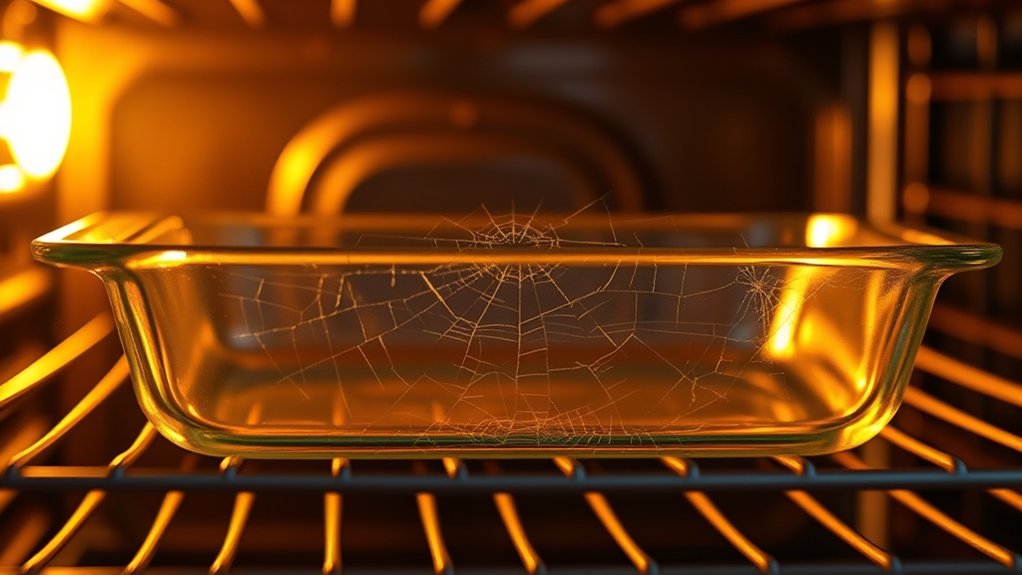
Glass cracks in the oven when heat creates stress faster than the material can relieve it. You may see this when the glass has uneven thickness, hidden flaws, or residual internal strain. Sudden temperature differences also matter because the outer surface expands before the inner core, and that mismatch concentrates force.
For glass safety, you should treat these failures as predictable material limits, not random events. Baking hazards increase when you place cool glass into a hot cavity or expose one area to direct radiant heat.
| Cause | Effect | Risk |
|---|---|---|
| Thermal shock | Rapid expansion mismatch | Cracking |
| Internal strain | Stored stress release | Sudden failure |
| Surface damage | Stress concentration | Fracture start |
| Uneven heating | Local temperature gradient | Breakage |
| Material defects | Weak points | Reduced durability |
You can’t rely on appearance alone, because a clear dish may still fail under oven stress.
How Do You Heat Glass Safely?
You should use only heat-resistant glass types, such as borosilicate or tempered glass, because ordinary glass can fail under oven conditions. Keep the oven temperature within the manufacturer’s stated safe limit, and don’t assume all glassware tolerates the same maximum heat.
You also need to raise and lower the temperature gradually, since rapid thermal change can create stress and cause cracking.
Heat-Resistant Glass Types
How can you tell which glass can handle oven heat? You check the glassware safety markings and read the bakeware labels before you use it. Heat-resistant options usually include borosilicate and tempered soda-lime glass; both tolerate thermal stress better than ordinary decorative glass.
Borosilicate changes temperature more evenly, so you’re less likely to trigger cracking. Tempered glass has internal stress patterns that improve strength, but it can still fail if damaged or shocked. You should inspect each dish for chips, scratches, clouding, or warped rims, because flaws reduce heat tolerance.
Don’t assume a clear dish is oven-safe just because it looks sturdy. If the manufacturer doesn’t explicitly rate the item for oven use, treat it as unsuitable and choose a product designed for baking instead.
Safe Oven Temperature
The safest oven temperature for glass depends on the manufacturer’s rating, but gradual heating is just as important as the number on the dial. You should treat that rating as a maximum, not a target, because material science shows glass can fail when thermal stress exceeds its tolerance.
For oven safety, keep your setting within the approved range, often 350°F to 425°F for tempered bakeware, unless the maker specifies otherwise. You shouldn’t use broil, direct flame, or a preheated surface hotter than the glass is designed for.
Check for chips, scratches, or clouding before use, since defects weaken the structure. If you’re unsure, choose a lower setting and verify the product label or manufacturer guidance before heating.
Gradual Temperature Changes
Even when a glass dish is rated for oven use, it still needs a slow temperature change to stay intact. You should place it in a preheated oven only if the manufacturer allows it, and you should avoid sliding it from cold storage directly into high heat.
For glass safety, let the dish warm with the oven or rest briefly at room temperature before baking. Keep it away from broilers, stovetops, and wet counters, because uneven heating raises the risk of thermal shock.
When you remove it, set it on a dry cloth, trivet, or cooling rack, not a cold surface. Don’t rinse it with cool water while it’s hot. These steps help you heat glass safely and reduce breakage.
What Should You Avoid With Glass Bakeware?
Avoid sudden temperature changes with glass bakeware, because thermal shock can crack or shatter it. You shouldn’t place a cold dish into a fully preheated oven, set hot glass on a wet counter, or add chilled liquid to a hot pan.
Skip direct contact with burners, broilers, or stovetop flames, since most bakeware isn’t rated for those heat sources. You also need to avoid abrasive cleaners, metal utensils, and sudden impacts, which can weaken edges and introduce stress points.
For glass safety, inspect each dish before use; chips, scratches, and hairline defects reduce strength. Follow the manufacturer’s temperature limits exactly, and don’t exceed them to compensate for uneven cooking.
Prevention methods include preheating gradually, using dry oven mitts, and letting the dish cool on a trivet. You should never use damaged bakeware, because hidden flaws can fail under ordinary oven conditions.
What Should You Do If Glass Cracks?
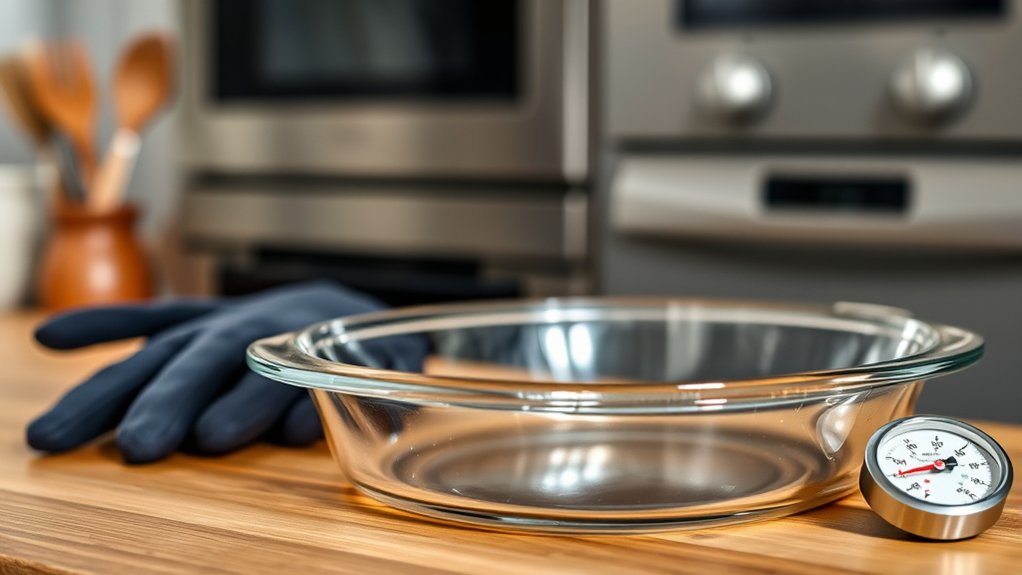
If a glass dish cracks during baking, stop using it immediately and turn off the heat if it’s safe to do so. Keep the oven door closed until the dish cools, because sudden air exposure can worsen fracture propagation.
After cooling, remove the dish only with dry oven mitts and inspect the damage under good light. For safe glass handling, discard any dish with visible cracks, chips, or a spiderweb pattern; don’t reuse it for cooking, storage, or reheating.
- Let the glass cool fully before touching it.
- Use gloves, tongs, and a stable surface.
- Sweep fragments with a damp paper towel.
- Seal broken pieces in a rigid container.
- Review crack prevention steps before your next bake.
If you need to clean the oven, unplug it first and use a brush, not bare hands. Document the failure if you suspect thermal stress, then replace the dish with oven-rated glass only.
Frequently Asked Questions
Can Glass Lids Go in the Oven Safely?
Yes, you can use glass lids only if they’re oven-safe and rated for your temperature. You should avoid decorative glass, since it may crack or shatter.
Check manufacturer labels, handles, and maximum heat limits carefully.
Is Decorative Glass Oven-Safe for Baking?
No, you shouldn’t assume decorative glass is oven-safe for baking. You need manufacturer confirmation, because baking safety depends on heat resistance, coatings, and thermal shock limits.
If it isn’t rated, don’t use it.
Can Cold Glass Be Placed Directly Into a Hot Oven?
No, don’t place cold glass directly into a hot oven; thermal shock causes most glass failures. About 90% of breakage happens from rapid temperature change. You should warm it gradually, following the manufacturer’s limits.
Do Glass Mixing Bowls Work in the Oven?
Yes, you can use glass mixing bowls in the oven only if they’re labeled oven-safe. You should check for furnace safe testing marks, avoid sudden temperature changes, and handle them cautiously to prevent cracking.
How Long Does Oven-Safe Glass Usually Last?
Typically, you can rely on oven-safe glass for years, but you’ll need to respect glass durability and oven ready limits.
Like a steady lighthouse, it lasts until repeated thermal stress, scratches, or impacts weaken it.
Conclusion
So, can you put glass in the oven? Yes—if you use oven-safe glass rated for heat, like borosilicate or tempered bakeware. Check the manufacturer’s temperature limit, warm it gradually, and keep it away from broilers, stovetops, and sudden temperature swings.
Don’t use chipped or cracked pieces; they’re a weak link in the chain and can fail fast. If you’re unsure, choose oven-rated glass and follow the label exactly.
In conclusion, when considering if you can put glass in the oven, always opt for oven-safe glass to ensure safety and durability.