What Temperature to Cook Pork in Oven
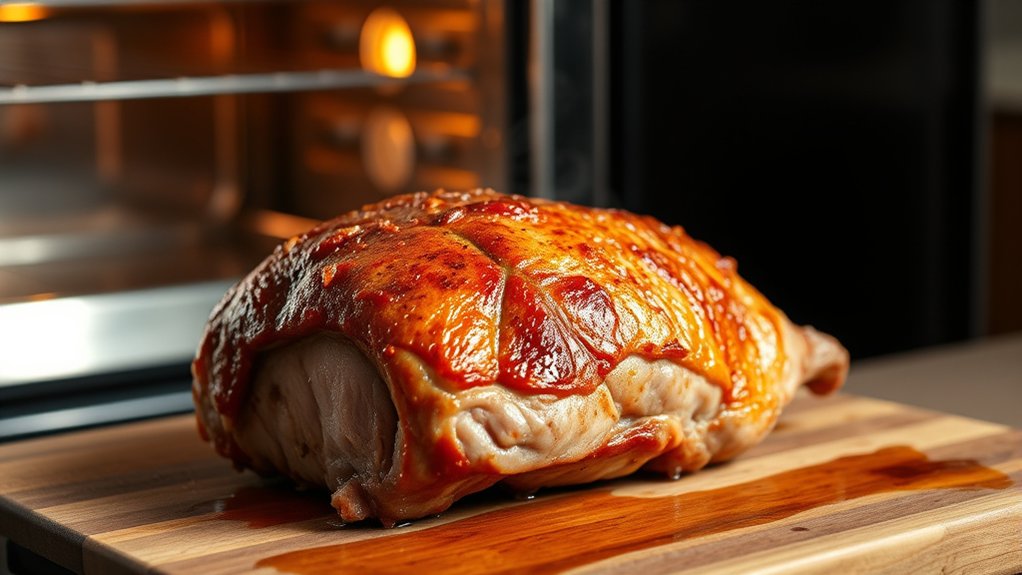
You can cook pork in the oven to a juicy, safe finish without guessing by color alone. In your oven, aim for 145°F in the center for most cuts, then let it rest 3 minutes; use 160°F for ground pork.
Check the thickest part, away from bone or fat, and watch how roast temperature changes by cut. If you want tender results every time, the timing details matter next.
Key Takeaways
- Cook most pork chops and tenderloin at 400°F in the oven for good browning and juiciness.
- Pork loin roast is typically roasted at 375°F, about 25 minutes per pound.
- Shoulder roasts are usually cooked at 300°F for 3 to 4 hours.
- Use a thermometer, not color or time alone; pork is done at 145°F with a 3-minute rest.
- Ground pork should reach 160°F, and resting helps carryover heat finish cooking.
What Temperature Is Pork Done?
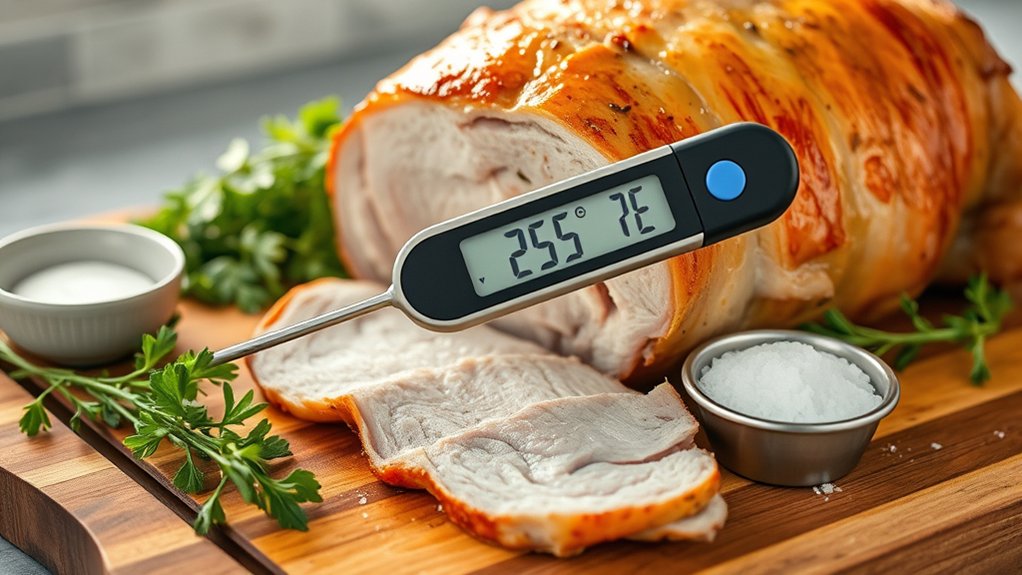
Pork is done when its internal temperature reaches 145°F, measured at the thickest part with a food thermometer, followed by a 3-minute rest. You should trust the thermometer, not color, because safe pork can still look slightly pink.
This endpoint supports pork safety and helps you avoid overcooking. Insert the probe into the center of the thickest section, away from bone or fat, then wait for a stable reading.
If you use a different cut size, check several spots to confirm doneness. Keep oven accuracy in mind, since an unreliable oven can mislead your timing and leave the meat undercooked or dry.
Calibrate your thermometer if readings seem inconsistent. After the rest, the temperature can rise a bit and the juices will redistribute, giving you better texture.
When you follow this method, you’ll cook pork confidently and precisely every time.
Pork Chop Oven Temperature
For tender, juicy pork chops, set your oven to 400°F for most standard cuts. At this temperature, you get good browning without drying out the meat. Pat the chops dry, then season them well with salt, pepper, and your favorite spice rubs.
For tender, juicy pork chops, bake at 400°F for great browning without drying them out.
If you want extra flavor, add garlic powder, paprika, or mustard powder before cooking. Place the chops on a rimmed baking sheet or in a hot skillet, then bake until the center reaches 145°F. A thicker chop may need a few extra minutes, while thinner cuts finish faster.
Let them rest for 3 to 5 minutes so the juices settle. For pork pairing, serve them with roasted potatoes, green beans, apples, or a crisp salad. If you prefer a deeper crust, you can briefly sear the chops first, then finish them in the oven.
Keep an instant-read thermometer handy so you can avoid guesswork and serve confidently.
Best Oven Temp for Pork Tenderloin
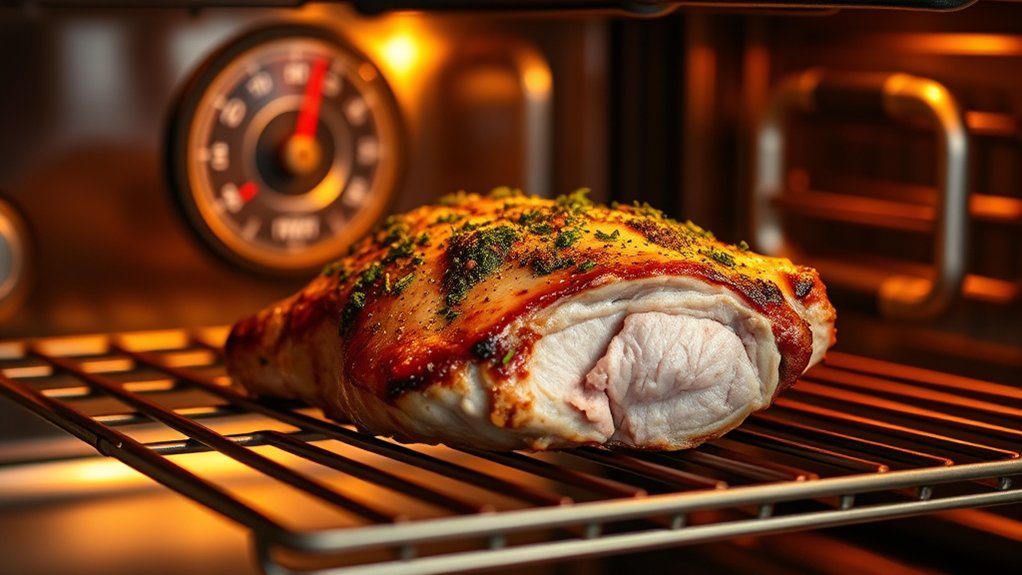
When you’re cooking pork tenderloin in the oven, set the temperature to 400°F for the best balance of browning and juiciness. This heat lets the outside develop color quickly while the center stays tender, which makes it ideal for lean cuts.
Use this oven technique after patting the tenderloin dry, seasoning it well, and placing it on a rack or in a hot skillet for even heat flow. For reliable pork roasting, keep the oven fully preheated before the meat goes in. That helps you avoid steaming and encourages a better crust.
If you want a more gentle result, you can lower the heat slightly, but 400°F usually gives you the cleanest, most efficient cook. Watch the tenderloin closely and use a thermometer so you don’t overcook it. With the right temperature, you’ll get a juicy center and a flavorful exterior.
Pork Oven Times by Cut
Cooking time changes a lot depending on the cut, so once you’ve set the right oven temperature, the next step is matching that heat to the meat you’re roasting.
For pork tenderloin, plan on about 20 to 25 minutes at 425°F. For boneless loin chops, figure 15 to 20 minutes at 400°F, while bone-in chops usually need 20 to 30 minutes.
A pork loin roast takes longer: about 25 minutes per pound at 375°F. Shoulder roasts need the most patience, often 3 to 4 hours at 300°F because of their size and connective tissue.
If you use pork rubs, apply them before roasting so they can season the surface evenly. For wet marinades, keep marinade timing simple: several hours for chops or tenderloin, overnight for larger roasts.
Always use the cut’s thickness and weight to guide your clock, not just the recipe.
How to Tell When Pork Is Done?
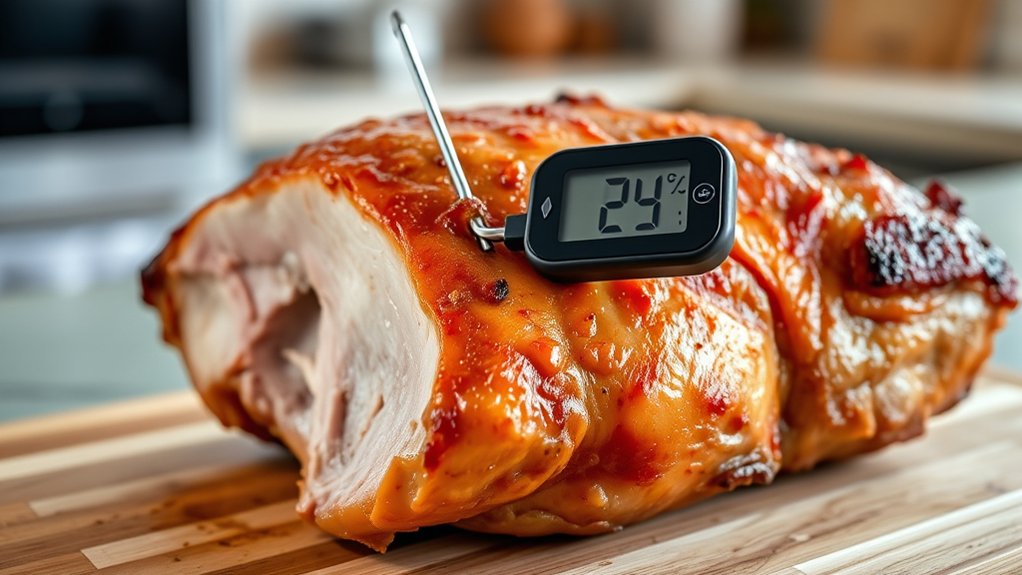
You can tell pork is done by checking its internal temperature with a meat thermometer in the thickest part. When you cut into it, the juices should run clear, not pink.
After it reaches the right temperature, let it rest so the juices settle and the meat stays juicy.
Internal Temperature Check
How do you know when pork is done? You check the internal temperature with an instant-read thermometer. Insert it into the thickest part of the meat, avoiding bone and fat, then wait for the reading to stabilize.
For chops, roasts, and tenderloin, aim for 145°F, then let the pork rest briefly so the temperature finishes rising. If you’re cooking ground pork, look for 160°F.
Doneness cues help, but they shouldn’t replace the thermometer; color alone can mislead you. The meat should feel firm yet still slightly springy, and the thermometer gives you the exact answer.
Check several spots in larger cuts so you don’t miss a cooler center. This simple internal temperature check keeps your pork safe, juicy, and properly cooked every time.
Juices Run Clear
Clear juices can signal that pork is close to done, but they’re not a foolproof test on their own. If you cut into the thickest part and see little to no pink liquid, that supports your doneness check.
Still, rely on a thermometer first, because juices clarity can vary with cut, fat, and cooking method. Don’t guess based on surface color alone; pork can brown before it reaches a safe internal temperature.
Watch for safety concerns if the juices look clear but the center feels soft or undercooked. Insert the thermometer into the thickest section, avoid bone contact, and confirm the proper temperature before serving.
Use clear juices as a helpful clue, not the final answer, so you can cook pork accurately and safely every time.
Resting Time Matters
Resting time matters because pork keeps cooking after it leaves the oven. You should let it sit, loosely tented, so juices redistribute and the internal temperature finishes with carryover heat.
For chops, a 3 to 5 minute resting time works; for larger roasts, give 10 to 15 minutes. If you cut too soon, the juices run out and the meat can seem drier than it is.
Use a thermometer to confirm doneness, then remove the pork when it’s a few degrees below your target. During rest, juices carryover helps the center reach a safe, juicy finish.
After resting, slice against the grain and serve right away for the best texture and moisture.
How Long to Rest Pork
After you pull pork from the oven, let it rest so the juices can settle and the meat stays moist. For most cuts, 5 to 10 minutes is enough, though larger roasts can use a bit longer.
During this time, the internal temperature can keep rising slightly, so plan for carryover cooking.
Resting Time Basics
How long should you let pork rest after baking? For most cuts, rest it 5 to 10 minutes. For larger roasts, give it 10 to 15 minutes so the meat settles and slices cleanly.
Put the pork on a warm plate or cutting board and leave it loosely covered; tight wrapping traps oven moisture and softens crust formation. Keep the resting spot away from drafts, and don’t cut into the meat early just to check it. You’ll get neater slices if you wait, and the texture stays more even across each piece.
If you’re working with a thick roast, use the longer end of the range. Short chops need less time, but they still benefit from a brief rest before serving.
Juices And Carryover
As the pork rests, the juices redistribute and the center temperature can rise a few degrees from carryover heat. You should plan for this when you pull the meat from the oven, because juices and carryover keep cooking it gently.
For chops or tenderloin, rest 5 to 10 minutes; for larger roasts, rest 15 to 20 minutes. If you slice too soon, you’ll lose moisture onto the cutting board instead of keeping it in the meat.
Tent the pork loosely with foil, but don’t wrap it tightly or you’ll soften the crust. Check the final internal temperature after resting, not before.
Resting time matters because it helps you serve pork that’s juicy, tender, and safely cooked without overbaking.
Common Pork Cooking Mistakes
What goes wrong most often when cooking pork in the oven? You make common mistakes that dry out the meat or leave it underdone. One of the biggest timing misconceptions is cooking by minutes alone instead of checking internal temperature.
Use a thermometer, and pull pork when it reaches 145°F for chops, loin, or tenderloin; then rest it so carryover heat finishes the job. Don’t set the oven too high just to speed things up, because the outside can overcook before the center is safe.
Avoid opening the door often, since heat loss slows cooking and makes results uneven. You also shouldn’t skip seasoning or resting; both help flavor and juiciness.
If you’re roasting a larger cut, plan for more time, but let temperature guide you. Careful monitoring gives you tender, juicy pork every time.
Frequently Asked Questions
Can I Cook Pork From Frozen in the Oven?
Yes, you can cook pork from frozen in the oven, but you’ll need longer time and careful oven techniques.
Check pork safety with a thermometer, and don’t season or sear until it thaws enough.
Should Pork Be Covered While Baking?
Yes, you’ll usually cover pork at first unless you enjoy serving desert-dry meat. Covering traps pork moisture and can shorten roasting time. Uncover it near the end to brown the surface and crisp the edges.
Does Pork Need Seasoning Before Roasting?
Yes, you should season pork before roasting. Use seasoning basics like salt, pepper, garlic, and herbs to boost flavor development.
You’ll get juicier, tastier meat if you coat it evenly and let it rest first.
Can I Use Convection for Pork?
Yes, you can use convection for pork; it’s a wind at your back. You’ll cook it faster and more evenly, so reduce heat by 25°F.
For convection pork, avoid frozen roasting for best results.
What Rack Position Is Best for Pork?
You’ll get the best pork results on the middle rack, where heat circulates evenly. If you sear first, use a lower rack briefly, then move it center. Always rest meat before slicing.
Conclusion
In the oven, pork should reach 145°F in the center, then rest for 3 minutes so the juices can settle like a quiet drum after the last beat. For ground pork, cook to 160°F. Use a thermometer, not color, and check the thickest spot away from bone.
When you do, you’re not just cooking dinner—you’re turning heat into safety, tenderness, and trust. Let each roast rest, and let patience do its work.
Knowing the right temperature to cook pork in the oven ensures your meal is both delicious and safe.