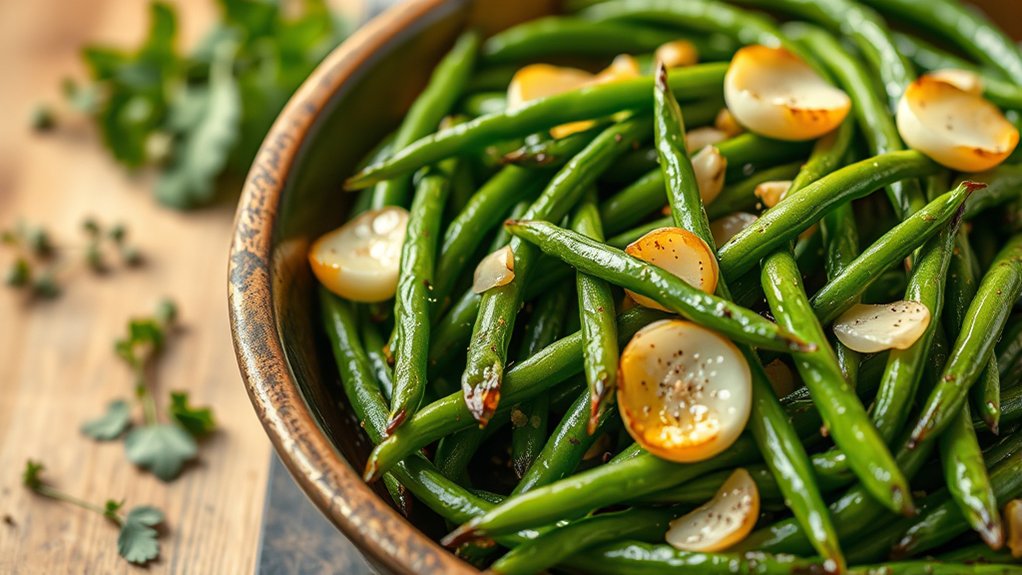
How to Cook Green Beans in Oven
To cook green beans in the oven, you’ll start with dry, trimmed pods tossed in olive oil, salt, and pepper.
Then, spread them on a hot sheet pan so they roast instead of steam.
A few minutes in a 425°F oven can turn them crisp-tender with browned edges.
But the real difference comes from timing and seasoning choices you make next.
Key Takeaways
- Preheat oven to 425°F, trim and dry fresh green beans, then spread them in a single layer on a rimmed baking sheet.
- Toss beans with olive oil, salt, and black pepper; add garlic powder, lemon zest, or red pepper flakes if desired.
- Roast for 12–15 minutes, flipping halfway through, until edges are browned and the beans are bright and slightly wrinkled.
- Avoid crowding the pan so beans roast instead of steam, keeping them crisp-tender with good color.
- Serve immediately, or store leftovers airtight in the fridge for 3–4 days and reheat briefly in the oven.
How to Bake Green Beans in the Oven
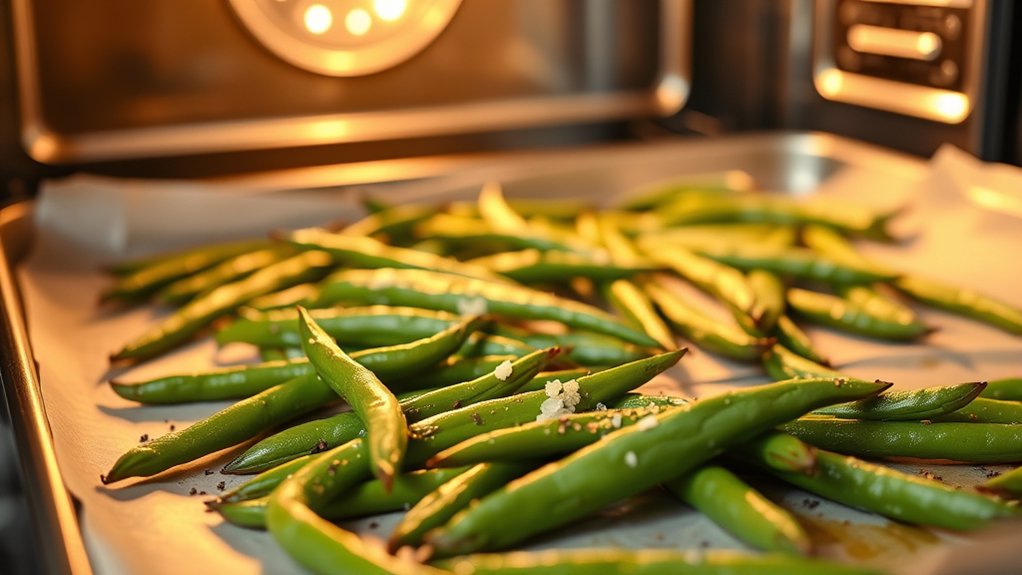
Baking green beans in the oven is one of the easiest ways to bring out their natural sweetness and give them a tender-crisp texture. You start by preheating your oven, then spread the beans in a single layer so hot air can circulate evenly.
That simple setup is one of the best kitchen hacks for avoiding soggy spots and encouraging light browning. As they roast, the beans science works in your favor: heat softens the cell walls while moisture escapes, creating a pleasant snap instead of a limp bite.
You’ll want to keep an eye on them and toss once halfway through so they cook evenly on all sides. When the tips look lightly blistered and the color turns bright green, they’re ready. This method gives you beans with deep flavor, a clean texture, and a finish that feels fresh, satisfying, and easy to repeat any night.
Ingredients for Oven-Baked Green Beans
To make oven-baked green beans, you’ll start with fresh green beans that are trimmed, crisp, and ready to roast. You’ll also want simple seasonings like olive oil, salt, pepper, and maybe garlic or onion powder to bring out their natural flavor.
If you like extra texture or richness, you can add optional ingredients like lemon zest, parmesan, sliced almonds, or a sprinkle of red pepper flakes.
Green Bean Basics
What do you need for oven-baked green beans? Start with fresh green beans that feel firm, snap cleanly, and look bright and crisp. You can also use trimmed, washed beans if you’re short on prep time.
For the best texture, choose medium-size pods, since very thin beans can overcook and very thick ones may stay tough. If you’re comparing roasting methods, this simple vegetable works beautifully because it browns well while keeping a tender bite.
Pat the beans dry before they hit the pan, so they roast instead of steam. Spread them in a single layer on a rimmed baking sheet, giving each bean room to cook evenly. That’s the basic foundation for a reliable, flavorful side dish.
Seasoning Essentials
How do you make oven-baked green beans taste their best? Start with a simple seasoning mix that lets their fresh, crisp flavor shine. You’ll want olive oil to help the beans roast evenly, plus salt and black pepper for clean, balanced flavor.
A little garlic powder adds warmth, while onion powder gives subtle depth without overpowering the vegetables. If you like a brighter finish, use a squeeze of lemon after baking, but keep the base seasoning straightforward.
This approach works well for weeknight dinners and easy protein pairing with chicken, fish, or tofu. For smooth kitchen organization, measure your seasonings before you preheat so everything’s ready when the beans hit the pan.
Optional Add-Ins
Want to dress up your oven-baked green beans a little more? You can boost flavor and create irresistible texture contrast with a few smart add-ins. A sprinkle of Parmesan melts into a salty crust, while sliced almonds or breadcrumbs add crunch.
Crispy bacon brings smoky depth, and minced garlic gives you a fragrant punch. For a bright finish, toss in lemon zest or a squeeze of juice right after baking. If you like a little heat, red pepper flakes work well too.
You can also add caramelized onions for sweetness, or a handful of cherry tomatoes for juicy color. Try these:
- Parmesan
- Sliced almonds
- Crispy bacon
- Lemon zest
- Red pepper flakes
How to Season Green Beans
The best way to season green beans is to keep the flavors bright and balanced so they enhance the beans instead of hiding them. Start with olive oil, salt, and black pepper; they coat each pod and help seasoning cling.
Add garlic powder for warmth, or a little onion powder for a mellow, savory edge. If you like a sharper finish, a squeeze of lemon juice or a pinch of zest wakes everything up.
You can also add crushed red pepper for gentle heat, but use it sparingly so the beans stay fresh and clean-tasting. Think of seasoning as bean gossip: just enough to bring out the story, not shout over it.
A kitchen superstition says a tiny sprinkle of sugar helps green beans taste sweeter, but you only need it if the beans seem flat. Taste after seasoning, adjust lightly, and let the beans’ natural flavor stay front and center.
How to Roast Green Beans
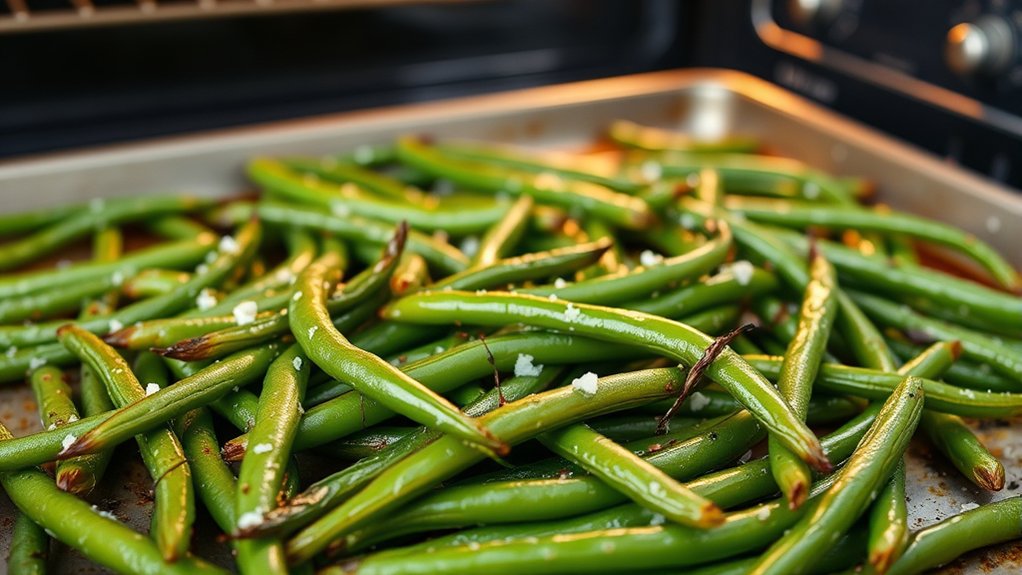
To roast green beans well, you’ll want to start with fresh, crisp beans that snap cleanly and look bright green. Toss them with olive oil, salt, pepper, and any seasonings you like so they’re lightly coated and ready for the oven.
Roast them at a hot temperature until they’re tender with browned, slightly crisp edges.
Choosing Fresh Green Beans
A handful of bright, crisp green beans can make all the difference when you roast them, so pick beans that feel firm, snap cleanly, and have a vibrant green color with no wrinkling or soft spots. When you’re choosing fresh beans, look for straight pods and tight skins, since quality starts with good texture and color.
Choose beans that feel heavy for their size. Avoid limp, bent, or rubbery pods. Inspect the ends for dryness or browning. Favor thin, tender beans for even roasting. Buy beans that look freshly picked, not faded.
You’ll get better results when every bean looks lively and uniform, because they roast evenly and stay pleasantly tender inside.
Seasoning For Roasting
How should you season green beans before roasting? You should start with olive oil, salt, and black pepper, then toss until every bean glistens. From there, build flavor with seasoning combinations that suit your meal.
Garlic powder adds savory depth, while onion powder brings gentle sweetness. For brightness, add lemon zest or a squeeze of juice after roasting. If you want heat, try red pepper flakes or a pinch of smoked paprika.
Fresh herbs like thyme or rosemary work well too, but use them lightly so they don’t overpower the beans. Keep spice balance in mind: you want the beans to taste bold, not buried. A small amount of Parmesan can add richness and help the seasoning cling beautifully.
Oven Temperature And Time
Roast green beans in a hot oven at 425°F for the best balance of tenderness and char. This oven temperature helps the beans blister quickly without turning mushy, so you get crisp edges and a juicy bite.
Spread them in a single layer and roast for 12 to 15 minutes, shaking the pan once halfway through. If you want deeper browning, leave them in for another minute or two, but watch closely.
- Trim ends for even cooking
- Dry beans before roasting
- Use parchment for easy cleanup
- Toss halfway for better color
- Serve right away for peak texture
For two word discussion ideas, think “fast roasting” or “golden edges.”
How Long to Bake Green Beans?
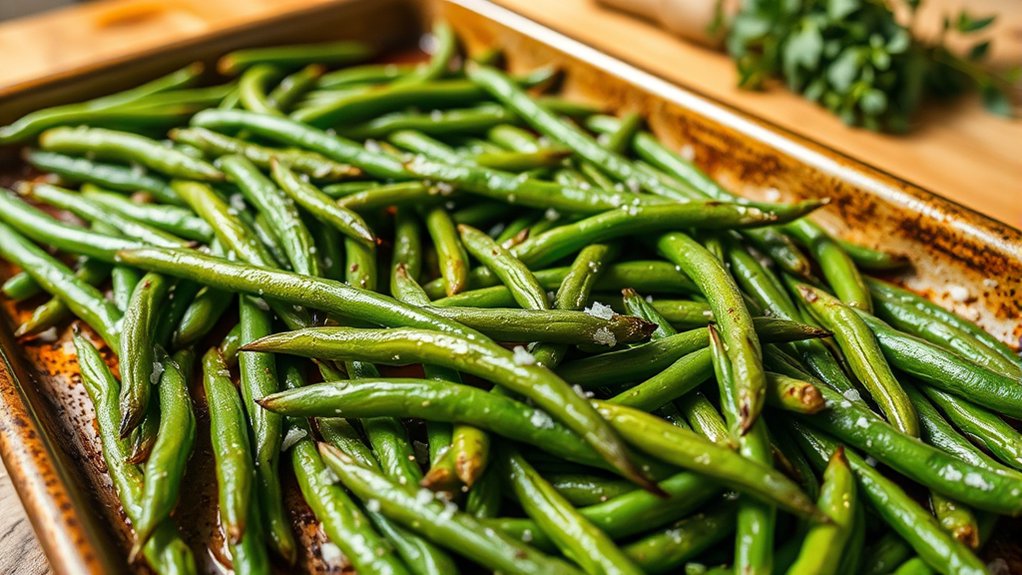
Wondering when your green beans are done? You usually need 15 to 20 minutes in a preheated oven at 425°F, though thinner beans can finish closer to 12 minutes and thicker ones may need a few more. Start checking early so you don’t overshoot the sweet spot.
You’re aiming for beans that look bright and slightly wrinkled, with tender centers and a bit of resistance when you bite them. This timing gives you a clear storytelling angle: you can follow the beans from raw to ready in a way that keeps audience engagement high, because the transformation is easy to see and taste.
If you want softer beans, keep them in the oven a little longer, but watch closely after the 15-minute mark. Cooking time also depends on how crowded your pan is, so spread them out for even heat. Once they’re done, pull them out promptly and serve hot.
Tips for Crisp-Tender Green Beans
For crisp-tender green beans, start with dry beans and a hot oven so they roast instead of steam. Pat them well after washing, then toss with just enough oil to lightly coat each bean. Spread them in a single layer on a rimmed sheet pan so they brown evenly and keep their crisp tender texture.
Use these oven baking tips: preheat fully, salt before roasting, and flip once for balanced color.
- Trim tough ends for a neat bite.
- Avoid crowding, or they’ll turn soft.
- Choose similar-sized beans for even cooking.
- Roast until edges blister and centers stay bright.
- Pull them out while they still feel slightly firm.
If you want extra snap, check them a minute early and let carryover heat finish the job. Serve right away for the best texture.
Green Bean Flavor Variations
Looking to change up the flavor? You can steer oven-roasted green beans in many directions with a few smart seasonings. For a classic take, toss them with olive oil, garlic, salt, and black pepper, then finish with lemon zest for brightness.
If you want warmth, add smoked paprika, cumin, or a pinch of red pepper flakes; those spices deepen the roasted edges without masking the beans’ clean taste. A little Parmesan brings savory richness, while toasted almonds add crunch.
For a fresh herb profile, use thyme, dill, or rosemary after roasting so their aroma stays lively.
Your choices connect to green bean history, which spans simple farmhouse cooking and more modern, globally inspired flavoring. Flavor science explains why roasting works so well: heat concentrates natural sugars, creating a sweeter, nuttier bite.
How to Store and Reheat Green Beans
After dinner, let the green beans cool to room temperature, then store them in an airtight container in the refrigerator for up to 3 to 4 days. These storage tips help keep them crisp-tender and flavorful, not soggy or dull.
Let green beans cool, then store airtight in the fridge for 3 to 4 days.
If you want them to last longer, line the container with a paper towel to catch extra moisture. Keep cooked beans away from strong-smelling foods so they don’t absorb odors.
- Label the container with the date.
- Reheat only the portion you’ll eat.
- Use the oven for the best texture.
- Warm them in a skillet with a splash of water.
- Microwave in short bursts, stirring once.
For reheating methods, use 350°F in the oven for 5 to 8 minutes, or heat gently on the stovetop until warmed through. Add a drizzle of olive oil, a pinch of salt, or a squeeze of lemon after reheating to refresh their taste.
Frequently Asked Questions
What Type of Green Beans Works Best for Baking?
Fresh, slender green beans, like haricots verts, work best for baking because you’ll get tender, even results. You’ll also enjoy them in soft serve desserts-inspired sides, especially with solar powered cooking for gentle roasting.
Should Green Beans Be Blanched Before Oven Cooking?
No, you don’t have to blanch green beans first, but blanching benefits include brighter color and better texture.
If you skip it, you’ll just need slightly longer cooking timing in the oven.
Can Frozen Green Beans Be Baked in the Oven?
Yes, you can bake frozen beans in the oven. You’ll get better texture if you spread them out, toss with oil and seasoning, and roast them hot until they’re tender and lightly browned.
How Do I Prevent Green Beans From Becoming Soggy?
You prevent soggy green beans by drying them well, tossing with little oil, and roasting at high heat.
Use techniques to avoid sogginess: spread them in one layer, avoid overcrowding, and pull them when crisp-tender.
Can I Use Parchment Paper on the Baking Sheet?
Yes, you can line your baking sheet with parchment paper; it catches drips like a quiet net beneath green beans.
You’ll still get tender, roasted edges, and cleanup’s much easier too.
Conclusion
So, there you are, turning humble green beans into something your oven can actually brag about. You toss, spread, roast, and—miracle of miracles—manage to resist steaming them into sad little floppies.
A few minutes later, they’re crisp-tender, bright, and oddly glamorous. Serve them right away, because like all good things, they won’t wait around forever.
If you’ve got Parmesan, lemon, or herbs, now’s your moment to pretend you planned it all along. This is how you truly master cooking green beans in oven.