How to Cook Brisket in Oven
If you want to learn how to cook brisket in the oven, starting with the right cut is essential. Choose a whole packer brisket and trim the fat to about 1/4 inch for the best results. Season it generously with salt, pepper, garlic powder, onion powder, and paprika to build great flavor.
If you happen to pull the brisket from the fridge on the same day you plan to cook it, you’ve already got a head start. Place the meat in a covered pan and roast it low and slow.
The key moment comes when the meat starts yielding just right, tender and juicy, signaling that your brisket is perfectly cooked.
Key Takeaways
- Choose a whole packer brisket when possible; it cooks more evenly with the flat and point together.
- Trim to about 1/4-inch fat cap, pat dry, and season generously with salt, pepper, and spices.
- Roast fat-side up in a tightly covered pan at 275°F for low and slow cooking.
- Keep the brisket covered and undisturbed for several hours until tender and easily pierced.
- Rest 30 to 60 minutes, then slice against the grain and serve with pan juices.
Choose the Right Brisket Cut
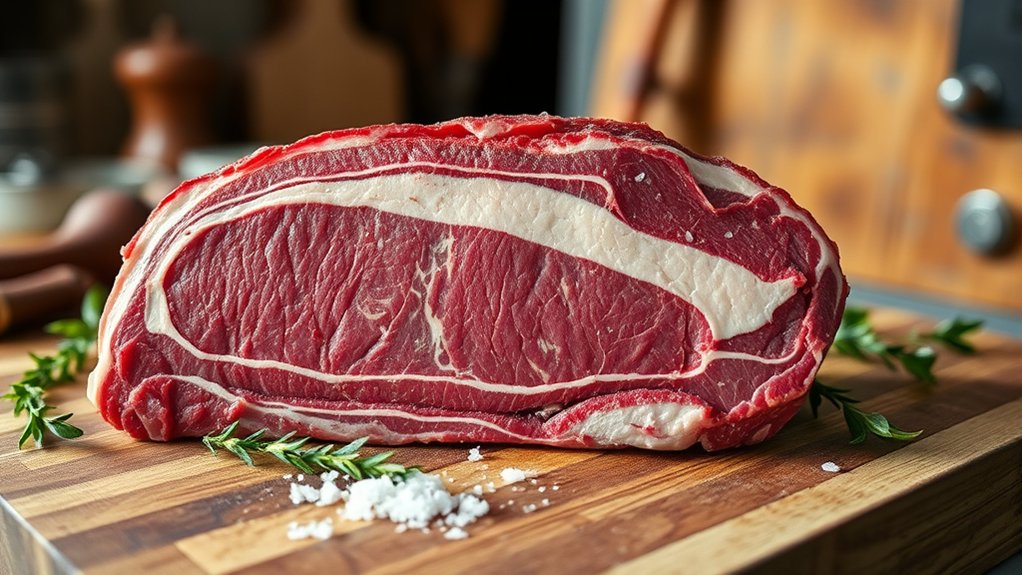
Before you heat the oven, pick a whole packer brisket if you can, since it gives you both the lean flat and the fattier point, which cook differently but stay moist together. You should look for a brisket with even thickness, firm fat, and flexible grain.
A flat that feels too thin can dry out in the oven, while a point adds insulation and richer flavor. If brisket pricing pushes you toward a smaller cut, choose a flat with a modest fat cap and avoid pieces with deep trimming or heavy surface damage.
Ask your butcher for the freshest cut available, and check that the meat looks deep red, not gray. If a whole packer isn’t available, consider alternative cuts such as chuck roast, but expect a different texture and cook time.
You’ll get the best oven results when you match the cut to your budget, your pan size, and the tenderness you want.
Season the Brisket for the Oven
Once you’ve picked your brisket, season it generously so the oven can build a flavorful crust. Pat the surface lightly if needed, then coat all sides with your seasoning and rub, pressing it on so it adheres evenly.
Use kosher salt, black pepper, garlic powder, onion powder, and paprika for a balanced base, or adjust the blend to match your taste. Apply a thicker layer over the fat cap and edges, since those areas benefit from extra flavor.
Keep the rub even, but don’t worry about perfection; the heat will melt and blend it as it cooks. Set the seasoned brisket in oven safe cookware, such as a roasting pan or Dutch oven, so the spices stay in place during roasting.
If you have time, let it rest briefly after seasoning so the surface can absorb the flavors. Handle it gently after coating, and avoid wiping off the rub before it goes into the oven.
Trim and Prep the Brisket
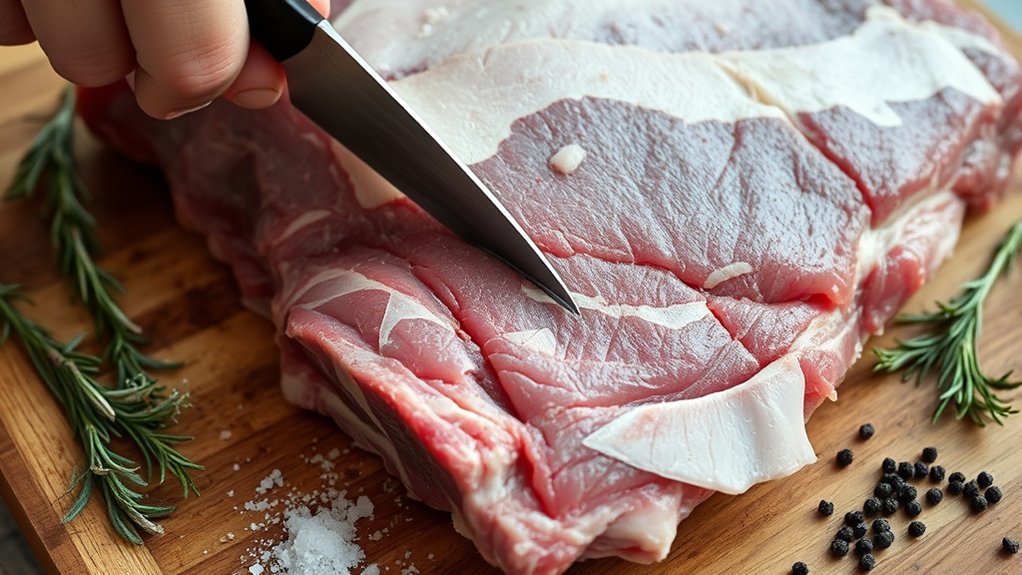
Trim the brisket by removing any loose, hard, or excessively thick fat, leaving about 1/4 inch of fat cap so the meat stays moist in the oven. Use a sharp knife and work slowly, keeping your cuts shallow during trim prep. Focus on fat trimming around the edges and any silverskin that won’t soften during cooking.
Pat the brisket dry with paper towels so seasonings adhere evenly and the surface browns better.
- Inspect both sides for uneven fat layers.
- Trim away tough connective tissue only.
- Square off thin edges to prevent overcooking.
- Set the brisket on a clean tray after prep.
After trimming, check the shape and thickness so the brisket cooks evenly. If one side is much thicker, even it out gently without removing too much meat. This careful prep helps you start with a cleaner, more consistent cut and makes the next steps easier.
Cook Brisket Low and Slow
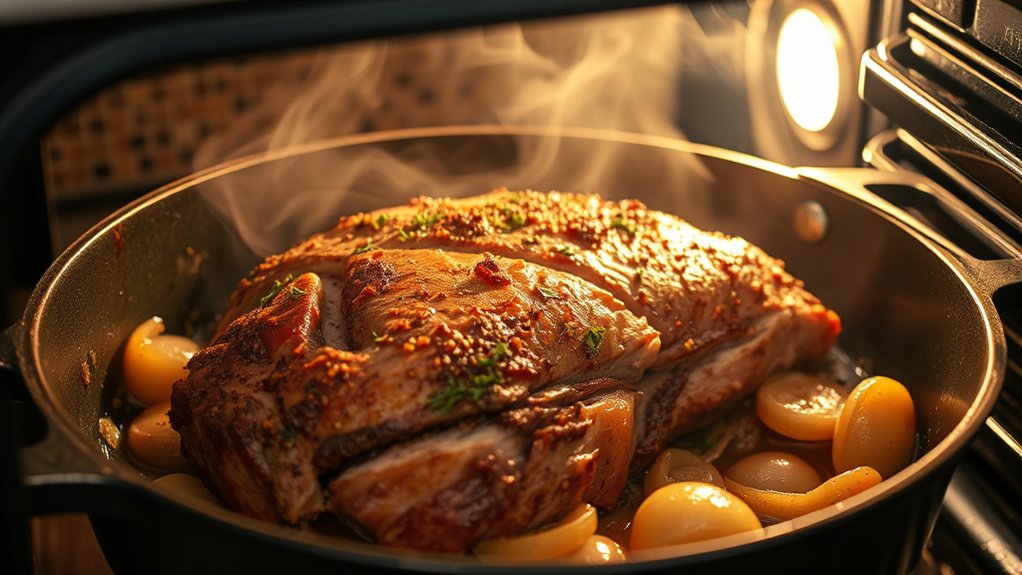
Set the brisket fat-side up in a roasting pan or Dutch oven, then cover it tightly and cook it at 275°F so the meat breaks down slowly without drying out. Keep the heat steady, because low heat helps collagen soften and lets the fat baste the surface as it cooks.
Slide the pan onto the center rack and avoid opening the lid or foil unless you need to add a small splash of liquid. For two word discussion idea one, maintain a snug seal so the oven traps moisture and supports even cooking.
For two word discussion idea two, check that the brisket stays in a quiet, gentle environment with no rapid temperature swings. If your oven runs hot, lower the set point slightly and keep the cook controlled.
Plan on several hours of undisturbed cooking, and use the same temperature throughout so the brisket cooks evenly from edge to center.
Check for Tenderness and Rest
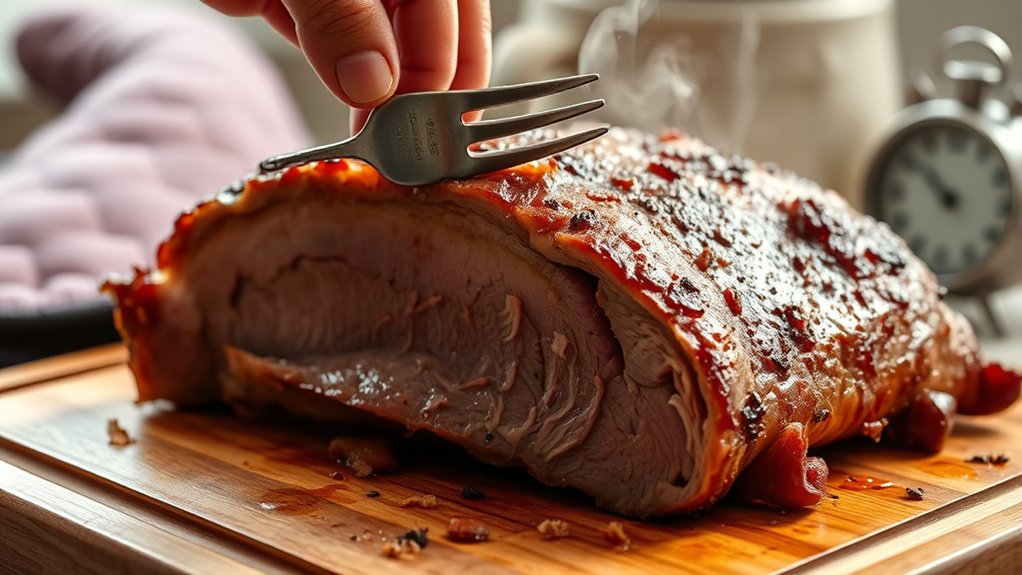
When the brisket has cooked for several hours, test it with a fork or instant-read thermometer to make sure it’s truly tender. Insert the fork into the thickest part; it should slide in with little resistance. For tenderness testing, you can also lift a corner gently. If the meat bends and starts to separate, it’s ready.
An internal temperature around 195°F to 205°F often signals full tenderness, but texture matters more than a number. Probe several spots to confirm even doneness. If it feels tight, cover it and cook a bit longer.
An internal temperature around 195°F to 205°F often signals tenderness, but texture is the true test.
Remove the brisket from the oven and keep it wrapped. Use resting techniques that let juices redistribute before you open it. Rest the brisket for at least 30 to 60 minutes on a board or in a cooler.
This pause helps the meat relax, stay moist, and slice more cleanly later.
Slice and Serve Brisket
To serve brisket neatly, slice it against the grain after it has rested so the juices stay in the meat. First, identify the grain direction on each section, because it can change where the point meets the flat.
Use a sharp slicing knife and make thin, even cuts, about 1/4 inch thick, for tender bites. If the brisket separates into two muscles, turn the meat and adjust your brisket slicing angle before continuing.
Arrange the slices on a warm platter and spoon some pan juices over the top to keep them moist. You can add serving toppings like pickled onions, sliced jalapeños, or barbecue sauce, but keep them on the side so guests can choose.
For cleaner presentation, fan the slices slightly and serve them right away. If you have leftovers, cool them quickly and store the slices with a little juice to help them reheat well later.
Frequently Asked Questions
What Oven Temperature Works Best for Different Brisket Sizes?
Use 250°F for most briskets; you’ll get low and slow protein sci results. For smaller 3–5 lb cuts, 275°F works.
For larger 8–12 lb packers, stay at 225–250°F for even tenderness.
Should I Use a Roasting Pan or Dutch Oven?
Use a Dutch oven for tighter heat and moister results; choose a roasting pan if you want more surface browning. Your brisket pan choice should match your oven-safe cookware and desired sauce reduction.
Can I Cook Brisket the Day Before Serving?
Yes, you can cook brisket the day before. You’ll slice it after chilling, then reheat it gently in its juices, covered, until hot.
This boosts flavor, saves time, and makes serving easier.
How Do I Reheat Brisket Without Drying It Out?
You reheat brisket best by wrapping it in foil with a splash of broth; for example, I’d warm a 2-pound piece at 275°F. Use gentle reheating techniques to maximize moisture retention and avoid drying.
What Sauces Pair Well With Oven-Cooked Brisket?
You’ll pair oven-cooked brisket with brisket sauces like tangy barbecue, horseradish cream, or peppery gravy. These flavor pairings cut richness, add moisture, and enhance smoky beef without overpowering its savory crust.
Conclusion
You’ve done the hard work, and now your brisket is ready to become a glorious, juicy giant. Let it rest so the juices settle like a calm river after a storm, then slice against the grain into tender ribbons of beef.
Serve it with those rich pan juices, and you’ll get a smoky, savory masterpiece that practically melts on the plate. Follow these steps, and your oven will turn brisket into pure, mouthwatering magic.
By mastering these techniques, you’ll discover how to cook brisket in the oven perfectly every time, creating a flavorful and tender dish that delights every palate.