Are Pyrex Bowls Oven Safe
Can you trust a Pyrex bowl to face the heat, or does it depend on the glass beneath the name?
When it comes to whether Pyrex bowls are oven safe, the answer is yes—but with important conditions.
You can use some Pyrex in the oven, but only if the manufacturer rates that specific bowl for oven use.
Check the markings, model, and temperature limit carefully.
Borosilicate and tempered soda-lime glass don’t behave the same under heat.
One wrong assumption can mean thermal shock, and that’s where the details matter most.
Key Takeaways
- Most Pyrex bowls are oven safe only if the specific model is rated by the manufacturer for oven use.
- Check the bottom, packaging, or manufacturer’s website for oven-safe marks, model numbers, and temperature limits.
- Pyrex’s heat resistance depends on the glass type, thickness, shape, age, and any chips or cracks.
- Avoid sudden temperature changes, direct flames, broilers, stovetops, and moving a cold bowl onto hot surfaces.
- After baking, let Pyrex cool gradually on a dry towel, wire rack, or wooden board before washing.
Are Pyrex Bowls Oven Safe?
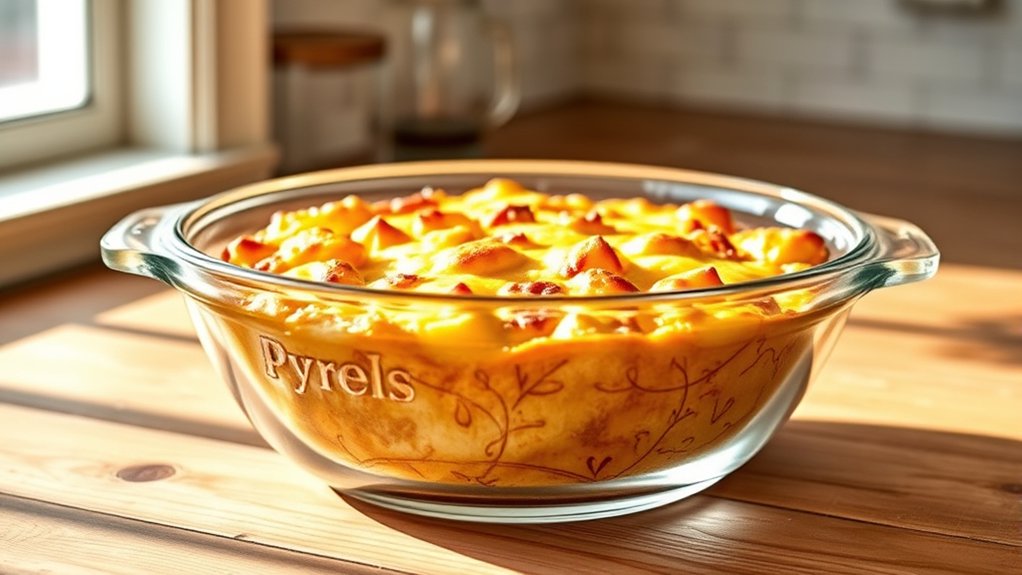
Yes, most Pyrex bowls are oven safe, but only if they’re made of true borosilicate or, in newer U.S. versions, tempered soda-lime glass rated by the manufacturer for oven use. When you ask are pyrex bowls oven safe, you’re really asking whether the specific bowl meets the glass safety limits for direct heat, temperature changes, and food contact.
You can use these bowls for baking and reheating, but you shouldn’t expose them to sudden thermal shock, broilers, stovetops, or cold surfaces straight from the oven. Manufacturer guidance matters because not every Pyrex-marked bowl shares the same material or thermal tolerance.
If you ignore that guidance, you increase the risk of cracking or breakage. For safe use, keep the bowl within its stated temperature range and handle it with dry oven mitts. Your caution should match the material’s limits, not the brand name alone.
How to Tell If Your Pyrex Is Oven Safe
To tell whether your Pyrex is oven safe, check the bottom for the maker’s mark, model number, and any oven-safe symbols or temperature limits. Then confirm those details on the manufacturer’s website or packaging. You should treat that mark as your primary identifier for baking glassware, because product lines can differ.
If the bowl lists a specific maximum temperature, don’t exceed it. If you can’t find a clear marking, assume nothing and verify the exact item before heating. Also inspect for chips, cracks, clouding, or deep scratches; damaged glass can fail under oven conditions and compromise oven safety.
Keep the bowl out of direct flame, broilers, and sudden temperature changes unless the manufacturer explicitly allows them. Use dry oven mitts when handling hot glassware, and avoid placing a cold bowl onto a hot surface. When in doubt, contact Pyrex support with the model number for a definitive answer.
What Makes Pyrex More or Less Heat-Resistant
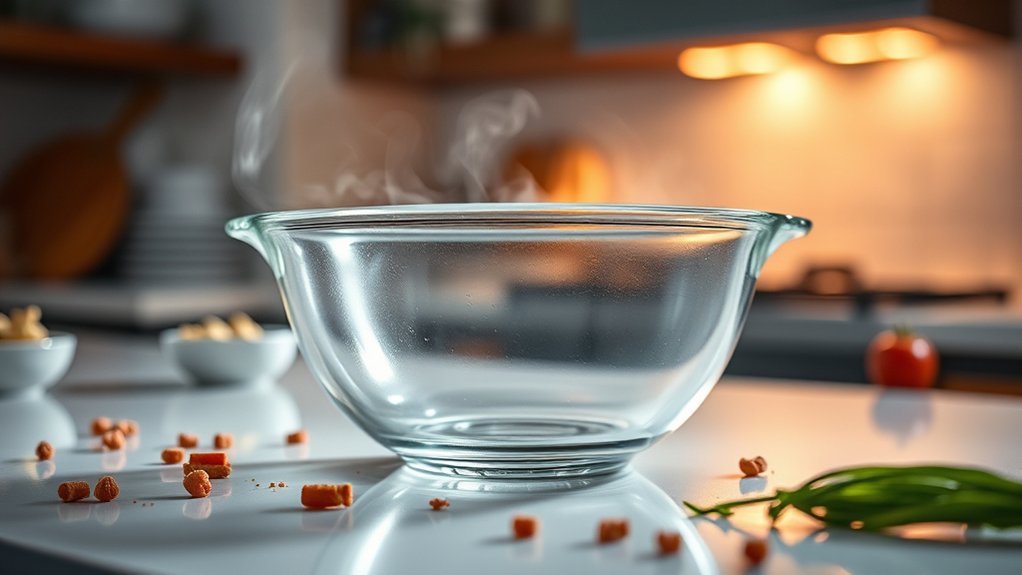
Pyrex’s heat resistance depends mainly on the glass type, wall thickness, shape, and any existing damage. You should treat glass composition as the primary variable: borosilicate tolerates thermal stress better than many soda-lime formulations, which can affect pyrex durability.
Pyrex’s heat resistance depends mainly on glass type, wall thickness, shape, and any existing damage.
Thicker walls usually distribute heat more evenly, but they also retain stress if temperature changes are abrupt. Curved or uneven shapes can create localized hot spots, so you should assume lower tolerance than for simple, uniform forms.
- Material formula: different glass composition changes expansion behavior.
- Geometry: narrow bases, handles, and rims concentrate stress.
- Condition: scratches, chips, or microcracks reduce heat resistance.
You can’t judge heat resistance by appearance alone. A clean, intact bowl may still fail if its structure has been weakened. For that reason, you should evaluate age, markings, and visible wear before assuming it can handle oven temperatures safely.
How to Safely Use Pyrex in the Oven
Before you use Pyrex, you should verify that your oven temperature stays within the manufacturer’s rated limit. You should also avoid sudden temperature changes, since rapid shifts can increase thermal stress and raise the risk of breakage.
For best results, use Pyrex for even heating rather than exposing it to direct flames, broilers, or other concentrated heat sources.
Check Oven Temperature
What temperature are you actually putting your Pyrex bowl into? You need to verify the oven setting before you load the dish, because oven safety starts with accurate heat control. Check the manufacturer’s temperature guidance and match it to your cookware selection; don’t assume every Pyrex item tolerates the same limit. Use the oven’s actual set point, not the dial estimate.
- Confirm the maximum temperature printed on the bowl or packaging.
- Set the oven to the required temperature and let it stabilize.
- Use an oven thermometer if your appliance runs hot or cool.
You should keep the baking temperature within the stated range and avoid exceeding it. That simple check reduces stress on the glass and supports safer, more predictable performance.
Avoid Sudden Temperature Changes
Even when you’ve set the oven to the right temperature, Pyrex can still fail if you expose it to a fast temperature swing. You should keep oven safety in mind and handle the dish with deliberate, controlled movement.
Don’t place a cold bowl into a preheated oven, and don’t move a hot bowl onto a cool, wet, or metal surface. Good glassware care means letting the bowl stabilize before and after heating.
| Risk | Action | Result |
|---|---|---|
| Cold Pyrex | Warm gradually | Lower stress |
| Hot Pyrex | Set on dry towel | Reduce shock |
| Wet surface | Avoid contact | Preserve integrity |
You should also avoid adding chilled ingredients to a hot bowl. These simple limits help protect the glass and reduce cracking risk.
Use For Even Heating
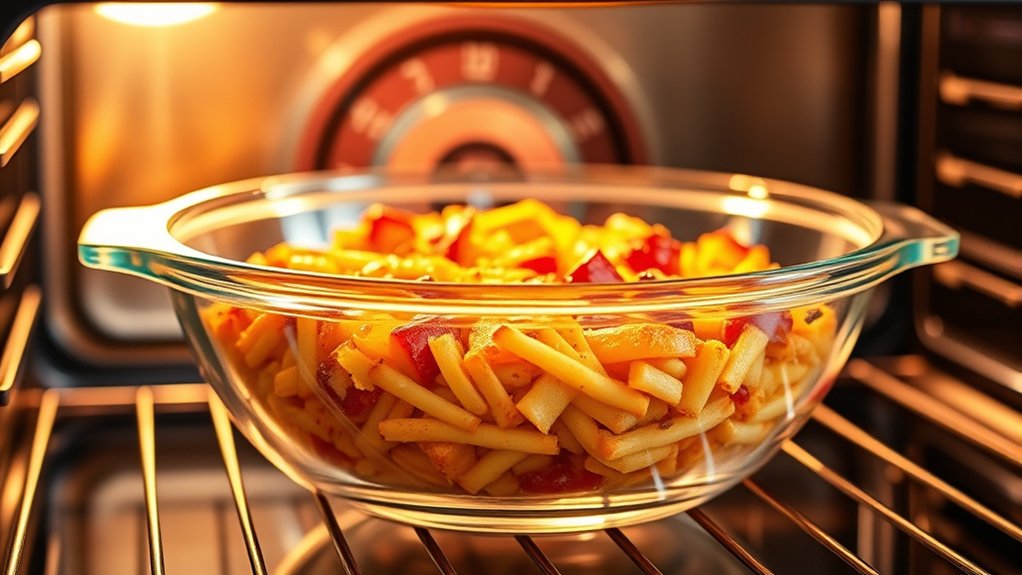
For best results, heat Pyrex evenly by placing it in a preheated oven on a stable rack and keeping hot spots to a minimum. You should position the bowl away from direct flame, heating coils, or vents, because uneven exposure can stress the glass and reduce material safety.
Follow these steps:
- Center the bowl on the middle rack.
- Leave space around it for airflow.
- Rotate it only if your recipe allows.
Use moderate temperatures and monitor baking closely. Avoid setting the dish on a cold, wet, or metal surface after removal.
Good oven care means managing heat distribution before, during, and after baking. When you control even heating, you lower thermal stress, protect the bowl, and keep performance predictable.
Pyrex Temperature Limits and Thermal Shock
Pyrex bowls can handle oven heat, but only within the limits set by the specific glass and the manufacturer’s instructions. You should treat the stated maximum temperature as an oven safety boundary, not a suggestion.
Pyrex glass chemistry affects how it expands and contracts, so gradual heating matters. If you expose the bowl to a sudden temperature change, you increase thermal shock risk, which can crack or shatter the glass.
To reduce stress, place the bowl in a preheated oven only when the brand allows it, and keep the heating rate steady. You should also avoid moving it between extreme temperatures.
Even within safe limits, localized hot spots can create uneven stress. Handle the bowl with dry mitts, and let it cool on a stable, dry surface.
Follow the manufacturer’s temperature rating exactly, because different Pyrex products may use different formulations and tolerances for heat.
When Not to Put Pyrex in the Oven
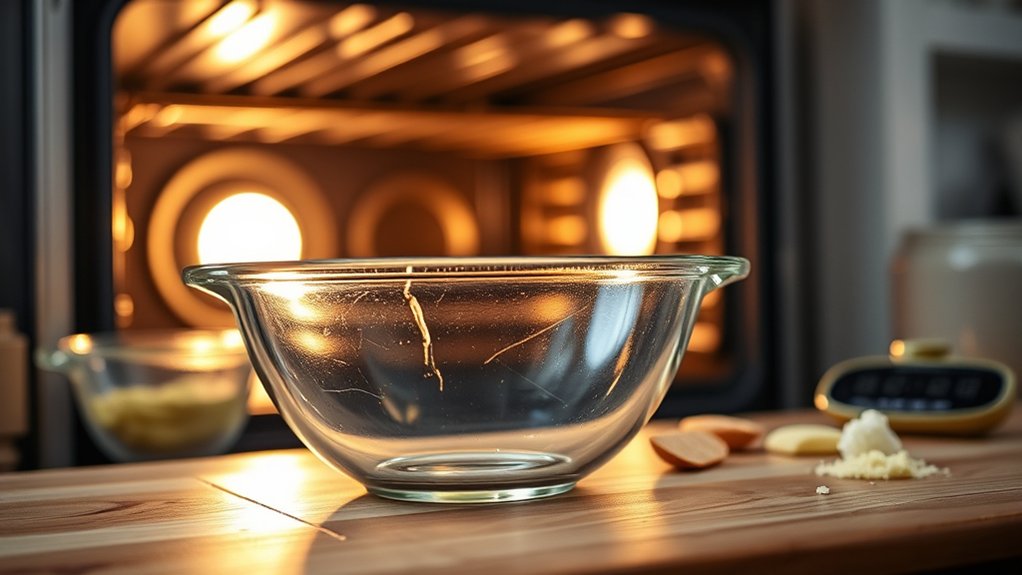
You should not put a Pyrex bowl in the oven if it’s cracked, chipped, scratched, or has any visible damage, since weakened glass is far more likely to fail under heat. You also need to avoid oven use when the bowl has been recently chilled, frozen, or exposed to sudden temperature changes, because that condition raises breakage risk.
Avoid oven use with cracked, chipped, or scratched Pyrex, and never heat a recently chilled bowl.
For careful glassware care, inspect the bowl before each use and reject any piece with cloudiness, edge wear, or stress marks.
- Don’t use damaged glass.
- Don’t expose a cold bowl to high heat.
- Don’t ignore discoloration or defects.
You should also skip oven use if the bowl isn’t rated for baking or if the manufacturer’s instructions prohibit it. Even durable glass can fail when misused. If you’re unsure, choose another vessel rather than risk injury, spills, or ruined food.
Best Practices for Baking With Pyrex
To get reliable results with Pyrex, preheat the oven fully and place the bowl on a stable rack in the center of the oven for even heat exposure. You should avoid direct contact with broiler elements, stovetops, or wet countertops, because rapid temperature gradients can stress the glass.
Keep fillings at room temperature when possible, since cold ingredients reduce heat transfer efficiency and raise breakage risk. Use dry oven mitts and support the bowl from underneath to limit flexing.
If you need to add liquid, pour it slowly against the side, not onto hot glass. Follow the manufacturer’s temperature guidance exactly, and don’t exceed it.
In glass physics, thermal shock is the main hazard, so you should never move Pyrex from freezer to oven. After baking, set it on a dry towel, wire rack, or wooden board, not a cool surface.
Handle it cautiously, and let it cool gradually before washing.
Frequently Asked Questions
Can Pyrex Bowls Go Under a Broiler?
No, you shouldn’t put Pyrex bowls under a broiler. You risk thermal shock, especially with vintage oven safety concerns.
Check your dish’s markings; use broiler-safe cookware only, and keep direct heat exposure minimal.
Are Vintage Pyrex Bowls Oven Safe?
You’re not guaranteed that vintage Pyrex bowls are oven safe; you should verify each piece first. Avoid broiler use, stovetop safety, lids safety, and air fryer use unless the manufacturer specifically confirms heat tolerance.
Can Pyrex Bowls Be Used on the Stovetop?
No, you shouldn’t use Pyrex bowls on the stovetop. They’re made for controlled heat, not direct flame.
For stovetop use, choose cookware rated for it; broiler safety doesn’t apply here, either.
Do Pyrex Lids Have the Same Oven Safety?
No, you shouldn’t assume Pyrex lids share the same oven safety. You should check each lid’s material for dishware durability and material safety, because plastic and glass lids often tolerate heat differently.
Is Pyrex Safe for Air Fryer Use?
Not always: you can use Pyrex in an air fryer only if the specific piece is air fryer-safe and fits well. Hot metal meets fragile glass, so check air fryer safety, oven compatibility, and temperature limits first.
Conclusion
So, you can use some Pyrex bowls in the oven, but you’ll want to treat them as conditionally suitable rather than universally safe. Check the maker’s marks, the model, and the listed temperature limit before you bake. Keep the bowl away from sudden thermal changes, direct flame, and any rough handling.
If it’s chipped or cracked, retire it. When you follow the manufacturer’s guidance, you’ll reduce the chance of an unplanned departure from service. Always prioritize safety to ensure your cooking experience goes smoothly.
In conclusion, while many Pyrex bowls are oven safe, it’s essential to verify their specifications and handle them with care to avoid accidents.